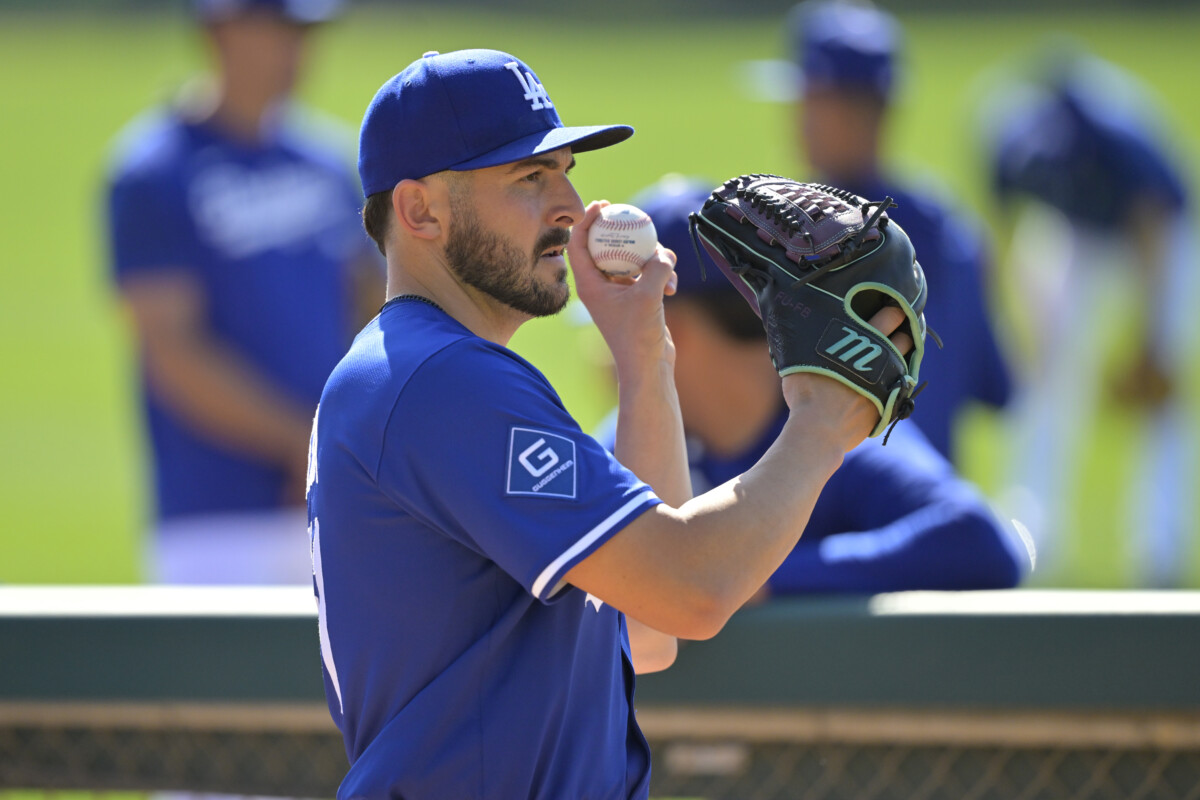
Alex Vesia’s World Series status has historically hinged on his recovery from an intercostal strain suffered during the 2024 postseason. After missing the National League Championship Series (NLCS), his successful return to the World Series roster solidified his role as a high-leverage left-handed specialist, a status he maintains in the 2026 season.
The Evolution of Alex Vesia’s Postseason Availability
Understanding Alex Vesia’s World Series status requires a look at the pivotal 2024 season, which defined his reputation as a resilient postseason asset. During the National League Division Series (NLDS) against the San Diego Padres, Vesia experienced a sharp pain in his side while warming up for the eighth inning of Game 5. This was later diagnosed as an intercostal strain, a common but debilitating injury for pitchers that affects the muscles between the ribs, which are critical for rotational power.
The timing was catastrophic for the Los Angeles Dodgers. As the team's primary left-handed high-leverage reliever, his absence during the NLCS against the New York Mets forced the coaching staff to navigate "bullpen games" and rely more heavily on right-handed anchors like Blake Treinen and Evan Phillips. However, by the time the World Series against the New York Yankees arrived, Vesia’s status transitioned from "uncertain" to "active."
His inclusion on the World Series roster was not merely a matter of health but a strategic necessity. The Yankees’ lineup featured elite left-handed hitters, including Juan Soto and Austin Wells, making Vesia’s deceptive high-fastball and slider combination indispensable. As we look at his career from the vantage point of 2026, that specific recovery period remains the benchmark for how the Dodgers manage his workload and "status" during deep October runs.
The Medical Reality: Understanding Intercostal Strains in Pitchers
When discussing a pitcher’s "status," the technical nature of the injury is often overlooked. An intercostal strain involves the muscles that facilitate the expansion and contraction of the chest cavity. For a pitcher like Vesia, who relies on significant trunk rotation and a high-effort delivery to generate "ride" on his four-seam fastball, even a Grade 1 strain can be a season-ending event if not managed correctly.
The Kinetic Chain and Rotational Torque
Pitching is a total-body movement where energy is transferred from the legs, through the core (the "kinetic chain"), and out through the arm. The intercostal muscles act as stabilizers during the "cocking" phase and the "acceleration" phase of the delivery. If these muscles are compromised:
- Velocity Drops: The pitcher cannot generate the same torque, leading to a measurable decrease in miles per hour (MPH).
- Command Issues: Pain during the follow-through often causes pitchers to "fly open" with their lead shoulder, leading to pitches missing high and outside.
- Risk of Compensation Injuries: To avoid pain in the ribs, a pitcher might subconsciously alter their arm slot, putting undue stress on the ulnar collateral ligament (UCL) or the shoulder capsule.
Vesia’s status was cleared for the World Series only after he completed a rigorous "up-and-down" session in the bullpen, simulating the stress of pitching, sitting in the dugout, and returning for a second inning. This remains the standard protocol for the Dodgers' medical staff in 2026 when assessing any reliever’s readiness for the championship stage.
Alex Vesia's Roster Impact: A Tactical Breakdown
Vesia’s presence on the active roster changes the entire complexion of a series. In the 2024 World Series, his availability allowed manager Dave Roberts to play the "matchup game" more aggressively. In 2026, Vesia continues to serve this role, though the evolution of the three-batter minimum rule has forced him to become more than just a "LOOGY" (Left-Handed One-Out Guy).
Why His Status Dictates Bullpen Usage
When Vesia is healthy and active, the "bridge" to the closer becomes much sturdier. His ability to induce high swing-and-miss rates (often exceeding 30% on his fastball) makes him a "fireman" capable of entering a game with runners on base.
- Left-on-Left Dominance: Historically, left-handed hitters struggle with Vesia’s "flat" approach angle. His fastball appears to rise, a phenomenon known as Induced Vertical Break (IVB).
- Neutralizing Righties: By 2026, Vesia has further refined his changeup, allowing him to stay in games against right-handed power hitters, thereby preserving the rest of the bullpen.
If Vesia’s status is "inactive," the coaching staff is often forced to use "closers" in the 7th or 8th innings, which creates a vacuum in the 9th. This "trickle-down" effect is why his health is the most scrutinized aspect of the Dodgers' roster during the postseason.
Comparative Status: 2024 vs. 2026 Postseason Readiness
In 2026, the metrics used to determine a player's "status" have become even more data-driven. The following table compares the key variables that determined Vesia's availability during the 2024 World Series and how those same metrics are evaluated today.
| Metric/Factor | 2024 World Series Status | 2026 Performance Profile |
|---|---|---|
| Primary Injury Risk | Acute Intercostal Strain (Left Side) | General Workload Management |
| Fastball Velocity (Avg) | 94.5 - 95.8 MPH | 93.8 - 95.2 MPH |
| Spin Rate (RPM) | 2,400+ (Elite) | 2,450+ (Optimized) |
| Roster Role | High-Leverage Setup / Matchup | Primary Late-Inning Specialist |
| Medical Clearance | Multi-day rest + Bullpen Simulation | Bio-mechanical Stress Monitoring |
| Availability Policy | "Day-to-Day" via Roberts | Scheduled Recovery Cycles |
The Decision-Making Process: Front Office and Coaching Staff
The "status" of a player like Alex Vesia isn't just decided by the player saying, "I'm ready." It is a tripartite decision involving the medical team, the front office (analytics), and the field manager.
- The Medical Evaluation: As seen in 2024, the medical team uses ultrasound and MRI to track the healing of muscle fibers. In 2026, wearable technology provides real-time data on muscle fatigue, allowing the team to predict potential strains before they occur.
- The Analytical Projection: The front office looks at the "stuff plus" metrics. If Vesia is healthy but his spin rate has dropped by 200 RPMs due to a lingering side issue, the analytics suggest he will be less effective than a healthy minor-league call-up.
- The Managerial Instinct: Dave Roberts has often cited the "look test." In the high-pressure environment of the World Series, a pitcher must demonstrate not just physical health but the mental "conviction" in their pitches. Vesia’s status is often confirmed by his aggressive demeanor on the mound during simulated games.
High-Leverage Performance: Why Fans Track His Status
Fans and bettors alike monitor Alex Vesia’s status because of his "clutch" factor. In the postseason, the margin for error is razor-thin. Vesia has earned a reputation for being a "strikeout artist" in situations where a fly ball or a ground ball could score a runner.
His 2024 World Series performance, coming off the injury, was a testament to his value. Despite the intercostal concern, he remained a primary weapon against the heart of the Yankees' order. This history of performing under physical duress has made him a fan favorite and a frequent subject of injury-status searches. In 2026, as he nears potential free agency or contract extension talks, his ability to maintain "World Series status" remains his greatest professional asset.
Frequently Asked Questions
Did Alex Vesia play in the 2024 World Series?
Yes. Despite suffering an intercostal strain in the NLDS and missing the NLCS, Alex Vesia was officially added to the Dodgers' World Series roster against the New York Yankees. He was utilized in key late-inning situations to neutralize left-handed hitters.
What was the specific injury that affected Vesia’s status?
He suffered an intercostal strain (specifically on his left side). This injury occurs in the muscles between the ribs and is particularly difficult for pitchers because it hampers the core rotation necessary to generate velocity and command.
How does Vesia’s 2026 status compare to his 2024 form?
By 2026, Vesia has focused more on "core durability" and mobility exercises to prevent a recurrence of side injuries. While his raw velocity is similar, his usage is more carefully managed in the regular season to ensure he is at "100% status" for the October postseason.
Why is a left-handed reliever's status so important in the World Series?
Most championship-caliber teams, like the Yankees or Phillies, feature powerful left-handed bats in the middle of their lineup. A pitcher like Vesia, who specializes in "erasing" lefties, allows a manager to stop an opponent's momentum without burning through the entire bullpen.
Can intercostal strains lead to long-term issues for pitchers?
If not fully healed, they can lead to chronic "side soreness" or cause the pitcher to alter their mechanics, which might lead to elbow or shoulder injuries. This is why the Dodgers were so cautious with Vesia’s status during the 2024 NLCS.
Where can I find the most current updates on Alex Vesia’s roster status?
For real-time updates during the 2026 season, the official MLB Transaction Wire and the Dodgers' official roster page are the most authoritative sources. Local beat reporters also provide insight into "active/inactive" status during the pre-game window (usually 3-4 hours before first pitch).
Practical Advice for Following Player Status
When tracking the status of a relief pitcher like Alex Vesia during the World Series or a high-stakes regular-season series, look beyond the "Probable Pitchers" list. Bullpen status is rarely announced officially until the roster deadline (usually the morning of the first game of a series).
Key Indicators of a "Positive" Status:
- Participation in high-intensity "long toss" on the field.
- Facing live batters in a "simulated game" (Sim Game) during an off-day.
- The absence of a "taxi squad" left-hander being activated from the Triple-A affiliate.
For fans and analysts, the most reliable sign that Vesia is ready for World Series action is his presence in the bullpen during pre-game introductions. Given his track record of bouncing back from the 2024 intercostal issue, his "active" status is generally a harbinger of a strong defensive performance for the Dodgers' relief corps.