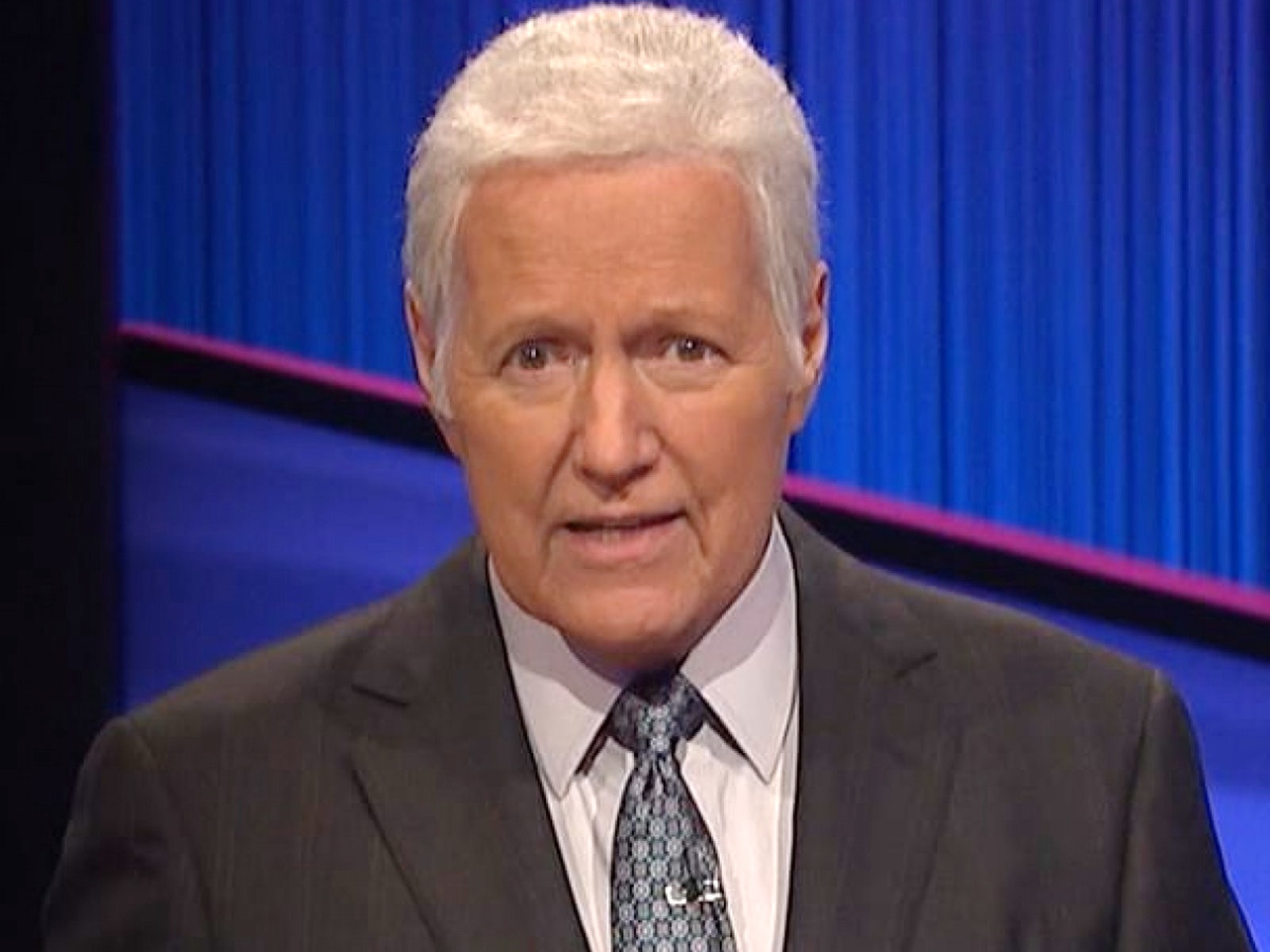
Alex Trebek was widely considered smart because of his formal education in philosophy, his mastery of the French and English languages, and his rigorous 37-year tenure as the host of Jeopardy!. Beyond his role as a quizmaster, his intelligence was rooted in meticulous preparation, a genuine curiosity for global culture, and an authoritative presence that prioritized factual accuracy over entertainment.
For nearly four decades, George Alexander Trebek was more than just a television personality; he was the primary symbol of intellectualism in American popular culture. While the format of Jeopardy! inherently associates its host with knowledge, Trebek’s reputation for being "smart" was not a mere byproduct of the script he read. It was a multifaceted trait built on a foundation of academic rigor, linguistic versatility, and a professional discipline that transformed the way audiences perceived information. As we reflect on his legacy in 2026, it is clear that his intelligence was defined by a specific combination of cognitive agility and a lifelong commitment to the pursuit of truth.
The Academic Foundation: Philosophy and Critical Thinking
To understand why Alex Trebek was perceived as smart, one must look toward his early academic life. Born in Sudbury, Ontario, Trebek attended the University of Ottawa, where he graduated in 1961 with a degree in philosophy. Unlike many contemporary broadcasters who specialize in communications or journalism, Trebek’s background in philosophy provided him with a unique cognitive toolkit.
Philosophy is a discipline that demands logical reasoning, the ability to dissect complex arguments, and a comfort with existential ambiguity. For Trebek, this educational background likely contributed to his characteristic "coolness" under pressure. On Jeopardy!, he was rarely flustered by technical errors or contestant confusion. His ability to maintain a neutral, yet authoritative, stance was a hallmark of the philosophical mind—observing the "game" of life (or trivia) with a measured, analytical eye.
Furthermore, his connection to the University of Ottawa remained a pillar of his intellectual identity. Over the years, he donated millions of dollars to the institution, specifically funding the Alex Trebek Forum for Dialogue. This initiative was designed to foster discussion on public policy and social issues, further proving that his interest in "knowledge" was not limited to three-sentence clues on a game board, but extended to the complex socioeconomic challenges of the modern world.
Linguistic Versatility and the Power of Pronunciation
A significant component of the "Alex Trebek is smart" narrative was his linguistic ability. Raised in a bilingual household with a French-Canadian mother and a Ukrainian-immigrant father, Trebek was fluent in both English and French. This bilingualism was the gateway to a broader interest in linguistics that became a signature of his hosting style.
Viewers often noted Trebek’s insistence on correct foreign pronunciations. Whether the subject was a 17th-century French painter, a German composer, or a Spanish geographic landmark, Trebek aimed for phonetic authenticity. While some critics occasionally labeled this as pedantic, it served a deeper intellectual purpose: it signaled a respect for the culture of origin.
In the world of broadcasting, intelligence is often signaled through precision. By accurately pronouncing "Montesquieu" or "Scherzo," Trebek demonstrated that he wasn't just reading words—he understood the phonetic rules and cultural contexts behind them. This linguistic agility allowed him to bridge the gap between a generic entertainer and a worldly educator.
The Jeopardy! "Blue Room": Professionalism as Intellectual Discipline
Perhaps the most misunderstood aspect of Trebek’s intelligence was his role in the production of Jeopardy!. Many viewers assumed he simply showed up and read the clues. In reality, Trebek was an active participant in the editorial process.
Each morning before taping, Trebek spent hours in the "Blue Room"—the writers' workspace—reviewing every clue and response. He was known to challenge the writers on the phrasing of a clue or the "correctness" of an answer. If a clue felt ambiguous or if a secondary answer was potentially valid, Trebek was often the one to catch it.
The Intellectual Workflow of Alex Trebek
| Phase | Activity | Intellectual Skill Required |
|---|---|---|
| Morning Review | Vetting 61 clues per game for accuracy and flow. | Critical Analysis & Fact-Checking |
| Script Modification | Adjusting pronunciations and pacing for clarity. | Phonetics & Communication Theory |
| Active Adjudication | Making split-second calls on contestant responses. | Rapid Information Processing |
| Post-Game Analysis | Reviewing difficult clues with the editorial staff. | Reflective Learning |
This level of involvement required more than just the ability to read; it required a deep-seated general knowledge and the cognitive stamina to process hundreds of facts across disparate fields—science, history, pop culture, and law—every single day. His "smartness" was, in many ways, a form of extreme mental athleticism.
Authority and the "Teacher" Persona
In the psychology of media, Trebek occupied the archetype of the "Professor." He did not position himself as a cheerleader for the contestants; instead, he was a fair but firm adjudicator. When a contestant missed a question, Trebek’s "No" was often described as being delivered with the disappointment of a teacher who knew the student could do better.
This persona reinforced the perception of his intelligence. By maintaining a standard of excellence, he elevated the show from a mere contest to an intellectual pursuit. He rarely used the "smartest man in the room" trope for ego; rather, he used it to maintain the integrity of the game. In an era where information was becoming increasingly fragmented and "alternative facts" began to permeate the cultural zeitgeist, Trebek’s unwavering adherence to the "correct response" made him a stabilizing intellectual force.
Curiosity Beyond Trivia: The Manual and Modern Intelligence
One aspect of Trebek’s intelligence that was frequently discussed in his later years, including in his 2020 memoir The Answer Is..., was his practical or "manual" intelligence. Trebek was an avid "do-it-yourselfer." He famously spent his weekends repairing his own home, fixing plumbing, and working on his property.
This highlights a different facet of being smart: spatial and mechanical intelligence. Trebek often remarked that he enjoyed the tangible nature of manual labor as a counterweight to the abstract nature of trivia. To his fans, this made his intelligence feel grounded. He wasn't just a man who knew who signed the Magna Carta; he was a man who understood how a circuit breaker worked. This holistic view of intelligence—combining the academic with the practical—endeared him to a wide demographic and solidified his reputation as a well-rounded thinker.
The Historical Context of the 1960s CBC Roots
To understand the trajectory of Trebek's intellectual brand, one must look back at his beginnings at the Canadian Broadcasting Corporation (CBC). Before moving to the United States, Trebek hosted programs like Reach for the Top, a high school quiz show. This early exposure to the "quiz" format ingrained in him a respect for young scholars and the competitive nature of knowledge.
His early work in news and sports broadcasting also forced him to become a generalist. In the mid-20th century, broadcast journalists were expected to be walking encyclopedias. Trebek carried this ethos with him throughout his career. Even when he moved to the U.S. to host more traditional game shows like The Wizard of Odds or High Rollers, he maintained a level of decorum and sharpness that set him apart from the more "high-energy" and sometimes "campy" hosts of that era.
The Cultural Impact of the "Smart" Icon
By the 2010s and leading into his final years in 2020, Trebek had become a cultural touchstone for intelligence. This was further cemented by parodies, such as Will Ferrell’s portrayal of him on Saturday Night Live. While the sketch portrayed him as the "straight man" to absurd contestants, it relied entirely on the audience’s understanding that the real Alex Trebek was the intellectual superior in the room.
His intelligence also played a role in his public battle with stage IV pancreatic cancer. The way he communicated his diagnosis—using clear, clinical language while remaining emotionally honest—showed an intellectual maturity. He approached his own mortality with the same quest for understanding and transparency that he brought to his work.
Philanthropy as an Extension of Intelligence
True intelligence is often measured by what one chooses to support. Trebek’s philanthropic efforts were almost entirely directed toward education and the environment. Aside from his contributions to the University of Ottawa, he supported the Royal Canadian Geographical Society and various environmental conservation groups.
He recognized that knowledge is the primary tool for solving global issues. By funding geographic literacy and higher education, he sought to create a more "smart" society. For Trebek, being smart was not about winning a game; it was about having the tools necessary to preserve the planet and understand our place in history.
Frequently Asked Questions
Did Alex Trebek know all the answers to the Jeopardy! clues?
While Trebek did not know every answer off the top of his head, he was extremely well-informed. He studied the clues extensively before every show, ensuring he understood the context of the answers. His job was not to be a contestant, but to be a master of the material provided. Over 37 years, the sheer volume of information he processed made him one of the most knowledgeable generalists in the world.
What was Alex Trebek’s educational background?
Alex Trebek earned a degree in Philosophy from the University of Ottawa in 1961. This background in logic and critical thinking served as the foundation for his authoritative and methodical hosting style on Jeopardy!.
How many languages did Alex Trebek speak?
Trebek was fluently bilingual in English and French. He also had a working knowledge of Spanish and was proficient in the pronunciations of several other languages, including German, Italian, and Russian, which he used to ensure the accuracy of clues on the show.
Why was Alex Trebek's pronunciation so specific?
Trebek believed in respecting the original language of the subject matter. He felt that as a host of a show dedicated to facts and knowledge, it was his responsibility to pronounce names and terms as accurately as possible. This attention to detail reinforced the show's reputation for intellectual rigor.
Did Alex Trebek write the clues for Jeopardy!?
Trebek did not write the clues—that was the job of a dedicated team of writers and researchers. However, he was heavily involved in the editorial process. He reviewed every clue before filming, suggested edits for clarity, and often questioned the writers to ensure there was only one possible correct response.
Practical Legacy: Why Trebek’s "Smartness" Still Matters in 2026
In 2026, the legacy of Alex Trebek serves as a reminder of the value of the "curated fact." In an age where information is generated and spread at an overwhelming pace, the discipline Trebek modeled—verification, pronunciation, and context—is more relevant than ever.
For those looking to emulate his intellectual style, the "Trebek Method" involves three key actions:
- Prioritize Precision: Don't just learn a fact; learn how to communicate it accurately.
- Remain Curious: Approach every subject, whether it's 18th-century poetry or modern plumbing, with the same level of interest.
- Support Education: Recognize that individual intelligence is most valuable when it contributes to the collective knowledge of society.
Alex Trebek’s "smartness" was not a gift of nature alone; it was a professional choice. He chose to be prepared, he chose to be precise, and he chose to treat knowledge with the respect it deserves. That, more than any trivia fact, is why he remains the ultimate icon of American intelligence.