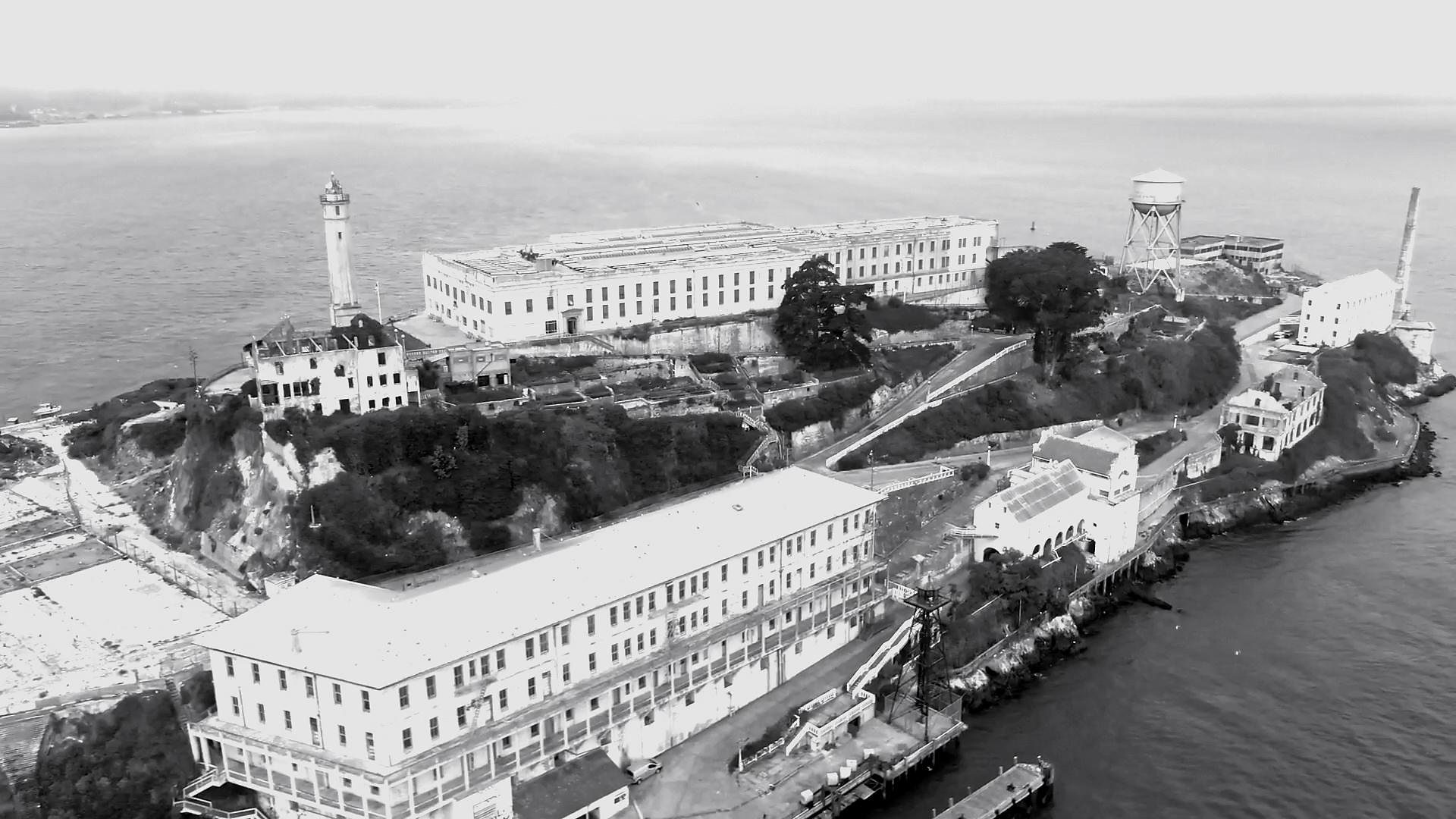
The last significant escape attempt from Alcatraz occurred in December 1962, when John Paul Scott and Deryl Parker sawed through window bars and reached the water. While Parker was caught nearby, Scott became the only prisoner known to have reached the San Francisco mainland by swimming, though he was immediately captured.
Alcatraz Federal Penitentiary, often referred to as "The Rock," was designed to be the ultimate dead end for the American criminal element. Situated in the frigid, turbulent waters of the San Francisco Bay, it housed the most incorrigible inmates from 1934 until its closure in 1963. Throughout its history, 36 men made 14 separate escape attempts. While the June 1962 disappearance of Frank Morris and the Anglin brothers remains the most famous, the events leading up to the final closure in 1963 represent the true "last escape" of the prison’s era.
To understand the last escape, one must distinguish between the most successful disappearance and the final physical breach of the prison's perimeter. As we look back from 2026, the fascination with these events remains undiminished, fueled by forensic advancements and historical preservation efforts that continue to shed light on how these men challenged an "escape-proof" fortress.
The June 1962 Great Escape: A Technical Masterpiece
The disappearance of Frank Morris, John Anglin, and Clarence Anglin in June 1962 is the most analyzed escape in penal history. While technically not the chronologically last attempt, it was the event that effectively broke the reputation of Alcatraz and accelerated its decommissioning.
The Preparation and Tools
The trio spent months engineering their exit. Their primary obstacle was the aging concrete and the ventilation grates leading into the utility corridors. Using discarded saw blades, spoons stolen from the mess hall, and a makeshift drill fashioned from a vacuum cleaner motor, they meticulously widened the vents in their cells.
The technical ingenuity involved was staggering:
- Dummy Heads: To buy time during nighttime bed checks, the men created realistic decoy heads using a mixture of soap, toilet paper, and real hair gathered from the barbershop.
- The Raft: They constructed a makeshift inflatable raft and life vests out of more than 50 rubberized raincoats, heat-sealing the seams using steam pipes in the utility corridor.
- The Bellows: They converted a concertina (musical instrument) into a pump to inflate the raft once they reached the shoreline.
The Route
On the night of June 11, 1962, the men climbed through the widened vents into the utility corridor, ascended the plumbing pipes to the roof, and navigated the searchlight-swept perimeter. They slid down a kitchen vent pipe to the ground and scaled two 12-foot barbed-wire fences to reach the island's northeast shore. From there, they entered the water, intending to head toward Angel Island.
The Aftermath and 2026 Perspective
For decades, the FBI maintained that the men likely drowned in the 50-degree Fahrenheit waters. However, in recent years, including reports analyzed as late as 2025, various pieces of circumstantial evidence—including a letter allegedly written by John Anglin in 2013 and modern computer modeling of bay currents—suggested that if the men entered the water at a specific window (around midnight), they could have survived and reached Horseshoe Bay. The case remains the only unsolved escape in Alcatraz history.
The Decisive December Attempt: Scott and Parker
The chronological "last escape" attempt occurred on December 16, 1962. While less famous than the Morris-Anglin disappearance, it provided the definitive proof that the prison's physical integrity had been compromised by the salt air and age.
The Breach
John Paul Scott and Deryl Parker were working in the prison culinary area. They utilized a string and abrasive grit to saw through the bars of a window in the basement latrine. This method, though slow, was effective because it was nearly silent. Once through the bars, they dropped to the ground and made for the water.
The Outcome
Deryl Parker was discovered quickly on "Little Alcatraz," a small rock formation a short distance from the island. He was suffering from hypothermia and surrendered without a fight. John Paul Scott, however, achieved what was previously thought impossible: he swam all the way to the San Francisco mainland.
Scott was found by several teenagers at Fort Point, beneath the Golden Gate Bridge. He was unconscious and suffering from extreme exhaustion and hypothermia. Unlike the Morris-Anglin trio, Scott’s "success" in reaching the shore proved that the swim was survivable, but his immediate capture and near-death state reinforced the extreme difficulty of the feat.
Why Alcatraz Closed: The Final "Escape" of the Institution
By 1963, the federal government realized that the "Last Escape" was not just about the inmates leaving the island, but about the island itself becoming an unsustainable liability. Attorney General Robert F. Kennedy ordered the prison's closure on March 21, 1963, just months after the Scott and Parker attempt.
Factors Leading to Closure
- Operating Costs: Alcatraz was nearly three times more expensive to run than other federal prisons. Because it was an island, everything—including fresh water—had to be barged in.
- Structural Decay: The saltwater environment had severely corroded the reinforced concrete and steel bars. The 1962 escapes proved that inmates could literally "dig" their way out because the building was crumbling.
- Shifting Penal Philosophy: By the early 1960s, the focus of the Federal Bureau of Prisons was shifting from pure isolation and punishment toward rehabilitation, making the "End of the Line" model of Alcatraz obsolete.
Comparison of Key Escape Attempts
The following table compares the most significant escape attempts that defined the final years of the penitentiary.
| Date | Inmates Involved | Method | Outcome |
|---|---|---|---|
| May 1946 | Bernard Coy, Joseph Cretzer, et al. | Armed takeover of the cell house (Battle of Alcatraz). | 3 inmates and 2 officers died; attempt failed. |
| Sept 1958 | Aaron Burgett, Clyde Johnson | Tied up a guard and swam for it. | Johnson caught in water; Burgett's body found later. |
| June 1962 | Frank Morris, John & Clarence Anglin | Widened vents, dummy heads, raincoat raft. | Disappeared; remains the most famous "cold case." |
| Dec 1962 | John Paul Scott, Deryl Parker | Sawed through window bars and swam. | Parker caught on rocks; Scott reached mainland but was captured. |
The Technical Challenges of the Alcatraz Environment
Escaping Alcatraz was not merely a matter of climbing a fence. The island was a technical nightmare for any prospective escapee, even as the building aged.
The San Francisco Bay Currents
The water surrounding the island is not a stagnant pool; it is a complex system of tidal surges. During an ebb tide, millions of gallons of water rush out of the bay toward the Pacific Ocean at speeds exceeding 6 knots. An escapee entering the water at the wrong time would be swept under the Golden Gate Bridge and into the open sea within minutes.
Hypothermia
Even in the summer, the water temperature in the bay rarely rises above 55 degrees Fahrenheit. In these conditions, "thermal shock" can occur instantly, causing a person to gasp and inhale water. Even a strong swimmer like John Paul Scott faced muscular paralysis within 30 to 60 minutes of exposure.
The Psychological Barrier
The "Silent System" in place for many years at Alcatraz, combined with the view of the San Francisco skyline just 1.25 miles away, was a form of psychological torture. Inmates could hear the sounds of parties and city life on the wind, which drove many to the desperation required to attempt the "Last Escape."
Frequently Asked Questions
Did anyone ever actually escape Alcatraz and survive?
Officially, the FBI and the Bureau of Prisons state that no one ever successfully escaped and remained free. However, the three men from the June 1962 attempt—Frank Morris and the Anglin brothers—were never found. While they are officially listed as "missing and presumed drowned," their families and various independent investigators believe they survived and lived out their lives in South America or elsewhere.
Who was the last prisoner to leave Alcatraz?
The last prisoner to leave the island was Frank Weatherman (Inmate #1576) on March 21, 1963. Upon leaving, he famously told reporters, "Alcatraz was never no good for nobody."
How did John Paul Scott survive the swim in December 1962?
Scott was an exceptionally strong swimmer. He reportedly used grease to insulate his body against the cold, a technique used by channel swimmers. Despite this, he was found in a state of shock and near-death at Fort Point. His body temperature had dropped to dangerous levels, and he was only saved by the quick intervention of the teenagers who found him and the subsequent medical care he received.
Can you visit the site of the last escape today?
Yes, as of 2026, Alcatraz Island is managed by the National Park Service as part of the Golden Gate National Recreation Area. Visitors can take a ferry to the island and see the actual cells where Morris and the Anglins escaped, as well as the window Scott and Parker used to exit the basement. The "Award-Winning Audio Tour" features voices of actual former inmates and guards describing these events.
What happened to the inmates after Alcatraz closed?
Most inmates were transferred to the newly opened federal penitentiary in Marion, Illinois, or to other high-security facilities like Leavenworth. Marion was designed to be the "new Alcatraz," eventually leading to the development of the modern "Supermax" prison system used at ADX Florence.
Practical Recommendations for Historians and Visitors
For those interested in the technical aspects of the last escape, it is recommended to visit the Alcatraz archives maintained by the National Park Service. Historical research in 2026 has been bolstered by digital reconstructions of the 1962 escape route, which are often displayed in the island's theater.
If you are planning a visit to see the site of these escapes:
- Book in Advance: Tours often sell out weeks ahead, especially during the anniversary months of June and December.
- Focus on the Cellhouse: Look specifically for the "Utility Corridor" behind cells 150-154 in B-Block to see the patchwork concrete where the Morris/Anglin vents were repaired.
- Review the FBI Pelican Files: The FBI has declassified much of the "Pelican" file related to the 1962 escape; reading these original reports before a visit provides significant context that the standard tour may omit.
The legacy of the "Last Escape" serves as a reminder of human ingenuity and the limitations of physical containment. Whether the 1962 trio survived or Scott’s desperate swim remains the true finale, Alcatraz stands as a monument to a bygone era of American justice.