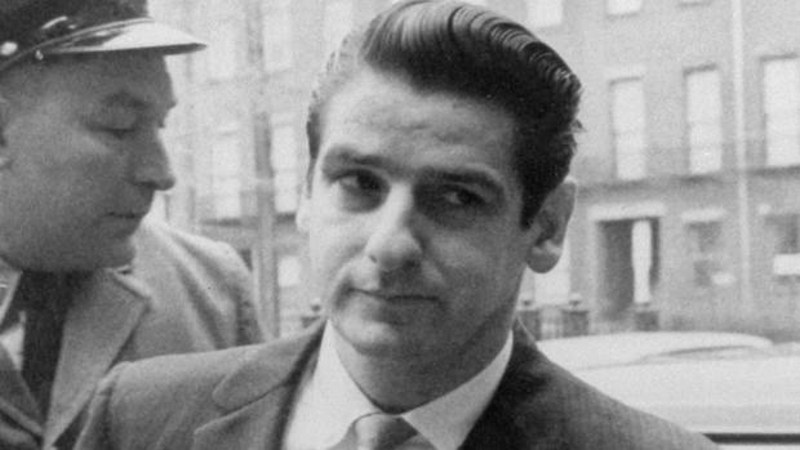
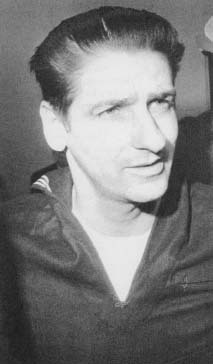
Albert Henry DeSalvo remains one of the most polarizing figures in American criminal history, best known as the man who confessed to being the "Boston Strangler." Between 1962 and 1964, thirteen women were murdered in the Boston area, crimes that DeSalvo claimed responsibility for while imprisoned on unrelated charges. Although he was never officially tried for the murders, modern DNA evidence in 2013 finally linked him to the last victim, Mary Sullivan, providing a partial resolution to a decades-old mystery.
The Crimes that Paralyzed Boston (1962–1964)
The series of murders attributed to the Boston Strangler began in June 1962 and continued through January 1964. These crimes were characterized by a specific and terrifying Modus Operandi (MO). Most of the victims were single women, ranging in age from 19 to 85, who were found strangled in their apartments with no signs of forced entry. The killer often used the victims' own clothing—stockings, bras, or scarves—to fashion elaborate ligatures, often tied with a distinctive decorative bow.
The atmosphere in Boston during this period was one of pure hysteria. The "Phantom of Boston," as the press initially called the killer, seemed able to vanish into thin air. Women across the city began installing multiple locks on their doors, purchasing tear gas, and refusing to open their homes to strangers. Despite the heightened security, the killer continued to find his way inside. The lack of forced entry suggested a killer who was either extremely charming or possessed a believable ruse to gain access to private residences.
The victims included:
- Anna Slesers (55)
- Mary Mullen (85)
- Nina Nichols (68)
- Helen Blake (65)
- Ida Irga (75)
- Jane Sullivan (67)
- Sophie Clark (20)
- Patricia Bissette (23)
- Mary Brown (69)
- Beverly Samans (23)
- Evelyn Corbin (58)
- Joann Graff (23)
- Mary Sullivan (19)
The Criminal Evolution of Albert DeSalvo
Before becoming the primary suspect in the Strangler case, Albert DeSalvo had a documented history of sexual deviancy and property crimes. Understanding his transition from a "nuisance" criminal to a suspected serial killer is essential for analyzing the validity of his confessions.
The Measuring Man
In the late 1950s, DeSalvo operated under the guise of the "Measuring Man." He would knock on women's doors claiming to be from a modeling agency. Using a professional demeanor and a tape measure, he would take the women's measurements, often touching them inappropriately under the pretext of his "job." This phase of his criminal career demonstrated his ability to manipulate victims through a non-threatening persona, a trait that would later be associated with the Boston Strangler's ability to enter homes without force.
The Green Man
By the early 1960s, DeSalvo’s behavior escalated into the "Green Man" series of crimes. Wearing green work trousers, he would enter apartments—often through unlocked doors or by posing as a maintenance worker—and tie up his victims before sexually assaulting them. Unlike the Boston Strangler murders, the Green Man victims were usually left alive. DeSalvo was eventually arrested for these crimes in November 1964. It was during his psychiatric observation at Bridgewater State Hospital that he began the conversations that would link him to the 13 murders.
The Confession and the Role of F. Lee Bailey
The confession of Albert DeSalvo is one of the most controversial moments in legal history. While at Bridgewater, DeSalvo met George Nassar, a fellow inmate who was a highly intelligent convicted murderer. DeSalvo began detailing the Boston Strangler murders to Nassar, who then contacted his attorney, the famed F. Lee Bailey.
Bailey saw an opportunity to utilize DeSalvo's confession to secure a "not guilty by reason of insanity" verdict for the Green Man charges, which would ensure DeSalvo remained in a psychiatric facility rather than a standard prison. In 1965, DeSalvo provided a series of taped confessions to Bailey and the authorities. He described the interiors of the victims' apartments, the specific ligatures used, and the positions of the bodies with a level of detail that many investigators believed only the killer could know.
However, the confession was not without its flaws. DeSalvo's descriptions of some victims' physical characteristics were inaccurate, and there were discrepancies regarding the timing of certain events. Furthermore, the "Strangler Bureau," a special task force led by Attorney General Edward W. Brooke, found no physical evidence—fingerprints, blood, or hair—linking DeSalvo to the crime scenes. Because the confession was made as part of a legal strategy and lacked corroborating physical evidence at the time, the Commonwealth of Massachusetts chose not to prosecute him for the murders, fearing a trial might result in an acquittal or a successful insanity plea.
Legal Outcomes and the 1967 Trial
In 1967, Albert DeSalvo went to trial, but not for the Boston Strangler murders. He was tried for the "Green Man" offenses: armed robbery, assault, and sex acts. F. Lee Bailey attempted to use the Strangler confessions as evidence of DeSalvo's uncontrollable "irresistible impulse" and insanity. Bailey’s goal was to have DeSalvo committed to a mental institution for life, where he could be studied by psychiatrists.
The prosecution, however, argued that DeSalvo was a calculating criminal who knew exactly what he was doing. The jury agreed with the prosecution, finding DeSalvo sane and guilty of the Green Man crimes. He was sentenced to life in prison. This legal maneuver effectively "shelved" the Boston Strangler case. The public was led to believe the killer was behind bars, even though no one had been convicted of the 13 homicides.
Death at Walpole State Prison
On November 25, 1973, Albert DeSalvo was found stabbed to death in the infirmary of Walpole State Prison (now MCI-Cedar Junction). He had been moved from the general population to the infirmary for protection after reportedly becoming a target of other inmates. He was stabbed sixteen times in the heart.
His murder remains officially unsolved, though it is widely believed to have been a "hit" sanctioned by prison gangs. Some theories suggest DeSalvo was killed because he was attempting to recant his confessions, which might have brought unwanted police attention back to the prison system or implicated others. Others believe his death was simply the result of prison politics and his own boastful nature, which often irritated fellow inmates.
Forensic Breakthroughs: The 2013 DNA Evidence
For decades, the case rested on DeSalvo’s contested confession. Many, including some investigators and the families of the victims, believed the "Strangler" was actually multiple people and that DeSalvo was a "pathological confessor" seeking fame. This changed in 2013 when the Boston Police Department and the Suffolk County District Attorney’s Office announced a major breakthrough.
Using modern Y-STR DNA testing, forensic scientists compared DNA found at the 1964 crime scene of Mary Sullivan with DNA obtained from a water bottle used by DeSalvo’s nephew. This produced a "familial match" that excluded 99.9% of the male population. To confirm the link, authorities exhumed Albert DeSalvo’s body from Puritans Lawn Memorial Park.
| Forensic Comparison | 1964 Evidence (Mary Sullivan) | 2013 Forensic Result |
|---|---|---|
| Evidence Type | Seminal fluid on a blanket | DNA Profile Extraction |
| Initial Testing | ABO Blood Typing (Inconclusive) | Y-STR DNA Analysis |
| Matching Source | N/A | DeSalvo's Exhumed Remains |
| Certainty Level | Unknown | 99.9% Probability Match |
| Legal Status | Open Cold Case | Confirmed Forensic Link |
The DNA extracted from DeSalvo's remains was a perfect match for the evidence found on Mary Sullivan. This provided the first and only piece of biological evidence linking DeSalvo to any of the 13 victims. While it technically only proved he killed Mary Sullivan, many investigators view it as a validation of his entire confession, arguing that if he killed the last victim, it is highly probable he was responsible for the others.
Lingering Doubts and the Multi-Killer Theory
Despite the 2013 DNA results, the Boston Strangler case is not universally considered "closed." Critics of the single-killer theory point to several inconsistencies:
- The Victim Profile: The victims ranged from young students in their 20s to elderly women in their 80s. Serial killers typically have a much narrower "victim preference."
- The MO Variance: While ligatures were common, the level of violence and the specific nature of the sexual assaults varied significantly between the earlier elderly victims and the later younger victims.
- The Confession Errors: DeSalvo initially failed to identify the correct colors of the rooms where the murders occurred and struggled with the sequence of events until prompted by investigators.
- The "Measuring Man" Mismatch: DeSalvo’s known criminal history involved non-violent measurement scams and non-lethal sexual assaults. The leap to the brutal, ritualistic murders of the Strangler is considered an unusual escalation by some criminal profilers.
Some experts, including the original psychologist on the case, Dr. James Brussel, suggested there might have been two different killers—one targeting elderly women and another targeting younger women—whose crimes were later conflated by the media and DeSalvo’s broad confession.
Comparison of Victims and Evidence Status
The following table summarizes the status of the thirteen victims traditionally associated with the Boston Strangler.
| Victim Name | Date of Murder | Age | Method of Entry | Evidence Link |
|---|---|---|---|---|
| Anna Slesers | June 14, 1962 | 55 | Posed as maintenance | Confession only |
| Mary Mullen | June 28, 1962 | 85 | Natural/Heart attack* | Disputed |
| Nina Nichols | June 30, 1962 | 68 | Posed as maintenance | Confession only |
| Helen Blake | June 30, 1962 | 65 | Unlocked door | Confession only |
| Ida Irga | Aug 19, 1962 | 75 | Unknown | Confession only |
| Jane Sullivan | Aug 21, 1962 | 67 | Unknown | Confession only |
| Sophie Clark | Dec 5, 1962 | 20 | Ruse/Believable entry | Confession only |
| Patricia Bissette | Dec 31, 1962 | 23 | Unknown | Confession only |
| Mary Brown | Mar 6, 1963 | 69 | Unknown | Confession only |
| Beverly Samans | May 6, 1963 | 23 | Acquaintance/Ruse | Confession only |
| Evelyn Corbin | Sept 8, 1963 | 58 | Ruse | Confession only |
| Joann Graff | Nov 23, 1963 | 23 | Unknown | Confession only |
| Mary Sullivan | Jan 4, 1964 | 19 | Ruse | DNA Confirmed |
*Mary Mullen died of a heart attack during an apparent assault; DeSalvo confessed to her death, but it was initially ruled natural causes.
Frequently Asked Questions
Was Albert DeSalvo ever convicted of the Boston Strangler murders?
No. Albert DeSalvo was never charged or convicted for any of the thirteen murders. He was convicted of the "Green Man" crimes, which included armed robbery and sexual assault. The decision not to prosecute him for the murders was based on the lack of physical evidence at the time and the desire to keep him incarcerated for life via the other charges.
How did DNA finally prove DeSalvo was the killer?
In 2013, investigators used Y-STR DNA profiling to compare seminal fluid found at the Mary Sullivan crime scene with DNA from DeSalvo's exhumed body. The match was definitive, proving that DeSalvo had been at the scene and committed the assault. This was the first time in nearly 50 years that any physical evidence linked him to a "Strangler" victim.
Why do some people believe there were multiple stranglers?
The theory of multiple killers persists because the victims' age groups were very different (young vs. elderly) and the crime scenes showed varying degrees of forensic "organization." Some believe DeSalvo, a compulsive liar and fame-seeker, learned details of the crimes from fellow inmate George Nassar or from media reports and simply "took credit" for all of them to become famous.
What happened to the "Strangler" case after DeSalvo’s death?
For many years, the case remained in a legal limbo. While the Boston Police considered it "solved" based on the confession, the lack of a conviction meant the files remained technically open. The 2013 DNA evidence allowed the Suffolk County District Attorney to officially state that the mystery of Mary Sullivan’s death was solved, though the other twelve murders remain "officially" unsolved due to the lack of biological material to test.
Did F. Lee Bailey believe DeSalvo was guilty?
Yes, F. Lee Bailey remained convinced throughout his life that DeSalvo was the Boston Strangler. Bailey often cited DeSalvo’s knowledge of unpublicized details—such as the specific knots used in the ligatures—as proof that his client was the perpetrator. Bailey’s objective was to use this guilt to prove DeSalvo was mentally ill and required treatment rather than punishment.
Recommendations for Further Research
For those seeking to understand the intricacies of the Albert DeSalvo case as of 2026, it is recommended to consult the official archives of the Suffolk County District Attorney’s Office regarding the 2013 DNA findings. For a psychological perspective, the works of Dr. James Brussel, who provided the initial criminal profile, offer insight into the behavioral analysis of the era.
Researchers should also examine the 1967 trial transcripts to understand how the "Green Man" crimes were legally separated from the "Strangler" confessions. While the DNA link to Mary Sullivan is a cornerstone of the case, the remaining 12 murders continue to be a subject of forensic study and historical debate, representing a landmark transition from traditional investigative techniques to modern genetic confirmation.