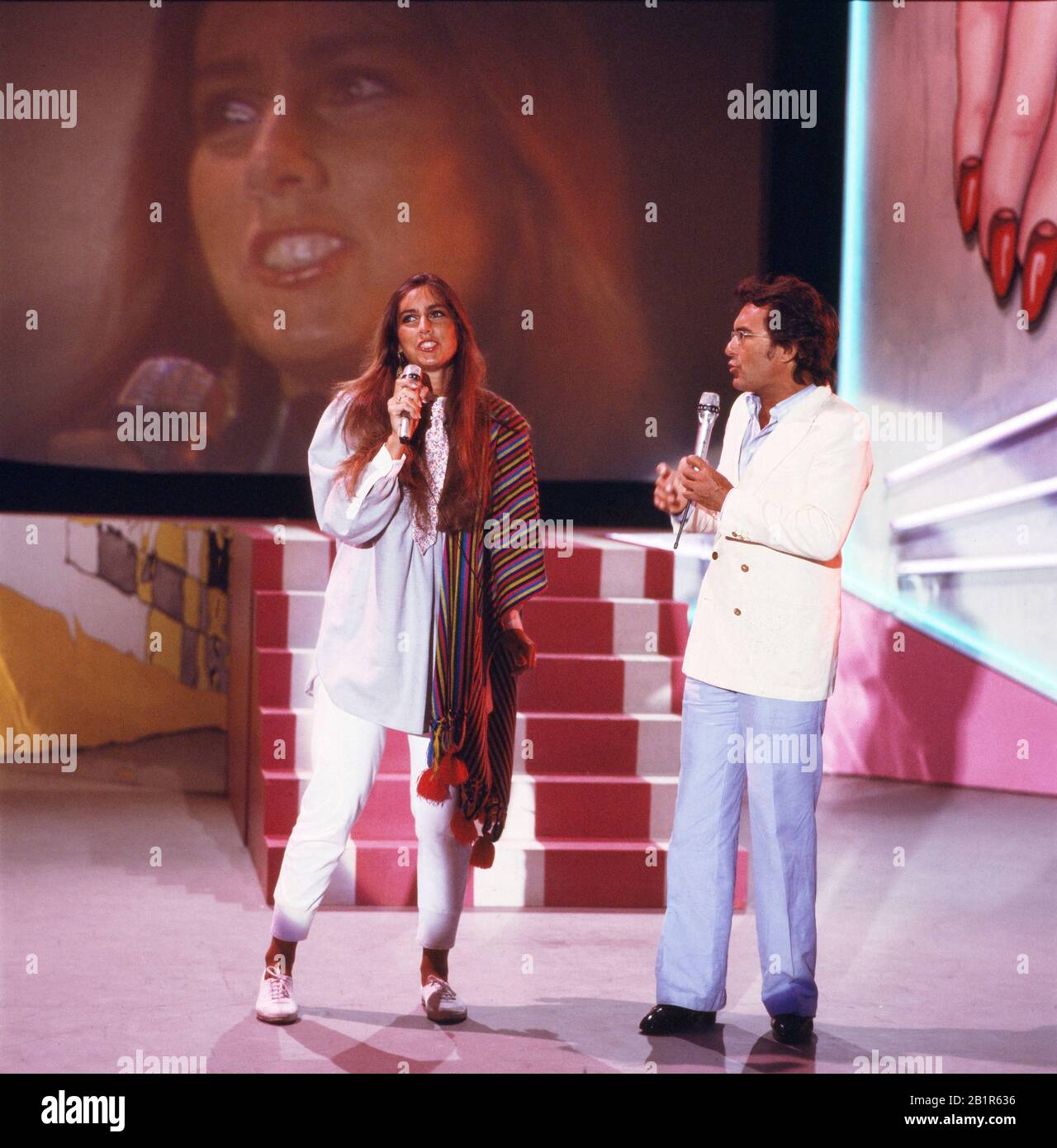
Al Bano and Romina Power remain one of the most commercially successful and iconic duos in European pop music history. Their catalog features romantic ballads, upbeat Euro-pop tracks, and socio-political anthems, headlined by timeless hits such as "Felicità," "Ci sarà," and "Sharazan." Combining Al Bano’s wide operatic tenor with Romina Power’s relaxed vocal tone, their songs dominated European and Latin American charts throughout the 1970s, 1980s, and 1990s.
The Musical Evolution of Al Bano and Romina Power
The musical partnership of Albano Carrisi (Al Bano) and Romina Power represents a unique convergence of background, vocal discipline, and stylistic influence. Before performing as a duo, Al Bano was already an established solo artist in Italy, celebrated for his dramatic bel canto tenor style, which he demonstrated on breakout singles like 1967's "Nel sole." Romina Power, the American-born daughter of Hollywood actors Tyrone Power and Linda Christian, brought an international, folk-influenced sensibility and a lighter vocal touch to the collaboration.
The pair met in 1967 on the film set of Nel sole, a movie based on Al Bano’s hit single. They married in 1970, but their formal artistic identity as a duet emerged mid-decade. Their early recordings established a distinct call-and-response dynamic: Al Bano provided powerful, soaring climaxes, while Power delivered catchy, accessible melodic hooks and spoken-word passages.
Their collaborative sound evolved alongside European pop production trends:
- Mid-1970s: Acoustic, folk-pop, and traditional Italian balladry characterized by acoustic guitars and light orchestral arrangements.
- Early-to-Mid 1980s: Polished Euro-pop featuring synthesizer melodies, disco-influenced basslines, and punchy drum programming tailored for festival performances and radio playback.
- Late 1980s to 1990s: Orchestral pop anthems featuring dramatic choruses, complex sound staging, and lyrics addressing humanitarian and environmental themes.
Beyond their vocal chemistry, the duo’s international strategy relied heavily on recording dual-language releases. By re-recording their albums in Spanish alongside their Italian originals, Al Bano and Romina Power secured a massive audience across Spain, Mexico, Argentina, and the wider Latin American market.
The Breakthrough Era: Early Hits and Eurovision (1975–1981)
The musical duo officially debuted their joint recording career with the 1975 album Atto I. The album contained the hit single "Dialogo" (also released in Spanish as "Discusión"), which showcased their distinct vocal contrast. "Dialogo" introduced audiences to their signature thematic territory: romantic dialogue, domestic life, and structural harmonies built around Al Bano’s upper register.
| Year | Milestone |
|---|---|
| 1975 | "Dialogo" released; establishes formal musical partnership. |
| 1976 | Represent Italy at Eurovision with "We'll Live It All Again". |
| 1981 | "Sharazan" achieves massive chart success across Europe. |
Eurovision 1976: "We'll Live It All Again"
In 1976, the duo was selected to represent Italy at the Eurovision Song Contest held in The Hague, Netherlands. They performed "We'll Live It All Again (Noi lo rivivremo di nuovo)," a song written by Al Bano, Romina Power, and Detto Mariano.
Singing a blend of Italian and English, the pair delivered a reflective performance about nostalgic reflection and enduring personal connection. The track finished in seventh place, but its international distribution expanded their fan base into Central and Northern Europe.
The Breakthrough of "Sharazan" (1981)
While the late 1970s yielded steady album releases, the release of "Sharazan" in 1981 marked their transition into global hitmakers. Built around a recognizable synth-line and a folk melody, the song captured a sense of romantic escapism.
"Sharazan" topped the charts in Italy and achieved top-tier chart placements in Germany, Switzerland, and Austria. The Spanish adaptation helped establish the duo as mainstream pop figures in South America, setting the stage for their biggest success the following year.
The Golden Era: Sanremo Victories and Global Anthems (1982–1989)
The 1980s represented the peak of Al Bano and Romina Power’s commercial success, anchored by repeated appearances at the prestigious Sanremo Music Festival. During this decade, their recorded output balanced simple pop songs with expansive, anthemic ballads.
- "Sharazan" (1981)
- Int'l Hit
- Top 10 Euro
- "Felicità" (1982)
- Sanremo 2nd
- Global Smash
- "Ci sarà" (1984)
- Sanremo 1st
- Winner Italy
- "Libertà!" (1987)
- Social Anthem
- Chart Peak
"Felicità" (1982)
Released for the 1982 Sanremo Music Festival, "Felicità" (Happiness) finished in second place at the competition but emerged as the duo's signature song. Written by Dario Farina, Gino De Stefani, and Cristiano Minellono, the track features an upbeat tempo, synth-pop bass, and a refrain celebrating simple life pleasures.
"Felicità" sold millions of copies internationally. It hit the top of the charts across Europe and Latin America (as "Felicidad"). The song remains a cultural staple of 1980s Italian pop music, widely featured in films, television shows, and commercials worldwide.
"Ci sarà" (1984)
Two years after "Felicità," Al Bano and Romina Power returned to Sanremo in 1984 with "Ci sarà" ("There Will Be"). Unlike their previous attempt, "Ci sarà" won first place in the festival competition, gathering widespread public votes.
The song combined bright 1980s synthesizer production with an optimistic lyrical vision of the future. "Ci sarà" became another international chart-topper and consolidated their reputation for delivering infectious, hopeful pop music.
"Magic Oh Magic" (Eurovision 1985)
Following their Sanremo victory, the duo was selected once again to represent Italy at the 1985 Eurovision Song Contest in Gothenburg, Sweden. They performed "Magic Oh Magic," a synth-driven pop track. Like their 1976 entry, the performance earned seventh place, further supporting their tour dates across continental Europe.
"Sempre sempre" (1986)
In 1986, the duo released the album Sempre sempre, supported by its hit title track. "Sempre sempre" blended classic Italian melody with mid-1980s rhythmic arrangements. Featuring a melodic trade-off between Power’s verses and Al Bano’s vocal climaxes, the song became a concert staple and solidified their recording contract success with WEA Records.
"Nostalgia canaglia" and "Libertà!" (1987)
The year 1987 proved to be one of the duo's most artistic periods:
- "Nostalgia canaglia": Presented at the 1987 Sanremo Music Festival, where it took third place, this track features dramatic orchestral backing and a driving pop beat, exploring themes of longing and rootlessness.
- "Libertà!": The title track of their 1987 album shifted away from traditional romantic pop toward social commentary. Featuring grand choral arrangements and powerful vocal performances from Al Bano, "Libertà!" served as an anthem for human rights and political freedom during the final years of the Cold War.
"Cara terra mia" (1989)
Continuing their engagement with reflective, broader thematic material, the duo returned to Sanremo in 1989 with "Cara terra mia" ("My Dear Earth"). The track tackled environmental conservation and human stewardship of the planet, finishing third in the competition and showing their willingness to address contemporary societal issues within a pop structure.
Spanish-Language Success and International Catalog
A major factor in Al Bano and Romina Power's global legacy was their commitment to the Spanish-speaking market. Rather than relying on translated lyric sheets for fans, they systematically recorded complete Spanish vocal tracks for every major album release.
| Italian Title | Spanish Title |
|---|---|
| "Felicità" | "Felicidad" |
| "Sharazan" | "Sharazan" (Spanish vocal track) |
| "Ci sarà" | "Y será" |
| "Sempre sempre" | "Siempre siempre" |
| "Libertà!" | "Libertad" |
| "Nostalgia canaglia" | "Nostalgia canalla" |
| "Dialogo" | "Discusión" |
These versions were not literal translations; lyricists reworked the verses to fit Spanish poetic cadence while retaining the core themes of the originals. Consequently, tracks like "Felicidad" and "Siempre siempre" received extensive airplay on radio stations throughout Spain, Mexico, Colombia, and Argentina. The duo conducted multi-city tours across Latin America, performing in arenas and appearing on televised variety shows throughout the 1980s and early 1990s.
Complete Track Analysis: Highlighting Key Songs
To understand the scope of their catalog, it is helpful to examine the musical structure and historical background of their major works.
| Song Title | Year | Key Milestone / Context | Primary Vocal Style & Production Highlights |
|---|---|---|---|
| "Dialogo" | 1975 | Early Breakthrough | Folk-pop duet; acoustic guitar foundation. |
| "We'll Live It All" | 1976 | Eurovision (7th place) | Mid-tempo ballad; mixed Italian/English. |
| "Sharazan" | 1981 | European Chart-Topper | Synth-pop hook; prominent folk melody. |
| "Felicità" | 1982 | Sanremo (2nd place) | Fast-tempo Euro-pop; iconic dual chorus. |
| "Che angelo sei" | 1982 | Album Felicidà track | Melodic pop duet; soft vocal interplay. |
| "Ci sarà" | 1984 | Sanremo (1st place) | Upbeat synth-pop; anthem-style arrangement. |
| "Magic Oh Magic" | 1985 | Eurovision (7th place) | Mid-80s electronic pop; rhythmic hooks. |
| "Sempre sempre" | 1986 | Top-selling Title Track | Classic Italian pop ballad; wide vocal range |
| "Nostalgia canaglia" | 1987 | Sanremo (3rd place) | Dramatic pop chorus; orchestral accents. |
| "Libertà!" | 1987 | Social Anthem Single | Choir-backed epic; operatic tenor lead. |
| "Cara terra mia" | 1989 | Sanremo (3rd place) | Environmental anthem; dramatic dynamics. |
| "Oggi sposi" | 1991 | Late Sanremo Entry | Traditional Italian pop; light rhythm section |
Analytical Breakdown of Core Tracks
"Sharazan" (1981)
- Musical Structure: Set in a minor-to-major key transition, relying heavily on early Roland and Korg synthesizer patches paired with acoustic rhythm guitars.
- Vocal Dynamic: Power leads the verses in a clear vocal register, leading into Al Bano’s high sustained notes on the refrain.
- Lyrical Content: Romantic escapism, describing an idealized place where love reigns without conflict.
"Felicità" (1982)
- Musical Structure: Standard 4/4 Euro-pop structure operating at a driving tempo (approx. 130 BPM). The track features a recognizable synthesizer line that repeats throughout the verse transitions.
- Vocal Dynamic: Characterized by overlapping vocal lines where Romina sings the rhythmic verse counterpoints, and Al Bano delivers the broad melodic hooks.
- Lyrical Content: A list song detailing everyday moments of joy—a warm breeze, a handwritten note, communal meals, and peace.
"Libertà!" (1987)
- Musical Structure: Built on a slow-building crescendo, transitioning from a delicate keyboard opening into a full orchestral arrangement supported by a backbeat and mixed choir.
- Vocal Dynamic: Demonstrates Al Bano's full vocal range, utilizing his operatic chest voice to project above the choral backing. Romina provides soft, grounding verses that build emotional contrast.
- Lyrical Content: A call for universal human freedom, dignity, and the removal of ideological barriers.
Musical Characteristics and Vocal Dynamics
The enduring appeal of Al Bano and Romina Power’s music rests on several defining stylistic elements:
Vocal Contrast
The duo's signature sound relies on contrast:
- Al Bano: Operatic background, wide vocal range, heavy vibrato, and dynamic power. His vocals deliver dramatic climaxes and emotional intensity.
- Romina Power: Soft vocal delivery, limited pitch variation, conversational tone, and melodic simplicity. Her voice provides stability, warmth, and accessibility.
This vocal pairing allowed their songs to appeal to fans of classical Italian musica leggera as well as lovers of mainstream international pop.
- Al Bano: Operatic Tenor
- Romina Power: Folk/Pop Alto
- Accessible Euro-Pop
Songwriting and Production Collaborations
The duo collaborated with top-tier Italian songwriters, arrangers, and producers, including:
- Dario Farina: Co-writer of "Felicità" and "Ci sarà," responsible for their signature mid-1980s synth-pop sound.
- Cristiano Minellono: Lyricist behind many of their biggest hits, known for crafting memorable refrains.
- Detto Mariano: Arranger who helped craft their 1970s acoustic-orchestral sound.
- Gian Piero Reverberi: Renowned conductor and founder of Rondo' Veneziano, who contributed orchestral arrangements to their complex late-1980s tracks.
1990s Transition, Personal Split, and Reunion
As the music industry shifted toward electronic dance music and rock-influenced pop in the early 1990s, Al Bano and Romina Power maintained a steady presence with albums like Voci d'incontro (1990) and Notte e giorno (1993). They continued competing at Sanremo, notably with "Oggi sposi" in 1991.
However, the tragic disappearance of their eldest daughter, Ylenia Carrisi, in New Orleans in early 1994 placed immense strain on their personal and professional lives. The pair released their final joint studio album of that era, Emozionale, in 1995. By the late 1990s, the duo ceased recording together, formally separating in 1999 and pursuing individual paths for over a decade. Al Bano continued a successful solo career focused on traditional Italian music and operatic pop, while Romina Power pursued writing, painting, and occasional acting projects.
The Historic Reunion (2013–Present)
After a 16-year musical separation, Al Bano and Romina Power reunited on stage in October 2013 for a series of concerts at the Crocus City Hall in Moscow. The success of these initial performances led to an international reunion tour.
| Year | Highlight |
|---|---|
| 2013 | First joint performance in 16 years (Moscow, Russia). |
| 2015 | Guest performance at Sanremo; huge television viewership ratings. |
| 2017–2020 | International tours across Europe and the Americas. |
| 2020 | Guest appearance at Sanremo introducing new duet "Raccogli l'attimo". |
In 2015, they returned to the Sanremo Music Festival stage as guest stars, performing a medley of "Felicità," "Sharazan," and "Ci sarà." Their appearance set television rating records for the festival broadcasts. In 2020, they released a new joint single, "Raccogli l'attimo" ("Seize the Moment"), written by Cristiano Malgioglio and Antonio Summa, demonstrating their sustained chemistry and global audience appeal.
Recommended Discography Listening Guide
For listeners seeking to explore the catalog of Al Bano and Romina Power, the following curated progression offers a comprehensive tour of their work:
Phase 1: The Essential Hits (Starter Tracklist)
- "Felicità" (1982) – The definitive Euro-pop anthem.
- "Ci sarà" (1984) – Sanremo-winning synth-pop track.
- "Sharazan" (1981) – The international breakout hit.
- "Sempre sempre" (1986) – Classic dramatic romantic ballad.
Phase 2: Dramatic and Social Anthems
- "Libertà!" (1987) – Orchestral pop anthem featuring choral arrangements.
- "Nostalgia canaglia" (1987) – High-energy festival track showcasing Al Bano's upper vocal register.
- "Cara terra mia" (1989) – Environmental pop anthem.
Phase 3: International & Spanish Editions
- "Felicidad" (1982) – Iconic Spanish variation.
- "Discusión" (1975) – Spanish adaptation of their debut single "Dialogo."
- "Siempre siempre" (1986) – Popular Latin American radio edit.
Frequently Asked Questions
What is Al Bano and Romina Power's most famous song?
Their most famous song is "Felicità," released in 1982. It placed second at the 1982 Sanremo Music Festival, sold millions of copies worldwide, topped charts across Europe and Latin America, and remains a defining icon of 1980s Italian pop music.
Did Al Bano and Romina Power ever win the Sanremo Music Festival?
Yes. They won first place at the Sanremo Music Festival in 1984 with the song "Ci sarà." They also achieved second place in 1982 ("Felicità") and third place in both 1987 ("Nostalgia canaglia") and 1989 ("Cara terra mia").
How many times did they compete in the Eurovision Song Contest?
Al Bano and Romina Power represented Italy at the Eurovision Song Contest twice:
- In 1976 with "We'll Live It All Again (Noi lo rivivremo di nuovo)," finishing 7th.
- In 1985 with "Magic Oh Magic," also finishing 7th.
Why are their songs so popular in Spanish-speaking countries?
The duo systematically re-recorded their albums in Spanish throughout their peak years. By tailoring lyric adaptations specifically for Spanish-speaking audiences, singles like "Felicidad," "Sharazan," and "Siempre siempre" received extensive radio play and sales recognition across Spain and Latin America.
What vocal range does Al Bano sing?
Al Bano is a dramatic pop tenor with a strong operatic background. He is known for his ability to sustain powerful notes in his upper chest register, a stark contrast to Romina Power's softer, lighter alt-pop vocal style.
Final Recommendation: Next Steps for Collectors and Listeners
To fully appreciate Al Bano and Romina Power's musical legacy:
- Start with Compilation Works: Beginners should explore official compilation releases such as Le più belle canzoni di Al Bano & Romina Power or The Best of Al Bano & Romina Power, which contain remastered versions of their Sanremo and Eurovision entries.
- Explore Spanish Catalog Versions: For listeners interested in cross-cultural adaptations, listening to Spanish-language albums like Felicidad (1982) provides insight into their vocal versatility and international production choices.
- Watch Live Performances: Viewing historical archive footage of their 1982 and 1984 Sanremo Music Festival performances through official Rai broadcasting archives offers a clear look at their stage dynamic during the peak of their global popularity.