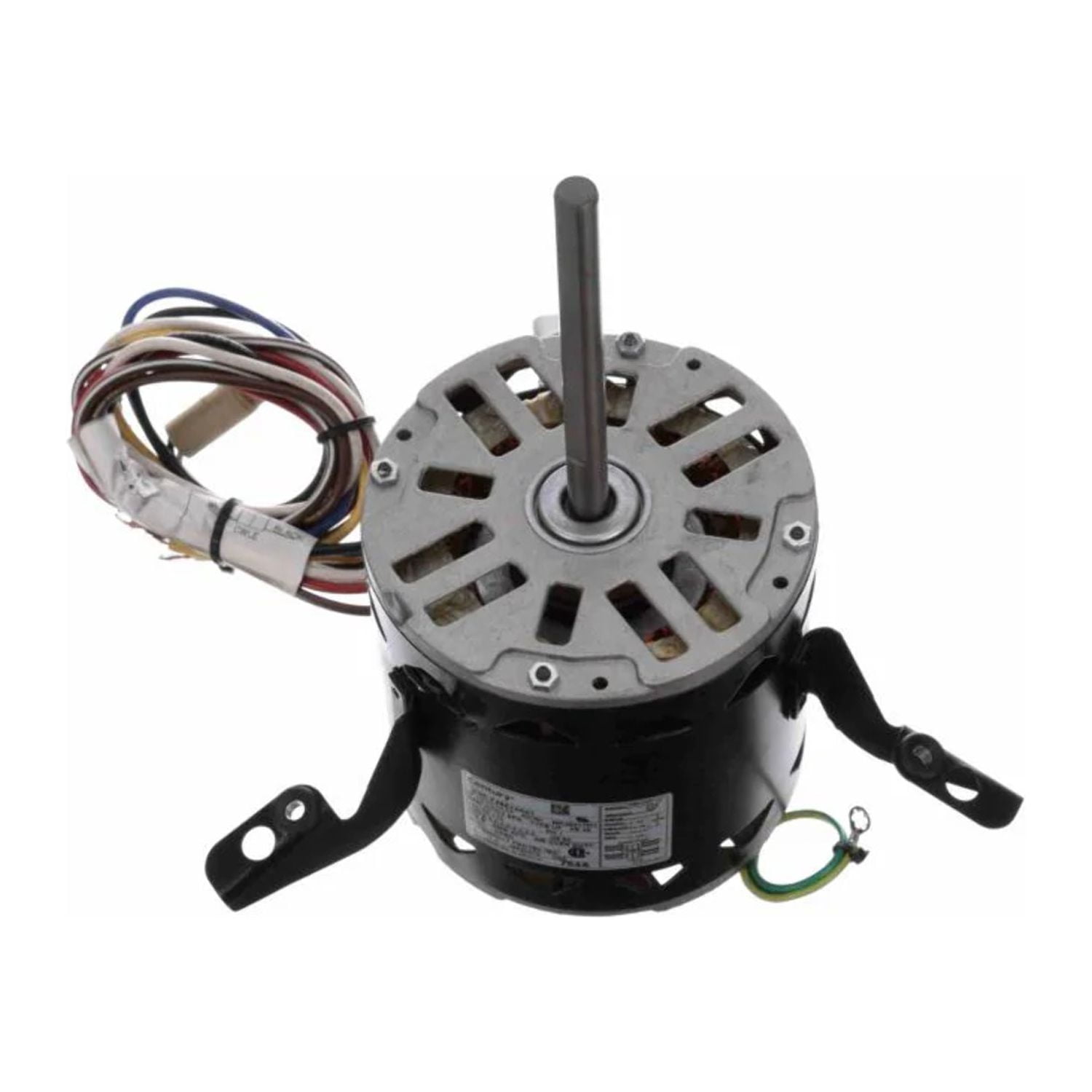
Replacing an air conditioning motor in 2026 typically costs between $300 and $1,500, with a national average of approximately $650 to $900. The final price depends heavily on whether you are replacing an indoor blower motor or an outdoor condenser fan motor, the motor’s efficiency rating (PSC vs. ECM), and local labor rates.
Navigating the costs of HVAC repairs can be daunting, especially when a system failure occurs during a heatwave. Understanding the components involved, the technology driving your unit, and the market conditions of 2026 is essential for making an informed financial decision. This guide breaks down every variable of air conditioning motor costs to help you budget for repairs or decide if a full system replacement is more economical.
Understanding the Primary Types of AC Motors
To understand the cost, you must first identify which motor has failed. An air conditioning system generally utilizes two primary motors: the condenser fan motor and the blower motor. While they perform similar mechanical functions—moving air—their specifications, locations, and replacement complexities differ significantly.
The Condenser Fan Motor (Outdoor Unit)
Located in the outdoor condensing unit, this motor is responsible for turning the fan blades that pull air through the condenser coils. This process dissipates the heat removed from your home into the outside environment. Because it is exposed to the elements, these motors are designed to be weather-resistant. In 2026, replacing a condenser fan motor generally falls on the lower end of the pricing spectrum, often ranging from $300 to $700 including labor.
The Blower Motor (Indoor Unit)
The blower motor is located inside your furnace or air handler. Its job is to circulate conditioned air through your ductwork and throughout the house. These motors are often more powerful and technically complex than condenser motors, especially in high-efficiency systems. A standard blower motor replacement typically costs between $500 and $1,500. If your system uses a high-end variable-speed motor, the cost can occasionally exceed this range.
Technology Impact: PSC vs. ECM Motors
The single most significant factor in the price of the part itself is the technology the motor uses. As of 2026, the industry has largely shifted toward high-efficiency components to meet federal energy standards, making the distinction between PSC and ECM motors critical for homeowners.
Permanent Split Capacitor (PSC) Motors
PSC motors were the industry standard for decades. They are "single-stage" motors, meaning they are either 100% on or 100% off. While they are reliable and relatively inexpensive to replace ($150 to $400 for the part), they are less energy-efficient. In 2026, these are increasingly found in older systems or entry-level units. Their simplicity makes them easier and faster to install, which can also keep labor costs down.
Electronically Commutated Motors (ECM)
ECM motors are modern, high-efficiency components that use integrated electronics to vary their speed. By adjusting the airflow to the exact needs of the home, they significantly reduce energy consumption and improve indoor air quality. However, this technology comes at a premium. An ECM motor part can cost between $500 and $1,000, and because they often require specialized programming or configuration to match the specific HVAC controller, labor costs are also higher.
Comprehensive Cost Breakdown by Motor Category
The following table provides a detailed look at the estimated costs for various motor types and services in 2026. These figures include the cost of the part and the professional labor required for installation.
| Motor Type | Part Cost (Estimated) | Labor Cost (Estimated) | Total Replacement Cost |
|---|---|---|---|
| Standard Condenser Motor | $150 – $350 | $150 – $300 | $300 – $650 |
| OEM Condenser Motor | $250 – $500 | $200 – $400 | $450 – $900 |
| Standard PSC Blower Motor | $200 – $450 | $250 – $450 | $450 – $900 |
| Variable Speed (ECM) Blower | $600 – $1,200 | $300 – $600 | $900 – $1,800 |
| Dual-Shaft Blower Motor | $300 – $600 | $300 – $500 | $600 – $1,100 |
Note: Prices may vary based on brand-specific requirements (e.g., Carrier, Trane, Lennox) and regional economic factors.
Key Factors Influencing Total Replacement Costs
Several variables beyond the motor type will dictate the final invoice from your HVAC contractor. Being aware of these can help you avoid "sticker shock."
1. Warranty Status
This is the most impactful factor for out-of-pocket expenses. Most major HVAC brands offer a 5-to-10-year limited parts warranty. If your system is still under warranty, the motor itself may be covered at no cost to you. However, homeowners are almost always responsible for the labor charges, which can still range from $200 to $600 depending on the complexity of the job. Always have your unit's serial number ready so the technician can verify warranty coverage with the manufacturer.
2. OEM vs. Aftermarket Parts
Original Equipment Manufacturer (OEM) parts are made specifically by the brand that built your AC unit. They are guaranteed to fit and function perfectly but are more expensive. Aftermarket or "universal" motors are designed to fit a wide range of systems. While they are more budget-friendly, they may require modifications to the mounting brackets or wiring, and some high-efficiency systems will not operate correctly without OEM electronic signals.
3. System Accessibility
Labor costs are calculated based on time. If your indoor blower motor is located in a cramped crawlspace, a steep attic, or a tightly confined closet, the technician will charge more for the additional time and physical difficulty involved in the extraction and installation.
4. Emergency and Seasonal Rates
HVAC companies often implement "peak season" pricing during the height of summer. If your motor fails on a weekend or holiday and you require an emergency dispatch, expect to pay a premium service fee ranging from $150 to $300 just for the technician to arrive at your door, in addition to the standard repair costs.
Signs Your AC Motor is Failing
Early detection of a failing motor can sometimes prevent a total system shutdown and allow you to schedule a repair during normal business hours, saving you money on emergency fees.
- Unusual Noises: Squealing or screeching often indicates that the bearings inside the motor are failing. A heavy clanking or banging sound might suggest a loose blower wheel or fan blade that is putting undue stress on the motor shaft.
- The Smell of Burning: If you detect a pungent, electrical burning odor coming from your vents or the outdoor unit, the motor windings may be overheating or "shorting out." This is a fire hazard; you should shut down the system immediately.
- Poor Airflow: If you hear the system kick on but feel very little air coming from the registers, the blower motor may be struggling to reach its required RPMs or may have stopped entirely.
- Intermittent Operation: A motor that starts and then quickly shuts off is likely "thermaling out." This happens when the motor gets too hot and its internal safety switch cuts power to prevent a fire. This is a clear sign that the motor is at the end of its lifespan.
- Increased Energy Bills: A failing motor has to work much harder to move air, drawing more amperage and spiking your monthly utility costs.
Professional Labor vs. DIY: A Risk Analysis
While the prospect of saving $300 to $600 in labor might tempt some homeowners to attempt a DIY motor replacement, this is a high-risk endeavor for several reasons:
- Electrical Hazards: AC motors are connected to high-voltage power lines. Furthermore, they are paired with start capacitors that store a lethal electrical charge even when the power is turned off. Handling these without proper training and tools (like a capacitor discharge tool) is dangerous.
- Diagnostic Accuracy: Often, a motor that won't start isn't actually broken; it may just have a blown capacitor (a $100–$200 repair) or a faulty control board. DIYers often spend hundreds on a new motor only to find the problem persists.
- Warranty Voidance: Most manufacturers explicitly state that their parts warranty is only valid if the component is installed by a licensed HVAC professional. A DIY installation could void the remaining warranty on your entire system.
- Precision Balancing: Blower wheels and fan blades must be perfectly aligned and balanced. An improper DIY installation can lead to vibrations that destroy the new motor's bearings within months.
Regional Price Variations and Economic Impacts in 2026
By 2026, the HVAC market has stabilized following the supply chain disruptions of the early 2020s, but prices remain higher than historical norms due to the complexity of newer refrigerants (like R-454B) and the associated hardware changes.
In metropolitan areas with high costs of living, such as New York City, San Francisco, or Chicago, labor rates for a licensed HVAC technician can exceed $250 per hour. Conversely, in more rural regions or smaller markets, rates may be closer to $120 to $150 per hour. Additionally, states with aggressive energy efficiency mandates may have higher equipment costs because they require the use of ultra-high-efficiency ECM motors, which are inherently more expensive to manufacture and replace.
How to Extend the Life of Your AC Motor
While motor failure is eventually inevitable, certain maintenance habits can push that failure date further into the future, potentially saving you the cost of replacement for several years.
- Change Filters Regularly: A clogged air filter forces the blower motor to work significantly harder to pull air through the system. This creates static pressure that overheats the motor. In 2026, with higher MERV-rated filters becoming common, frequent changes (every 30-90 days) are more important than ever.
- Clean the Condenser Coils: If the outdoor coils are covered in dirt, grass clippings, or dryer lint, the condenser fan motor must run longer and hotter to dissipate heat. Annual professional cleaning is recommended.
- Check the Capacitor: The capacitor is the "battery" that helps the motor start and run smoothly. Capacitors often fail before the motor. Replacing a weak capacitor during a routine tune-up can prevent the motor from burning out due to low voltage.
- Clear Debris: Ensure that shrubs, fences, or debris are at least 24 inches away from the outdoor unit to allow for proper airflow.
Frequently Asked Questions
Is it worth replacing a motor on a 15-year-old AC unit?
Generally, if your system is over 12–15 years old and faces a major repair like a blower motor replacement, it may be wiser to invest that money into a new, high-efficiency system. The cost of the motor is a significant down payment on a new unit that will come with a fresh 10-year warranty and lower monthly operating costs.
How long does it take a professional to replace an AC motor?
A standard condenser fan motor replacement usually takes 1 to 2 hours. A blower motor replacement is more complex and typically takes 2 to 4 hours, depending on the accessibility of the air handler and whether the blower wheel needs to be cleaned or replaced as well.
Can I just replace the motor bearings instead of the whole motor?
While it is technically possible to replace bearings in some older, larger industrial motors, most residential AC motors are "sealed units." They are not designed to be taken apart and repaired. In the modern HVAC industry, the labor cost to rebuild a small motor would exceed the cost of a new replacement.
Why is my ECM motor so much more expensive than my neighbor's motor?
Your neighbor likely has an older, single-speed PSC motor. If your system is a high-efficiency or variable-speed model, it requires an ECM. These motors contain complex circuit boards and permanent magnets, allowing them to save you 20-30% on your electric bill, but the replacement part cost reflects that advanced technology.
Does homeowners insurance cover AC motor replacement?
Standard homeowners insurance typically only covers HVAC damage if it is caused by a "covered peril," such as a lightning strike or a fallen tree. It does not cover mechanical failure due to normal wear and tear. However, if you have a home warranty, the motor replacement is likely covered, subject to your service call fee.
Practical Recommendation
Before committing to a full motor replacement, always request a comprehensive diagnostic report. Ask the technician to test the start/run capacitor and the control board first, as these are cheaper components that often mimic motor failure. If the motor truly is dead, verify your warranty status. If the unit is older than 12 years, obtain a quote for a full system replacement alongside the repair quote to determine which path offers the best long-term value.