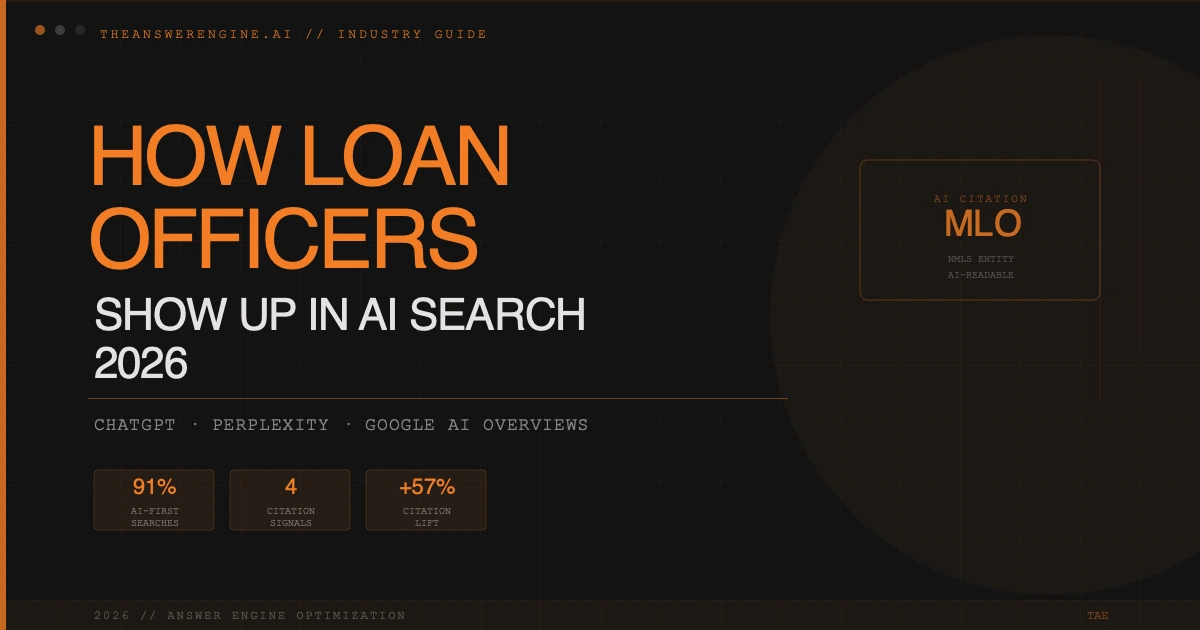
Artificial intelligence for mortgage loan officers provides a suite of automated tools designed to streamline document processing, enhance borrower communication, and improve risk assessment accuracy. By integrating machine learning models into loan origination systems, professionals can reduce manual data entry, accelerate underwriting cycles, and ensure compliance with evolving federal and state lending regulations.
The mortgage industry is currently defined by high-velocity competition and stringent regulatory requirements. For a loan officer, the primary constraint is often the time between application and closing. AI technologies address this by automating the ingestion of financial documentation—such as W-2 forms, bank statements, and tax returns—using Optical Character Recognition (OCR) and Intelligent Document Processing (IDP). These systems identify inconsistencies in borrower data long before a manual file review takes place, allowing loan officers to address missing information proactively rather than reactively.
The Technical Foundation of AI in Mortgage Lending
Modern AI implementation in the mortgage sector relies on several distinct technical layers. Understanding these is essential for loan officers who wish to leverage these tools effectively without compromising data security or regulatory adherence.
Intelligent Document Processing (IDP)
IDP is perhaps the most immediate application for loan officers. Traditional manual entry is prone to human error and consumes significant administrative bandwidth. AI-driven IDP platforms use neural networks to recognize document types, extract relevant fields (such as debt-to-income ratios or income verification figures), and populate the Loan Origination System (LOS) directly.
Predictive Analytics for Lead Scoring
AI models analyze historical loan performance and lead behavior to score prospective borrowers. By assessing data points such as credit history, employment stability, and behavioral engagement patterns, AI helps loan officers prioritize leads that have a statistically higher probability of closing. This shift from manual follow-ups to data-informed prioritization allows for more efficient allocation of time.
Natural Language Processing (NLP) for Borrower Communication
Conversational AI, often manifested as advanced chatbots or automated email assistants, handles routine inquiries regarding loan status, document checklists, and educational information. These systems use Natural Language Processing to parse the intent of a borrower’s request, providing accurate, compliant responses 24/7. This ensures that the loan officer remains the primary point of contact for complex advisory tasks while routine status updates are managed by the automated system.
Strategic Integration and Workflow Improvements
Integrating AI into a daily mortgage workflow requires a structured approach to prevent system friction. Loan officers should focus on modular adoption rather than wholesale replacement of established processes.
- Verification of System Compatibility: Before selecting an AI tool, verify that the platform integrates via API with your existing LOS (e.g., Encompass, LendingPad, or Calyx). Fragmented systems lead to data silos, which increase the risk of errors.
- Compliance Guardrails: AI tools must comply with the Truth in Lending Act (TILA), the Equal Credit Opportunity Act (ECOA), and state-specific fair lending laws. Ensure your AI provider maintains SOC 2 Type II certification and provides audit trails for every automated decision or data extraction.
- Data Hygiene: AI is only as effective as the data it processes. Implement a standardized data entry protocol at the point of origination. If borrowers provide inconsistent data, the AI’s error-handling processes must be calibrated to flag these for human review immediately.
Comparing AI Solutions for Loan Origination
Loan officers must evaluate software based on specific operational needs. The following table highlights core capabilities frequently sought in 2026 mortgage tech stacks.
| Feature Category | Manual Process | AI-Enhanced Process | Primary Benefit |
|---|---|---|---|
| Data Ingestion | Manual re-keying from PDFs | Automated OCR/IDP extraction | Reduced human error |
| Lead Prioritization | Chronological order | Predictive behavioral scoring | Higher conversion rates |
| Compliance Checks | Manual audit post-submission | Real-time automated flagging | Reduced loan repurchase risk |
| Status Updates | Phone calls/emails to loan officer | Automated portals/chatbots | Improved borrower experience |
Overcoming Common Implementation Challenges
One of the most common pitfalls when integrating AI is the "black box" phenomenon—where a system provides a result without a clear, auditable trail. For mortgage loan officers, this is a significant professional risk. You must ensure that any tool you use provides a "human-in-the-loop" interface, where the loan officer retains the final sign-off authority on all underwriting decisions.
Furthermore, training is critical. AI tools are not "set and forget." They require constant calibration. As interest rates fluctuate and lending guidelines evolve in 2026, the parameters within your AI models must be updated to reflect the current risk appetite of your lenders. Failure to monitor these inputs can lead to an increase in false positives or, more dangerously, inaccurate risk assessment.
Regulatory Considerations and Fair Lending
Fair lending remains the cornerstone of the mortgage industry. AI models, particularly those using machine learning for underwriting, can inadvertently introduce bias if the training data contains historical disparities. Loan officers and their institutions are legally obligated to ensure that AI algorithms are transparent and non-discriminatory.
Regulators, including the Consumer Financial Protection Bureau (CFPB), have emphasized that the use of technology does not absolve the lender of responsibility. You must verify that your vendor provides an explainability report for any automated adverse action or decision. If the AI denies a borrower, you must be able to articulate the specific, non-discriminatory reasons for that denial.
Frequently Asked Questions
1. Does using AI for loan processing replace the need for an underwriter? No. AI is designed to augment the capabilities of underwriters and loan officers by handling repetitive tasks and preliminary data analysis. The human element—interpreting unique financial circumstances and managing the borrower relationship—remains indispensable in 2026.
2. Is it safe to upload sensitive borrower documents to an AI platform? Safety depends on the provider’s security architecture. You must use platforms that employ end-to-end encryption and meet industry-standard security benchmarks such as ISO 27001 or SOC 2. Always verify that your contract includes specific provisions regarding data ownership and privacy.
3. How do I know if an AI tool is compliant with fair lending laws? Compliance is verified through documentation and regular testing. Ask your software provider for their "disparate impact testing" results and ensure they can provide a clear audit trail of how their model reaches its conclusions.
4. What is the biggest mistake loan officers make with AI? The biggest mistake is over-reliance on automation without adequate human oversight. AI should be used as a support tool to gather and organize information; it should not replace the professional judgment required to structure a loan package correctly.
5. How much does AI integration typically cost for an individual loan officer? Costs vary widely, ranging from monthly subscription fees for SaaS platforms to significant capital expenditure for enterprise-level LOS integrations. Many providers now offer tiered pricing based on the volume of loans processed monthly.
Next Steps for Implementation
To begin integrating AI into your mortgage practice, conduct a workflow audit to identify the most time-consuming manual processes, such as tax transcript retrieval or borrower document sorting. Once identified, research vendors that offer free trials or limited implementation periods. Prioritize platforms that offer robust customer support and comprehensive documentation regarding their API and security protocols. By starting with one small, high-impact area—such as document classification—you can build confidence and competency in AI-driven workflows before scaling to more complex predictive or decision-support tasks.