Finding affordable Florida health insurance plans requires understanding federal marketplaces, state-specific subsidies, income thresholds, and private carrier options. By evaluating your household size, expected income, and medical needs, you can secure comprehensive coverage through the federal Health Insurance Marketplace, explore specialized state programs, or utilize off-exchange alternatives while maximizing available financial assistance.
Securing reliable and cost-effective medical coverage is a top priority for residents across the Sunshine State. Whether you are self-employed, between jobs, retiring early, or simply looking for an alternative to your employer-sponsored insurance, navigating the healthcare landscape can feel overwhelming. With various plan tiers, network structures, and fluctuating premium costs, finding a policy that balances your healthcare needs with your monthly budget requires a strategic approach.
Understanding how the system works—from qualifying for subsidies to comparing Health Maintenance Organization (HMO) networks with Preferred Provider Organization (PPO) networks—empowers you to make informed decisions. This guide breaks down the mechanics of acquiring affordable health insurance in Florida, outlining your options, eligibility rules, enrollment timelines, and practical strategies for lowering your out-of-pocket medical expenses.
Understanding the Florida Health Insurance Landscape
Florida operates on the federal Health Insurance Marketplace, commonly known as Healthcare.gov, rather than running a state-based exchange. This means all eligible residents utilize the federal platform to shop, compare, and enroll in individual and family health plans. Because Florida has not expanded Medicaid under the Affordable Care Act (ACA) for able-bodied adults without dependents in the same manner as some other states, the private marketplace and specialized programs play an outsized role in providing coverage for low-to-middle-income residents.
The private health insurance market in Florida features several major national and regional carriers, including Blue Cross and Blue Shield of Florida (GuideWell/Florida Blue), Ambetter, Molina Healthcare, Aetna, Oscar Health, and UnitedHealthcare. Availability varies significantly by county. While an insurer might offer comprehensive, low-cost options in Miami-Dade or Broward County, they may have little to no network coverage in rural panhandle or Big Bend counties. Consequently, your geographical location serves as the primary determinant of which plans and prices are available to you.
Qualification and Eligibility for Subsidies
The single most effective way to secure affordable health insurance in Florida is by qualifying for financial assistance through the ACA. These subsidies come in two main forms: Advanced Premium Tax Credits (APTCs), which lower your monthly premium, and Cost-Sharing Reductions (CSRs), which lower your deductibles, copayments, and coinsurance when you visit the doctor or hospital.
Premium Tax Credits
Premium tax credits are calculated based on your estimated Modified Adjusted Gross Income (MAGI) relative to the Federal Poverty Level (FPL) for your household size. Under current federal guidelines, individuals and families earning between 100% and 400% (and temporarily beyond, subject to legislative extensions) of the FPL qualify for subsidies. If your income falls within these parameters, the federal government pays a direct portion of your monthly premium to the insurance carrier, capping the percentage of income you must spend on a benchmark Silver-tier plan.
Cost-Sharing Reductions
To qualify for CSRs—often called "extra savings"—you must enroll in a plan specifically within the Silver tier and have a household income between 100% and 250% of the FPL. These reductions dramatically lower your out-of-pocket financial liability when utilizing healthcare services. If you qualify for CSRs, a Silver plan can often provide better financial protection and lower out-of-pocket costs than a Gold or Platinum plan, making it the most cost-effective choice for qualifying low-income consumers.
Types of Health Insurance Plans Available in Florida
When shopping for affordable health insurance plans, you will encounter several acronyms that describe how care is delivered and reimbursed. Choosing the right network structure is vital for controlling both your monthly premiums and your unexpected medical bills.
Health Maintenance Organization (HMO)
HMO plans require you to receive care exclusively from doctors, hospitals, and facilities within the plan's contracted network. If you see an out-of-network provider, the plan generally covers nothing, leaving you responsible for the full bill. Additionally, HMOs typically require you to select a Primary Care Physician (PCP) and obtain formal referrals from that PCP before you can see a specialist. HMOs generally feature lower monthly premiums and lower out-of-pocket costs, making them popular choices for budget-conscious consumers who do not mind network restrictions.
Preferred Provider Organization (PPO)
PPO plans offer significantly more flexibility. You can see any doctor or specialist you choose without a referral, and you do not need to designate a PCP. While using out-of-network providers will cost more than staying in-network, the plan still provides partial coverage. This flexibility comes with a trade-off: PPO plans typically carry higher monthly premiums and higher deductibles than HMO counterparts.
Exclusive Provider Organization (EPO)
EPO plans represent a hybrid model. Like an HMO, they do not cover out-of-network care except in emergencies, meaning you must stay within the network to receive benefits. However, like a PPO, EPOs typically do not require you to select a primary care physician or obtain referrals to see specialists. EPOs are increasingly common in Florida's marketplace and offer a middle-ground option for consumers seeking moderate premiums with fewer administrative hurdles.
Marketplace Plan Tiers Explained
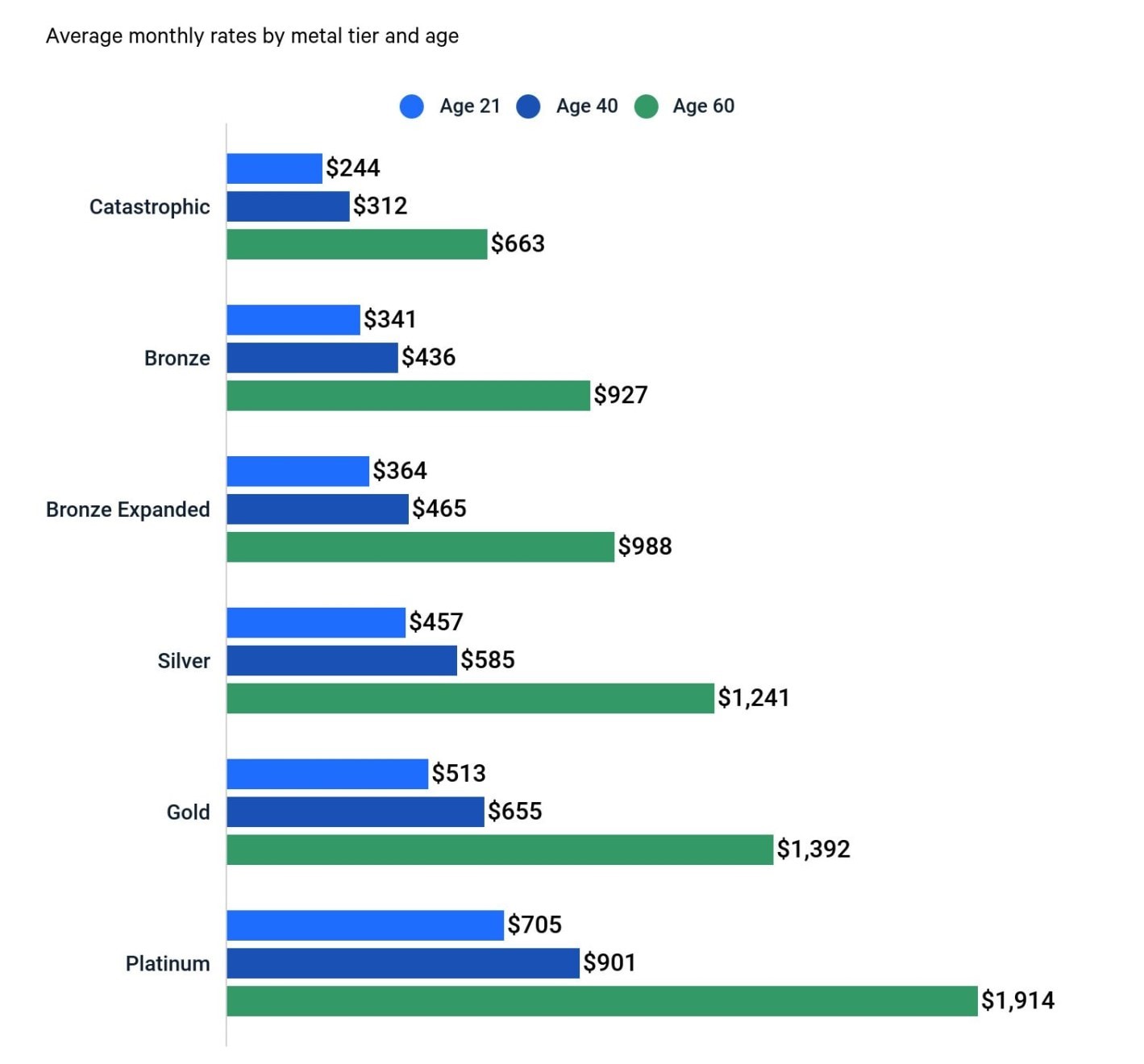
The ACA categorizes marketplace health insurance plans into metallic tiers based on how you and the insurance company split healthcare costs. The tiers do not reflect the quality of medical care; rather, they indicate the actuarial value—the percentage of total average healthcare costs the plan covers.
| Plan Tier | Approximate Cost Split (Insurance / You) | Best Suited For |
|---|---|---|
| Bronze | 60% / 40% | Young, healthy individuals wanting catastrophic protection and low monthly premiums. |
| Silver | 70% / 30% | Moderate users of healthcare; required tier to access Cost-Sharing Reductions. |
| Gold | 80% / 20% | Individuals with predictable, high-volume medical needs or regular prescription costs. |
| Platinum | 90% / 10% | Consumers with extensive medical needs who want minimal out-of-pocket costs at high monthly premiums. |
Enrollment Windows and Special Circumstances
Timing is critical when securing health insurance in Florida. Enrolling outside designated periods is generally prohibited unless you experience a qualifying life event.
The Open Enrollment Period (OEP)
The standard Open Enrollment Period for the federal marketplace runs annually from November 1 through January 15, with coverage typically taking effect on January 1 or February 1 depending on the exact date of enrollment. During this window, any eligible Florida resident can sign up for, change, or drop a health insurance plan without needing a specific life justification.
Special Enrollment Periods (SEPs)
If you miss the annual OEP, you cannot sign up for marketplace coverage unless you qualify for a Special Enrollment Period. Common qualifying life events include:
- Losing qualifying health coverage (such as aging off a parent's plan, losing a job-based policy, or losing Medicaid eligibility).
- Experiencing a household change (marriage, divorce, having a baby, or adopting a child).
- Moving to a new ZIP code or county that changes your available plan options.
- Experiencing a major change in household income that impacts your subsidy eligibility.
Generally, you have a 60-day window following the qualifying event to enroll in a new plan.
Off-Exchange Options and Alternative Coverages
While marketplace plans benefit from subsidies, some Florida residents may find that off-exchange plans—purchased directly from insurance carriers or through licensed brokers—better suit their specific situations.
Off-Exchange ACA-Compliant Plans
These plans meet all federal ACA requirements, meaning they cover essential health benefits and cannot deny coverage or charge more for pre-existing conditions. However, you cannot receive federal tax credits or subsidies for plans purchased entirely off-exchange. They are primarily utilized by individuals whose incomes exceed the subsidy threshold and who prefer a specific insurance carrier or network not heavily featured on the federal marketplace.
Short-Term Limited Duration Insurance (STLDI)
Short-term plans are designed to fill temporary gaps in coverage, such as when transitioning between jobs or waiting for Medicare eligibility. While these plans typically feature lower monthly premiums than ACA-compliant options, they come with substantial caveats:
- They are not required to cover pre-existing conditions.
- They often exclude essential health benefits like maternity care, mental health services, or prescription drugs.
- Federal regulations limit their maximum initial duration and renewal periods to prevent them from being used as permanent health insurance solutions.
Direct Primary Care (DPC) and Health Sharing Ministries
Direct Primary Care is an arrangement where patients pay a flat monthly membership fee directly to a primary care doctor for unlimited access to routine care, basic labs, and check-ups. While DPC does not cover hospitalization, surgery, or major medical emergencies, it can be paired with a high-deductible catastrophic plan or a health-sharing ministry to build an alternative coverage strategy. Health-sharing ministries are faith-based non-profit organizations where members pool funds to share medical expenses; however, they are not insurance, are not regulated by state insurance commissioners, and frequently exclude pre-existing conditions.
Step-by-Step Guide to Finding and Enrolling in a Plan
Navigating the enrollment process efficiently ensures you do not miss deadlines or leave financial assistance on the table. Follow these steps to secure coverage:
- Gather Necessary Financial Documents: Collect your most recent federal tax return, W-2 forms, pay stubs, and estimates of expected household income for the upcoming coverage year. Accurate income reporting prevents surprise tax reconciliation bills.
- Visit the Official Platform: Navigate directly to Healthcare.gov to create or log into your account. Avoid unauthorized lead-generation websites that sell your contact information to aggressive telemarketers.
- Complete the Application: Enter your household size, ZIP code, and estimated income. The system will instantly evaluate your eligibility for tax credits and determine whether you or your children qualify for Medicaid or the Florida KidCare program.
- Compare Plans and Networks: Review available options in your county. Check the provider directories to ensure your preferred doctors, hospitals, and specialists participate in the network. Review the "Summary of Benefits and Coverage" (SBC) to understand deductibles, copays, and prescription formularies.
- Select and Enroll: Choose the plan that best fits your medical and financial requirements. Complete the enrollment forms and make your first month's premium payment directly to the insurance carrier to activate your coverage.
Common Mistakes to Avoid
When shopping for affordable health insurance plans in Florida, minor oversights can lead to severe financial or coverage penalties. Avoid these common pitfalls:
- Underestimating or Overestimating Income: Inaccurate income reporting on your marketplace application can disrupt your coverage. Underestimating income means you may have to repay excess subsidies when filing your taxes. Overestimating income means you might miss out on monthly savings you were legally entitled to receive throughout the year.
- Focusing Solely on the Monthly Premium: A plan with a $50 monthly premium may seem attractive, but if it carries a $9,100 deductible and high copays, a single unexpected medical emergency will quickly wipe out those initial savings. Always calculate the total potential cost (annual premiums plus maximum out-of-pocket limits).
- Ignoring Prescription Formularies: Insurance companies maintain lists of covered medications called formularies, divided into tiers. If you rely on specialized medications, verify that your specific drugs are covered and check what tier they fall under before enrolling in a plan.
- Missing Deadlines: Missing the Open Enrollment window without a qualifying life event means waiting an entire year to secure comprehensive ACA coverage, leaving you vulnerable to medical debt.
Frequently Asked Questions
Can I get free health insurance in Florida?
Depending on your income and household size, you may qualify for zero-dollar or very low-cost premium plans through the marketplace after tax credits are applied. Additionally, Florida residents with very low incomes, pregnant women, or those caring for dependent children may qualify for state Medicaid or Florida KidCare programs.
Does Florida have state-specific health insurance subsidies?
No. Florida relies entirely on the federal Health Insurance Marketplace and federal tax credits established under the Affordable Care Act. There are no additional state-funded premium assistance programs for individual marketplace plans.
What happens if my income changes during the year?
You are legally required to report income changes, address changes, or household size adjustments to the marketplace within 30 days. The marketplace will recalculate your tax credits to ensure you are receiving the correct subsidy amount, protecting you from large tax penalties at the end of the year.
Are pre-existing conditions covered under Florida marketplace plans?
Yes. All ACA-compliant plans offered through the federal marketplace in Florida are mandated by federal law to cover pre-existing health conditions without charging higher premiums or denying coverage.
Can I enroll in a marketplace plan at any time of the year?
Generally, no. You can only enroll during the annual Open Enrollment Period (November 1 through January 15) unless you experience a qualifying life event that triggers a Special Enrollment Period.
Next Steps for Securing Your Coverage
To secure affordable health insurance in Florida, begin by reviewing your expected household income and compiling your financial documents. Visit Healthcare.gov during the open enrollment window or check your eligibility for a special enrollment period immediately if you have experienced a qualifying life event. Compare local HMO, PPO, and EPO options carefully, verifying that your preferred medical providers and prescription drugs are fully supported within your chosen network.