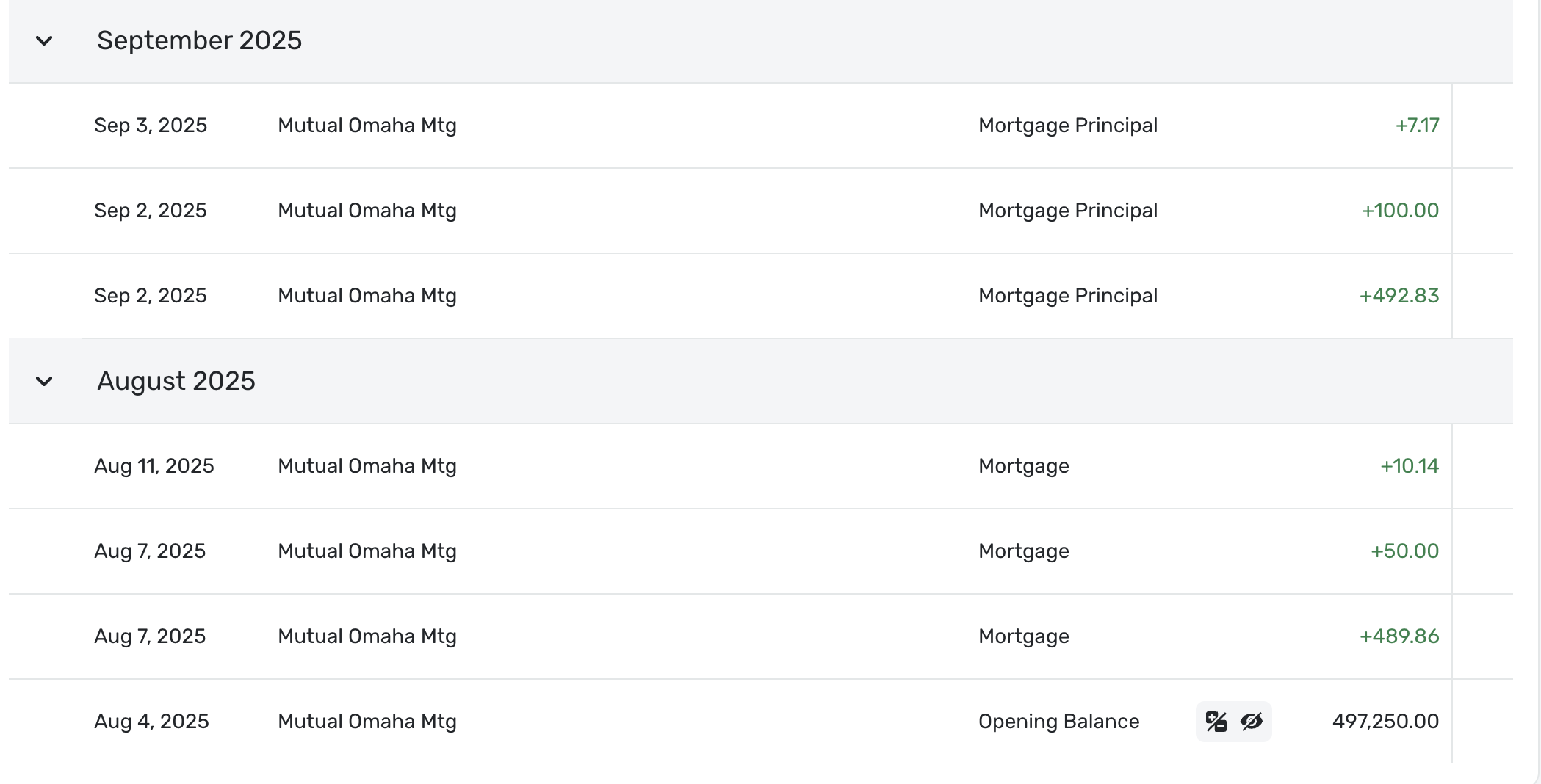
Calculating net worth accurately requires subtracting your total liabilities from your total assets. When you own a home with a mortgage, your primary residence functions as both a significant asset and a secured debt obligation. To determine your true financial position, you must record the current fair market value of the property as an asset and the remaining principal balance of the mortgage as a liability, resulting in an equity figure that reflects your actual ownership stake.
Understanding the Net Worth Formula
At its most fundamental level, net worth is a simple snapshot of your financial health. The equation is: Total Assets - Total Liabilities = Net Worth.
When you purchase a home, you gain an asset that theoretically appreciates over time, but you also take on a substantial long-term debt. Many individuals make the mistake of either excluding the home entirely because it is "where they live" or including only the purchase price rather than the current market value. To maintain an accurate picture, you must treat your home as a financial instrument that fluctuates in value, just like a stock portfolio or a retirement account.
The Asset Side: Fair Market Value
The asset portion of your home is not represented by what you paid for it years ago, nor is it represented by your tax-assessed value. Instead, you must use the Fair Market Value (FMV). FMV is the price the property would sell for in the current 2026 real estate market between a willing buyer and a willing seller.
You can estimate this by researching recent "comps" (comparable sales) in your neighborhood, utilizing online real estate platforms, or consulting with a licensed local appraiser. Because the real estate market is dynamic, you should revisit this valuation at least once annually to ensure your net worth statement remains grounded in reality.
The Liability Side: Remaining Principal Balance
The liability portion is simpler to track but often misunderstood. It is not the total amount of interest you will pay over the life of the loan, nor is it the original loan amount. It is the current outstanding principal balance.
You can find this number by logging into your mortgage servicer’s online portal and checking your most recent monthly statement. It is critical to use the principal balance only. Do not include escrow payments for taxes or insurance in this figure, as those are operational costs of ownership rather than components of your debt obligation.
Why Equity is the Only Number That Matters
While your net worth statement lists the home as a full asset and the mortgage as a full liability, the net result—your home equity—is the portion of the asset that you truly "own."
If you were to sell your home tomorrow, you would need to pay off the mortgage balance using the proceeds from the sale. After accounting for transaction costs like realtor commissions, title fees, and transfer taxes, the remaining amount is what you would actually walk away with. Consequently, tracking your home equity is often more useful for personal financial planning than tracking the raw asset value alone.
Comparison of Net Worth Valuation Methods
| Method | Focus | Pros | Cons |
|---|---|---|---|
| Gross Asset Method | Full market value minus full debt | Shows total leverage | Can be volatile with market swings |
| Equity Only Method | Market value minus debt and estimated selling costs | Reflects actual liquidity | Ignores the asset’s potential for appreciation |
| Historical Cost Method | Purchase price minus principal paid | Very stable; non-speculative | Drastically underestimates wealth in rising markets |
The "Gross Asset Method" is the industry standard for personal finance tracking because it treats real estate similarly to other leveraged assets. However, sophisticated investors often subtract estimated selling costs—typically 6% to 10% of the home's value—to provide a more conservative "liquidation value" for their net worth.
Common Pitfalls and How to Avoid Them
Adding a home to your net worth is deceptively simple, but several common errors can lead to an inflated or inaccurate sense of wealth.
Overestimating Market Value
Many homeowners base their net worth on "Zestimates" or optimistic listing prices in their neighborhood. If you base your asset value on the highest price a neighbor achieved for a renovated home while your home requires significant repairs, you are artificially inflating your net worth. Always aim for a conservative, realistic valuation.
Ignoring Closing Costs
When calculating the net value of your home for a long-term plan, remember that you cannot convert your home into cash for free. Selling a property involves significant friction. If you are calculating net worth for the purpose of retirement planning, it is prudent to apply a "liquidation haircut" to the asset value to account for the agent fees and closing costs you would incur if you had to sell.
Frequency of Updates
The housing market does not update daily like the stock market. Trying to update your home’s value every month is unnecessary and potentially counterproductive. A quarterly or annual update is sufficient to capture market trends without subjecting yourself to the psychological stress of minor, short-term market fluctuations.
The Role of Market Fluctuations
In 2026, real estate markets remain localized. While national headlines may suggest a trend, your specific zip code might tell a different story. If your local market experiences a downturn, your net worth will drop even if your mortgage principal is decreasing. This is the nature of being "long" on real estate.
It is important to view your home as a long-term store of value. Do not allow short-term market volatility to distract you from your broader financial goals, such as increasing your liquid savings or investing in retirement vehicles like a 401(k) or IRA.
Integrating Home Equity into Your Financial Strategy
Once you have correctly added your mortgage home to your net worth, the figure serves as a tool for informed decision-making.
- Leverage Ratios: Understanding your total net worth helps you determine your debt-to-equity ratio. If your home represents 90% of your net worth, you are heavily concentrated in real estate, which may present a risk if you need to access cash quickly during a market slump.
- Borrowing Power: If you consider a Home Equity Line of Credit (HELOC) or a cash-out refinance, knowing your accurate equity position is essential. Lenders will perform their own appraisal, but having your own data ensures you understand your eligibility before applying.
- Insurance Coverage: Your net worth is a measure of what you need to protect. Knowing the full replacement value of your home helps ensure you have adequate homeowner’s insurance, as rebuilding costs can sometimes exceed the market value of the property.
Frequently Asked Questions
Should I update my home value if I renovate?
Yes. Significant improvements—such as adding a bathroom, remodeling a kitchen, or replacing the roof—often increase the Fair Market Value of your home. When you complete such a project, adjust your asset value to reflect the increase in the property's potential sale price. Keep receipts and documentation for these improvements to justify the increase during your personal audits.
Does my escrow account count toward my net worth?
No. An escrow account is essentially a prepaid fund used to pay future taxes and insurance. While it is money that belongs to you, it is generally not included in personal net worth calculations because it is essentially a liability offset. Treat it as a wash; do not count the balance as an asset, and do not count the pending tax payment as a liability.
How do I handle interest-only or adjustable-rate mortgages?
The method remains the same: identify the current outstanding principal balance. Regardless of the loan structure, your net worth is only concerned with the actual debt owed to the lender at that moment. However, be aware that with interest-only loans, your principal balance will not decrease over time, meaning your equity will not grow unless the home value itself appreciates.
What if I have a second mortgage or HELOC?
You must include all liens against the property as liabilities. If you have a primary mortgage and a HELOC, your total liability for the property is the sum of both balances. Subtracting both from the current fair market value will give you your true equity position.
Is it better to ignore the home in net worth to be conservative?
Some financial planners suggest excluding the home to focus on "investable assets" (cash, stocks, bonds). While this provides a more accurate picture of your immediate liquidity, it ignores a massive part of your financial life. The most effective approach is to calculate two figures: your total net worth (including the home) and your liquid net worth (excluding the home). This gives you both a view of your total wealth and your ability to weather a financial emergency.
Final Recommendation
To maintain an accurate financial dashboard, establish a recurring calendar event to update your home’s value and your mortgage principal balance once per year. Use a conservative estimate for your property value, referencing recent sales of similar homes in your immediate area. By keeping these records current, you transform your home from an abstract concept into a clear, measurable component of your total wealth, allowing you to make better-informed decisions regarding your long-term financial future.