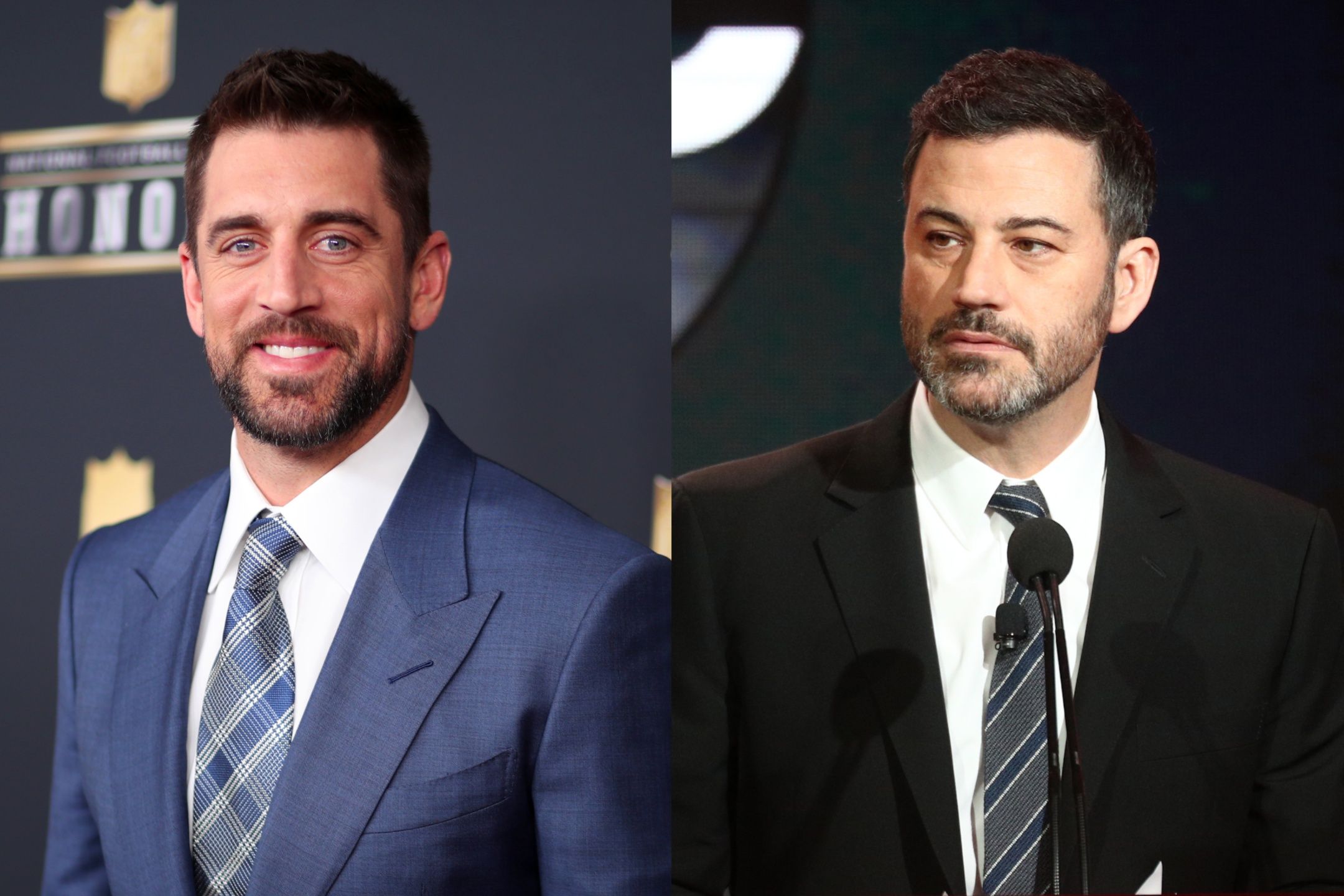
The public tension between NFL quarterback Aaron Rodgers and late-night host Jimmy Kimmel, which peaked in early 2024, centers on a heated exchange of comments regarding the "Epstein list" and a subsequent threat of legal action. The conflict originated from Rodgers’ remarks on The Pat McAfee Show and evolved into a highly publicized back-and-forth that highlighted the intersection of sports media, celebrity culture, and the consequences of public rhetoric.
The Genesis of the Conflict: Comments on The Pat McAfee Show
The dispute began on January 2, 2024, during a routine appearance by Aaron Rodgers on ESPN’s The Pat McAfee Show. During a segment discussing the impending release of court documents related to Jeffrey Epstein, Rodgers suggested that Jimmy Kimmel was hoping that the names of his associates would not be made public.
Rodgers’ phrasing implied a connection between the late-night host and the late financier Jeffrey Epstein. At the time, there was significant public discourse surrounding the unsealing of records from a defamation lawsuit involving Epstein and Ghislaine Maxwell. Rodgers, known for frequently discussing conspiracy-adjacent topics on the program, framed his comment as a warning to those "worried" about the list.
The clip went viral almost immediately, drawing condemnation from observers who noted that Kimmel had never been linked to Epstein in any legitimate investigative reports. For the audience of The Pat McAfee Show, the comment was seen by some as a characteristic "off-the-cuff" remark, while others interpreted it as a serious, defamatory accusation that transcended the typical boundaries of sports-talk banter.
Jimmy Kimmel’s Response and Threat of Litigation
Jimmy Kimmel responded to the remarks on the social media platform X (formerly Twitter) on January 2, 2024. He categorically denied having any association with Epstein and explicitly criticized Rodgers, labeling him a "delusional" individual. In his statement, Kimmel suggested that Rodgers’ comments were reckless and potentially dangerous, given the heightened political climate and the nature of the accusations.
Significantly, Kimmel’s response included a direct threat of legal action. He stated that Rodgers should keep his name out of his mouth, and that if the claims persisted, he would take the matter to court for defamation. This escalation marked a shift from a casual media spat to a potential legal confrontation.
Kimmel later addressed the incident on his show, Jimmy Kimmel Live!, providing a monologue that detailed his perspective on the incident. He emphasized the personal toll that such baseless claims can take and reaffirmed that he had never met, spoken to, or been associated with Jeffrey Epstein in any capacity.
The Role of ESPN and The Pat McAfee Show
The fallout placed ESPN and Pat McAfee in a difficult position. As a rights-holder for The Pat McAfee Show, ESPN faced criticism regarding the editorial oversight of the program. The network, which had faced challenges balancing the show’s "loose" format with corporate responsibility, saw the incident as a primary example of the risks associated with live, unscripted segments involving high-profile guests.
Pat McAfee addressed the situation during his show, attempting to clarify the context of the remarks. He stated that Rodgers was not making a factual accusation but was instead engaging in a "trash-talk" segment that had gone too far. McAfee noted that he understood why Kimmel was upset and acknowledged the intensity of the reaction.
ESPN executive Mike Foss issued a statement following the event, noting that the comments made by Rodgers were a mistake. This admission highlighted the tension between allowing the show its creative autonomy and maintaining the professional standards expected of the network.
Chronological Overview of Key Developments
Understanding the timeline of this conflict is essential to grasp why it remained in the public consciousness throughout early 2024.
| Date | Event | Significance |
|---|---|---|
| Jan 2, 2024 | Rodgers makes comments on The Pat McAfee Show. | The primary incident triggering the dispute. |
| Jan 2, 2024 | Kimmel responds via social media. | Escalation through a direct threat of legal action. |
| Jan 3, 2024 | McAfee addresses the controversy on his show. | The network attempts to frame the remarks as "trash talk." |
| Jan 8, 2024 | Kimmel addresses the situation in a monologue. | Final public word from the host on the specific incident. |
| Feb 2024 | Media discourse begins to dissipate. | The conflict shifts from a breaking news story to a historical media moment. |
Legal Implications and Defamation Law
The threat of a lawsuit brought the legal standard of "defamation" into the center of the conversation. In the United States, defamation requires a plaintiff to prove that a false statement of fact was made, that it was published to a third party, and that it caused harm to the plaintiff's reputation.
Public figures like Jimmy Kimmel face a higher burden of proof than private individuals. Under the New York Times Co. v. Sullivan standard, a public figure must prove "actual malice"—meaning the defendant knew the statement was false or acted with reckless disregard for the truth.
While the legal threat did not materialize into a formal lawsuit, the episode serves as a case study for celebrities and media personalities regarding the consequences of verbalizing unsubstantiated claims on national platforms. The incident demonstrates that even when framed as commentary or banter, remarks that touch upon criminal associations can trigger immediate legal pushback.
Impact on Sports Media Culture
The Aaron Rodgers and Jimmy Kimmel incident significantly influenced the evolving culture of sports talk radio and television. In recent years, the lines between sports analysis, lifestyle commentary, and political opinion have become increasingly blurred.
This transformation has created a new environment where athletes are given massive platforms to discuss topics beyond the playing field. While this format allows for authentic engagement, it also introduces substantial reputational risks. The Rodgers-Kimmel incident forced many media executives to reconsider the "live" nature of their programming and the necessity of having editorial safeguards in place when dealing with controversial subjects.
FAQs: Addressing Common Questions
Was there ever a formal lawsuit filed?
No. Despite the public threat of legal action, no formal defamation lawsuit was ever filed by Jimmy Kimmel against Aaron Rodgers. The situation remained in the realm of public debate and media commentary.
Did Aaron Rodgers apologize for the comments?
Rodgers did not offer a traditional apology. Instead, in subsequent appearances, he clarified that his comments were intended to highlight the public interest in the Epstein documents and were not meant to serve as a direct accusation against Kimmel.
Why was this considered a "safety" issue by Kimmel?
Kimmel expressed concern because unfounded accusations involving criminal behavior can incite harassment or threats from the public. He argued that equating a private citizen—or in this case, a public host—with a convicted sex offender is inherently damaging and potentially dangerous to the individual's safety.
How did ESPN handle the controversy?
ESPN distanced itself from the comments, with executive leadership stating that the remarks were inappropriate. The network utilized the incident to refine its internal guidelines regarding how controversial topics are handled on partner-produced shows.
What is the current status of the relationship between the two?
As of 2026, there is no indication of reconciliation between the two parties. The incident is viewed as a definitive rupture in their public rapport, marking a clear boundary where sports commentary met the consequences of tabloid-style speculation.
Next Steps for Consumers of Media Commentary
For followers of sports and entertainment media, the conflict serves as a reminder of the importance of media literacy. When high-profile figures engage in speculation or voice unverified claims on popular talk shows, it is critical to cross-reference their statements with reliable reporting. The incident underlines that the entertainment industry, while often blurred with news, does not always adhere to the same factual vetting processes as professional journalism.
Readers are encouraged to focus on primary sources when evaluating claims of criminality or public records, rather than relying on the commentary of television personalities, regardless of their platform. By maintaining a critical perspective, audiences can better navigate the landscape of modern celebrity discourse.