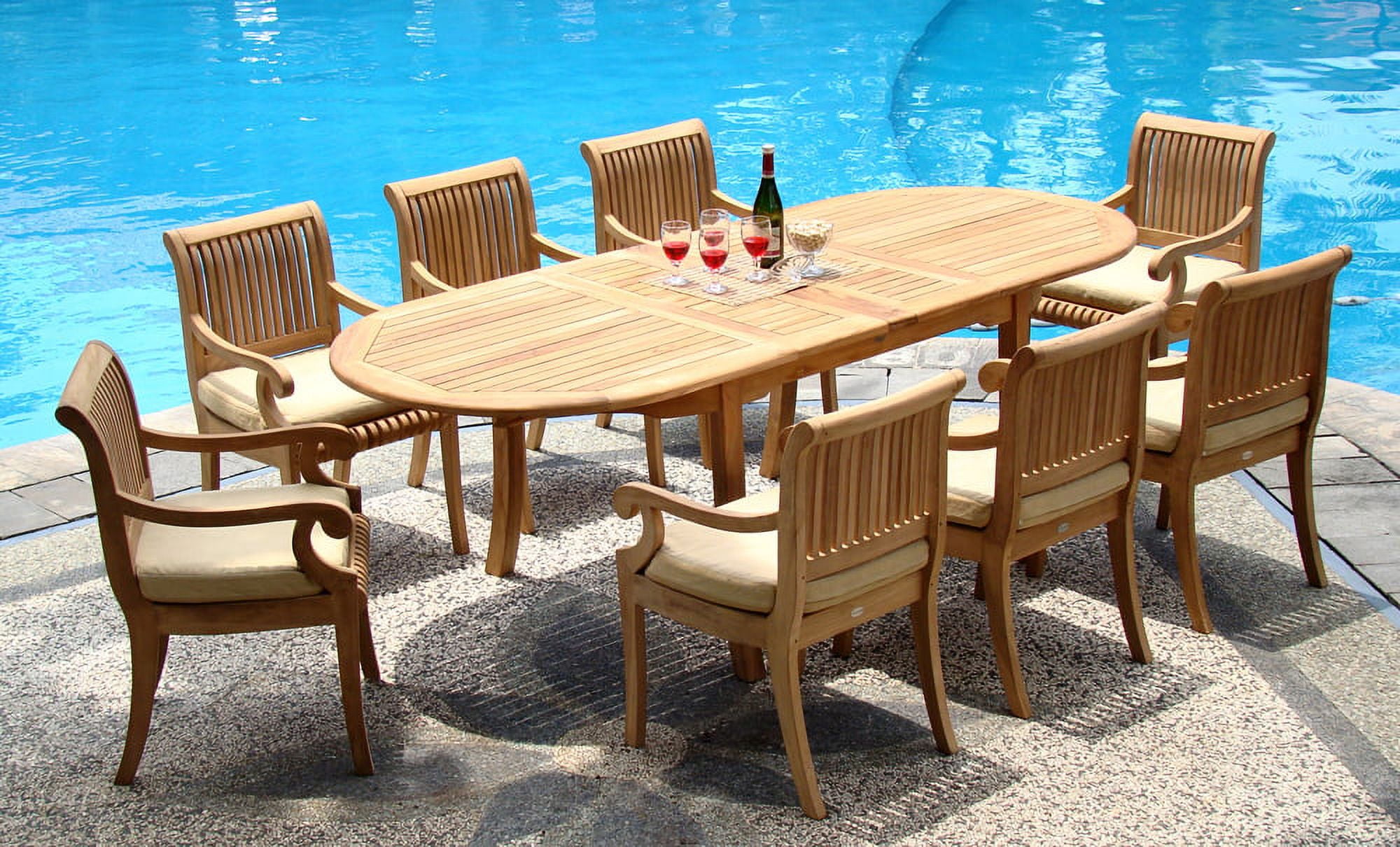
An 8 seater garden dining table and chairs set provides a dedicated social hub for large families and frequent entertainers, requiring a minimum patio footprint of approximately 12 to 15 square meters. To ensure longevity, prioritize weather-resistant materials such as Grade A teak, powder-coated aluminum, or high-density polyethylene (HDPE) synthetic rattan.
Understanding the Scale of 8-Seater Outdoor Dining
When transitioning from a standard four or six-person set to an 8 seater garden dining table and chairs, the primary challenge is not just the furniture itself, but the "dining envelope"—the total space required for the furniture plus the clearance for guests to move comfortably. In 2026, outdoor living has evolved into a sophisticated extension of the home, where the 8-seater set acts as the primary anchor for "alfresco" hosting.
A typical rectangular 8-seater table measures between 200cm and 250cm in length. However, the technical requirement for a comfortable dining experience dictates that each guest needs roughly 60cm to 70cm of elbow room. Furthermore, you must account for the "push-back" space. For a guest to stand up and move behind others without causing a bottleneck, you need at least 75cm to 100cm of clearance from the table edge to the nearest obstacle, such as a wall, planter, or patio drop-off.
Measuring Your Garden Space
Before purchasing, map out your intended area using masking tape or string. If your patio is 4 meters wide, an 8-seater rectangular table (usually 1 meter wide) leaves 1.5 meters on either side. Once chairs are added and occupied, this space shrinks significantly. For circular or square 8-seater configurations, the footprint is even more demanding, often requiring a perfectly symmetrical clearing that can dominate smaller gardens.
Material Selection: Durability and Performance in 2026
The longevity of an 8 seater garden dining table and chairs depends almost entirely on the material's ability to withstand UV radiation, moisture, and temperature fluctuations. As we move through 2026, consumer preference has shifted toward low-maintenance, high-durability composites and premium metals.
Powder-Coated Aluminum
Aluminum remains the gold standard for modern outdoor furniture. It is naturally rust-resistant because it does not contain iron. High-quality 8-seater sets use thick-walled aluminum frames treated with a polyester powder coating. This coating is baked on at high temperatures, creating a finish that is much tougher than conventional paint.
- Pros: Lightweight (easy to move chairs), zero rust, modern aesthetic.
- Cons: Can feel cold to the touch in winter or hot in direct summer sun if not paired with cushions.
Grade A Teak
For those seeking a traditional or "organic modern" look, teak is the premier timber choice. Grade A teak is harvested from the heartwood of mature trees and is rich in natural oils and silica. These properties make it virtually rot-proof and resistant to pests. In 2026, ethical sourcing is paramount, so ensure any teak set carries the FSC (Forest Stewardship Council) certification.
- Pros: Exceptional lifespan (25+ years), stays cool in the sun, beautiful aging process (silver patina).
- Cons: Requires occasional cleaning; high initial investment.
Synthetic Rattan (HDPE)
Not all rattan is created equal. Budget sets often use PVC, which becomes brittle and cracks under UV exposure. Professional-grade 8-seater sets utilize High-Density Polyethylene (HDPE). This material is dyed through, meaning the color won't fade, and it remains supple across a wide range of temperatures.
- Pros: Highly weather-resistant, classic "woven" look, usually includes deep-fill cushions.
- Cons: Bulky frames can be difficult to store; cheap versions degrade quickly.
Performance Fabrics
The chairs in an 8-seater set are only as good as their upholstery. By 2026, solution-dyed acrylics (such as Sunbrella or Agora) have become the industry standard for high-end sets. Unlike cheaper polyester, these fabrics are breathable, mold-resistant, and UV-stable. Many now feature "quick-dry" foam technology, which uses open-cell structures to allow water to drain through the cushion almost instantly after a rain shower.
Table Shapes and Social Dynamics
The shape of your 8 seater garden dining table and chairs significantly influences the atmosphere of your gatherings. While space often dictates the choice, the "social flow" should not be overlooked.
The Rectangular Classic
The most common configuration for 8 people is the rectangular table, typically arranged with three chairs on each long side and one at each head. This setup is ideal for long, narrow patios or "outdoor rooms" defined by the architecture of the house. It provides a formal dining feel and is excellent for serving large spreads of food.
The Round Table
A round 8-seater table (usually 180cm to 210cm in diameter) is the ultimate choice for conversation. Because everyone is equidistant from the center, there is no "head" of the table, fostering a more inclusive environment. The primary drawback is the massive footprint; round tables require a very large, square patio area to avoid looking cramped. Many round sets in 2026 incorporate a "Lazy Susan" in the center to facilitate easy sharing of dishes.
The Square Configuration
Square 8-seater tables (with two chairs per side) offer a contemporary, architectural look. They provide a vast amount of central space for decor or shared platters. However, like round tables, they demand significant floor space (at least 1.5m x 1.5m for the table alone) and can make it difficult to reach items in the very center of the table without standing up.
Oval Tables
Oval tables offer a compromise, providing the length of a rectangle with the softened edges of a round table. This shape is particularly useful in gardens with curved landscaping or where you want to minimize the visual "hardness" of the furniture.
Technical Specifications Comparison
| Material | Expected Lifespan | Maintenance Level | Weight Category | Best Use Case |
|---|---|---|---|---|
| Powder-Coated Aluminum | 15-20 Years | Low (Soap & Water) | Light | Modern, exposed patios |
| Grade A Teak | 25+ Years | Medium (Annual Clean) | Heavy | Traditional, windy locations |
| HDPE Rattan | 10-15 Years | Low (Hose down) | Medium | Conservatory-style/Cosy |
| Stainless Steel | 20+ Years | Medium (Polishing) | Very Heavy | Ultra-modern, coastal areas |
| HPL (High Pressure Laminate) | 10-15 Years | Very Low | Medium | High-traffic, family use |
Maintenance and Winter Protection Strategies
Even the most durable 8 seater garden dining table and chairs benefit from a proactive maintenance regime. In 2026, the focus is on "preventative preservation" rather than "restorative repair."
- Covering: Investing in a high-quality, breathable furniture cover is the single best way to extend the life of an 8-seater set. Ensure the cover is secured with toggles to prevent it from blowing away in winter storms. Breathability is key; non-breathable plastic covers can trap moisture, leading to mold and mildew on cushions or wood.
- Cushion Storage: While many 2026 fabrics are "all-weather," it is still recommended to store cushions in a dry, ventilated deck box during the winter months. This prevents the accumulation of atmospheric pollutants and bird droppings that can degrade the fabric over time.
- Frame Care: For aluminum and stainless steel, an annual wash with mild detergent and a soft cloth is usually sufficient. For teak, you must decide between maintaining the honey-gold color (requiring a UV-protector) or allowing it to weather to a silver-grey. Avoid "teak oil," which can encourage mold growth; instead, use a water-based teak sealer if you prefer the original wood tone.
- Hardware Check: At the start of each season, check the bolts and fasteners. Large 8-seater tables can experience significant leverage forces when moved or leaned upon. Tightening these connections ensures the structural integrity of the set remains intact.
Key Considerations for Chair Comfort
When seating eight people, comfort becomes a primary factor in how long your guests will stay. An 8-seater set usually comes with one of three chair types:
- Stacking Chairs: Excellent for space-saving if you need to clear the patio. Modern aluminum designs are now so refined that stacking chairs no longer look "cheap."
- Armchairs: Larger and more comfortable than side chairs, armchairs are the standard for 8-seater sets. Ensure the armrests are at a height that allows them to slide under the table to save space when not in use.
- Reclining Dining Chairs: A growing trend in 2026, these chairs feature a subtle reclining mechanism, allowing guests to transition from dining to lounging without moving to a different furniture set.
The seat height for garden dining should ideally be between 43cm and 48cm, with a table height of approximately 75cm. This 30cm "clearance zone" between the seat and the tabletop is the ergonomic standard for comfortable dining.
Frequently Asked Questions
Can I leave my 8-seater set outside all year round?
Yes, provided the set is made from high-quality materials like aluminum, HDPE rattan, or Grade A teak. However, "all-weather" does not mean "all-clean." While the structure will survive the winter, the furniture will accumulate dirt and debris. Using a breathable cover is highly recommended to reduce the cleaning required in the spring.
How much space do I actually need for an 8-seater set?
As a rule of thumb, add 2 meters to both the length and width of the table. For a 2.5m x 1m rectangular table, you should have a patio area of at least 4.5m x 3m. This allows 75cm-1m on all sides for chairs to be pulled out and for people to walk past.
Are fire pit tables a good option for 8-seater sets?
Fire pit tables have become very popular in 2026 for 8-seater configurations. They extend the use of the garden into the evening and colder months. However, be aware that the central fire pit reduces the amount of "flat" table space available for plates and serving dishes. Ensure the fire pit has a matching cover so the table can be used fully when the fire is not lit.
What is the difference between "weather-resistant" and "waterproof"?
In the context of garden furniture, "weather-resistant" means the material can withstand exposure to the elements without structural failure (e.g., it won't rot or rust). "Waterproof" usually refers to fabrics that have a coating to prevent water penetration. Most high-end cushions are "water-repellent," meaning water beads off the surface, but they are designed to let water drain through rather than trapping it inside.
Should I choose a glass or ceramic tabletop?
By 2026, tempered safety glass remains common, but ceramic and HPL (High-Pressure Laminate) have gained favor for 8-seater sets. Ceramic is highly scratch-resistant and heatproof, making it ideal for busy family dining. Glass is easier to clean but shows fingerprints and water spots more clearly.
Final Recommendation
When investing in an 8 seater garden dining table and chairs, prioritize the frame material first. A high-quality powder-coated aluminum or Grade A teak set will outlast three or four cheaper steel or PVC-rattan alternatives. Always measure your patio twice, ensuring you have at least one meter of clearance around the entire perimeter of the table to facilitate a comfortable flow of movement. If you frequently host long evening meals, prioritize chairs with solution-dyed acrylic cushions and ergonomic armrests to ensure your guests remain comfortable long after the meal has ended.