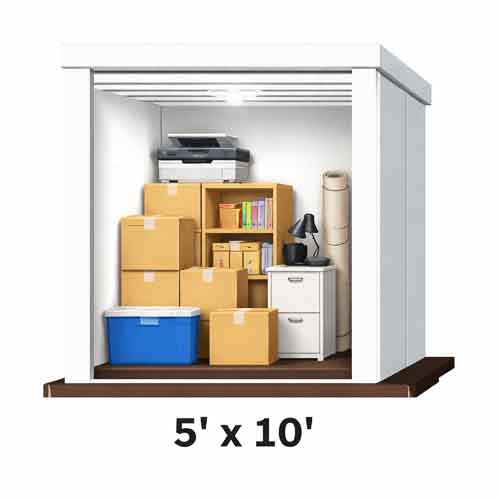
A 7.5x10 storage unit provides approximately 75 square feet of floor space and around 600 to 750 cubic feet of volume, making it an ideal mid-sized solution for holding the contents of a one- to two-bedroom apartment or roughly two rooms of major furniture.
Selecting the right self-storage unit requires an accurate understanding of spatial dimensions, vertical clearance, and packing mechanics to ensure that your belongings fit safely and remain easily accessible. Among the various mid-sized options available at most commercial storage facilities, the 7.5x10 storage unit occupies a versatile middle ground. It bridges the gap between smaller, closet-sized lockers and larger, multi-room spaces, offering substantial storage capacity without requiring you to pay for unused square footage.
Whether you are staging a home for sale, transitioning between leases, or simply decluttering your living environment, a 7.5-foot by 10-foot space demands a strategic approach. Understanding its precise physical parameters, spatial limitations, and optimal loading configurations will help you maximize every cubic foot of available room.
Understanding 7.5x10 Storage Unit Dimensions and Capacity
To make informed decisions about your storage needs, you must first understand the structural layout of a 7.5x10 unit. While standard storage unit dimensions typically advance in five-foot increments (such as 5x10 or 10x10), the 7.5x10 configuration offers a slightly wider footprint than a traditional 5x10 space, dramatically improving maneuverability and item placement options.
Floor Area and Cubic Volume
The physical floor plan measures 7.5 feet wide by 10 feet long, yielding a total of 75 square feet of surface area. In most modern indoor and outdoor storage facilities, standard ceiling heights range from 8 to 10 feet. Assuming an average 8-foot ceiling clearance, the total cubic volume reaches approximately 600 cubic feet. If your facility features 10-foot ceilings, that capacity expands to roughly 750 cubic feet.
This volume accommodates a predictable array of household goods, business inventory, or recreational gear. However, the usable volume depends heavily on how efficiently you stack items and whether you leave interior walking paths.
What Fits Inside a 7.5x10 Unit?
Facility operators commonly recommend a 7.5x10 storage unit for individuals moving out of a studio apartment, a small one-bedroom apartment, or a college dorm room with significant furniture. Typical items that fit comfortably within this space include:
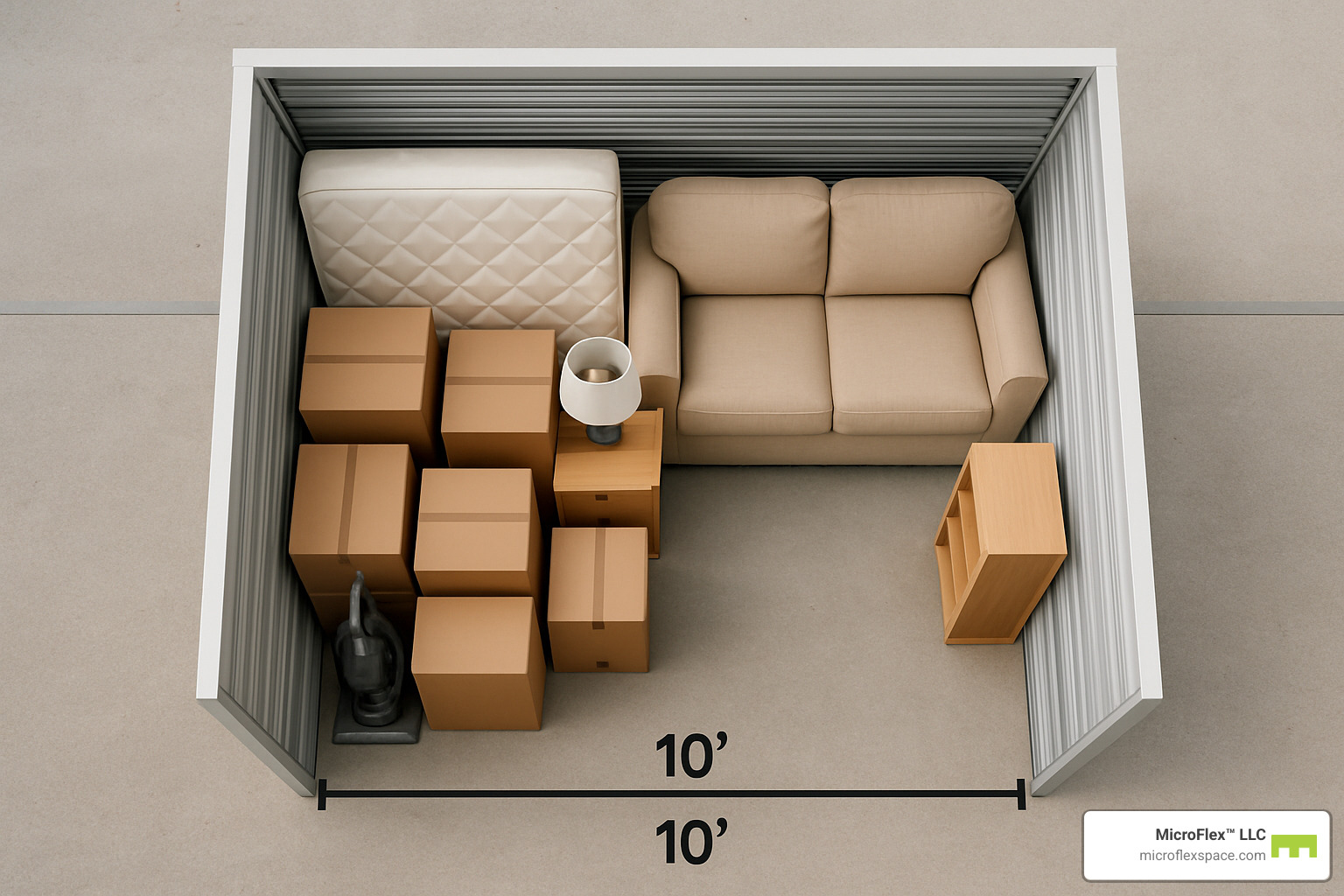
- Living Room Furniture: A standard sofa, loveseat, coffee table, end tables, and an entertainment center or media console.
- Bedroom Sets: A queen-sized or king-sized mattress set, a dresser, a nightstand, and wardrobe boxes.
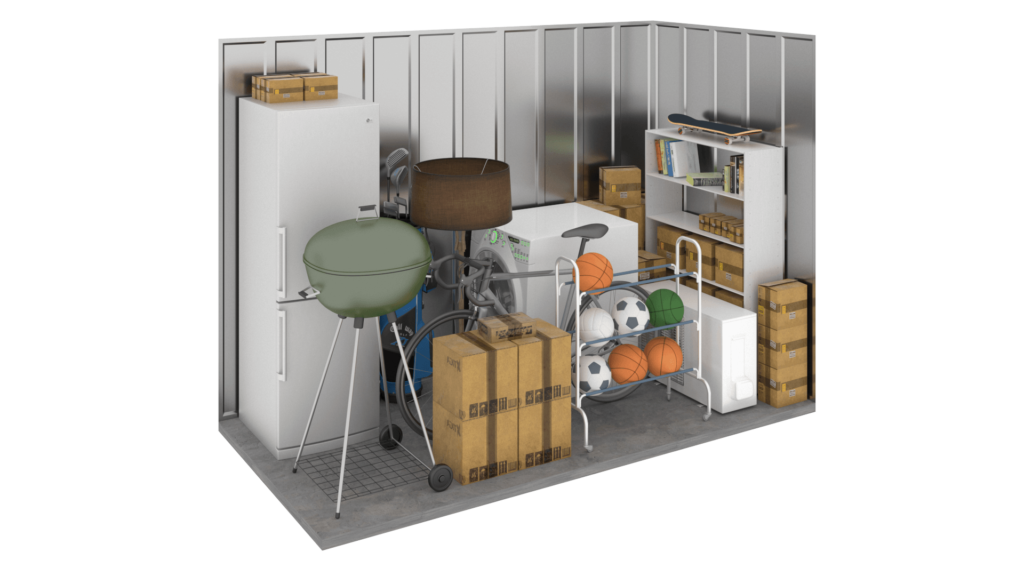
- Appliances: Compact washers, dryers, or refrigerators (when thoroughly cleaned and dried, with doors propped open to prevent mold).
- Boxes and Totes: Between 20 and 40 medium-to-large moving boxes, depending on how high you stack them.
- Miscellaneous Items: Bicycles, seasonal sports equipment, suitcases, and rolled-up rugs or mattresses.
| Room Equivalent | Typical Furniture & Items | Estimated Box Capacity | Ideal Use Case |
|---|---|---|---|
| Studio Apartment | Full mattress, sofa, dresser, desk, chairs | 15–25 boxes | Moving between leases or downsizing |
| 1-Bedroom Apartment | Queen mattress, living room set, dining table | 25–40 boxes | Staging a home for real estate sale |
| Business Inventory | Shelving units, seasonal stock, archive boxes | 40–60 archive boxes | Retail overflow and document storage |
| Recreational Gear | Bicycles, kayaks, camping gear, suitcases | 10–20 specialty items | Off-season storage for outdoor hobbies |
Comparing 7.5x10 Units to Alternative Sizes
Choosing the correct storage unit size prevents both overcrowding and overpaying. When evaluating self-storage options, renters frequently compare the 7.5x10 unit against its closest industry standard counterparts: the 5x10 and the 10x10.
7.5x10 vs. 5x10 Storage Units
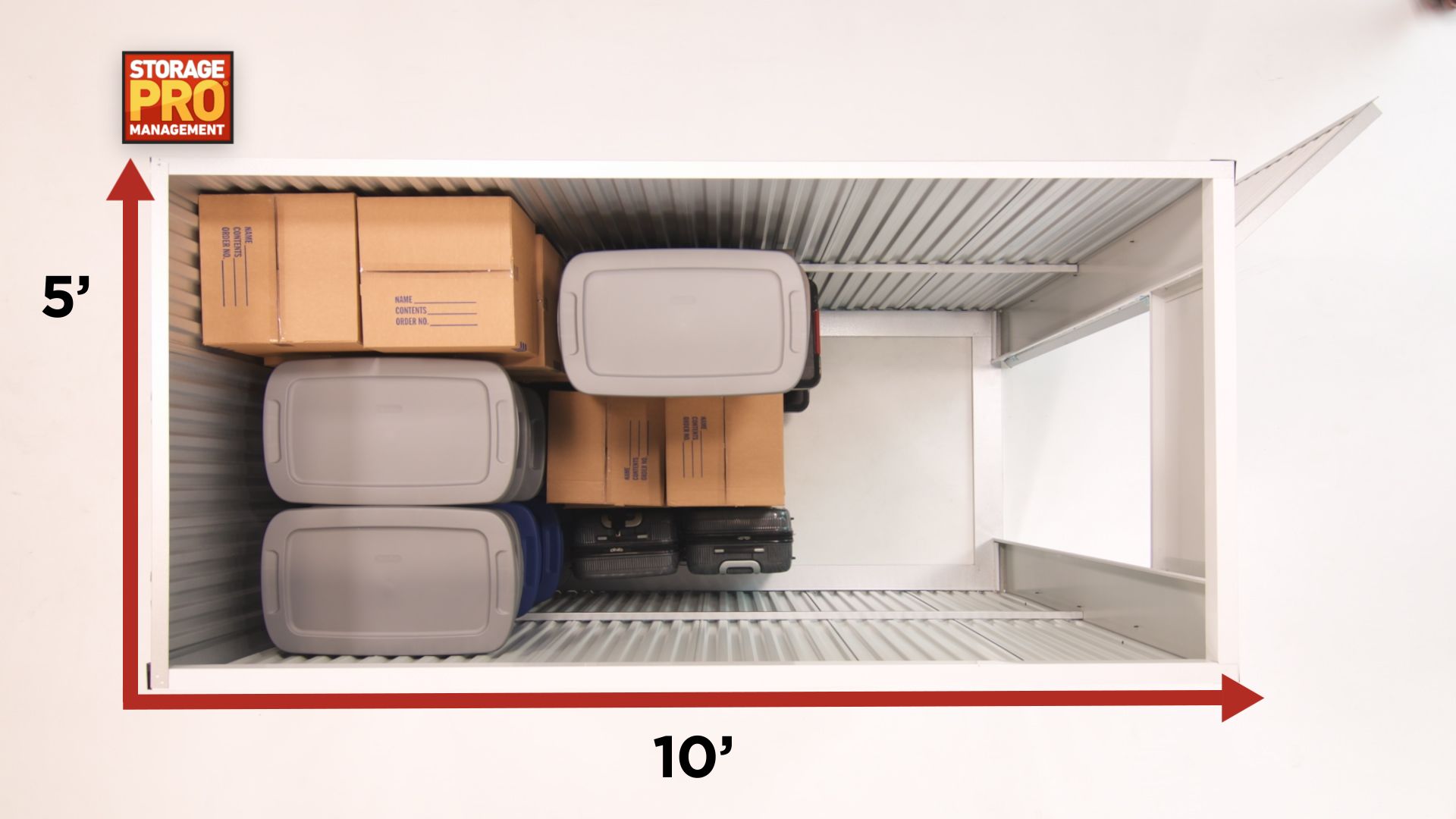
A 5x10 storage unit offers 50 square feet of space. While adequate for a studio apartment or the contents of a single bedroom, a 5x10 unit is essentially a long, narrow hallway. You often must stack items vertically against the walls and leave little to no room to walk inside the unit to retrieve items located in the back.
The extra 2.5 feet of width in a 7.5x10 unit changes the geometry entirely. It allows you to create a central aisle, granting direct access to boxes and furniture items without needing to unload half the unit to find a single misplaced item.
7.5x10 vs. 10x10 Storage Units
A 10x10 storage unit doubles the floor space of a 5x10, providing 100 square feet and roughly 800 cubic feet of volume. A 10x10 is typically recommended for a standard two-to-three-bedroom home.
If your belongings fall right on the threshold between a small two-bedroom apartment and a full two-bedroom home, choosing between a 7.5x10 and a 10x10 comes down to inventory volume and financial cost. If you possess bulky bedroom sets, multiple large appliances, and dozens of heavy boxes, a 10x10 unit provides necessary breathing room. However, if your furniture is modular, disassembled, or minimal, the 7.5x10 unit offers sufficient capacity at a lower monthly rental rate.
Preparing Your Belongings for Long-Term Storage
Effective storage extends far beyond simply loading items into a truck and transferring them to a facility. Proper preparation protects your investments from environmental degradation, physical warping, and structural damage over time.
Cleaning and Conditioning
Before placing any item into a 7.5x10 storage unit, clean it thoroughly.
- Upholstered Furniture: Vacuum sofas, chairs, and mattresses to remove dust, crumbs, and microscopic organic debris that can attract pests. Consider professional steam cleaning and ensure fabrics dry completely to prevent mold growth.
- Wooden and Metal Surfaces: Wipe down wooden tables, chairs, and bed frames with a quality wood cleaner or polish. Apply a light coat of paste wax to raw wood to protect against humidity shifts. Wipe metal tools and equipment with a light machine oil to prevent surface rust.
- Appliances: Defrost freezers and refrigerators at least 48 hours before storage. Clean interior cavities with baking soda and water, dry them completely, and leave doors slightly ajar using a spacer or towel to promote air circulation.
Disassembly and Boxing Strategies
Maximizing vertical and horizontal space inside a 7.5x10 unit requires systematic disassembly:
- Disassemble Furniture: Remove legs from dining tables, take apart bed frames, and remove drawers from dressers to reduce bulk and protect joint fixtures. Tape hardware securely in labeled plastic bags and attach them directly to the underside of the corresponding furniture piece.
- Standardize Box Sizes: Use uniform moving boxes rather than a random assortment of grocery bags and odd-sized cartons. Uniform boxes stack evenly, creating stable vertical columns that resist shifting and collapsing.
- Heavy Items on the Bottom: Distribute weight logically by placing heavy book boxes and dense containers at the base of your stacks, reserving lighter plastic bins and fragile linen boxes for upper tiers.
Loading Techniques and Layout Planning for a 7.5x10 Space
Strategic loading transforms a chaotic pile of boxes into an organized, easily accessible archive. Because a 7.5x10 unit features a manageable floor plan, thoughtful layout planning ensures you can reach high-frequency items without unpacking the entire unit.
Establishing Access Aisles
Even with an extra 2.5 feet of width compared to a 5x10 unit, space remains at a premium.
- Map Out a Pathway: When loading, create a central "U" or straight corridor down the center of the 10-foot length. This allows you to walk into the unit and inspect items along both side walls.
- Front-Load High-Frequency Items: Place items you may need to retrieve soon—such as seasonal clothing bins, tax archives, or sports equipment—near the roll-up door.
- Back-Load Permanent Storage: Position large, heavy furniture pieces and long-term storage items against the back wall and deep side corners.
Protecting Surfaces and Managing Vertical Space
Protecting your belongings from physical wear requires proper buffer materials and secure vertical stacking:
- Use Pallets or Wooden Slats: If your facility does not provide raised flooring or concrete clearance, place wooden pallets or heavy-duty plastic skids on the floor. This elevates your boxes and furniture off the concrete, protecting them against potential moisture migration and condensation.
- Blanket Wrapping: Wrap wooden furniture, mirrors, and glass tabletops in quilted moving blankets rather than plastic shrink wrap. Plastic traps ambient moisture and causes wood to rot or glass to sweat, whereas breathable textile blankets protect against scratches and dings.
- Vertical Utilization: Stack sturdy boxes floor-to-ceiling, but never place heavy boxes on top of fragile or hollow items like plastic storage drawers or cardboard wardrobe boxes unless internal support bars are installed.
Cost Considerations, Insurance, and Facility Selection
Renting a 7.5x10 storage unit involves ongoing financial commitments and logistical considerations. Evaluating facility policies and security features ensures your property remains protected throughout the rental period.
Understanding Rental Pricing Factors
Monthly rental rates for a 7.5x10 storage unit vary significantly based on geographic location, facility amenities, and unit type:
- Climate Control: Climate-controlled units maintain regulated temperatures and humidity levels, protecting wood, electronics, leather, and musical instruments from warping, cracking, and mold. These units typically cost 15% to 35% more than standard drive-up outdoor units.
- Indoor vs. Drive-Up Access: Indoor units located down interior hallways offer enhanced security and weather protection during loading. Drive-up outdoor units provide maximum convenience, allowing you to park your moving truck directly at the door.
- Geographic Demand: Urban centers and high-density metropolitan areas command premium rental rates, whereas suburban and rural facilities offer lower square-foot pricing.
Security and Insurance Requirements
Before signing a rental agreement, review the facility's security infrastructure and insurance protocols:
- Facility Security: Look for facilities featuring perimeter fencing, electronic gate access with unique PIN codes, 24/7 closed-circuit television (CCTV) surveillance, and individual door alarms.
- Tenant Insurance: Most self-storage operators require you to maintain insurance coverage for stored property. Check your existing homeowners or renters insurance policy; many policies extend coverage to off-site storage units with a specified deductible limit. If your policy excludes stored goods, purchase coverage directly through the storage facility provider.
Frequently Asked Questions
What size moving truck do I need for a 7.5x10 storage unit?
A 10-foot to 15-foot box truck is typically sufficient to transport the contents of a 7.5x10 storage unit in a single trip. A 10-foot truck works well for compact studio apartment inventories, while a 15-foot truck provides extra breathing room if you are moving bulky furniture or irregular boxes.
Can a 7.5x10 unit fit a king-sized mattress?
Yes, a king-sized mattress (measuring 76 inches wide by 80 inches long) fits inside a 7.5x10 storage unit. Because the unit is 7.5 feet (90 inches) wide, the mattress can lie flat on the floor or stand upright against the back wall without bending, provided you navigate the turning radius through the doorway.
Is climate control necessary for a 7.5x10 storage unit?
Climate control is strongly recommended if you are storing wooden furniture, musical instruments, leather goods, artwork, photographs, or electronics. Extreme temperature fluctuations and high humidity can cause wood to split, metal to rust, and electronic components to degrade over time.
How many boxes can fit in a 7.5x10 storage unit?
Depending on box sizes and how high you stack them, a 7.5x10 unit comfortably holds between 25 and 45 medium-to-large moving boxes, alongside major furniture pieces. If you use the space exclusively for box storage without large furniture, you can fit over 100 stacked archive boxes.
What is the best way to lock a storage unit?
Always use a heavy-duty disc lock (also known as a padlock) rather than a standard long-shackle padlock. Disc locks feature a circular design that shields the steel shackle from bolt cutters, providing superior protection against forced entry.
Conclusion
A 7.5x10 storage unit provides an exceptionally versatile footprint for managing transitional life events, home renovations, or business inventory overflows. By accurately assessing your inventory volume, utilizing vertical stacking principles, protecting sensitive items with climate control, and maintaining a clear interior pathway, you can maximize every square foot of your rented space. Plan your layout in advance, invest in uniform packing supplies, and secure your belongings with quality insurance and disc locks to ensure long-term peace of mind.