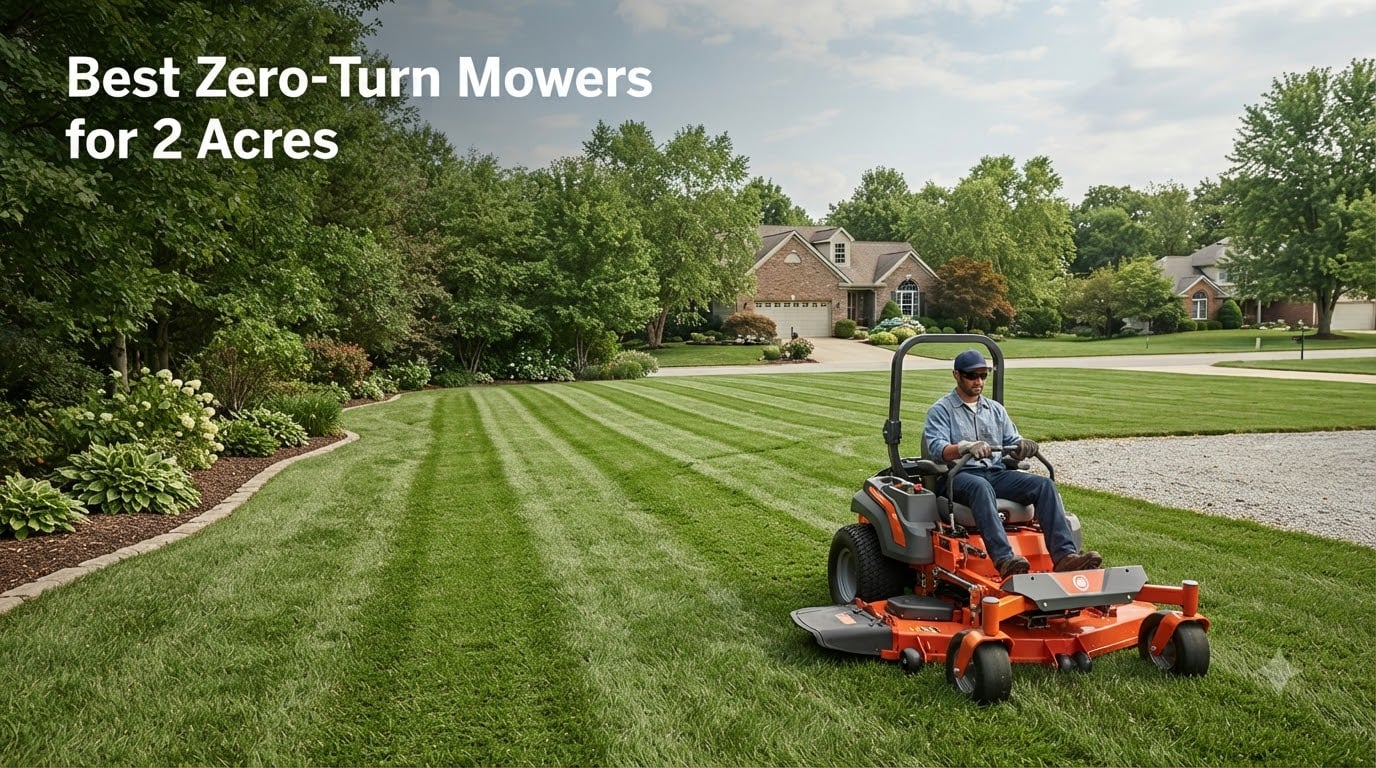
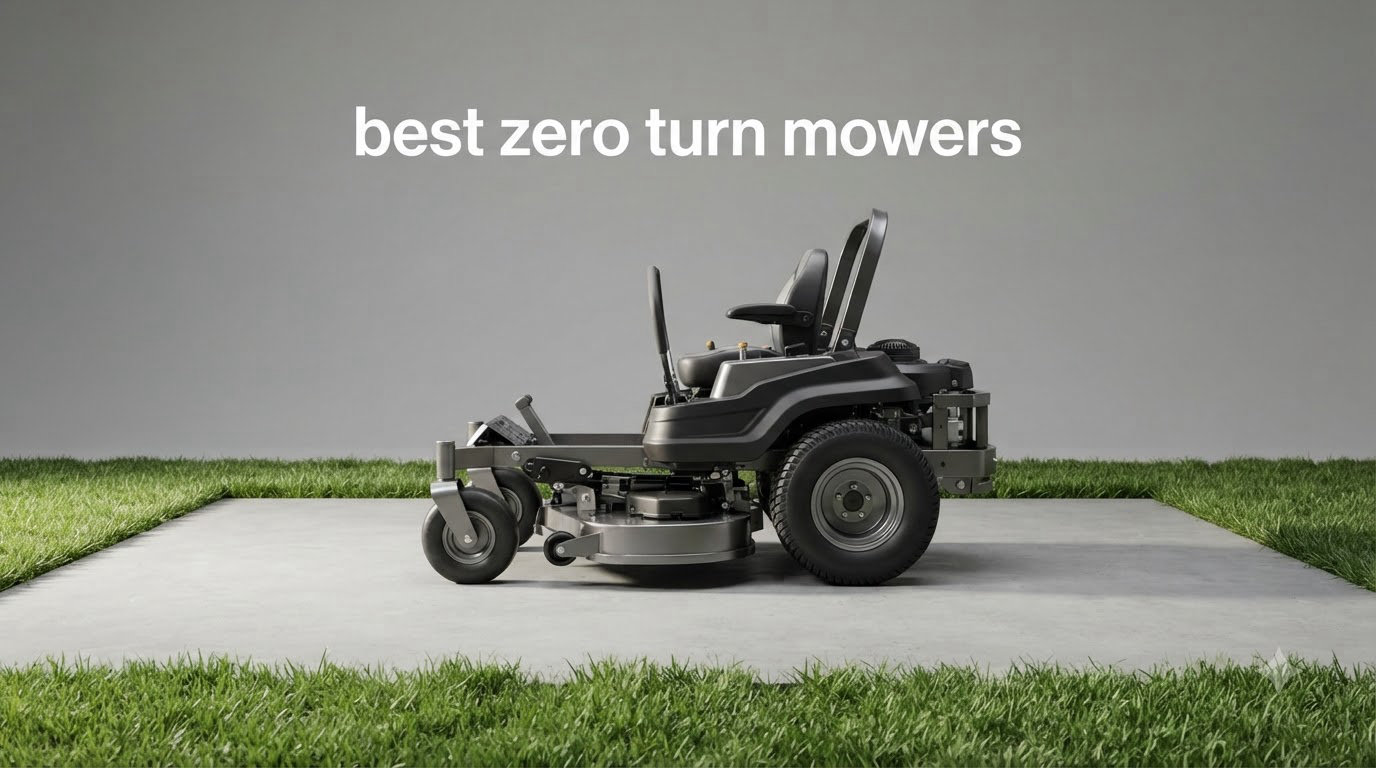
The best zero turn mowers in 2026 provide unmatched speed and precision by using independent wheel motors for a 360-degree turning radius. This guide reviews the top five models, ranging from whisper-quiet electric units to commercial-grade gas powerhouses, ensuring you find the ideal machine for your specific acreage and terrain.
Zero turn mowers (ZTRs) have revolutionized residential and professional landscaping by virtually eliminating the need for three-point turns. Unlike traditional riding tractors that use a steering rack to pivot front wheels, a ZTR utilizes dual hydrostatic transmissions—one for each rear wheel. Controlled by twin lap bars, these machines allow one wheel to move forward while the other reverses, enabling the mower to spin in place. As of 2026, the market has split into two dominant sectors: high-density lithium-ion electric mowers for residential use and high-displacement Kawasaki or Kohler-powered gas units for large-scale rural properties.
Choosing the right model requires a deep understanding of deck construction, transmission ratings, and engine torque. This article provides detailed reviews of five industry-leading mowers to help you navigate the complexities of modern lawn care technology.
1. John Deere Z370R Electric ZTrak: The Residential Efficiency Leader
By 2026, the John Deere Z370R has established itself as the gold standard for homeowners with 1 to 2 acres who prioritize low maintenance and quiet operation. As part of the Z300 series, this electric model replaces the traditional internal combustion engine with a sealed 3.2kWh lithium-ion battery system.
Technical Performance and Cutting Quality
The Z370R features a 42-inch Accel Deep™ deck. Unlike stamped decks found on entry-level models, this deck is designed with a deep-draw flat top that maintains high airflow. This allows grass to be lifted and cut cleanly without clumping, even at higher ground speeds. Because the blades are driven by independent electric motors, the mower maintains a constant blade tip speed regardless of the terrain’s resistance. This ensures a uniform cut across thick fescue or damp Kentucky bluegrass.
Operational Advantages
The most significant benefit of the Z370R is the reduction in "Total Cost of Ownership" (TCO). There are no oil filters, spark plugs, or drive belts to replace. Users can monitor battery levels and "range-to-empty" via the MowerPlus smartphone app, which connects via Bluetooth. For the 2026 model year, John Deere has improved the weather sealing (IP66 rating), meaning the mower can handle heavy morning dew and post-mow wash-downs without risk to the electrical components.
Pros:
- Near-Silent Operation: Allows for early morning or late evening mowing without disturbing neighbors.
- Zero Maintenance: Eliminates the need for fuel stabilization, oil changes, and belt adjustments.
- Onboard Charging: Plugs directly into a standard 120V outlet; no specialized charging station required.
Cons:
- Range Limitations: Not suitable for properties exceeding 2 acres on a single charge.
- Initial Cost: The upfront price remains higher than equivalent gas-powered residential models.
2. Husqvarna Z254F: The Versatile Mid-Range Workhorse
The Husqvarna Z254F remains a perennial favorite for those with 2 to 3 acres of varied terrain. It sits in the "prosumer" category, offering features typically reserved for commercial units but at a price point accessible to homeowners.
The ClearCut™ Fabricated Deck
The standout feature of the Z254F is the 54-inch ClearCut™ fabricated cutting deck. Unlike residential decks made from a single sheet of pressed steel, fabricated decks are constructed from heavy-gauge steel plates welded together. This provides superior rigidity and resistance to impacts from rocks or roots. The ClearCut™ design incorporates specialized baffles that optimize airflow, making it one of the best discharging decks in its class.
Engine and Transmission Synergy
Equipped with a 23 HP Kohler 7000 Series engine, the Z254F provides ample torque for thick, overgrown grass. The engine is paired with Hydro-Gear EZT transmissions. While these are integrated (non-serviceable) units, they are engineered for residential durability and offer a top speed of roughly 6.5 MPH. The 2026 iteration includes an improved cooling fan system for the transaxles, extending the lifespan of the hydraulic fluid during hot summer sessions.
Pros:
- Reinforced Chassis: The frame is designed to handle the vibrations and stresses of uneven lawns.
- Superior Mulching: The high-flow deck design makes it an excellent candidate for mulch kit upgrades.
- Ergonomics: Includes a high-back seat and padded control levers to reduce operator fatigue.
Cons:
- Noise Levels: As a gas-powered unit, it requires hearing protection during extended use.
- Size: The 54-inch deck may be too wide for properties with narrow gates or tightly spaced landscaping.
3. Ariens Apex 60: The Heavy-Duty Prosumer Choice
For users managing more than 4 acres or those with rugged, hilly terrain, the Ariens Apex 60 is a powerhouse. Ariens has long been known for "over-building" their machines, and the Apex 60 is the pinnacle of that philosophy.
Commercial-Grade Internals
The Apex 60 is powered by a Kawasaki FR Series engine, widely regarded by mechanics as the most reliable residential engine on the market. More importantly, it utilizes Hydro-Gear ZT-3100 transaxles. Unlike the entry-level EZT models, the ZT-3100 units are fully serviceable, meaning you can change the oil and filters to ensure the transmissions last for decades rather than years.
The ENVY™ ELITE Cutting System
The 60-inch deck is built from 10-gauge steel, which is significantly thicker than standard residential offerings. It uses a constant belt-tensioning system, which reduces wear on the drive belts and ensures the blades don't slow down when hitting a patch of heavy weeds. The "Apex" name refers to its ability to maintain a professional-grade "stripe" on the lawn, aided by the massive rear tires that provide exceptional traction on slopes.
Pros:
- Serviceable Transmissions: Allows for long-term mechanical maintenance.
- Massive Cutting Width: Reduces mowing time significantly on large, open acreages.
- Commercial Frame: 1.5-inch by 3-inch steel tube frame provides extreme durability.
Cons:
- Weight: At over 800 pounds, it can leave ruts in soft or saturated soil.
- Fuel Consumption: The large Kawasaki engine is thirsty, requiring frequent refilling during long sessions.
4. Cub Cadet Ultima ZT1 42: Best for Small Yards and Maneuverability
Not everyone needs a 60-inch monster. The Cub Cadet Ultima ZT1 42 is designed for the high-end residential market where maneuverability is more important than raw deck size. It is specifically engineered to navigate around flower beds, trees, and tight corners.
Design and Frame Strength
The ZT1 series broke the mold for residential mowers by introducing a square tubular steel frame. This "continuous square" design is far more rigid than the C-channel frames used by competitors, leading to less deck bounce and a more consistent cut. The 42-inch deck is a stamped/fabricated hybrid, offering a balance between lightweight maneuverability and structural strength.
User Experience in 2026
In 2026, Cub Cadet has refined the "comfort suite" of the ZT1. It features an adjustable high-back seat with a polymer suspension system and LED headlights as standard equipment. The deck height is adjusted via a foot-operated pedal, allowing the operator to change the cutting height in 1/4-inch increments without letting go of the steering levers.
Pros:
- Compact Footprint: Fits through standard 48-inch gates with ease.
- Visibility: The open-frame design gives the operator an unobstructed view of the front tires and deck edges.
- Ease of Use: Intuitive controls make it a great "first zero turn" for new owners.
Cons:
- Deck Gauge: The 11-gauge steel is thinner than the Ariens or Gravely models.
- Limited Speed: Top speed is capped at 7 MPH, which feels slow on larger properties.
5. Gravely Pro-Turn 600: The Professional Standard
If you are a landscaping professional or a homeowner who demands nothing less than industrial performance, the Gravely Pro-Turn 600 is the definitive choice for 2026. This is not a "prosumer" machine; it is a full-scale commercial asset designed to run 8 hours a day, 6 days a week.
X-Factor® 3 Deck Technology
The Pro-Turn 600 features the X-Factor® 3 Deck, which is constructed from 7-gauge steel. To put that in perspective, 7-gauge steel is nearly 3/16ths of an inch thick—virtually indestructible under normal conditions. The deck features a vacuum-effect airflow that pulls grass upright before the blade makes contact, resulting in a golf-course-quality finish even at speeds up to 13 MPH.
Operator Comfort and Longevity
Mowing for hours can lead to back pain, which is why Gravely includes a high-back suspension seat with padded armrests and a specialized vibration-isolation system. The mower is powered by a Kawasaki FX Series engine, which includes a heavy-duty canister air filter to protect the internal components from the dust and debris common in professional landscaping environments.
Pros:
- Extreme Speed: Cuts large properties in a fraction of the time of residential units.
- Unrivaled Durability: Built to withstand thousands of hours of rigorous use.
- Commercial Warranty: Usually carries a much stronger warranty for professional use cases.
Cons:
- Price: This is a significant investment, often costing three times as much as a residential ZTR.
- Complexity: Requires a higher level of mechanical knowledge to maintain and service correctly.
Comparison of Top 5 Zero Turn Mowers (2026)
| Model | Power Type | Deck Size | Best For | Transmission Type |
|---|---|---|---|---|
| John Deere Z370R | Electric (3.2kWh) | 42" | 1-2 Acres (Quiet) | Dual Electric Motors |
| Husqvarna Z254F | Gas (23 HP) | 54" | 2-3 Acres (Varied) | Hydro-Gear EZT |
| Ariens Apex 60 | Gas (24 HP) | 60" | 4+ Acres (Slopes) | Hydro-Gear ZT-3100 |
| Cub Cadet ZT1 42 | Gas (22 HP) | 42" | Small yards/Gates | Hydro-Gear EZT |
| Gravely Pro-Turn 600 | Gas (31 HP) | 60" | Commercial/Pro Use | Hydro-Gear ZT-5400 |
Essential Factors to Consider When Buying
Selecting a zero-turn mower requires looking beyond the shiny paint and horsepower ratings. In 2026, technology has plateaued in some areas while leaping forward in others. Here is how to evaluate the technical specs.
Deck Construction: Stamped vs. Fabricated
A stamped deck is made from a single sheet of steel pressed into a mold. They are lighter and more aerodynamic, which is great for airflow and lifting grass, but they can crack over time if they hit hard objects. A fabricated deck is made of heavy steel plates welded together. These are heavier and more durable, making them essential for properties with rocks, stumps, or uneven terrain.
Transmission Reliability
The transmission is the heart of a zero turn. Most residential mowers use the Hydro-Gear EZT or ZT-2200 series. These are "non-serviceable," meaning if the internal seals fail, you usually have to replace the entire unit. For long-term reliability, look for "serviceable" transaxles like the ZT-3100 or ZT-3400. These have oil filters and drain plugs, allowing you to maintain the hydraulic system indefinitely.
Terrain and Slope Stability
Zero-turn mowers are notoriously difficult to control on steep slopes (typically anything over 15 degrees). Because the front wheels are casters (like on a shopping cart), they do not provide steering. The mower is steered entirely by the rear wheels. If you have a hilly property, look for a model with a wide wheel track and low center of gravity, like the Ariens Apex or Gravely Pro-Turn. For 2026, many manufacturers have improved tire compounds to provide better "bite" on damp inclines.
Maintenance and Long-Term Care
Regardless of which mower you choose, a rigorous maintenance schedule is the only way to protect your investment. Even electric models like the John Deere Z370R require attention.
- Blade Sharpening: Dull blades tear grass rather than cutting it, which leads to "brown tipping" and disease. Sharpen blades every 25-50 hours of use.
- Deck Cleaning: Grass contains moisture and acid. If left to caked on the underside of the deck, it will cause the steel to rust and thin out. Use a scraper or a deck wash port after every use.
- Tire Pressure: Zero-turn mowers rely on balanced tire pressure for a level cut. If one rear tire has 2 PSI less than the other, the mower will "pull" to one side and the deck will hang unevenly.
- Battery Storage (Electric): For the Z370R and other electric units, avoid storing the battery in sub-zero temperatures. Keep the charge between 40% and 80% during the off-season to maximize the lifespan of the lithium cells.
Frequently Asked Questions
Are electric zero-turn mowers powerful enough for thick grass?
Yes. In 2026, electric motors provide "instant torque," which means they do not bog down as easily as gas engines when hitting a thick patch of grass. The motor can maintain a high RPM (Revolutions Per Minute) regardless of the load, often resulting in a cleaner cut in challenging conditions than entry-level gas models.
How long do the batteries last on an electric zero turn?
The lithium-ion batteries used in models like the John Deere Z370R are designed to last for roughly 10 years or 1,000 to 1,500 charge cycles. Most residential users only mow 30 to 40 times a year, meaning the battery will likely outlast the mechanical components of the mower.
Can I use a zero-turn mower on a hill?
You should exercise caution. Most manufacturers recommend avoiding slopes greater than 15 degrees. Because the front wheels are casters, they can slip and cause the mower to slide sideways or "nose-dive" down a hill. Always mow across a slope rather than up and down, and ensure you have specialized turf tires with good grip.
What is the difference between a residential and commercial zero turn?
The primary differences are the gauge of the steel deck, the serviceability of the transmissions, and the engine's air filtration system. Commercial mowers (like the Gravely Pro-Turn 600) use 7-gauge steel and heavy-duty canister air filters, whereas residential models use 11-gauge or 12-gauge steel and standard pleated air filters.
Is a 60-inch deck better than a 42-inch deck?
A wider deck reduces the number of passes you need to make, saving time. However, a 60-inch deck is much harder to maneuver in tight spaces and requires a more powerful engine to turn the larger blades. If your yard has many trees, flower beds, or narrow gates, a 42-inch or 48-inch deck is often more efficient.
Final Recommendation
For the average homeowner with 1.5 acres of flat lawn, the John Deere Z370R is the best choice for 2026 due to its zero-maintenance profile and quiet operation. However, if you have a larger, more rugged property with over 3 acres, the Ariens Apex 60 offers the best balance of commercial-grade durability and residential value. Landscaping professionals should look no further than the Gravely Pro-Turn 600 for a machine that can handle the rigors of daily commercial use.