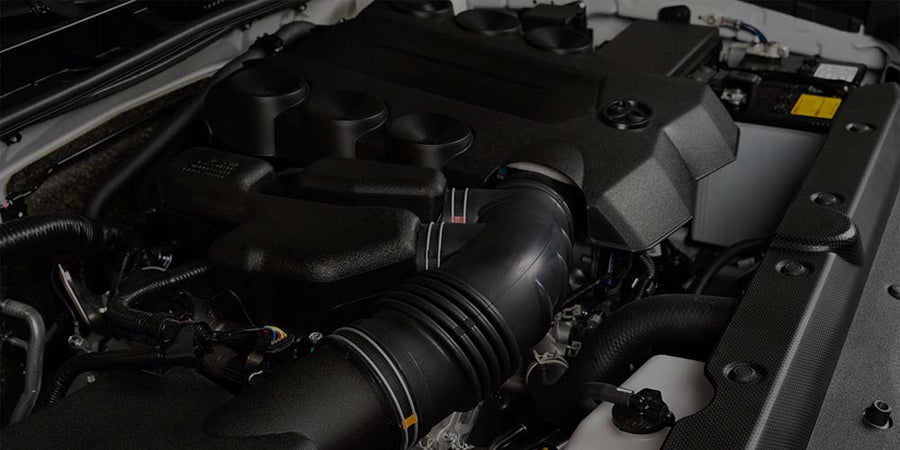
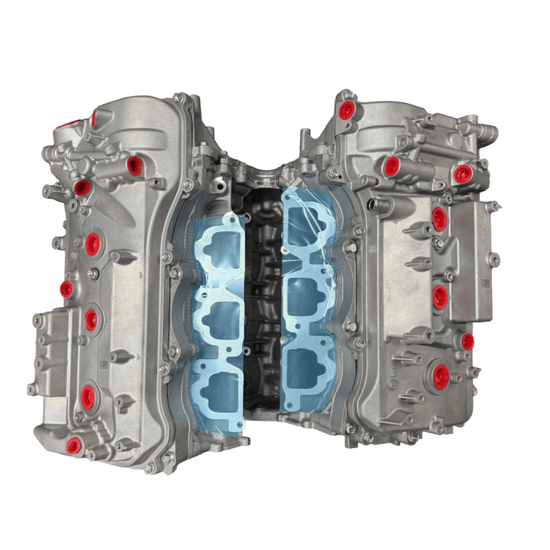
Toyota 4Runner engine options have evolved from rugged, low-displacement four-cylinders to high-torque hybrid powertrains. In 2026, the lineup is dominated by the i-FORCE 2.4L turbocharged engines, but for many enthusiasts, the legacy of the 4.0L V6 and the legendary 4.7L V8 remains a primary factor in the used market and long-term ownership decisions.
Choosing the right engine for a Toyota 4Runner requires balancing historical reliability against modern performance demands. Since its debut in 1984, the 4Runner has utilized a variety of powertrains designed to withstand the rigors of off-roading while providing daily drivability. As we look at the landscape in 2026, we see a distinct divide between the "analog" naturally aspirated engines of the past and the high-efficiency, forced-induction systems of the current sixth generation.
The Modern Era: Sixth Generation (2025–2026) Engines
With the launch of the sixth-generation 4Runner, Toyota fundamentally shifted its powertrain philosophy. Moving away from large-displacement, naturally aspirated engines, the current 2026 models utilize the TNGA-F global truck platform, which mandates more efficient, turbocharged powerplants.
The 2.4L i-FORCE Turbocharged Inline-Four
The standard engine for the current 4Runner is the i-FORCE 2.4-liter turbocharged four-cylinder. This engine is shared with the Tacoma and represents a significant jump in torque over the outgoing 4.0L V6. It produces 278 horsepower and 317 lb-ft of torque.
The technical shift here focuses on the "torque curve." Unlike previous engines that required high RPMs to reach peak pulling power, this turbocharged unit provides maximum torque as low as 1,700 RPM. This makes the 2026 4Runner feel more responsive in city driving and more capable when crawling over obstacles at low speeds.
The i-FORCE MAX Hybrid Powertrain
For those seeking maximum performance, the i-FORCE MAX hybrid is the premier engine option. It pairs the same 2.4L turbocharged engine with a 48-hp electric motor integrated into the 8-speed automatic transmission. The total system output is a staggering 326 horsepower and 465 lb-ft of torque.
This hybrid system is not designed solely for fuel economy; rather, it is a performance-oriented hybrid. The electric motor provides "instant-on" torque, filling the gap before the turbocharger fully spools. In 2026, this powertrain is standard on higher trims such as the TRD Pro, Trailhunter, and Platinum, offering the highest towing capacity and off-road recovery power in the model's history.
The "Bulletproof" Standard: Fifth Generation (2010–2024)
For over a decade, the 4Runner was defined by a single engine option: the 4.0L 1GR-FE V6. While critics often pointed to its dated fuel economy and 5-speed transmission, its reputation for reaching 300,000 miles with only basic maintenance is unmatched in the SUV segment.
The 4.0L 1GR-FE V6 (Dual VVT-i)
The 5th generation 4Runner utilized a refined version of the 1GR-FE. This version featured Dual Variable Valve Timing with intelligence (Dual VVT-i), which adjusted timing on both intake and exhaust cams to optimize power and efficiency. It produced 270 horsepower and 278 lb-ft of torque.
- Reliability: This engine uses a timing chain rather than a belt, reducing long-term maintenance costs. The cooling system and oiling circuits are over-engineered, contributing to its legendary longevity.
- Performance: While reliable, the engine is often described as "lethargic" by modern standards. It requires a heavy foot for highway passing, and the 5-speed automatic transmission limits its ability to stay in the power band during steep climbs.
The Rare 2.7L 2TR-FE (2010 Only)
Early in the fifth generation, Toyota offered a 2.7L four-cylinder engine as a budget-friendly option. Producing only 157 horsepower, it was widely considered underpowered for the 4Runner's heavy body-on-frame construction. It was discontinued after a single model year due to low consumer demand, making it a rare find on the used market today.
The V8 Exception: Fourth Generation (2003–2009)
The fourth generation is unique because it is the only period in history where Toyota offered a factory V8 engine in the 4Runner. This era represents a peak for owners who prioritize heavy towing and smooth, linear power delivery.
The 4.7L 2UZ-FE V8
Borrowed from the Land Cruiser and Tundra, the 4.7L V8 is one of Toyota's most respected engines. Early models (2003-2004) produced 235 horsepower, while later models equipped with VVT-i (2005-2009) jumped to 260-270 horsepower and 306 lb-ft of torque.
The V8 4Runner is highly sought after in 2026 for several reasons:
- Full-Time 4WD: V8 models came standard with a full-time four-wheel-drive system featuring a Torsen center differential.
- Towing: It increased the 4Runner’s towing capacity to 7,000 lbs (or 7,300 lbs for 2WD models), a figure that remained a benchmark until the 6th generation hybrid arrived.
- Smoothness: The inherent balance of a V8 provides a much smoother highway experience compared to the V6 counterparts.
Technical Note: The 2UZ-FE is an interference engine that uses a timing belt. This belt must be replaced every 90,000 miles to prevent catastrophic engine failure—a key maintenance detail for current owners.
The Early 4.0L 1GR-FE V6 (Single VVT-i)
The V6 offered in the 4th generation was the predecessor to the 5th gen's engine. It featured Single VVT-i and produced 245 horsepower. While efficient for its time, early versions (2003–2005) were known for occasional head gasket issues, a problem Toyota resolved in the 2006 refresh.
Classic Powertrains: Generations One through Three
To understand the 4Runner’s DNA, one must look at the small-displacement engines that built its reputation for durability in the 1980s and 90s.
The 3.4L 5VZ-FE V6 (Third Gen, 1996–2002)
Many enthusiasts consider the 3.4L V6 the "sweet spot" of classic 4Runner engines. Producing 183 horsepower and 217 lb-ft of torque, it provided a significant upgrade over the previous 3.0L V6. It is a non-interference engine, meaning if the timing belt breaks, the valves will not hit the pistons, making it incredibly resilient to maintenance neglect.
The 2.4L 22R-E Inline-Four (First & Second Gen)
The 22R-E is perhaps the most famous four-cylinder engine in off-roading history. Known for its simplicity and iron-block construction, it produced roughly 112 horsepower. While slow, its ability to run in extreme heat and dusty conditions without failure made it the engine of choice for global expeditions.
Technical Comparison of Toyota 4Runner Engines
The following table summarizes the most prominent engine options found in the 4Runner from the classic era to the modern 2026 models.
| Generation | Years | Engine Code | Configuration | Horsepower | Torque (lb-ft) | Timing Type |
|---|---|---|---|---|---|---|
| 6th Gen | 2025–2026 | i-FORCE MAX | 2.4L I4 Hybrid | 326 hp | 465 lb-ft | Chain |
| 6th Gen | 2025–2026 | i-FORCE | 2.4L I4 Turbo | 278 hp | 317 lb-ft | Chain |
| 5th Gen | 2010–2024 | 1GR-FE | 4.0L V6 | 270 hp | 278 lb-ft | Chain |
| 4th Gen | 2003–2009 | 2UZ-FE | 4.7L V8 | 260–270 hp | 306 lb-ft | Belt |
| 4th Gen | 2003–2009 | 1GR-FE | 4.0L V6 | 245 hp | 282 lb-ft | Chain |
| 3rd Gen | 1996–2002 | 5VZ-FE | 3.4L V6 | 183 hp | 217 lb-ft | Belt |
| 2nd Gen | 1990–1995 | 3VZ-E | 3.0L V6 | 150 hp | 180 lb-ft | Belt |
| 1st/2nd | 1984–1995 | 22R-E | 2.4L I4 | 112 hp | 142 lb-ft | Chain |
Performance Factors: Towing, Fuel, and Maintenance
Towing Capacity by Engine
Engine choice directly impacts the utility of the vehicle.
- The Hybrid Advantage: In 2026, the i-FORCE MAX hybrid provides the best towing experience, rated for up to 6,000 lbs. The high torque allows it to maintain speed on inclines more effectively than the old V8.
- The V8 Legacy: The 4th gen V8 remains a towing favorite for its 7,000+ lb capacity, though its fuel consumption is high.
- The V6 Constraint: The 5th generation 4.0L V6 is generally capped at 5,000 lbs. While it can pull this weight, the 5-speed transmission often hunts for gears on hilly terrain.
Fuel Economy Considerations
Fuel efficiency has historically been the 4Runner’s "Achilles' heel."
- V6 Models: Owners of the 4.0L 1GR-FE typically see 17–19 MPG combined.
- V8 Models: The 4.7L V8 often drops into the 14–16 MPG range.
- 2026 i-FORCE: The modern turbocharged and hybrid engines aim for the low-to-mid 20s MPG, representing a nearly 25% improvement over the previous decade's models.
Maintenance and Common Issues
When evaluating engine options, certain "wear items" should be prioritized based on the engine's technical design:
- Timing Belts vs. Chains: As noted, the 4.7L V8 and the 3.4L V6 use belts that require periodic replacement. The 4.0L V6 and the new 2.4L Turbo use chains designed to last the life of the engine.
- Turbocharger Longevity: For the 2025–2026 models, long-term maintenance includes monitoring the turbocharger cooling system. Turbocharged engines run hotter and require more frequent oil changes (typically every 5,000 miles) to prevent oil sludge.
- The "Head Gasket" Era: Prospective buyers of 2nd generation (3.0L V6) or early 4th generation (4.0L V6) models should verify if the head gaskets have been inspected or replaced, as these years were prone to failure under high heat.
Frequently Asked Questions
Which 4Runner engine is the most reliable?
The 4.0L 1GR-FE V6 found in the 2010–2024 models is widely regarded as the most reliable. Its simple design, lack of forced induction (turbos), and use of a timing chain make it capable of reaching extremely high mileage with minimal repairs. However, the classic 2.4L 22R-E is also a contender for its mechanical simplicity.
Is the 2026 4Runner hybrid engine worth the extra cost?
In 2026, the i-FORCE MAX hybrid is worth the investment for users who frequently drive in mountainous terrain or need maximum towing torque. While it adds complexity, the performance gains—specifically the 465 lb-ft of torque—provide a driving experience that the old naturally aspirated engines cannot match.
Why did Toyota stop making the V8 4Runner?
Toyota discontinued the V8 in the 4Runner after 2009 primarily due to tightening fuel economy standards and the development of the 1GR-FE V6, which provided similar horsepower with better efficiency. Additionally, the V8 was seen as overlapping with the larger Toyota Sequoia and Land Cruiser 200 Series.
Does the 4Runner have a turbo engine in 2026?
Yes, all 2026 Toyota 4Runner models are equipped with a 2.4-liter turbocharged inline-four engine. There is no longer a naturally aspirated V6 or V8 option in the new vehicle lineup, reflecting a global automotive shift toward smaller, more efficient, forced-induction powerplants.
Can I swap a newer 4Runner engine into an older model?
Engine swaps, such as putting a 4.7L V8 into a 3rd gen 4Runner, are popular in the enthusiast community but require significant technical skill. The electrical integration (ECU and wiring harnesses) and transmission mating are the primary hurdles. In 2026, aftermarket support for these swaps is extensive, but they are rarely "plug-and-play."
Recommendation for Buyers
If you are purchasing a 4Runner in 2026, your choice should be dictated by your specific use case. For those buying new, the i-FORCE MAX is the definitive choice for performance, offering a modern driving feel and massive torque for off-roading. If you are shopping the used market and prioritize absolute, "buy-it-for-life" reliability, the 5th generation 4.0L V6 remains the gold standard. For those who need to tow trailers exceeding 5,000 lbs on a budget, a well-maintained 4th generation V8 is a unique and powerful alternative that continues to hold its value exceptionally well.