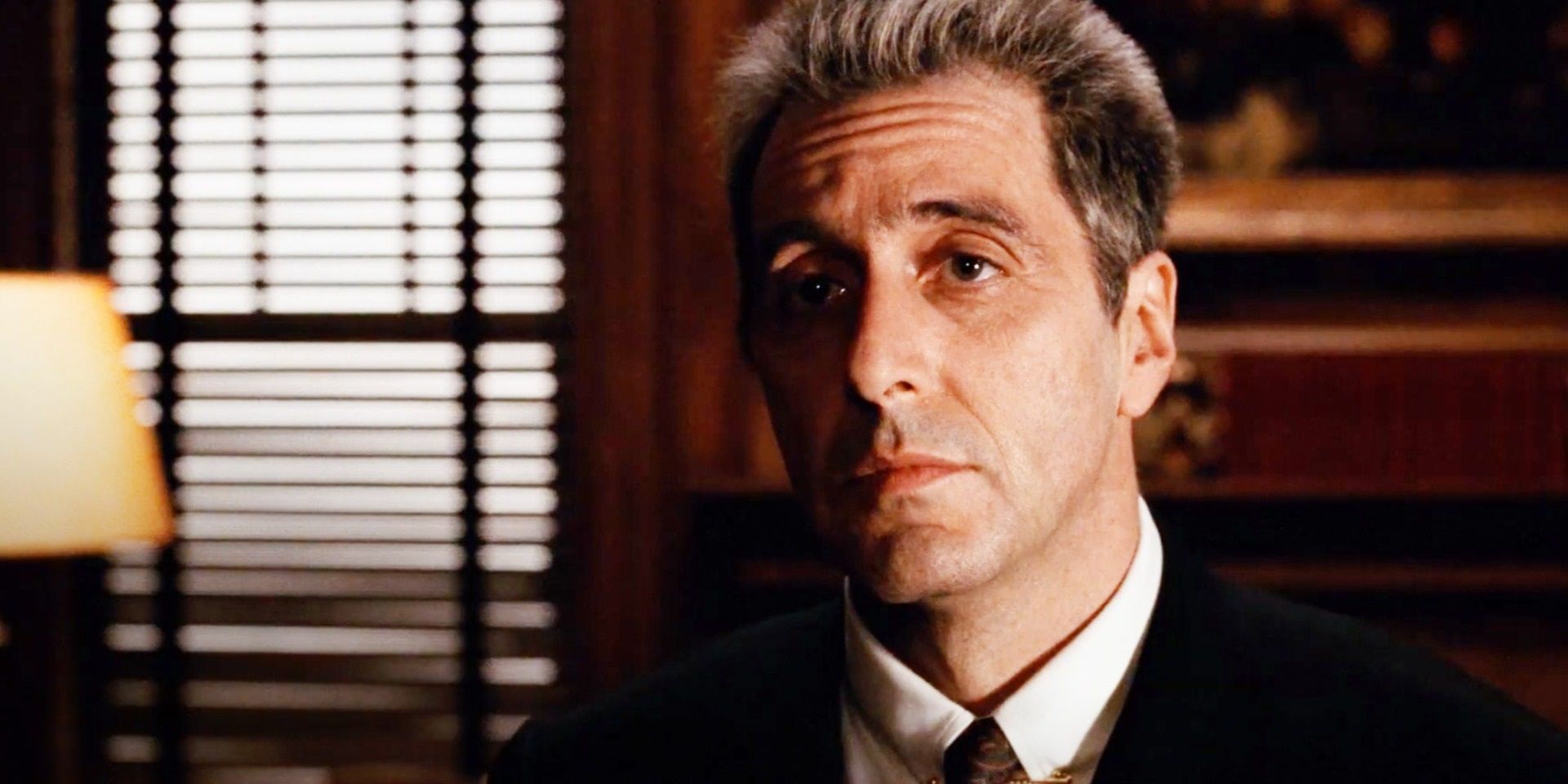
At the conclusion of The Godfather Part III, an aging Michael Corleone experiences the ultimate tragic payoff for a lifetime of ruthless ambition when his daughter Mary is accidentally assassinated on the steps of the Teatro Massimo. Michael is left isolated, broken, and full of remorse, eventually dying alone years later in Sicily while recalling the happiest moments of his family’s past.
The conclusion of Francis Ford Coppola's 1990 cinematic epic The Godfather Part III represents one of the most poignant, operatic, and devastating finales in motion picture history. Unlike the controlled, cold-blooded ascension of power that closed the first film, or the chilling isolation that defined the second, the third film's ending delivers a sweeping moral reckoning. For decades, film scholars, casual viewers, and devoted fans of Mario Puzo's crime saga have dissected the final twenty minutes of the movie. Understanding what happens requires looking beyond the immediate narrative beats to examine the parallel political and operatic structures, the psychological toll on Michael Corleone, and the thematic closure of a multi-generational tragedy.
The Convergence of Plot Threads in Palermo
To understand the finale of The Godfather Part III, one must first examine the chaotic environment in which it unfolds. The climax is set against the backdrop of a grand theatrical performance at the Teatro Massimo in Palermo, Sicily. Michael Corleone has traveled to Sicily to witness his son, Anthony Corleone, make his professional operatic debut in Pietro Mascagni’s Cavalleria Rusticana.
Simultaneously, a massive financial and ecclesiastical conspiracy reaches its boiling point. Michael has attempted to legitimize the Corleone family wealth by orchestrating a massive transaction to buy controlling interest in Immobiliare, a multinational real estate conglomerate, through a deal with the Vatican bank. However, invisible forces within the Vatican and the mafia are actively working against him. Archbishop Gilday, Chairman Don Tommasino (before his assassination), and the treacherous-looking financier Don Lucchesi have orchestrated a web of double-crosses.
Unbeknownst to Michael, his ambitious nephew, Vincent Mancini—who has now been christened the new Don of the Corleone family by Michael himself—is executing a ruthless preemptive strike to eliminate all of Michael's remaining enemies. Vincent orchestrates the simultaneous assassinations of key figures within the Vatican-Mafia cabal, including the corrupt Pope John Paul I (fictionalized as dying via poisoned tea), the treacherous accountant Keinszig, and the puppet-master Don Lucchesi, who is brutally dispatched with his own glasses by Vincent's assassin, Calò.
The Tragedy on the Steps of the Teatro Massimo
The emotional anchor of the ending takes place outside the opera house after the performance concludes. The audience spills out onto the grand stone steps of the Teatro Massimo into the cool Sicilian night. Michael, having reconciled with his estranged wife Kay Adams, believes he has successfully achieved his lifelong dream: he has transitioned the family into legitimate high society, passed the mantle of leadership to Vincent, and secured absolution for his sins.
However, a vengeful rival faction has not finished its work. Mosca di Schio, a aging hitman hired by the treacherous Don Altobello, has infiltrated the opera house disguised as a priest. Armed with a pistol, Mosca tracks Michael through the crowd.
As the family lingers on the steps, Mosca fires two shots intended for Michael. The first bullet strikes Michael in the shoulder, grazing him. In the immediate chaos and confusion, a second shot rings out. Instead of hitting Michael, the bullet strikes his beloved, innocent daughter, Mary Corleone. Mary gasps, stumbles backward, and collapses into the arms of her parents.
The ensuing sequence is legendary for its raw, silent devastation. Al Pacino’s Michael does not immediately scream; instead, a delayed, gut-wrenching realization washes over his face. When he finally pulls Mary's body into his arms and attempts to cry out, his voice fails him, emerging only as a silent, agonizing wail of utter despair. This moment fulfills the overarching curse of the Corleone family: Michael’s sins, violence, and refusal to truly walk away have directly resulted in the destruction of the one thing he loved most and sought desperately to protect.
The Ultimate Fate of Michael Corleone
The film does not end on the bloody steps of Palermo. A concluding epilogue jumps forward in time, offering a stark portrait of the former Don in his final days.
Michael is shown sitting alone in the sun-drenched courtyard of a Sicilian villa—the same property where Don Tommasino once resided. He is old, frail, and physically broken. The power, the wealth, and the Immobiliare empire are distant memories. He wears dark glasses to hide his failing health and emotional exhaustion.
As he sits in a chair, a sudden dizzy spell overtakes him. He slumps sideways out of the chair, tumbling to the ground, and dies completely alone. The screen fades to black, accompanied by a concluding quotation that encapsulates the tragic journey of the protagonist: "In the depth of my soul, I realize that the fate of man is ever what he, himself, has made it."
| Narrative Element | Initial State (Beginning of Film) | Climax (Teatro Massimo) | Final Resolution (Epilogue) |
|---|---|---|---|
| Michael's Status | Aging, seeking Vatican legitimation | Witnessing son's opera debut, relinquishing power | Retired, frail, living in isolated exile in Sicily |
| Family Leadership | Michael holds supreme control | Vincent Mancini is anointed the new Don | Vincent leads while Michael suffers in total solitude |
| Mary Corleone | Artist, in love with Vincent | Attending the opera with family | Tragically killed by Mosca's stray bullet |
| The Vatican Deal | Stalled by corrupt church officials | Sabotaged by poison and internal betrayal | Unravels entirely amidst the chaos of assassinations |
Thematic Significance of the Finale
The ending of The Godfather Part III serves as a thematic bookend to the entire trilogy. While the first film explores Michael’s reluctant descent into criminality and the second film details his moral corrosion and absolute isolation, the third film delivers the punishment.
The clever use of Cavalleria Rusticana throughout the climax creates a brilliant parallel. On stage, the opera tells a story of betrayal, jealousy, and inevitable bloodshed in a Sicilian village. Off stage, the Corleone family drama mirrors these exact operatic beats. The operatic framing elevates a standard mob story into classical tragedy, suggesting that Michael’s life was an unavoidable Greek drama scripted by his own choices.
Furthermore, the death of Mary is the ultimate manifestation of poetic justice within the cinematic universe. In the first film, Michael tells Kay that his family will be completely legitimate within five years, drawing a clear line between the violent world of the mafia and the innocent world of his wife and children. By the third film, Michael has failed to keep that boundary. He brought his children into the orbit of his empire, and the violence naturally followed them, consuming the purest member of the bloodline.
Frequently Asked Questions
Why was Mary Corleone targeted by the assassin?
Mary was not the intended target. The assassin, Mosca di Schio, was hired by Don Altobello to kill Michael Corleone. Mary was accidentally struck and killed by a stray bullet meant for her father during the confusion on the opera house steps.
Does Michael Corleone die at the end of the movie?
Yes. After a time jump showing him living out his remaining years in solitary retirement in Sicily, Michael suffers a sudden medical collapse and dies alone in a courtyard chair.
What happened to Vincent Mancini after the ending?
Following the events at the Teatro Massimo and his appointment as the new head of the family, Vincent carries on the Corleone name and criminal operations, though the film leaves his long-term fate largely unexamined after Michael's death.
How does the ending connect to the first two films?
The ending acts as the final nail in the coffin of Michael's soul. While he sought absolution from the Catholic Church—symbolized by his acceptance of an award from the Pope—true spiritual redemption is denied to him because he cannot undo the generational trauma and death he caused.
Why is the opera scene so important to the conclusion?
The opera Cavalleria Rusticana runs parallel to the murders being orchestrated by Vincent across Sicily. The swelling music, dramatic staging, and themes of vengeance mirror the real-life violence unfolding around the theater, heightening the dramatic tension of the climax.
Final Recommendation and Next Actions
To fully appreciate the narrative weight of the ending, viewers should watch the Coda: The Death of Michael Corleone, Francis Ford Coppola’s 2020 recut of the film. This alternative version features restructured opening and closing sequences that tighten the pacing, clarify the political motivations behind the Vatican bank plot, and emphasize Michael's tragic trajectory with greater emotional resonance than the original 1990 theatrical release.