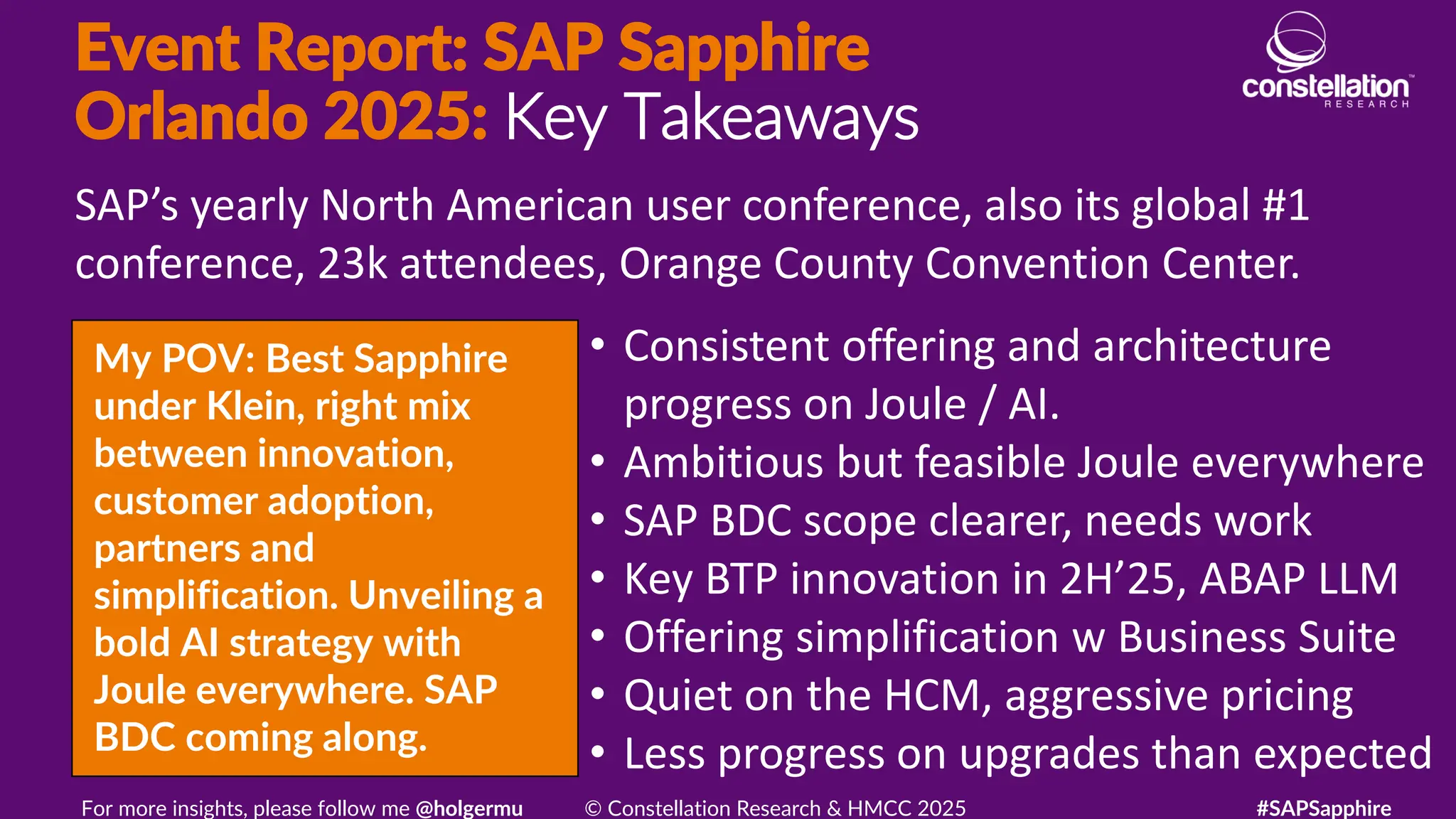
The 2025 SAP Sapphire conference delivered significant announcements focusing on artificial intelligence integration, cloud migration strategies, and enterprise supply chain resilience. This annual flagship event outlined SAP's strategic roadmap for business technology, detailing how organizations can leverage advanced data management, business AI agents, and modular enterprise resource planning to navigate digital transformation and modern market complexities.
Understanding the Strategic Context of SAP Sapphire
SAP Sapphire serves as the primary annual gathering where the software corporation showcases its technological vision, product roadmaps, and architectural shifts to a global audience of enterprise customers, partners, and developers. The 2025 event arrived at a critical juncture for enterprise software. Organizations are no longer evaluating cloud migration as a distant milestone; instead, they are actively optimizing multi-cloud environments while demanding tangible business value from emerging technologies.
The primary search intent surrounding the 2025 sap sapphire highlights and roadmap centers on understanding how newly announced capabilities will impact existing implementations, what the transition paths look like for legacy systems, and how organizations can strategically align their enterprise architectures with SAP’s multi-year vision. Navigating these updates requires distinguishing between immediate product availability and long-term roadmap commitments.
Ambiguities often arise between immediate service rollouts and features designated for future releases. Throughout the 2025 announcements, SAP emphasized a clear boundary between capabilities generally available upon announcement and those slated for beta testing or phased deployment through subsequent quarters. Enterprise IT leaders must carefully review release notes and product availability matrices before initiating major architectural shifts based on conference presentations.
Core Pillars of the 2025 SAP Sapphire Announcements
The 2025 conference structure concentrated on three foundational pillars: Business AI embedded deeply within enterprise workflows, advanced cloud ERP flexibility, and sustainable supply chain management. Each pillar addresses specific operational pressures faced by modern multinational corporations, mid-market enterprises, and public sector organizations.
Business AI and Autonomous Agents
Artificial intelligence dominated the keynotes, moving past conversational chat interfaces toward autonomous agents capable of executing complex, multi-step business processes across disparate modules.
- Context-Aware Automation: AI tools integrated directly into SAP S/4HANA Cloud are designed to interpret unstructured data, such as customer emails or supplier invoices, and autonomously initiate matching workflows without human intervention.
- Joule Copilot Enhancements: The Joule digital assistant received substantial upgrades, expanding its footprint across human resources, procurement, and financial planning modules. Joule now supports cross-system queries, pulling data simultaneously from SAP and approved third-party SaaS platforms.
- Trust, Compliance, and Governance: SAP introduced tighter governance frameworks ensuring that enterprise data utilized for large language model fine-tuning remains sequestered, secure, and compliant with regional data sovereignty regulations like the European Union's Artificial Intelligence Act.
Cloud ERP Modernization and Clean Core Strategies
Migrating to and maintaining a "clean core" in cloud environments remained a dominant technical theme for enterprise architects.
| Strategy Focus | Legacy Approach | 2025 Sapphire Modernized Approach | Primary Business Benefit |
|---|---|---|---|
| Customization | Heavy on-premise ABAP code modifications | Side-by-side extensibility via SAP Build and SAP BTP | Reduced upgrade friction and lower total cost of ownership |
| Data Architecture | Siloed regional databases and fragmented staging tables | Unified SAP Datasphere semantics and federated data access | Real-time analytics without data duplication |
| Upgrade Cycles | Multi-year, disruptive, costly major version upgrades | Continuous, automated quarterly cloud feature deliveries | Immediate access to security patches and latest innovations |
Organizations managing complex legacy transformations learned that SAP's roadmap heavily discourages deep source-code modifications inside the core ERP. Instead, the focus has shifted firmly toward side-by-side extensions using the SAP Business Technology Platform (BTP). This approach ensures that core systems remain pristine, facilitating smoother automated updates and eliminating the technical debt that traditionally plagued enterprise software deployments.
The SAP Product Roadmap: Milestones and Timelines
Evaluating the 2025 SAP Sapphire roadmap requires examining the phased rollout of capabilities across major product suites. Enterprises must map their internal IT budgeting cycles against these delivery windows to maximize operational efficiency.
SAP S/4HANA Cloud Evolution
The roadmap for SAP S/4HANA Cloud emphasizes deeper predictive analytics and automated financial close management. SAP demonstrated enhanced capabilities for continuous accounting, where automated reconciliation routines run daily rather than at traditional month-end boundaries. Furthermore, localized compliance engines were updated to handle changing global tax regulations, including electronic invoicing mandates across various international jurisdictions.
Supply Chain and Procurement Innovations
Global supply chain disruptions continue to test enterprise resilience. The 2025 roadmap highlighted advanced visibility tools within SAP Integrated Business Planning (IBP) and SAP Ariba. Key additions include predictive logistics routing that factors in weather patterns, geopolitical risk indices, and supplier financial health scores. These tools aim to transition supply chain management from reactive problem-solving to proactive disruption mitigation.
[Supplier Data Sources] ---> [SAP Datasphere] ---> [Predictive AI Models] ---> [Automated Procurement Actions in SAP Ariba]
This integrated data pipeline illustrates how raw information flows from external sensors and databases into analytical models, ultimately triggering automated purchase adjustments or alternative routing suggestions within operational execution tools.
Implementation Prerequisites and Operational Considerations
Adopting the architectural patterns outlined at SAP Sapphire 2025 requires thorough preparation. Organizations cannot simply activate these features without addressing foundational data and governance prerequisites.
Data Readiness and Cleansing
Advanced business AI and unified analytics depend entirely on data quality. Enterprises must audit their master data management practices before implementing SAP Datasphere and AI-driven automation. Siloed spreadsheets, inconsistent customer identifiers, and unmanaged legacy archives will degrade the performance of automated agents and lead to erroneous business insights.
Skills Gap and Change Management
The transition to clean core architectures and AI-augmented workflows demands new skill sets from internal IT teams and business end-users alike. Organizations must invest in continuous training programs. IT professionals need deep familiarity with SAP BTP development paradigms, low-code/no-code extension tools via SAP Build, and AI prompt engineering principles tailored to enterprise data structures.
Frequently Asked Questions
What was the primary theme of SAP Sapphire 2025?
The primary theme focused on scaling Business AI integration, advancing cloud ERP clean-core strategies, and building resilient, sustainable global supply chains through unified data management via SAP Datasphere.
How does the 2025 roadmap affect existing on-premise SAP ECC customers?
On-premise customers face the ongoing countdown toward the end of mainstream maintenance. The 2025 announcements reinforce the strategic necessity of planning a migration path to SAP S/4HANA Cloud, highlighting specialized migration tools and incentives designed to ease the transition.
What is a "clean core" strategy in SAP architecture?
A clean core strategy involves keeping the standard SAP ERP source code unmodified. Organizations build customizations and business logic externally using the SAP Business Technology Platform, which drastically simplifies future software updates and reduces maintenance costs.
How is SAP integrating artificial intelligence into its enterprise software?
SAP integrates AI through Joule, its proprietary digital assistant, and embedded machine learning algorithms within S/4HANA Cloud. These tools automate routine tasks, synthesize cross-system data, and provide predictive insights for financial and supply chain management.
What are the first steps an organization should take after reviewing the roadmap?
Enterprises should begin by conducting a comprehensive readiness assessment of their current SAP landscape, identifying custom code modifications that violate clean-core principles, and auditing their master data governance framework to prepare for advanced analytics and AI adoption.
Strategic Recommendations and Next Actions
To capitalize on the innovations showcased at SAP Sapphire 2025, enterprise leaders should initiate a structured audit of their current IT infrastructure. First, map all existing custom modifications against the capabilities of SAP BTP to plan your migration toward a clean-core architecture. Second, establish a cross-functional governance committee comprising IT, finance, and supply chain stakeholders to evaluate where Business AI agents can deliver the highest immediate return on investment. Finally, engage with certified SAP implementation partners to review your specific version upgrade paths and align your multi-year capital expenditure roadmap with SAP’s official release schedules.