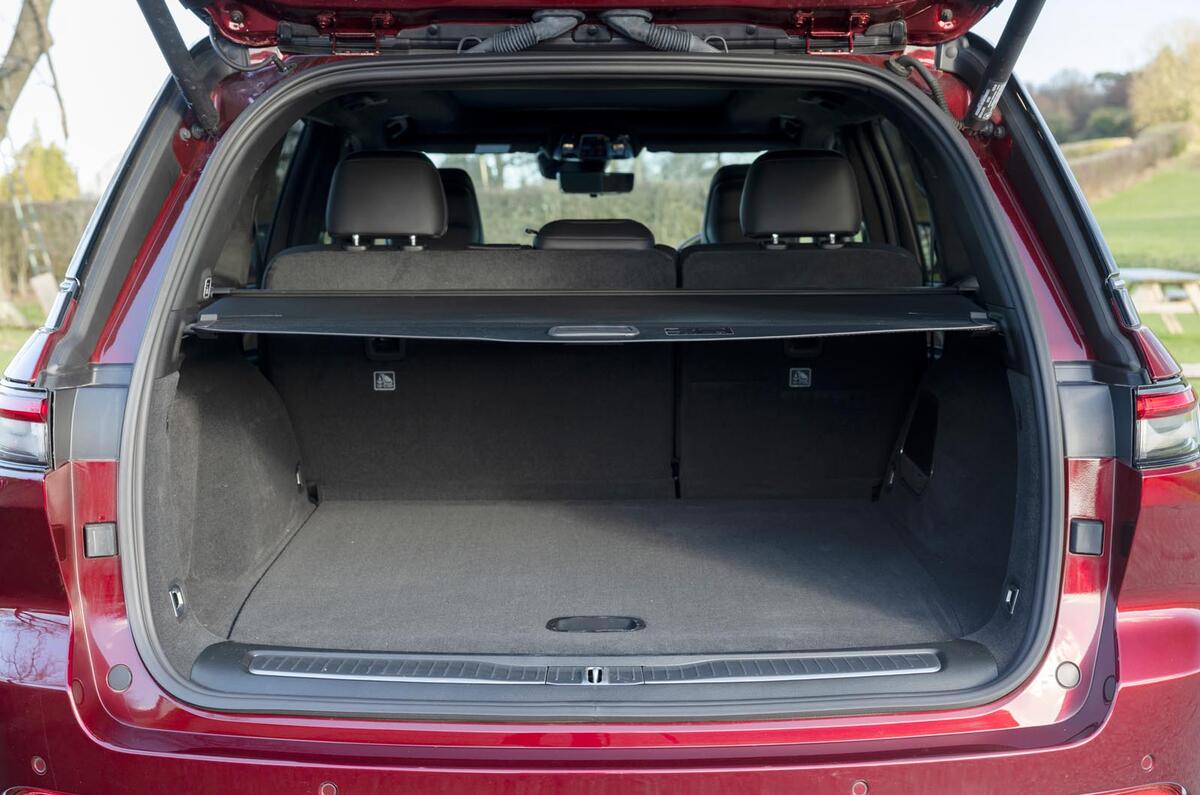
The 2014 Jeep Grand Cherokee offers 36.3 cubic feet of cargo space behind the second-row seats, which expands to 68.3 cubic feet when the rear 60/40 split-bench seats are folded flat. This capacity provides a balanced mix of passenger comfort and hauling capability for daily errands, outdoor gear, and road trips.
Evaluating a midsize SUV requires looking past simple brochures to understand how interior measurements translate into real-world utility. The 2014 model year marked a significant milestone for the fourth-generation Grand Cherokee, featuring a refreshed exterior, a refined interior, and the introduction of an eight-speed automatic transmission across almost all trim levels. While drivers often focus on towing capacities—which reach up to 7,400 pounds when properly equipped—the interior cargo dimensions dictate how well the vehicle handles luggage, camping equipment, and bulky cargo.
Understanding these measurements involves analyzing length, width, height, and overall volume configurations. This breakdown examines the precise dimensions of the 2014 Jeep Grand Cherokee cargo area, analyzes its configuration limits, compares it with period competitors, and offers practical loading strategies to maximize interior space.
Evolution and Design Context of the 2014 Interior Layout
The fourth-generation Jeep Grand Cherokee (WK2 platform), produced from the 2011 through 2022 model years, underwent a major mid-cycle refresh for 2014. Engineers designed the cabin to balance rugged utility with refined comfort, maintaining a two-row, five-passenger layout across all trim levels, ranging from the base Laredo to the high-end Summit and performance-focused SRT.
Unlike some competitors that attempt to squeeze a cramped third row into a midsize footprint, Jeep kept the Grand Cherokee strictly as a five-seater. This decision preserves generous legroom and ensures that the cargo area remains deep and wide. The load floor was engineered to sit relatively flat when the rear seats are folded, minimizing awkward ridges that typically interfere with sliding large boxes or furniture pieces into the cabin.
Furthermore, the integration of under-floor storage compartments around the spare tire well adds hidden utility for smaller tools, emergency kits, or recovery gear. The rear hatch opens wide, though the sloping D-pillars and the aerodynamic roofline slightly taper the vertical clearance near the tailgate opening compared to boxier, traditional SUV profiles.
Detailed Breakdown of Cargo Volume and Floor Dimensions
When analyzing the 2014 Jeep Grand Cherokee cargo space dimensions, it helps to separate the numbers into two primary configurations: seats up and seats folded.
With all five seating positions occupied, the cargo area provides 36.3 cubic feet of volume. Measured from the back of the second-row seatbacks to the interior tailgate panel, the floor length in this configuration is approximately 38 to 39 inches. This space easily accommodates multiple suitcases, grocery bags, or a medium-sized dog crate.
When the rear 60/40 split seats are folded completely flat, the available volume increases to 68.3 cubic feet. In this two-passenger configuration, the maximum floor length from the tailgate to the back of the front seats extends to roughly 69 to 70 inches (depending on front seat adjustment). This length allows adults to utilize the rear for camping gear, lumber, or longer recreational items like snowboards and surfboards.
| Cargo Configuration | Volume (Cubic Feet) | Maximum Floor Length | Between Wheel Wells Width | Maximum Height |
|---|---|---|---|---|
| Rear Seats Up | 36.3 cu. ft. | ~39 inches | ~40.5 inches | ~32 inches |
| Rear Seats Folded | 68.3 cu. ft. | ~70 inches | ~40.5 inches | ~32 inches |
The width between the wheel wells measures approximately 40.5 inches. This dimension is critical because it dictates whether standard sheet goods, such as drywall or plywood (which measure 48 inches wide), can lay flat on the floor. Because the wheel well housings narrow the space to 40.5 inches, flat panel goods cannot rest completely flat on the floor without being angled or supported above the wheel wells, a common characteristic of unibody midsize SUVs in this class.
Practical Utility and Real-World Loading Limitations
While the raw numbers—36.3 and 68.3 cubic feet—provide a baseline, real-world utility depends heavily on aperture shape, liftgate geometry, and interior obstructions.
The liftgate opening features a fairly square design, but the structural taper near the roofline means that tall, boxy items must be measured carefully before loading. The liftgate itself opens high enough to clear most adults, preventing head bumps, and can be optioned with a power-liftgate feature on higher trims like the Limited, Overland, and Summit.
The load-floor height sits at approximately 32 inches from the ground. While this is standard for four-wheel-drive and all-wheel-drive vehicles with independent or solid-axle rear suspensions, lifting heavy items like generators or large coolers requires a deliberate vertical lift.
Key Interior Features Impacting Cargo Management:
- Tie-Down Anchors: Four sturdy chrome tie-down loops are positioned on the cargo floor to secure cargo nets or ratchet straps, preventing shifting during off-road driving or sudden braking.
- Storage Bins: Small side pockets and under-floor organizers keep loose items from rolling around.
- Reclining Rear Seats: The second-row seatbacks feature a reclining function, which slightly adjusts cargo volume depending on passenger comfort preferences.
- Fold-Flat Front Passenger Seat: Available on select trims, the front passenger seat can fold forward entirely flat, allowing extremely long items (up to 8 feet) to be transported safely inside the cabin.
Comparison with Class Competitors
In the midsize SUV segment, interior dimensions vary based on whether a manufacturer prioritizes third-row seating or maximizes two-row spaciousness. For the 2014 model year, primary competitors included the Ford Explorer, Toyota Highlander, and Chevrolet Traverse.
Unlike the Grand Cherokee, the Ford Explorer and Toyota Highlander offered standard or optional third rows. However, with all rear seats folded, their maximum cargo capacities varied significantly. The Ford Explorer provided up to 80.7 cubic feet, and the Chevrolet Traverse (a larger crossover) exceeded 116 cubic feet.
| Vehicle (2014 Model Year) | Cargo Space (Seats Up) | Max Cargo Space (Seats Folded) | Drivetrain Layout |
|---|---|---|---|
| Jeep Grand Cherokee | 36.3 cu. ft. | 68.3 cu. ft. | Unibody, RWD/4WD |
| Ford Explorer | 21.0 cu. ft. | 80.7 cu. ft. | Unibody, FWD/AWD |
| Toyota Highlander | 13.8 cu. ft. | 83.7 cu. ft. | Unibody, FWD/AWD |
| Subaru Outback | 35.5 cu. ft. | 73.3 cu. ft. | Unibody, Standard AWD |
As shown in the comparison, vehicles with third rows often sacrifice trunk space when all seats are in use (dropping below 25 cubic feet). The 2014 Jeep Grand Cherokee maintains a much larger dedicated trunk area with passengers in the back (36.3 cubic feet) because it does not dedicate cabin volume to a third row. Conversely, when maximum hauling space is required with seats folded, longer three-row crossovers surpass the Grand Cherokee's 68.3 cubic feet due to their more extended rear overhangs.
Common Mistakes and Best Practices for Maximizing Space
Loading a midsize SUV efficiently requires understanding weight distribution and physical clearance limits. Drivers frequently encounter challenges when attempting to maximize the 2014 Grand Cherokee's interior volume.
Avoiding Common Loading Errors:
- Overlooking Gross Vehicle Weight Rating (GVWR): The maximum weight limit for passengers and cargo combined is typically around 1,050 to 1,350 pounds depending on the specific engine (V6, V8, or EcoDiesel) and drivetrain. Heavy cargo combined with a full passenger load can exceed payload limits.
- Stacking Above Seatback Height: Loading items higher than the top of the second-row seatbacks without a protective cargo barrier poses a safety hazard during sudden stops, as loose objects can become projectiles.
- Forcing Rigid Panels Between Wheel Wells: Attempting to force 4x8 building materials flat onto the 40.5-inch wide floor can damage interior trim panels. Utilizing roof racks or a small utility trailer is recommended for oversized building supplies.
Best Practices for Safe Transport:
- Utilize Tie-Downs: Always hook heavy gear to the floor-mounted anchors to prevent sliding during cornering or off-road excursions.
- Distribute Weight Evenly: Place heavier items on the floor directly behind the front seats rather than near the tailgate to maintain optimal vehicle handling and braking balance.
- Protect Interior Trim: Use heavy-duty rubber mats or moving blankets to prevent scuffing the soft-touch plastics and leather surfaces common in mid-to-high trim levels like the Overland and Summit.
Frequently Asked Questions
Can you fit a mattress in the back of a 2014 Jeep Grand Cherokee?
A standard full-size or twin mattress can typically fit if the rear seats are folded flat and the front seats are pushed slightly forward, though it may curve upward near the edges due to the 40.5-inch width between the wheel wells. A standard queen mattress (which is 60 inches wide) will not fit flat between the wheel wells and cannot be laid horizontally without bending the edges significantly.
Are the rear seats completely flat when folded?
The rear seats on the 2014 model fold nearly flat, creating a minor incline of a few degrees rather than a 100% level horizontal surface. While this slight angle is virtually unnoticeable for standard luggage and boxes, anyone planning to use the rear area for sleeping or camping will want to use a thick sleeping pad or mattress topper to level out the surface.
Does the 2014 Jeep Grand Cherokee have under-floor cargo storage?
Yes. Lifting the main cargo floor panel reveals a molded storage tray surrounding the spare tire. This hidden compartment is useful for storing jumper cables, emergency roadside equipment, tow straps, and smaller flat items out of sight.
How much weight can the cargo area safely hold?
The maximum cargo and passenger weight capacity (payload) for the 2014 Jeep Grand Cherokee generally ranges between 1,050 and 1,350 pounds, depending on whether the vehicle is equipped with the 3.6L V6, the 5.7L V8, or the 3.0L EcoDiesel V6 engine. Heavier engine configurations slightly reduce the available payload capacity due to the heavier front-end weight of the motor.
Is a power liftgate standard on all 2014 trims?
No. A power-operated liftgate was standard or optional on higher trim levels such as the Limited, Overland, and Summit, but base Laredo models typically featured a manual liftgate with a flip-up glass window feature that allowed loading smaller items without opening the entire tailgate.
Practical Recommendations and Next Actions
Before purchasing gear, furniture, or loading for an extensive road trip in a 2014 Jeep Grand Cherokee, take physical tape-measurements of your items and compare them against the 40.5-inch wheel-well width and 69-inch maximum floor length. If you frequently transport oversized items that exceed these interior dimensions, consider investing in aftermarket roof crossbars and a rooftop cargo box to utilize the vehicle's exterior vertical space safely without straining interior limits.