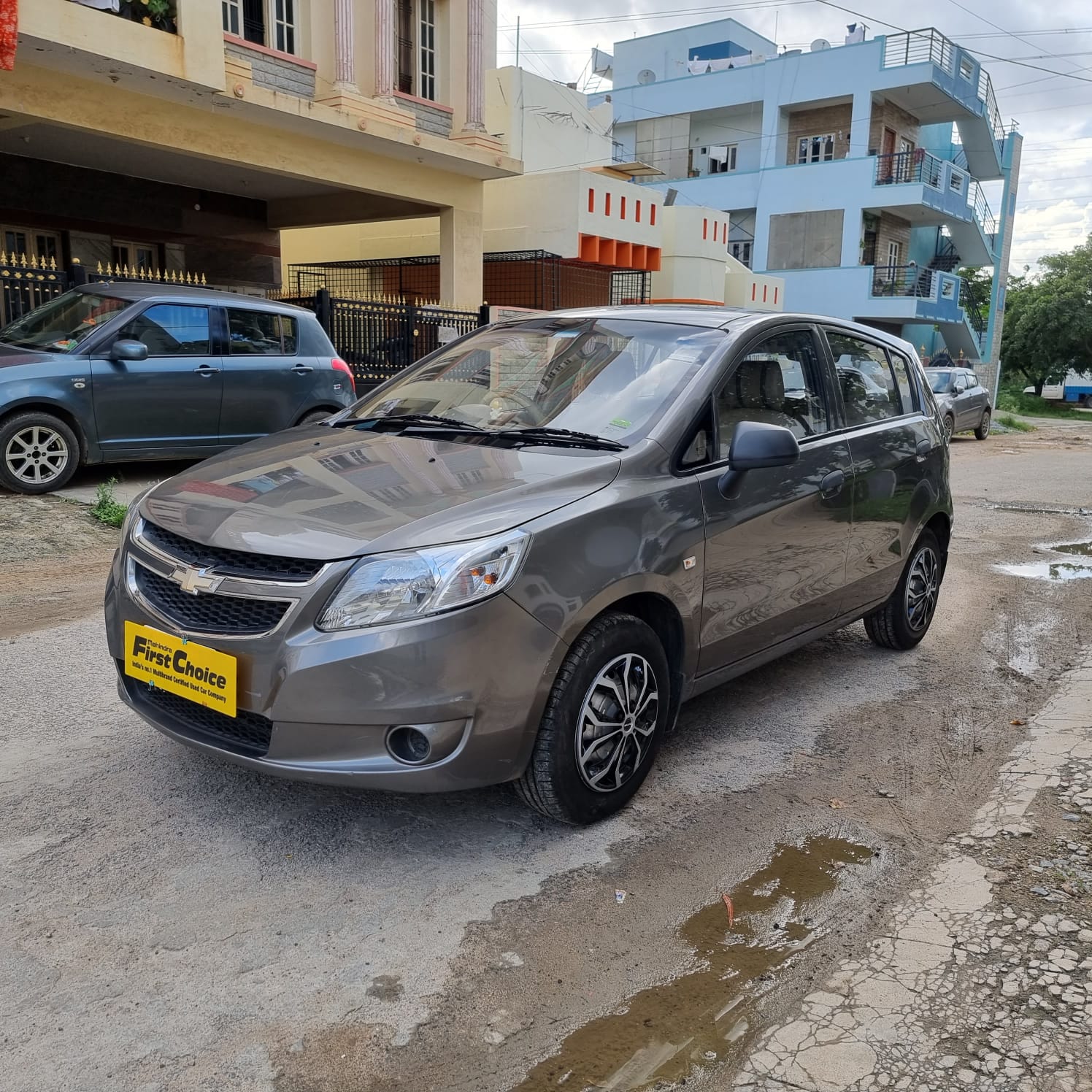
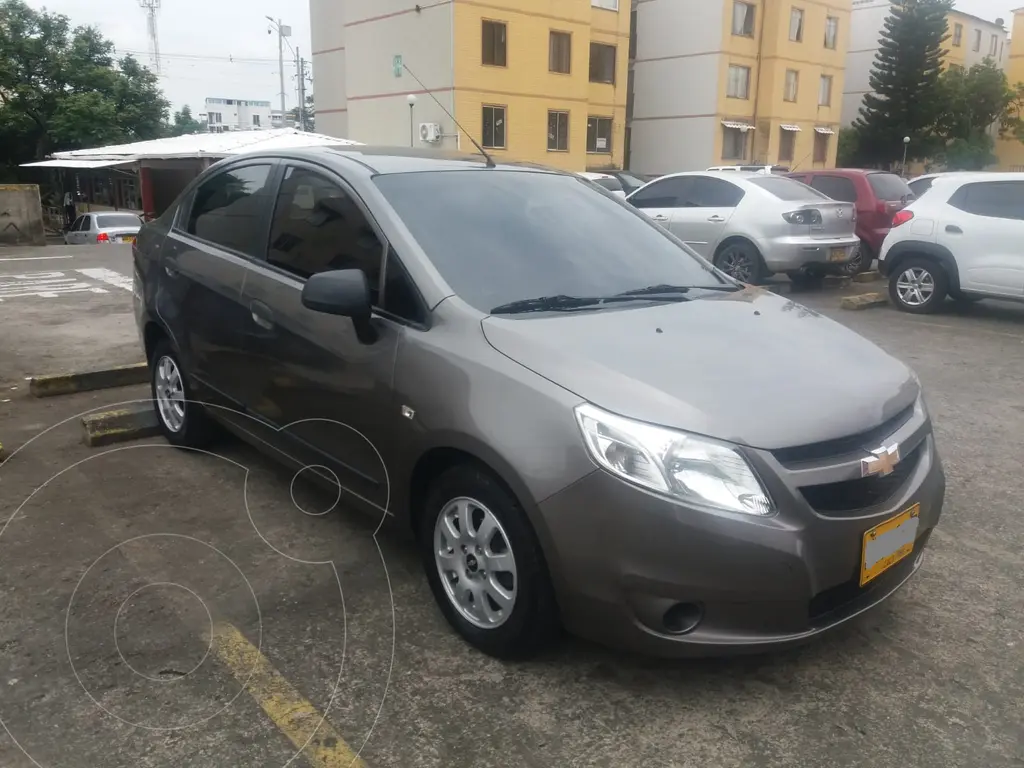
The 2014 Chevrolet Sail is a subcompact B-segment sedan and hatchback developed by the SAIC-GM joint venture, engineered primarily for value-driven emerging markets. Offered with a 1.2-liter petrol or a 1.3-liter turbo-diesel engine, it delivers generous rear cabin space, compliant ride comfort, and practical fuel economy, making it a functional contender in the used vehicle market.
Market Context and Positioning
The 2014 Chevrolet Sail represented General Motors' strategy to capture volume sales in rapidly growing automotive markets across Asia, Latin America, and parts of the Middle East. Developed in China through the Shanghai General Motors (SAIC-GM) partnership, the platform was specifically tailored to satisfy buyer demands for interior cabin space, simple mechanical layouts, and low maintenance costs.
In markets like India, the Sail was introduced in two distinct body styles: the Sail U-VA (hatchback) and the standard Sail Sedan. It effectively replaced the aging Chevrolet Aveo platform, adopting a cleaner aesthetic and more modern diesel engine technology. Rather than targeting premium features or sports-tuned dynamics, Chevrolet positioned the Sail squarely against budget-conscious family vehicles such as the Maruti Suzuki Swift Dzire, Hyundai Xcent, and Honda Amaze.
Although General Motors later restructured its international operations and phased out domestic vehicle sales in several entry-level markets, the 2014 Sail remains a prevalent option on the secondary market. Its legacy is defined by robust platform engineering, low acquisition costs, and practical daily utility.
Exterior Design, Dimensions, and Platform Architecture
The design of the 2014 Chevrolet Sail prioritizes interior passenger volume over aggressive exterior styling. Its silhouette features a cab-forward design, short front overhangs, and a high roofline intended to maximize interior headroom.
- Front Fascia
- Chevrolet Bow-Tie
- Split-Port Grille
- Hawk-Wing Headlamps
- Side Profile
- High Roofline
- Rising Character Line
- 14-Inch Alloy/Steel
- Rear End
- Elevated Boot Lip
- High-Mounted Tail Lamp
- Wrap-around Bumper
Front and Rear Styling
The front end incorporates Chevrolet’s signature dual-port grille divided by a horizontal bar housing the gold bow-tie emblem. Swept-back "hawk-wing" headlight clusters extend into the front fenders, giving the vehicle a wide stance. The lower front bumper integrates a wide cooling duct along with recessed fog lamps on mid-to-high trim levels.
At the rear, the Sail Sedan features a short, elevated boot deck designed to improve aerodynamic efficiency and cargo space. The tail lamps are mounted vertically along the rear quarters, offering high visibility for trailing traffic. The hatchback variant (Sail U-VA) adopts a vertical rear hatch layout with integrated tailgate lighting, emphasizing utilitarian rear access.
Chassis and Exterior Dimensions
The vehicle utilizes GM's Small-Engine Smart Car (S-ESC) platform, constructed with high-strength steel in critical load-bearing zones to balance structural rigidity with curb weight.
- Overall Length (Sedan): 4,249 mm
- Overall Length (Hatchback): 3,947 mm
- Overall Width: 1,690 mm
- Overall Height: 1,503 mm
- Wheelbase: 2,465 mm
- Ground Clearance: 174 mm (unladen)
- Curb Weight: 1,060 kg to 1,124 kg (depending on engine and trim)
- Turning Radius: 5.15 meters
The generous 174 mm ground clearance was a specific engineering choice to accommodate uneven road surfaces, speed humps, and unpaved terrain common in target markets.
Engine Options, Transmission, and Performance
The 2014 Chevrolet Sail came equipped with two distinct 4-cylinder engine choices: a naturally aspirated petrol unit and a turbocharged common-rail diesel unit. Both engines were coupled exclusively to a 5-speed manual transmission; no automatic gearbox option was offered for this model year in most regional markets.
- 2014 Chevrolet Sail
- 1.2L Petrol
- 83.8 HP / 108.5Nm
- 1.3L Diesel
- 74 HP / 190 Nm
- 1.2L Petrol
1.2-Liter Smartech Petrol Engine
The 1.2-liter Smartech petrol engine features a dual overhead camshaft (DOHC) design with 16 valves. It was developed with lightweight aluminum components to enhance fuel efficiency and reduce front-axle weight.
- Displacement: 1,199 cc
- Maximum Power: 83.8 HP (62.5 kW) @ 6,000 RPM
- Maximum Torque: 108.5 Nm @ 4,400 RPM
- Fuel System: Multi-Point Fuel Injection (MPFI)
In driving conditions, the 1.2-liter petrol engine displays smooth idling characteristics and predictable throttle response. Low-end torque is modest, requiring drivers to downshift during low-speed maneuvers or steep highway climbs. It excels primarily in urban stop-and-go environments, offering quiet operation at low to mid RPM ranges.
1.3-Liter Smartech Turbo-Diesel Engine
The 1.3-liter Smartech diesel engine is derived from the widely acclaimed Fiat-sourced Multijet architecture, customized by GM Powertrain engineers. It features a fixed-geometry turbocharger with an intercooler and a common-rail direct injection (CRDI) fuel delivery system.
- Displacement: 1,248 cc
- Maximum Power: 74 HP (55 kW) @ 4,000 RPM
- Maximum Torque: 190 Nm @ 1,750 – 3,250 RPM
- Fuel System: Common Rail Direct Injection with Turbocharger
The diesel variant delivers strong mid-range pulling power due to its 190 Nm torque curve, which peaks early at 1,750 RPM. Below 1,600 RPM, turbo lag is noticeable, necessitating gear changes when accelerating from slow speeds. Once within its powerband, the engine provides confident overtaking power and effortless highway cruising capacity.
Transmission and Drivetrain Characteristics
Both engines drive the front wheels via a 5-speed manual gearbox utilizing a cable-shift mechanism. Gear engagement is light, though the shift gates lack the short, crisp throw found in sportier sedans. The clutch pedal effort is relatively light, reducing driver fatigue in heavy traffic.
Ride, Handling, and Steering Dynamics
The suspension architecture of the 2014 Chevrolet Sail consists of independent MacPherson struts with coil springs and a stabilizer bar at the front, paired with a semi-independent torsion beam axle at the rear.
- Front Axle
- MacPherson Strut
- Coil Springs
- Stabilizer Bar
- Rear Axle
- Torsion Beam Axle
- Coil Springs
- Twin-Tube Dampers
Suspension Tuning and Comfort
The suspension dampening is tuned primarily for ride compliance over rough surfaces. Small pavement imperfections and expansion joints are absorbed effectively by the long-suspension travel. Body roll is present when negotiating tight corners at higher speeds, reflecting the vehicle's tall stance and comfort-oriented spring rates.
Steering and Braking Systems
- Steering: Hydraulically assisted rack-and-pinion system. It provides consistent weight at highway speeds, though feedback directly from the road surface is relatively muted.
- Braking: Ventilated disc brakes on the front axle and self-adjusting drum brakes on the rear. Upper-tier trims include an Anti-lock Braking System (ABS) paired with Electronic Brakeforce Distribution (EBD).
Brake pedal feel is progressive, providing predictable stopping distances under normal operating conditions. Under sudden emergency braking, non-ABS variants can lock their wheels, making ABS-equipped variants significantly preferable on the second-hand market.
Interior Cabin, Ergonomics, and Cargo Space
The interior of the 2014 Sail adopts a "dual-cockpit" layout concept, a design trait shared across contemporary Chevrolet models. The dashboard uses a two-tone color palette (typically light beige and dark coffee brown), designed to heighten the perception of interior space.
- Dashboard Layout
- Instrument Cluster: Digital Tachometer, Analog Speedometer
- 2-DIN Audio: Bluetooth / USB, Climate Control Switches
- Glovebox
- Center Console Mounted Window Switches
Dashboard Layout and Driver Controls
The instrument cluster features an analog speedometer flanked by a digital display unit that combines a digital tachometer, fuel gauge, and trip computer readouts. While the digital readout gives the cluster a distinct look, the small tachometer bars can be harder to read at a quick glance compared to traditional needle-based dials.
A notable ergonomic quirk of the 2014 Sail is the placement of the power window controls. Rather than being positioned on the driver's door armrest, the window switches are located at the base of the center console ahead of the gear lever. This placement was implemented as a cost-reduction strategy to simplify door wiring harnesses, requiring a short adjustment period for drivers unaccustomed to the layout.
Seating, Comfort, and Material Quality
- Front Seats: Offer adequate thigh support and manual slide/recline adjustments. Driver height adjustment is available on upper trim levels (LT and LTZ).
- Rear Seats: A major highlight of the Sail is its rear passenger space. The flat rear floor pan allows three adults to sit comfortably with generous knee clearance and headroom.
- Materials: Hard plastics dominate the dashboard and door panels. While durable and easy to clean, the materials reflect budget-oriented manufacturing.
Storage and Cargo Utility
The 2014 Chevrolet Sail Sedan features a 370-liter boot capacity. The boot aperture is wide, allowing larger suitcases to be loaded easily. The hatchback version provides 248 liters of luggage space, which can be expanded by folding down the rear seatback.
Interior storage solutions include:
- Front door bottle holders with map pockets.
- A open dashboard tray above the glovebox for mobile devices.
- Dual cup holders adjacent to the handbrake lever.
- Under-seat storage tray located beneath the front passenger seat on select trims.
Trim Levels and Feature Equipment
Depending on the region, the 2014 Chevrolet Sail was offered in multiple trim levels (typically named Base, LS, LT, and LTZ).
| Feature / Equipment | Base Trim | LS Trim | LT / LTZ Trim |
|---|---|---|---|
| Air Conditioning | Manual | Manual with rear vents | Manual with high-capacity compressor |
| Power Windows | Front Only | Front & Rear | Front & Rear |
| Central Locking | Manual | Keyless Entry | Remote Keyless Entry |
| Audio System | Pre-wired (No Head Unit) | 1-DIN FM/AM/Aux | 2-DIN Bluetooth/USB/Aux/CD |
| Power Steering | Hydraulic | Hydraulic | Hydraulic |
| Braking System | Standard (No ABS) | Standard / Optional ABS | ABS with EBD |
| Airbags | None | Driver Only (Optional) | Dual Front Airbags |
| Wheels | 14-inch Steel | 14-inch Steel with Covers | 14-inch Alloy Wheels |
| Fabric / Upholstery | Basic Cloth | Fabric | Premium Fabric |
The top-tier LTZ trim added cosmetic updates such as chrome accents on the air vents, leather-wrapped steering wheel accents, rear parking sensors, and electrically adjustable outside rearview mirrors (ORVMs).
Technical Specifications Matrix
Below is a detailed engineering comparison of the two powertrain options available for the 2014 Chevrolet Sail:
| Technical Parameter | 1.2L Smartech Petrol | 1.3L Smartech Turbo-Diesel |
|---|---|---|
| Engine Type | Inline 4-Cylinder, DOHC, 16V | Inline 4-Cylinder, DOHC, 16V |
| Displacement | 1,199 cc | 1,248 cc |
| Bore x Stroke | 69.6 mm x 79.0 mm | 69.6 mm x 82.0 mm |
| Fuel Delivery | Multi-Point Fuel Injection (MPFI) | Common Rail Direct Injection (CRDI) |
| Aspiration | Naturally Aspirated | Turbocharged with Intercooler |
| Max Power Output | 83.8 HP (62.5 kW) @ 6,000 RPM | 74 HP (55 kW) @ 4,000 RPM |
| Max Torque | 108.5 Nm @ 4,400 RPM | 190 Nm @ 1,750 – 3,250 RPM |
| Transmission | 5-Speed Manual | 5-Speed Manual |
| Claimed Fuel Economy | ~18.2 km/L (approx. 42.8 mpg) | ~22.1 km/L (approx. 52.0 mpg) |
| Fuel Tank Capacity | 42 Liters | 42 Liters |
| Top Speed | ~160 km/h | ~165 km/h |
| Front Suspension | MacPherson Strut with Coil Spring | MacPherson Strut with Coil Spring |
| Rear Suspension | Torsion Beam Axle | Torsion Beam Axle |
| Brake System (Front/Rear) | Ventilated Disc / Drum | Ventilated Disc / Drum |
| Tire Size | 175/70 R14 | 175/70 R14 |
Fuel Economy and Real-World Ownership Costs
Fuel efficiency was a primary marketing pillar for the Chevrolet Sail range. The vehicle offers competitive mileage figures that keep operational expenditure low.
- 1.2L Petrol Real-World Figures:
- Urban Driving: 11.5 – 13.0 km/L
- Highway Driving: 15.5 – 17.0 km/L
- 1.3L Diesel Real-World Figures:
- Urban Driving: 15.0 – 17.0 km/L
- Highway Driving: 19.5 – 22.0 km/L
With a 42-liter fuel tank capacity, the diesel variant routinely delivers a highway range exceeding 800 kilometers on a single fill-up, making it well-suited for long-distance commuter roles.
Safety Features and Structural Performance
By current automotive standards, safety equipment on the 2014 Chevrolet Sail is basic, reflecting the regulations of its release era.
- 2014 Safety Architecture
- Active Safety
- ABS with EBD
- High Mount Stop Lamp
- Passive Safety
- Dual SRS Airbags
- High-Strength Steel Cage
- Active Safety
Safety Equipment Breakdown
- Anti-Lock Braking System (ABS) with EBD: Helps prevent wheel lockup under severe deceleration, allowing steering control during emergency stops (standard on high trims).
- Dual SRS Front Airbags: Supplemental Restraint Systems for the driver and front passenger designed to mitigate head and chest impacts (standard on LT/LTZ trims).
- Passenger Cell Safety Cage: Incorporates crumple zones at the front and rear to absorb collision energy, alongside side-impact protection beams inside all four doors.
- Child Safety Locks & Seatbelts: Rear door child locks paired with 3-point seatbelts for outer rear passengers and a center lap belt.
Note on Crash Tests: Lower-tier trims lacking airbags and ABS received poor ratings in structural crash testing evaluations conducted by independent crash safety programs like Global NCAP. Buyers considering a used 2014 Sail are strongly advised to select top-tier trims equipped with factory airbags and ABS.
Common Issues, Reliability Concerns, and Maintenance Requirements
Evaluating a 2014 Chevrolet Sail on the secondary market requires awareness of several documented mechanical and structural wear areas.
1. Diesel Exhaust Gas Recirculation (EGR) & Injector Buildup
The 1.3-liter diesel engine can accumulate carbon deposits within the EGR valve over time, particularly if driven exclusively in low-speed urban conditions. Symptoms include sluggish acceleration, excessive black tailpipe smoke, and uneven idling. Periodic cleaning of the EGR valve and intake manifold every 40,000 km mitigates this issue.
2. Front Suspension Wear
The front MacPherson strut mountings, sway bar links, and lower arm bushings tend to exhibit wear around the 60,000 to 80,000 km mark. Drivers may notice clunking noises over bumps or imprecise steering feel. Replacement of rubber bushings and stabilizer links restores steering precision.
3. Engine Mount Deterioration
Both petrol and diesel variants use rubber engine mounts that deteriorate over time. Worn mounts lead to increased cabin vibration, felt primarily through the gear lever, steering wheel, and floor pedals while idling.
4. Electrical and Switchgear Wear
The central console power window switches are prone to mechanical fatigue or contact failure due to spilled liquids or heavy daily use. Inspection of all power window controls, central locking relays, and climate control dials should be conducted prior to purchase.
5. Spare Parts Availability Post-GM Withdrawal
Since General Motors wound down retail operations in several domestic markets, main dealer service networks may no longer exist in certain areas. However, because the 1.3L diesel engine shares major component architecture with other volume manufacturers (such as Fiat, Suzuki, and Opel), core engine components remain readily available through third-party automotive supply networks and OEM brands like ACDelco.
Buyer's Checklist for a Used 2014 Chevrolet Sail
If inspecting a pre-owned 2014 Chevrolet Sail, follow this practical checklist:
- Engine Smoke Inspection: Start a cold diesel engine and observe the tailpipe. Brief light smoke is normal; persistent blue or dark black smoke indicates turbocharger seal failure or worn injectors.
- Clutch Engagement: Verify that the clutch pedal engages smoothly without chatter. A high release point or slipping gear acceleration indicates clutch disc wear.
- Underbody Rust Check: Examine the lower door sills, wheel arches, and floor pans for corrosion, especially in coastal regions.
- Coolant & Oil Leak Checks: Inspect the engine bay for oil leaks around the valve cover gasket and front main seal. Check the radiator tank for clean coolant free of oil contamination.
- Air Conditioning Operation: Run the air conditioning system at maximum cooling capacity. Listen for compressor clutch engagement noises and check for consistent cold air discharge across all vents.
- Verify Trim Level: Ensure the vehicle possesses functioning ABS and dual front airbags by checking the instrument cluster warning lights during ignition start.
Frequently Asked Questions
What engine options were available in the 2014 Chevrolet Sail?
The 2014 Chevrolet Sail was offered with two engine choices: a 1.2-liter 4-cylinder Smartech petrol engine generating 83.8 HP, and a 1.3-liter 4-cylinder Smartech turbo-diesel engine generating 74 HP and 190 Nm of torque.
Did the 2014 Chevrolet Sail come with an automatic transmission?
No, the 2014 Chevrolet Sail was produced exclusively with a 5-speed manual transmission for most international markets. No automatic or automated-manual transmission (AMT) was offered for this model year.
How spacious is the boot of the 2014 Chevrolet Sail?
The 2014 Chevrolet Sail Sedan features a boot volume of 370 liters. The hatchback variant (Sail U-VA) offers 248 liters of storage space, which can be expanded by folding down the rear seats.
Is it easy to find spare parts for a 2014 Chevrolet Sail today?
Yes, basic mechanical maintenance parts remain available through independent auto parts retailers and ACDelco distributors. Because the 1.3-liter diesel engine shares its core architecture with Fiat and Suzuki vehicles, engine service components are readily accessible. Body panels and interior trim pieces may require sourcing through specialized suppliers or secondary used markets.
What is the real-world fuel economy of the 2014 Chevrolet Sail Diesel?
The 1.3-liter diesel engine delivers approximately 15 to 17 km/L in urban city driving and between 19 and 22 km/L during steady-state highway cruising when properly maintained.
What are the main trim levels of the 2014 Chevrolet Sail?
The 2014 Sail was sold in Base, LS, LT, and LTZ configurations. Upper trims like the LT and LTZ are equipped with critical safety and convenience features, including ABS with EBD, dual front airbags, integrated Bluetooth audio, and alloy wheels.
Final Verdict and Recommendation
The 2014 Chevrolet Sail remains a utilitarian vehicle focused on passenger room, ride comfort, and operational economy. Its spacious rear bench, compliant suspension setup over degraded road surfaces, and frugal 1.3-liter diesel engine make it a practical daily commuter or secondary household car.
While its cabin materials are unpretentious and its driving dynamics emphasize comfort over performance, a well-maintained 2014 Sail—specifically in an ABS and airbag-equipped LT or LTZ trim—offers reliable transport at a low secondary-market price point. Used car buyers should prioritize vehicles with complete service records, minimal suspension wear, and verified safety equipment.