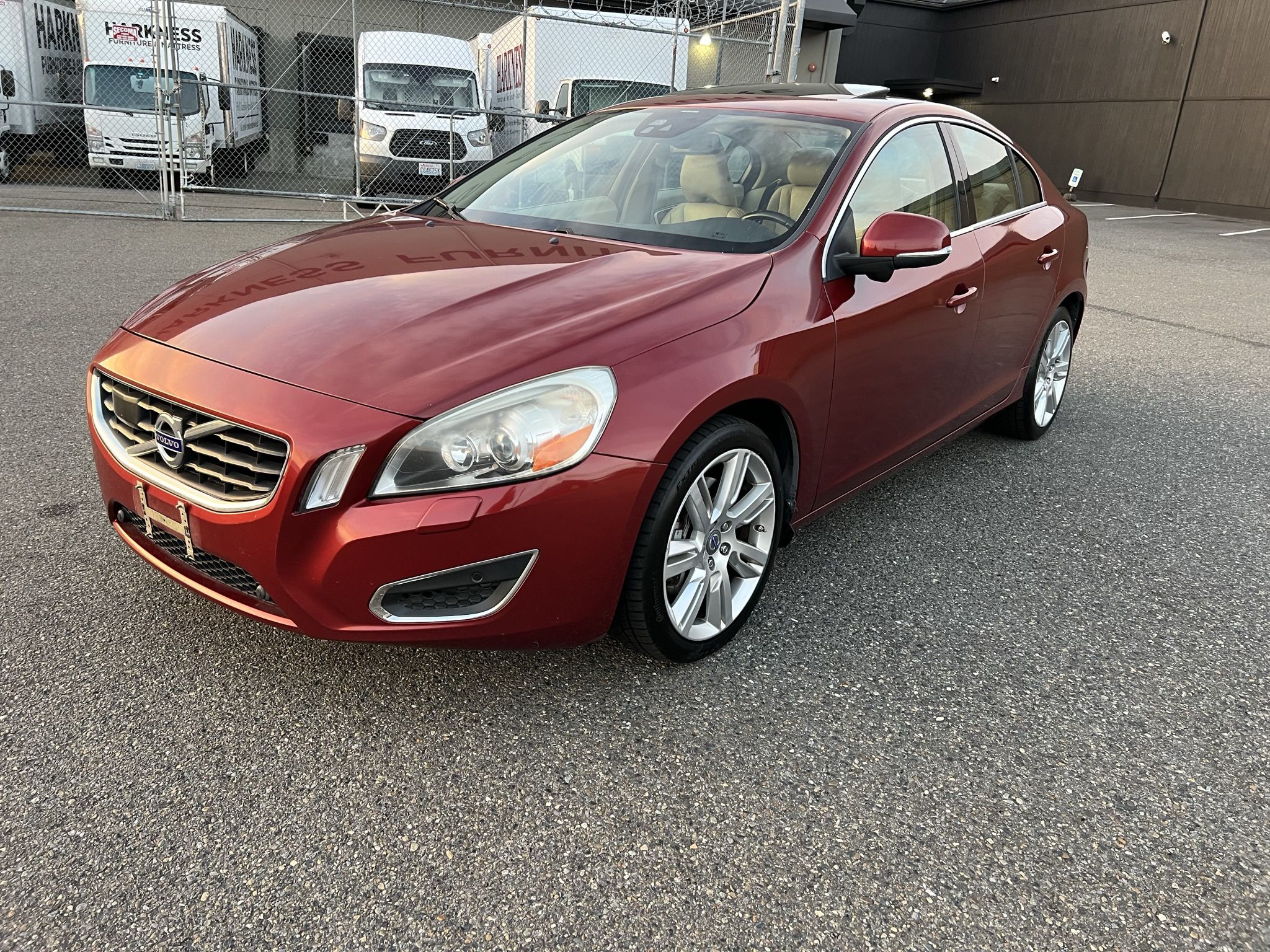
The 2013 Volvo S60 is a refined, comfortable entry-luxury sedan distinguished by exceptional safety scores, supportive seating, and potent turbocharged five- and six-cylinder engines. It offers an appealing, distinctive alternative to German rivals like the BMW 3 Series and Audi A4, though prospective buyers must watch for well-documented oil consumption issues on specific engine variants.
Overview: The Scandinavian Contender
The second-generation Volvo S60 marked a significant departure from Volvo's historically boxy styling, presenting a sleek, coupe-like silhouette mounted on the Swedish automaker's robust Y20 platform (shared with the XC60 and V60). By 2013, Volvo had refined this generation into a mature, well-rounded luxury sedan that balanced road-holding capability with class-leading passenger protection.
Several meaningful mechanical and technological updates arrived for the 2013 model year:
- All-Wheel Drive on T5 Models: Volvo expanded its Haldex all-wheel-drive (AWD) system down to the five-cylinder T5 trim, making weather-capable traction available at an accessible price point.
- Engine Tuning and Overboost: The 2.5-liter T5 received a higher compression ratio (up from 9.0:1 to 9.5:1), revised engine management, reduced internal friction, and a temporary turbo overboost function that raises peak torque output during hard acceleration.
- Updated City Safety: Volvo upgraded its standard low-speed collision mitigation system to operate at speeds up to 31 mph (50 km/h), up from the prior ceiling of 19 mph (30 km/h).
- Aesthetic and Interior Revisions: Minor cabin updates included a restyled, illuminated gear selector lever and revised option packages, adding active high beams and road-sign recognition to the available Technology Package.
Trim Levels and Powertrain Specifications
Volvo organized the 2013 S60 lineup around three primary engine configurations across front-wheel-drive and all-wheel-drive layouts. Every model paired with a responsive Aisin-Warner six-speed "Geartronic" automatic transmission with sport mode.
- 2013 Volvo S60 Lineup
- T5 Base / Premier
- 2.5L Turbo I5
- 250 hp / 266 lb-ft
- FWD or Haldex AWD
- T6 AWD
- 3.0L Turbo I6
- 300 hp / 325 lb-ft
- Standard AWD
- T6 R-Design
- Factory Polestar Tune
- 325 hp / 354 lb-ft
- Sport Chassis & Styling
- T5 Base / Premier
S60 T5 (FWD / AWD)
The entry-level T5 houses a 2.5-liter turbocharged inline five-cylinder engine (engine code B5254T12). It generates 250 horsepower at 5,400 rpm and 266 lb-ft of torque across a broad plateau from 1,800 to 4,200 rpm. An automated overboost function increases torque to 295 lb-ft in gears two through six for up to 10 seconds under full-throttle demand. Front-wheel drive came standard, with an electronically controlled Haldex all-wheel-drive system available as an option.
S60 T6 AWD
The mid-tier T6 features a transverse-mounted 3.0-liter twin-scroll turbocharged inline six-cylinder engine (engine code B6304T4). Delivering 300 horsepower at 5,600 rpm and 325 lb-ft of torque starting at 2,100 rpm, this powertrain sends power exclusively to all four wheels via Volvo’s instant-traction AWD system. The T6 provides effortless highway passing power and smooth, linear throttle delivery.
S60 T6 R-Design AWD
At the top of the range, the R-Design pairs the 3.0-liter inline-six with factory Polestar performance software. The engine calibration increases turbo boost pressure and advances ignition timing, producing 325 horsepower at 5,400 rpm and 354 lb-ft of torque between 3,000 and 3,600 rpm. The R-Design also receives a lower, stiffer sport-tuned chassis, upgraded 18-inch (or optional 19-inch) wheels, aggressive exterior fascia, and specialized interior trim.
2013 Volvo S60 Technical Specifications Comparison
| Specification | S60 T5 (FWD / AWD) | S60 T6 AWD | S60 T6 R-Design AWD |
|---|---|---|---|
| Engine Layout | 2.5L Turbocharged Inline-5 | 3.0L Twin-Scroll Turbo Inline-6 | 3.0L Twin-Scroll Turbo Inline-6 |
| Horsepower | 250 hp @ 5,400 rpm | 300 hp @ 5,600 rpm | 325 hp @ 5,400 rpm |
| Torque | 266 lb-ft @ 1,800–4,200 rpm (295 overboost) | 325 lb-ft @ 2,100–4,200 rpm | 354 lb-ft @ 3,000–3,600 rpm |
| Drivetrain | Front-Wheel Drive / Available AWD | All-Wheel Drive | All-Wheel Drive |
| Transmission | 6-speed Geartronic Automatic | 6-speed Geartronic Automatic | 6-speed Geartronic Automatic |
| 0–60 mph (sec) | 6.4 (FWD) / 6.6 (AWD) | 5.8 | 5.3 |
| EPA Fuel Economy (City/Hwy) | 21/30 mpg (FWD) | 20/29 mpg (AWD) | 18/25 mpg | 18/25 mpg |
| Curb Weight | 3,528 lbs (FWD) / 3,710 lbs (AWD) | 3,884 lbs | 3,890 lbs |
| Fuel Tank Capacity | 17.8 gallons | 17.8 gallons | 17.8 gallons |
| Recommended Fuel | Regular (87 AKI) or Premium (91+) | Premium (91+ AKI) recommended | Premium (91+ AKI) required |
On-Road Driving Dynamics
The 2013 Volvo S60 was engineered to deliver a European driving character without compromising ride isolation. Depending on trim, the suspension tuning splits into distinct profiles: Touring, Dynamic, and R-Design Sport.
Acceleration and Powertrain Refinement
The five-cylinder T5 has an off-beat, gravelly engine note characteristic of Volvo’s modular inline engines. Throttle tip-in is progressive, and the overboost feature gives the sedan genuine passing power on secondary highways. The six-speed automatic shifts smoothly in standard mode, while sport mode holds lower gears longer and quickens downshifts during braking.
The six-cylinder T6 and R-Design transform the car into a true sleeper sedan. The twin-scroll turbo eliminates off-the-line lag, producing a surging rush of torque from low engine speeds. The R-Design sprints from zero to 60 mph in roughly 5.3 seconds, rivaling contemporary German V6 and turbo-six executive cars.
Handling, Steering, and Chassis Feedback
Unlike its German competitors from the same era, the S60 emphasizes stability and composure over tail-out agility. The steering rack features speed-sensitive variable assist with three selectable resistance settings accessible via the infotainment system (Low, Medium, and High). While the steering delivers accurate path tracking, road surface textures remain largely filtered out.
Cornering grip is high, especially on models equipped with the Haldex AWD system. The drivetrain features Corner Traction Control, a brake-based torque vectoring system that brakes the inside wheel during aggressive turns, shifting torque to the outside wheel to suppress understeer.
The standard suspension balances bump absorption and body control effectively. The R-Design, fitted with 15-millimeter shorter springs, 15 percent stiffer springs, and mono-tube rear dampers, delivers crisper turn-in and controlled body roll at the expense of ride compliance over broken pavement.
Cabin Ergonomics, Interior Space, and Infotainment
Volvo cabins emphasize Scandinavian minimalism, premium tactile surfaces, and functional ergonomics. The 2013 S60 demonstrates this philosophy through high-grade leather, soft plastics, and an ultra-thin "floating" center stack housing secondary vehicle controls.
- Floating Center Stack
- 7-Inch Sensus Screen
- [ Vol ] / [ Tune/Select ]
- [ 1 ][ 2 ][ 3 ] / [ FanUp ]
- [ 4 ][ 5 ][ 6 ] / [ Human ]
- [ 7 ][ 8 ][ 9 ] / [ Climate ]
- [ * ][ 0 ][ # ] / [ FanDown ]
Seating Comfort and Materials
Front-seat comfort is a definitive strength of the S60. Developed using orthopedic research, the front bucket seats provide lumbar and lateral support that prevents driver fatigue over long-distance highway trips. Buyers looking at the R-Design benefit from more deeply bolstered sport seats upholstered in perforated leather with contrasting stitching.
Rear-Seat Accommodations and Cargo
While front occupants enjoy generous headroom and shoulder space, the rear quarters are tighter. Rear legroom measures 33.5 inches—sufficient for average-height adults, but tight behind a tall driver.
Cargo volume is another practical trade-off. The trunk provides just 12.0 cubic feet of storage capacity, trailing key rivals like the Audi A4 (12.4 cu ft) and BMW 3 Series (17.0 cu ft). The trunk opening is relatively narrow, though 60/40 split-folding rear seats and a center pass-through help accommodate longer cargo items.
Infotainment: The Volvo Sensus Interface
The S60 uses Volvo's Sensus system, displayed on a 7-inch fixed dashboard screen. The interface relies on steering-wheel controls and a physical rotary knob on the center console rather than a touchscreen or a central touchpad controller.
While the system is intuitive once learned, its graphical layout and menu architecture reflect its early-2010s origin. Bluetooth hands-free phone connectivity and audio streaming come standard, but modern smartphone mirrors like Apple CarPlay and Android Auto were not supported on this architecture. The optional 12-speaker, 650-watt Premium Sound System with Audyssey MultEQ processing remains an audiophile highlight.
Safety Engineering and Driver-Assistance Systems
Safety remains the cornerstone of the Volvo brand, and the 2013 S60 excels in crash testing and active driver assistance.
Structural Integrity and Crash Ratings
The S60 utilizes a patented front structure incorporating four distinct grades of steel—including ultra-high-strength boron steel around the passenger safety cage—to manage and disperse crash energy.
- Insurance Institute for Highway Safety (IIHS): The 2013 S60 was among the first vehicles tested on the rigorous small-overlap front crash test, earning the top score of Good and securing the IIHS Top Safety Pick+ designation. It earned "Good" ratings in moderate-overlap front, side-impact, roof-strength, and head-restraint evaluations.
- National Highway Traffic Safety Administration (NHTSA): The S60 achieved an overall safety score of Five Stars, earning five stars across frontal, side, and rollover crash tests.
Active Driver-Assist Features
Volvo pioneered collision-avoidance technology on this platform:
- City Safety (Standard): An optical laser system mounted behind the rearview mirror detects stationary or decelerating vehicles ahead. If the driver fails to react, the vehicle automatically brakes to mitigate or avoid collisions at speeds up to 31 mph.
- Technology Package (Optional): Added Adaptive Cruise Control, Collision Warning with Full Auto Brake, Pedestrian Detection, Distance Alert, Driver Alert Control, and Lane Departure Warning.
- BLIS (Blind Spot Information System): Uses cameras or radar in the door mirrors to illuminate warning indicators within the A-pillars when adjacent vehicles enter the blind spot.
Known Mechanical Issues: What Used Buyers Must Check
While the 2013 Volvo S60 features durable chassis components and heavy-gauge body panels, several mechanical vulnerabilities require careful evaluation prior to purchase.
1. The T5 Piston Ring Oil Consumption Defect
The most critical mechanical risk on the 2013 S60 involves the 2.5-liter five-cylinder (T5) engine. A specific run of engines built within this timeframe left the factory with defective piston oil control rings and revised ring land tolerances.
Over time, carbon deposits cause the oil scraper rings to seize in their grooves, allowing oil to escape into the combustion chambers. Symptoms include:
- Severe engine oil consumption (often exceeding one quart every 1,000 miles).
- Low oil pressure warnings during high-G turns or hard braking.
- Sooty, carbon-fouled exhaust tips and spark plugs.
- Catalytic converter degradation and cylinder wall scoring.
Volvo addressed this defect through technical service bulletins (such as TJ 29871 and extended warranties for affected VIN ranges), which outlined procedures for replacing the pistons, piston rings, and connecting rods.
When inspecting a prospective T5 model, review the vehicle’s service records for evidence of warranty piston replacement or completed oil consumption tests. Ask the seller how often oil must be added between scheduled intervals, pull the spark plugs to check for heavy ash deposits, and confirm that the engine is not running dangerously low on lubricant.
2. PCV / Oil Trap Diaphragm Failure
Both the 2.5-liter inline-5 and 3.0-liter inline-6 use an integrated Positive Crankcase Ventilation (PCV) oil trap assembly mounted to the engine. The rubber pressure-regulating diaphragm inside this housing can tear with age and thermal cycling.
A torn PCV diaphragm causes high crankcase vacuum, producing a distinctive high-pitched whistling or squealing noise at idle. If left uncorrected, high vacuum pulls dirty air past the front and rear crankshaft main seals, leading to premature oil seal failure.
To test for this on a pre-purchase inspection:
- Start the engine and bring it up to operating temperature.
- Listen for a whistling sound around the top engine cover.
- While idling, loosen the engine oil filler cap or pull the dipstick. If the whistle disappears and you feel significant suction fighting your hand, the oil trap diaphragm is torn and requires immediate replacement.
3. Aisin-Warner Transmission Fluid Maintenance
Volvo originally marketed the Aisin TF-80SC six-speed automatic as containing "lifetime" transmission fluid, leading many prior owners to skip regular transmission flushes.
By 100,000 miles, degraded fluid causes sediment build-up inside the valve body solenoids, resulting in harsh 1–2 upshifts or delayed "flare" shifts between the 2nd and 3rd gears. Verify that the transmission engages drive and reverse immediately when cold, and shift through all gears under moderate load to ensure fluid engagement remains smooth.
4. Suspension Bushings and Top Mounts
Due to the vehicle's 3,600- to 3,900-lb curb weight, suspension components wear steadily on rough roads. The rubber bushings in the front lower control arms and the rear trailing arms commonly tear or delaminate between 80,000 and 120,000 miles, causing front-end clunking over speed bumps, wandering at highway speeds, and uneven tire wear. Front strut mount bearings also creak during low-speed parking lot turns when dried out.
2013 S60 vs. Contemporary Competitors
To evaluate the 2013 S60's value, it helps to compare it against its primary competitors from the 2013 model year:
BMW 3 Series (F30 Generation)
The 2013 BMW 328i features sharper rear-wheel-drive dynamics, a larger trunk, and lower curb weight. However, early F30 328i sedans equipped with the 2.0-liter N20 four-cylinder engine face catastrophic timing chain guide failures. The Volvo S60 offers more durable structural crash protection and noticeably more comfortable, fatigue-free seats.
Audi A4 (B8.5 Generation)
The 2013 Audi A4 2.0T Quattro is the S60 T5 AWD's most direct competitor. Both share front-drive-based architectures that bias traction forward until slip occurs. The A4 features a slightly more modern cabin aesthetic, but its 2.0-liter TFSI engine suffered from its own widespread timing chain tensioner and oil consumption issues. The Volvo T6 inline-six dramatically outperforms the four-cylinder A4 in passing power and long-term powertrain durability.
Lexus IS (Second/Third Generation)
The Lexus IS 250 and IS 350 deliver superior long-term electronic and mechanical reliability alongside higher resale value. However, the IS 250 feels underpowered compared to the S60 T5, while the Volvo provides substantially superior structural safety ratings, quieter highway sound deadening, and superior rust protection in northern climates.
Frequently Asked Questions
Is the 2013 Volvo S60 reliable?
Overall, the 2013 Volvo S60 earns average to above-average reliability marks, depending directly on the engine choice and maintenance history. The chassis, body electronics, and six-cylinder T6 engines are robust and routinely exceed 150,000 to 200,000 miles. However, T5 models that develop piston ring oil consumption can face steep repair bills, making documented maintenance history critical.
What causes high oil consumption in the 2013 S60 T5?
High oil consumption in 2013 S60 T5 models stems from a manufacturer design defect in the piston oil control rings. Over time, the rings lose tension and allow engine oil to slip into the combustion chamber, where it burns off. Resolving this issue permanently requires installing revised, updated pistons and rings.
Does the 2013 Volvo S60 require premium gasoline?
Volvo recommends 91 octane (premium) fuel for the T5 engine for maximum performance and fuel economy, though 87 octane (regular) is acceptable without risking engine damage. For the 300-hp T6 AWD, premium fuel is strongly recommended. For the 325-hp T6 R-Design, premium fuel (91 AKI or higher) is strictly required to protect the Polestar engine calibration from pre-ignition and deliver its rated output.
What is the difference between S60 T6 and S60 T6 R-Design?
The standard T6 AWD focuses on comfort with a touring suspension, classic exterior design, and an output of 300 hp and 325 lb-ft of torque. The R-Design is a factory performance variant featuring 325 hp and 354 lb-ft of torque, a 15-millimeter lower ride height with stiffer springs, distinctive exterior bumpers, a rear diffuser with dual exhaust outlets, and supportive sport seats.
How safe is the 2013 Volvo S60 compared to modern vehicles?
The 2013 S60 remains remarkably safe, even by modern standards. Built with an extensive boron-steel safety cage, it was an early recipient of the IIHS Top Safety Pick+ award and achieved a five-star overall NHTSA rating. Standard City Safety low-speed autonomous emergency braking was years ahead of industry mandates, providing passive and active safety that rivals many newer vehicles.
Final Verdict and Purchasing Advice
The 2013 Volvo S60 remains a compelling used luxury sedan, offering distinct Swedish styling, supreme long-distance seating comfort, and safety ratings that still hold up against newer vehicles.
If you are shopping the used market, prioritize models with the following criteria:
- Target the 3.0-liter T6 AWD or R-Design: The turbocharged inline-six engine avoids the piston ring oil consumption problems of the five-cylinder T5 while transforming the S60 into a fast, weather-capable highway cruiser.
- Verify T5 Engine History: If selecting a T5 variant for budget or fuel-economy reasons, review past service invoices to confirm whether the piston rings have already been replaced under service bulletins or prior warranty campaigns. Perform a mechanical pre-purchase inspection to rule out oil fouling.
- Perform the PCV Glove/Vacuum Test: Verify the PCV oil trap diaphragm is intact to avoid sudden crankshaft seal failure.
- Confirm Transmission Fluid Condition: Seek vehicles that received interval-based transmission fluid drain-and-fills to ensure the six-speed automatic shifts smoothly between low gears.
By focusing on a well-maintained six-cylinder model or a verified, updated five-cylinder variant, you can secure a safe, comfortable, and winter-capable European luxury sedan at an accessible price point.