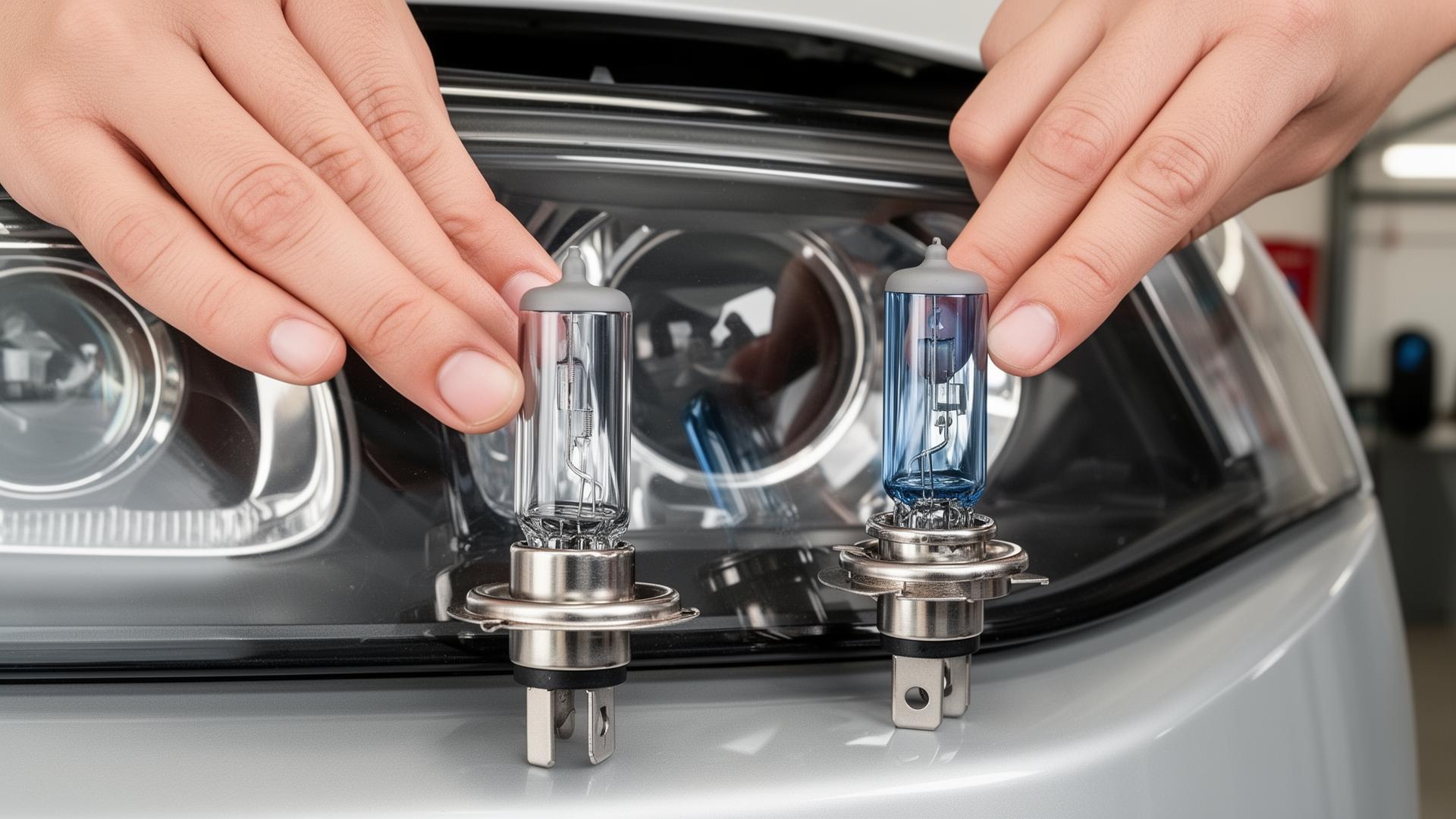
Replacing a headlight bulb in a 2012 vehicle typically involves accessing the rear of the headlight housing, disconnecting the electrical power connector, and rotating the bulb counter-clockwise to unlock it. You must identify your specific bulb type, such as H11 or 9006, and avoid touching the glass with bare skin to ensure the longevity of the new component.
Understanding the Landscape of 2012 Vehicle Lighting
By the 2012 model year, the automotive industry was in a transitional phase regarding lighting technology. While luxury trims were beginning to adopt High-Intensity Discharge (HID) or early Light Emitting Diode (LED) systems, the vast majority of consumer vehicles—including bestsellers like the Toyota Camry, Honda Civic, and Ford F-150—relied on halogen incandescent bulbs. As of 2026, these vehicles are now 14 years old, meaning the plastic components of the headlight assemblies have likely become brittle due to thousands of heat cycles and UV exposure.
Replacing a bulb in 2026 requires more than just a mechanical swap; it requires an understanding of how age affects the electrical and structural integrity of the lighting system. Connectors may be fused, plastic locking tabs may snap with minimal pressure, and the internal reflective coating of the housing may be degrading. Approaching this task with patience and the correct technical knowledge is essential for a successful DIY repair.
Prerequisites and Identifying Your Bulb Type
Before you open the hood, you must determine exactly which bulb your 2012 vehicle requires. Automotive bulbs are categorized by "trade numbers" or "fitting types." Using the wrong bulb can result in a failure to fit, electrical shorts, or even fire hazards due to mismatched wattage.
Common Bulb Categories for 2012 Models
Most 2012 vehicles use a "dual-filament" system or two separate bulbs for high and low beams.
- H11: Extremely common for low beams in Japanese and American sedans.
- 9005 (HB3): Frequently used for high beam applications.
- 9006 (HB4): A common low beam bulb for older designs still in use in 2012.
- H7: Often found in European models like Volkswagen or BMW.
- D1S/D2S: These are HID (Xenon) bulbs. If your 2012 vehicle has these, the replacement process is significantly different and involves high-voltage ballasts.
To find your specific bulb, consult your owner's manual under the "Specifications" or "Maintenance" section. Alternatively, many manufacturers print the bulb type directly on the plastic lens of the headlight or on a sticker located on the top of the radiator shroud. Online bulb finders from reputable manufacturers like Sylvania or Philips are also highly reliable resources for verifying fitment.
Essential Tools and Materials
While many 2012 models offer tool-free bulb access, you should have the following ready:
- Nitrile or Latex Gloves: This is the most critical item. Skin oils can cause halogen bulbs to explode or burn out prematurely.
- Safety Glasses: Protects against falling debris when working under the wheel well.
- Flat-head and Phillips Screwdrivers: For removing plastic trim clips or splash guards.
- 10mm Socket and Ratchet: Most Japanese and American 2012 models use 10mm bolts for headlight or bumper attachments.
- Dielectric Grease: To prevent corrosion in the electrical connector—a common issue in 14-year-old vehicles.
Step-by-Step Replacement Instructions
The following procedure applies to the vast majority of 2012 passenger vehicles. If you own a vehicle where the engine bay is too cramped to reach the bulbs, see the "Access Variations" section below.
Step 1: Preparation and Safety
Ensure the vehicle is parked on a level surface, the engine is off, and the headlight switch is in the "Off" position. Allow the bulbs to cool for at least 10 minutes. If your 2012 model is equipped with HID/Xenon lights, it is advisable to disconnect the negative battery terminal to avoid the risk of a high-voltage shock from the ballast.
Step 2: Accessing the Bulb
Open the hood and locate the rear of the headlight assembly. In most 2012 sedans, there will be a circular plastic dust cap or a rubber boot protecting the bulb. Rotate the plastic cap counter-clockwise to remove it. If your vehicle uses a rubber boot, simply pull it back.
Step 3: Disconnecting the Electrical Harness
Locate the plastic wiring connector attached to the base of the bulb. Most 2012 connectors use a "push-down" or "squeeze" tab.
- Note: In 2026, these tabs are often very brittle. Use a small flat-head screwdriver to gently assist the tab if it feels stuck, but do not force it.
- Pull the connector straight off the bulb. Do not pull on the wires themselves, as this can de-pin the connector.
Step 4: Removing the Old Bulb
Grasp the plastic base of the bulb. Rotate the bulb approximately 45 degrees counter-clockwise. You will feel the locking "keys" align with the slots in the housing. Gently pull the bulb straight out of the assembly.
Step 5: Inspecting the Socket
Before installing the new bulb, look inside the electrical connector. If you see green or white powdery residue, this is corrosion. Use a small wire brush or electrical contact cleaner to remove it. Applying a small amount of dielectric grease to the connector terminals at this stage will prevent future moisture intrusion and flickering.
Step 6: Installing the New Bulb
Remove the new bulb from its packaging while wearing gloves. Do not touch the glass. If you accidentally touch it, clean the glass with a lint-free cloth and isopropyl alcohol before installation.
- Align the three metal or plastic tabs on the bulb base with the slots in the headlight housing.
- Insert the bulb and rotate it clockwise until it clicks into place.
- Reattach the electrical connector until you hear a click.
- Replace the dust cap or rubber boot.
Model-Specific Access Variations
Not every 2012 vehicle allows for easy access from under the hood. Depending on the design, you may encounter one of three common hurdles.
Through the Wheel Well
Models like the 2012 Chevrolet Malibu or some Chrysler vehicles require you to access the bulbs through the front wheel well. You must turn the steering wheel all the way to one side, remove several plastic "push pins" from the inner fender liner, and peel the liner back to reach the headlight housing.
Bumper Removal
A frustrating trend in early 2010s engineering—found in some Subaru and Toyota models—requires the partial or full removal of the front bumper cover to access the headlight mounting bolts. If you cannot see the back of the bulb through the engine bay, check if the entire headlight housing must be pulled forward to service the bulbs.
Retention Springs
Common in European 2012 models (VW, Audi), these do not use a "twist-lock" mechanism. Instead, a wire spring clip holds the bulb against the housing. You must push the spring in and to the side to release the bulb. Ensure the new bulb is seated perfectly flat before re-engaging the spring, or the light beam will be aimed incorrectly.
2012 Bulb Specifications Table
The table below lists the standard bulb sizes for the most popular 2012 vehicle models still on the road in 2026.
| 2012 Vehicle Model | Low Beam Bulb | High Beam Bulb | Fog Light Bulb |
|---|---|---|---|
| Toyota Camry | H11 | 9005 | H11 |
| Honda Civic | 9006 | 9005 | H11 |
| Ford F-150 | H13 (Dual) | H13 (Dual) | 9140 / H10 |
| Chevrolet Silverado | H11 | 9005 | 5202 |
| Honda Accord | H11 | 9005 | H11 |
| Nissan Altima | H11 | 9005 | H11 |
| Volkswagen Jetta | H7 | H7 | HB4 / 9006 |
| Hyundai Elantra | H11 | 9005 | 881 |
The Science of the "No Touch" Rule
A common question is why touching the glass of a 2012 halogen bulb matters so much. Halogen bulbs operate at extremely high temperatures—often exceeding 480°F (250°C). The oils from your skin (sebum) stay on the quartz glass surface. When the bulb is turned on, these oils heat up faster than the glass itself, creating a localized hotspot.
This temperature differential causes the quartz glass to undergo "devitrification," leading to a structural weakness. Eventually, the glass may crack, or the internal filament will fail prematurely due to the uneven heat distribution. In 2012 vehicles, which often have tighter, more enclosed headlight housings than older cars, heat management is already a challenge. Always use gloves or a clean paper towel when handling bulbs.
Upgrading to LED in 2026: Considerations
As of 2026, many owners of 2012 vehicles are looking to upgrade from dim halogen bulbs to modern LEDs. While this offers significantly better visibility and a modern "cool white" look, there are technical and legal hurdles.
- Beam Pattern: Most 2012 headlight housings are designed for "point source" light from a filament. LEDs are "surface source" lights. If the LED chips are not positioned exactly where the original filament was, the light will scatter, blinding oncoming drivers and reducing your own down-road visibility.
- CANBus Errors: Many 2012 models use a Controller Area Network (CANBus) to monitor bulb health. Because LEDs draw much less power than halogens, the car may think the bulb is burnt out, causing a "Lamp Out" dashboard warning or hyper-flashing. You may need bulbs with built-in "decoders" or "load resistors."
- Legality: The National Highway Traffic Safety Administration (NHTSA) and various local jurisdictions have strict rules about retrofitting LEDs into housings designed for halogens. Ensure any upgrade you purchase is labeled as "street legal" or "DOT compliant."
Troubleshooting Common Issues
If you replace the bulb and it still doesn't work, the problem likely lies elsewhere in the aging electrical system of your 2012 vehicle.
- Fuses and Relays: Check the fuse box (usually under the hood or in the driver-side footwell). Look for a fuse labeled "HDLP" or "Headlight." In 2012 models, there are often separate fuses for the left and right sides.
- Grounding Problems: If both the high and low beams on one side are dim, it is likely a bad ground wire. Over 14 years, the point where the wire attaches to the metal chassis can rust.
- Oxidized Lenses: If the bulb is bright but the light on the road is dim, your 2012 plastic lenses are likely yellowed or "foggy." A headlight restoration kit can often restore 80-90% of the original clarity, significantly improving the efficacy of your new bulbs.
Frequently Asked Questions
Should I replace both headlight bulbs at the same time?
Yes, it is highly recommended to replace bulbs in pairs. Headlight bulbs have a finite lifespan, and if one has failed, the other is likely close to the end of its life. Furthermore, bulbs dim as they age; replacing only one will result in an uneven light output, which can be distracting and reduce your depth perception at night.
Why does my new 2012 headlight bulb keep burning out every few months?
The most common causes are touching the glass during installation, a loose headlight housing that causes excessive vibration, or a failing voltage regulator in your alternator. If the alternator is "overcharging" the system (outputting more than 14.5 volts), the bulbs will burn out very quickly.
Can I install HID bulbs in a halogen housing?
You should not install HID (Xenon) bulbs into a housing designed for halogen bulbs. Halogen reflectors cannot control the intense light of an HID, resulting in massive amounts of glare for other drivers. Additionally, HIDs require a ballast that the 2012 halogen wiring harness is not designed to support without a complex relay kit.
Is it necessary to realign my headlights after changing a bulb?
Generally, no. As long as the bulb is seated correctly in the keyed slots and locked into place, the alignment should remain the same. However, if you had to remove the entire headlight assembly or the bumper to gain access, you should check the aim against a garage wall to ensure the beams are not pointing too high or low.
My 2012 car has "Daytime Running Lights" (DRL). Does this affect which bulb I buy?
In many 2012 models, the DRL system uses the high-beam bulb at a lower voltage. If your vehicle has this setup, avoid using cheap LED bulbs without a driver, as the lower voltage can cause the LEDs to flicker or fail to turn on entirely.
Final Recommendation
For most 2012 vehicle owners, the best balance of safety and value in 2026 is found in high-performance halogen bulbs (such as the Sylvania SilverStar Ultra or Philips X-tremeVision). These provide a whiter, brighter light than standard bulbs without the fitment and legality issues of LED retrofits. Always keep a spare set of gloves in your glovebox and check your headlight clarity annually to ensure your 2012 vehicle remains safe for nighttime driving.