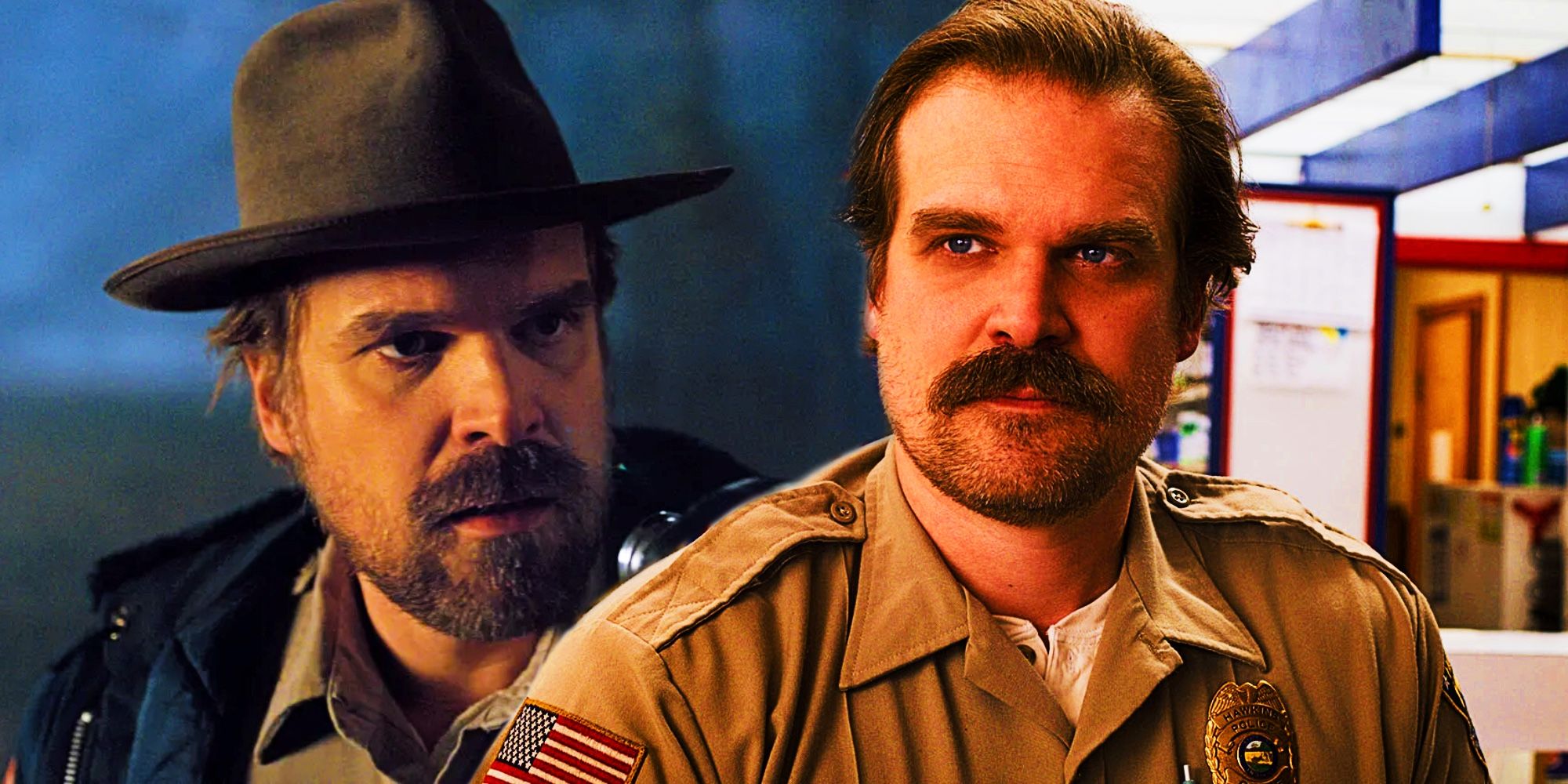
Season 4 of Stranger Things marks a monumental turning point for Jim Hopper, reflecting a decade of narrative growth, physical transformation, and emotional maturation since his introduction in 2016. Across the span of the series, the Hawkins chief of police evolves from a cynical, grief-stricken recluse into a hardened survivor and fiercely protective father figure. When the narrative shifts to the frozen labor camps of Kamchatka in Season 4, it tests the limits of Hopper’s resilience, forcing him to confront his deepest traumas while plotting a desperate escape back to the children he loves. This milestone season redefines his character arc, contrasting his gritty survivalist struggle abroad with the supernatural escalation back in Hawkins, Indiana.
The Journey from Hawkins Police Chief to Kamchatka Prisoner
To understand Hopper's state of mind in Season 4, it is essential to trace how his character developed over the preceding three seasons. Introduced in 1983 as a weary, pill-popping, alcohol-dependent small-town cop numbing the pain of his daughter Sarah’s death, Hopper slowly reawakened after taking Eleven under his wing. By the end of Season 3, his apparent sacrifice beneath the Starcourt Mall left audiences believing he had perished in a Russian laboratory blast.
Season 4 shatters that illusion, revealing that Hopper survived the explosion but was captured by Soviet forces and transferred to a brutal penal colony in Kamchatka. This shift moves him from the familiar, Americana-tinted corridors of Hawkins to a bleak, industrial nightmare. The transition highlights the global stakes of the Upside Down conspiracy. Hopper is no longer just protecting a small town; he is an international prisoner of war fighting a monstrous entity that the Soviets are attempting to harness as a weapon.
Physical and Psychological Toll
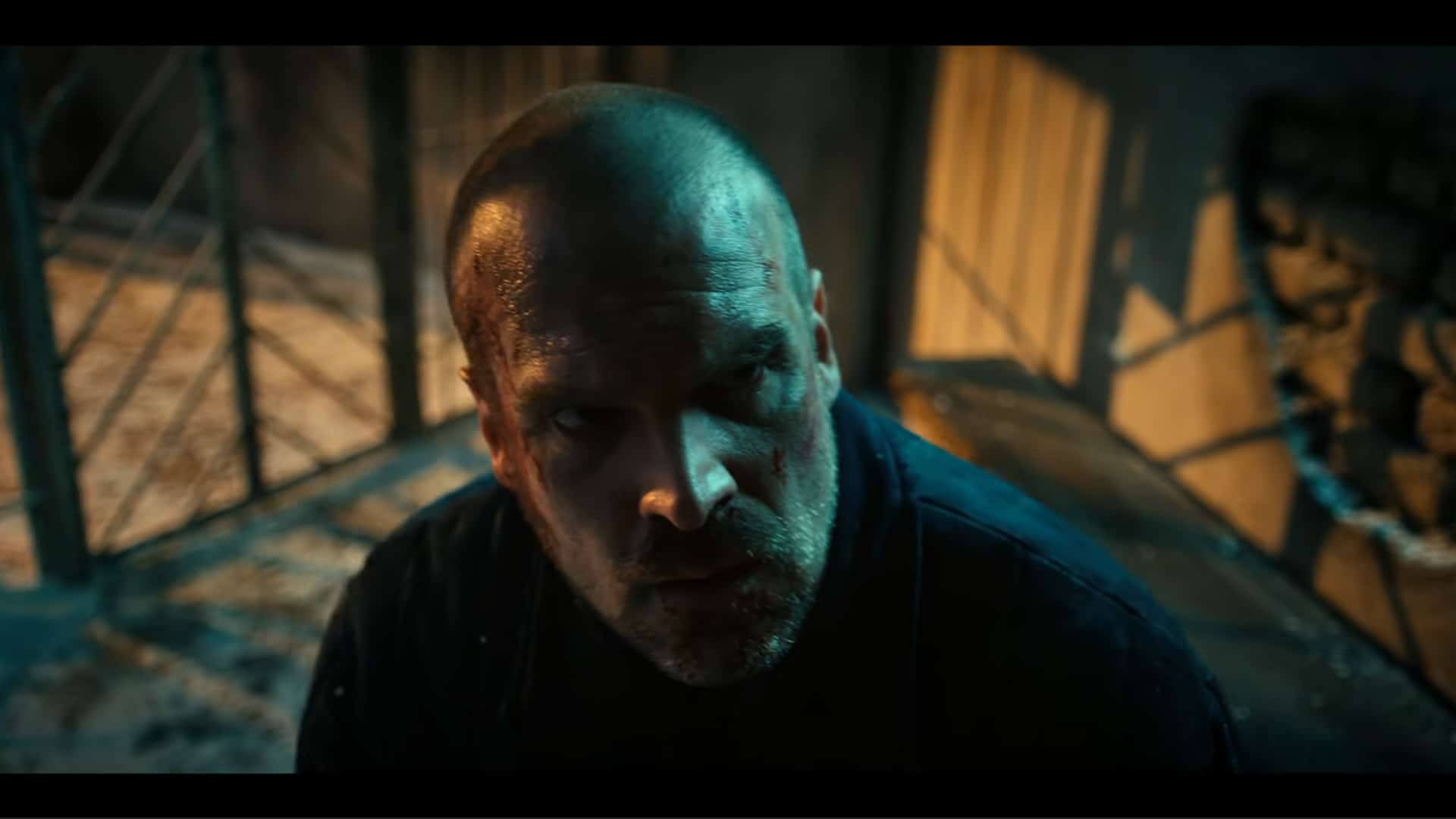
The physical transformation Hopper undergoes in Season 4 is one of the most striking aspects of his decade-long television arc. Star David Harbour underwent a rigorous physical and dietary regimen to portray Hopper’s emaciated, beaten state inside the Russian prison.
- Malnutrition and Labor: Hopper is subjected to grueling physical labor on the Trans-Siberian railway, chipping away at frozen rock with minimal rations.
- Torture and Interrogation: The prison guards, overseen by the sadistic Warden Olowson and later Anton. Anton, subject prisoners to systematic torture, including sleep deprivation and brutal beatings.
- The Demogorgon Threat: The prisoners are treated as disposable fodder for a captive Demogorgon, forcing Hopper to rely on cunning and improvised weapons rather than raw police authority.
Psychologically, Hopper battles a profound sense of failure. He believes his survival only brings doom to those he loves, expressing a conviction that he is cursed and that anyone close to him inevitably suffers. This internal conflict forms the emotional bedrock of his Season 4 narrative.
The Evolution of Hopper Across the Seasons
| Season | Primary Setting | Hopper's Core Motivation | Key Relationship Focus |
|---|---|---|---|
| Season 1 | Hawkins, Indiana | Solving Will Byers' disappearance; escaping personal grief | Developing initial trust with Joyce Byers |
| Season 2 | Hawkins / Lab | Protecting Eleven in secret seclusion | Deepening adoptive father-daughter bond |
| Season 3 | Hawkins / Starcourt | Guarding Hawkins from Soviet infiltration | Navigating Eleven's growing independence |
| Season 4 | Kamchatka, Russia | Surviving captivity and returning home to Eleven | Rebuilding self-worth and epistolary connection |
The Narrative Parallel: Hopper and Joyce's Rescue Mission
While Hopper battles for survival in the frozen wastes of Russia, his narrative remains deeply entwined with Joyce Byers. The dynamic between Winona Ryder's Joyce and David Harbour's Hopper reaches a new emotional peak in Season 4. After receiving a cryptic porcelain doll containing a ransom note from Russia, Joyce and Murray Bauman embark on a high-stakes rescue mission across the globe.
This subplot injects a classic Cold War espionage thriller tone into the sci-fi horror fabric of Stranger Things. Joyce's unwavering determination to save Hopper mirrors his own past sacrifices for her family. Their eventual reunion in the Russian prison—punctuated by a fiery flare gun battle against the Demogorgon—delivers one of the most satisfying emotional payoffs of the season, cementing a partnership that has evolved over a decade of shared trauma.
The Monologue on Curses and Redemption
A defining moment for Hopper in Season 4 occurs during a tense conversation aboard a smuggler's plane flown by Yuri. Hopper opens up to Dimitri (Enzo), a Russian guard who helped him orchestrate their escape. In a raw, emotionally vulnerable monologue, Hopper details the death of his daughter Sarah from cancer, his subsequent tour in Vietnam, and the lingering belief that he is a "monster" who ruins everything he touches.
This speech grounds the fantastical elements of Stranger Things in genuine human grief. It explains why Hopper pushed Eleven away and why he acted with such volatile aggression in earlier seasons. By verbalizing his trauma to Dimitri, Hopper begins the process of forgiving himself, setting the stage for his eventual return to Hawkins as a man who can truly heal rather than merely survive.
The Broader Impact on the Stranger Things Universe
Hopper’s survival and return fundamentally shift the power dynamics as the series heads toward its endgame. For ten years of fictional timeline and real-world broadcast, Hopper has served as the anchor of authority and protection for the younger generation.
By removing him from Hawkins in Season 4, the creators forced Eleven, Mike, Dustin, Lucas, and Max to face Vecna's psychological terror without their primary safety net. Concurrently, Hopper’s exposure to the Soviet weaponization of the Upside Down confirms that the government conspiracy extends far beyond the borders of the United States. When Hopper finally crosses back into the United States at the end of Season 4, stepping into the ash-falling ruins of Hawkins alongside Joyce, he brings with him vital intelligence regarding the hive mind's vulnerabilities.
Practical Guidance for Re-watching Hopper’s Arc
For viewers looking to re-examine Hopper’s decade-long journey with a focus on his Season 4 transformation, specific episodes offer vital thematic continuity.
- Watch Season 1, Episode 3 ("Holly, Jolly"): Observe Hopper breaking into the Hawkins National Laboratory, establishing his foundational defiance against institutional authority.
- Watch Season 2, Episode 5 ("Dig Dug"): Note the volatile argument between Hopper and Eleven in the cabin, which lays the groundwork for the parental guilt he carries into Season 4.
- Watch Season 3, Episode 8 ("The Battle of Starcourt"): Pay close attention to his final look toward Joyce before the reactor explosion, which sets up his harrowing descent into the Kamchatka gulag.
- Watch Season 4, Episode 5 ("The Nina Project") through Episode 9 ("The Piggyback"): Track his physical rehabilitation, tactical escape planning, and emotional reconciliation with his past.
By following this arc, fans can appreciate how the writers maintained character consistency while drastically altering Hopper's environment and physical capabilities.
Frequently Asked Questions
How did Hopper survive the explosion at the end of Season 3?
Hopper survived the Starcourt Mall laboratory blast because he was standing outside the direct vaporization zone of the key, though the shockwave knocked him unconscious. Russian soldiers clearing the debris found his body amidst the wreckage and subsequently captured him, transporting him to Kamchatka as a prisoner rather than executing him on sight.
Why was Hopper sent to a Russian labor camp?
The Soviet military captured American and international operatives, as well as anyone who stumbled upon their secret operations or possessed knowledge of the Upside Down. Hopper was labeled a dangerous foreign combatant and prisoner of war, interrogated for information regarding American knowledge of the rift, and ultimately used as forced labor in the icy Siberian gulag.
What is the significance of the letter Hopper wrote to Eleven?
The heartfelt letter Hopper drafted in Season 3—which Joyce reads to Eleven in Season 4—serves as his emotional anchor throughout his imprisonment. It represents his acknowledgment of Eleven growing up and his realization that love requires letting children make their own choices. Keeping the memory of this letter alive gives him the psychological strength to endure torture and malnutrition in Russia.
How does Hopper escape the Kamchatka prison?
Hopper escapes with the help of Dimitri, a sympathetic Russian guard bribed by Joyce and Murray. After surviving an attack by prisoners fed to the Demogorgon, Hopper, Dimitri, and fellow inmate Yuri commandeer a helicopter, using improvised weapons and sheer tactical cunning to break out of the high-security facility before Joyce and Murray arrive to facilitate their extraction.
Does Hopper return to Hawkins by the end of Season 4?
Yes, Hopper successfully reunites with Joyce, boards a flight back to the United States, and arrives in Hawkins just as the dimensional rift tears open the town. The season concludes with Hopper standing alongside Joyce, Eleven, and the rest of the group, looking out over the burning, ash-covered landscape as the final war against the Upside Down begins.
Conclusion and Next Actions
Examining a decade of Jim Hopper in Stranger Things reveals a masterclass in serialized character development, transforming a cliché small-town sheriff into a deeply flawed, resilient hero. To fully appreciate his journey, viewers should re-examine his early interactions with Joyce and Eleven in Seasons 1 and 2, noting the seeds of guilt and protectiveness that blossom into full-scale heroism in the frozen expanse of Season 4. Prepare for the final confrontation by tracking Hopper's tactical insights and emotional breakthroughs, ensuring a comprehensive understanding of how the Hawkins chief intends to finish the fight.