The single most transformative shift in understanding the proteasome 20S core is the realization that the barrel-like catalytic chamber is not a static gatekeeper, but a dynamic, allosterically regulated machine that undergoes coordinated conformational transitions—specifically the shift between latent (closed) and active (open) states—driven by remote binding events and mechanical gating mechanisms rather than simple passive diffusion.
Introduction to the Proteasome 20S Core
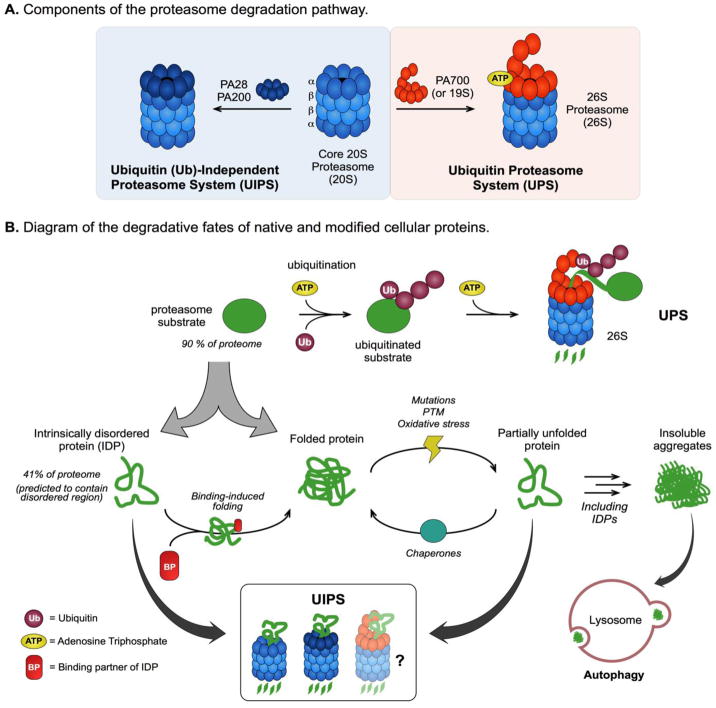
The ubiquitin-proteasome system (UPS) serves as the primary pathway for regulated intracellular protein degradation in eukaryotic cells, maintaining cellular homeostasis, clearing misfolded proteins, and modulating cell cycle progression. At the heart of this proteolytic machinery lies the 20S proteasome core particle (CP), a hollow, cylindrical barrel composed of four stacked hetero-heptameric rings. For decades, structural biologists and biochemists viewed the 20S core particle as a relatively passive degradation vessel. Once proteins were tagged with ubiquitin and unfolded by the regulatory particles (such as the 19S cap), they were thought to slide unhindered into the central chamber for peptide bond cleavage.
Recent advances in high-resolution cryo-electron microscopy (cryo-EM), single-molecule fluorescence spectroscopy, and advanced molecular dynamics simulations have dismantled this static view. The fundamental change in our understanding centers on the dynamic gating of the 20S core's outer pathways. Rather than remaining open or opening via simple chemical disruption, the 20S core is now understood to be an intricately regulated, allosteric macromolecular switch. Its N-terminal residues act as a physical barrier that must undergo coordinated conformational rearrangements to allow substrate entry, reshaping how researchers approach targeted protein degradation and therapeutic drug discovery.
Structural Architecture of the 20S Proteasome Core
To appreciate how the 20S core functions, one must examine its complex molecular architecture. The eukaryotic 20S core particle possesses an $\alpha_7\beta_7\beta_7\alpha_7$ barrel stoichiometry, meaning it consists of four rings stacked face-to-face in an $\alpha-\beta-\beta-\alpha$ arrangement.
The two outer rings are composed of seven distinct $\alpha$-subunits ($\alpha 1-\alpha 7$), while the two inner rings are composed of seven distinct $\beta$-subunits ($\beta 1-\beta 7$). The catalytic sites reside exclusively on the luminal surface of the $\beta$-rings, sequestered away from the cytoplasmic and nuclear environments to prevent accidental degradation of cytosolic proteins. Specifically, three pairs of $\beta$-subunits possess catalytic threonine residues at their N-termini:
$\beta 1$ subunits: Exhibit caspase-like (peptidylglutamyl-peptide hydrolyzing) activity.
$\beta 2$ subunits: Exhibit trypsin-like activity.
$\beta 5$ subunits: Exhibit chymotrypsin-like activity, which is typically the rate-limiting step for overall proteolysis.
Outer Alpha Ring (alpha 1-7) -> Gated Entry Port
Inner Beta Ring (beta 1-7) -> Catalytic Chamber (beta 1, 2, 5)
Inner Beta Ring (beta 1-7) -> Catalytic Chamber (beta 1, 2, 5)
Outer Alpha Ring (alpha 1-7) -> Gated Entry Port
This compartmentalization ensures that proteolysis is strictly controlled. The entrance to this catalytic chamber is formed by the N-termini of the $\alpha$-subunits, creating a narrow aperture often referred to as the $\alpha$-annulus or gate.
The Paradigm Shift: From Static Vessel to Dynamic Allosteric Switch
The central evolution in proteasome biology is the transition from viewing the 20S core as a constant-state degradation cylinder to recognizing it as an allosterically controlled enzyme governed by conformational equilibrium.
The Latent (Closed) State
In its isolated, unliganded form (often called the "latent" or "dormant" 20S proteasome), the N-terminal tails of the $\alpha$-subunits intertwine to form a tight seal over the axial pore. This closed conformation blocks the entry of folded proteins and restricts access even to unstructured polypeptides, protecting the cellular proteome from unregulated proteolysis. For many years, it was assumed that the 20S core required association with a 19S regulatory particle (forming the $26\text{S}$ proteasome) to force this gate open.
The Active (Open) State
Groundbreaking cryo-EM studies revealed that the 20S core can populate fully open-gate conformations even in the absence of regulatory caps, induced by small molecules, physiological peptides, or specific post-translational modifications. In the open state, the $\alpha$-subunit N-termini move outward and disordered loops shift away from the central axis, widening the pore from less than 15 angstroms to over 25 angstroms.
This transition is governed by long-range allosteric communication. Binding events at the outer surfaces or interactions with C-terminal tails of regulatory particles induce subtle rotations in the $\beta$-rings that propagate back to the $\alpha$-rings. This mechanical coupling demonstrates that the 20S core functions as an allosteric enzyme capable of sensing its biochemical environment.
Mechanisms of Gate Control and Activation
Understanding how the 20S core opens requires examining the physical triggers that overcome the energy barrier between the closed and open states. Several distinct mechanisms achieve this gating control:
- C-Terminal Tail Docking: Regulatory particles (19S, PA28, and PA200) possess conserved hydrophobic residues at their extreme C-termini (such as the HbYX motif: Hydrophobic-Tyr-X). These tails insert into specific inter-subunit pockets on the $\alpha$-rings of the 20S core, acting like a wedge that forces the $\alpha$-subunit N-termini to move aside.
- Allosteric Small-Molecule Activators: Synthetic and natural compounds (such as certain betulinic acid derivatives or peptide mimetic activators) can bind to pockets on the outer rings, stabilizing the open conformation without requiring a regulatory cap.
- Oxidative Stress and Post-Translational Modifications: Cellular stress leads to targeted modifications (such as tyrosine nitration, phosphorylation, or S-glutathionylation) of specific 20S subunits. These modifications can alter electrostatic interactions within the $\alpha$-annulus, prompting spontaneous gate opening to clear oxidatively damaged proteins independently of ubiquitin.
Comparative Analysis: Classical View vs. Modern Understanding
| Feature | Classical View (Pre-2010s) | Modern Understanding (Current) |
|---|---|---|
| 20S Core State | Static, passive barrel waiting for cargo. | Dynamic macromolecular switch with active conformational equilibria. |
| Gate Regulation | Exclusively opened by ATP-dependent 19S regulatory particle caps. | Regulated by multiple mechanisms, including allosteric small molecules, stress modifications, and diverse activators (PA28, PA200). |
| Substrate Accessibility | Blocked strictly to exclude all proteins until a cap is fully assembled. | Continuously samples open and closed states; can degrade specific unstructured proteins natively. |
| Therapeutic Targeting | Focused exclusively on inhibiting catalytic sites ($\beta 5$) with peptide aldehydes/boronates. | Expanding toward allosteric modulation, gate stabilization, and targeted 20S activation for proteinopathies. |
Methodological Breakthroughs Driving the Shift
The transformation in understanding the 20S core was not driven by a single theoretical insight, but by rapid technological leaps in structural biology:
- High-Resolution Cryo-Electron Microscopy (Cryo-EM): Modern direct electron detectors and sophisticated classification algorithms have allowed researchers to capture multiple conformational states of the 20S core within a single sample preparation. Instead of forcing proteins into crystal lattices—which often traps them in a single, unrepresentative artifactual state—cryo-EM visualizes ensembles of structures in solution.
- Single-Molecule Fluorescence: Techniques like Förster resonance energy transfer (FRET) have enabled real-time tracking of gate opening and closing dynamics, proving that the 20S core breathes continuously between open and closed conformations.
- Hydrogen-Deuterium Exchange Mass Spectrometry (HDX-MS): This approach maps solvent accessibility and backbone flexibility across the entire 20S complex, highlighting how local perturbations at the $\alpha$-rings trigger conformational changes deep within the $\beta$-catalytic chamber.
Therapeutic Implications of Dynamic 20S Gating
The recognition that the 20S core is a dynamic, allosterically regulated machine has revolutionized drug discovery targeting the ubiquitin-proteasome system. Historically, proteasome inhibitors (such as bortezomib, carfilzomib, and ixazomib) functioned as active-site directed covalent or non-covalent inhibitors, primarily used to treat multiple myeloma by overwhelming neoplastic cells with unfolded protein stress.
However, understanding the dynamic nature of the 20S core has opened entirely new therapeutic modalities:
- Allosteric Inhibitors: Rather than blocking the catalytic threonine directly, novel compounds target binding pockets on the $\alpha$-rings or inter-subunit interfaces to lock the gate in a permanently closed state, preventing substrate entry.
- Proteasome Activators: In neurodegenerative conditions such as Alzheimer’s, Parkinson’s, and Huntington's disease, the accumulation of toxic protein aggregates (e.g., tau, $\alpha$-synuclein, and huntingtin) often correlates with impaired proteasome function. Therapeutic strategies now aim to pharmacologically open the 20S core gate using small-molecule activators, enhancing the clearance of aggregation-prone proteins independently of the ubiquitin-conjugating cascade.
Frequently Asked Questions
What triggers the 20S proteasome gate to open naturally in cells?
The gate is primarily opened through the binding of regulatory particles (like the 19S cap or alternative activators like PA28 and PA200) whose C-terminal tails insert into pockets on the outer $\alpha$-rings. Additionally, cellular stress and specific post-translational modifications can trigger spontaneous allosteric opening to clear damaged proteins.
Why are the catalytic sites sequestered inside the 20S core?
The catalytic sites utilize threonine residues to hydrolyze peptide bonds indiscriminately. By sealing them inside a barrel whose entry is gated by the $\alpha$-subunits, the cell prevents accidental, unregulated destruction of functional cytoplasmic and nuclear proteins.
Does the 20S proteasome require ATP to function?
The core 20S particle itself does not require ATP hydrolysis for its proteolytic activity or gate opening; it can cleave small unstructured peptides and specific proteins when forced into an open state. ATP is primarily required by the 19S regulatory particle for unfolding structured substrates, ubiquitin recognition, and assembling the holoenzyme ($26\text{S}$).
How has cryo-EM changed our view of the proteasome?
Cryo-EM allows researchers to visualize macromolecular complexes in near-native frozen-hydrated states without the constraints of crystallization. This has exposed hidden conformational intermediates, proving that the proteasome is a flexible, breathing machine rather than a rigid structural tube.
Can the 20S proteasome degrade proteins without ubiquitin tags?
Yes. Under oxidative stress or specific physiological conditions, intrinsically disordered proteins or oxidized proteins can enter the 20S core directly through open gates without requiring ubiquitin conjugation or the 19S regulatory particle.
Practical Recommendations for Researchers
- Evaluate Conformational Ensembles: When studying proteasome mutants or novel ligands, avoid relying solely on static crystal structures. Utilize cryo-EM classification or FRET assays to assess shifts in conformational equilibria between closed and open gating states.
- Consider Allosteric Sites: Do not limit drug screening assays to active-site inhibition assays. Screen compound libraries for allosteric modulators that target inter-subunit interfaces on the outer $\alpha$-rings.
- Control for State Heterogeneity: Recognize that isolated 20S preparations often contain mixed populations of latent and partially open complexes. Standardize activation conditions using known peptide activators or control peptides when measuring baseline proteolytic rates.