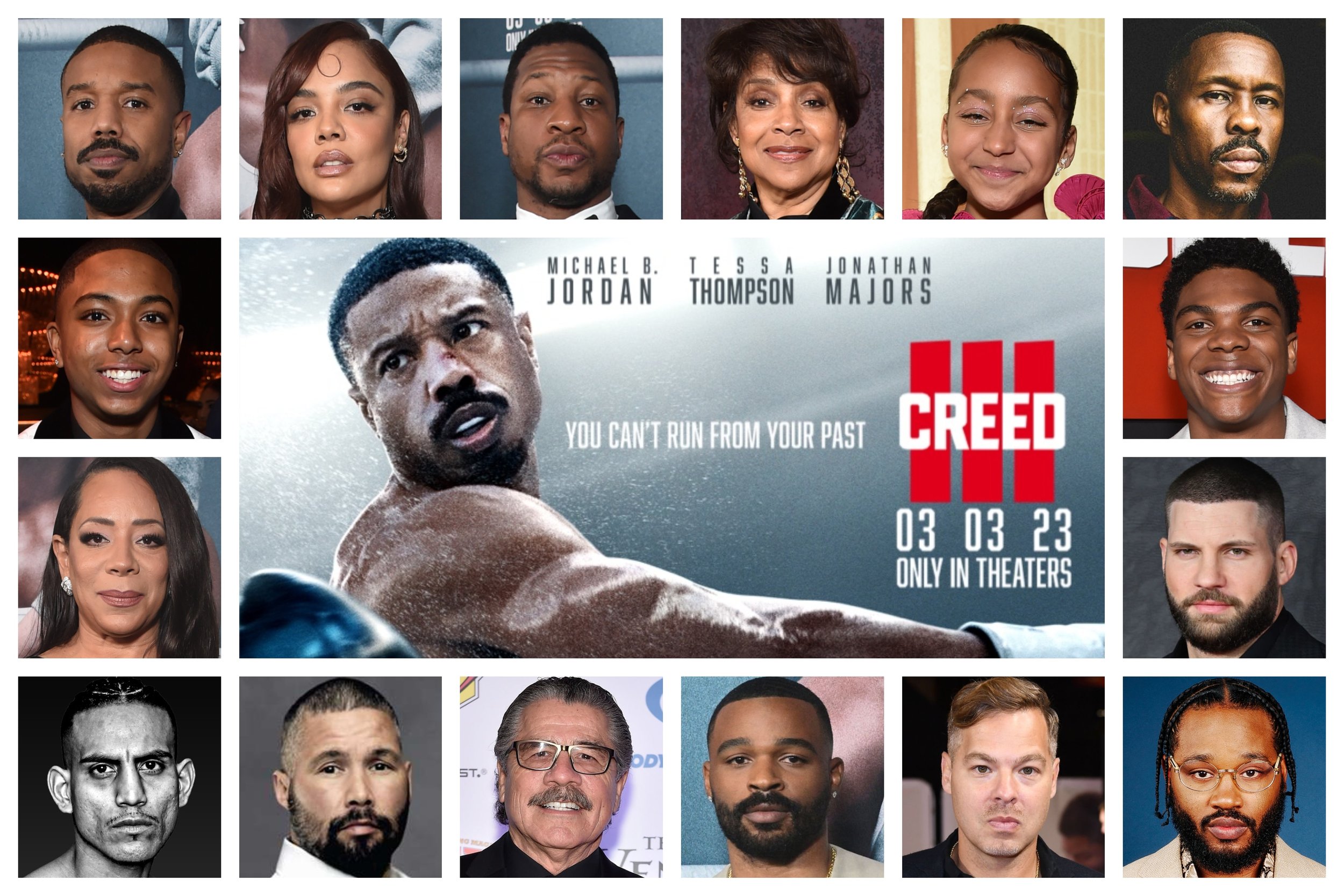
Creed III marks a significant milestone in the Rocky franchise as the first feature film directed by its star, Michael B. Jordan, and the first installment in the series to not feature Sylvester Stallone as Rocky Balboa. The narrative centers on Adonis Creed facing a ghost from his past: Damian Anderson, a childhood friend and former boxing prodigy who has spent nearly two decades in prison. Released in March 2023, the sports drama explores complex themes of brotherhood, accountability, and the psychological weight of success, grossing over $275 million worldwide and cementing the enduring viability of the cinematic universe without its original headlining star.
The Evolution of the Creed Franchise
The Rocky franchise underwent a necessary and successful evolution when director Ryan Coogler introduced audiences to Adonis Creed in 2015. The first film bridged the gap between legacy sequels and standalone storytelling by passing the torch from Sylvester Stallone's iconic Rocky Balboa to Michael B. Jordan's Adonis, the illegitimate son of Apollo Creed. This transition allowed the franchise to maintain its thematic focus on underdog grit while exploring modern identity, generational expectations, and the heavy burden of a legendary family name.
Following the commercial and critical success of the 2015 original and its 2018 sequel directed by Steven Caple Jr., the studio greenlit a third installment with a major creative shift. Michael B. Jordan stepped behind the camera for his directorial debut, steering the narrative away from external legacy antagonists toward a deeply personal, psychological conflict. This choice reflected a maturation of the series, shifting the tone from traditional underdog sports matches to an internal reckoning about trauma, guilt, and the choices that shape a person's life trajectory.
Narrative Structure and Plot Dynamics
The core narrative of Creed III is driven by the starkly divergent paths of two childhood friends. Adonis Creed has reached the pinnacle of his boxing career, having successfully defended his titles, retired comfortably, and transitioned into a thriving promoter and trainer role alongside his wife, Bianca (Tessa Thompson), and mother figure, Mary Anne Creed (Phylicia Rashad). His life appears secure, defined by generational wealth, family stability, and athletic immortality.
Enter Damian "Dame" Anderson, played by Jonathan Majors. Damian was once the neighborhood's golden boy and a supremely talented amateur boxer who protected Adonis during their youth. However, a fateful street altercation resulted in Damian receiving a lengthy prison sentence while Adonis escaped, allowing Adonis to build a life of privilege. When Damian is released after eighteen years, Adonis welcomes him back out of guilt and loyalty, offering him a place in his life and a path toward a legitimacy he missed.
| Character | Role in Narrative | Motivation | Key Relationship |
|---|---|---|---|
| Adonis Creed | Protagonist / Retired Champion | Protect his family, confront past guilt, and maintain legacy | Bianca, Mary Anne, Damian |
| Damian Anderson | Antagonist / Challenger | Reclaim lost time, prove his worth, and capture a world title | Adonis (Childhood friendturned-rival) |
| Bianca Taylor | Supporting / Partner | Support Adonis, manage her own progressive hearing loss and career | Adonis, Amara |
| Mary Anne Creed | Supporting / Matriarch | Protect Adonis from emotional fallout and preserve family truth | Adonis |
As Damian integrates into Adonis's orbit, his ambitions become clear. Rather than simply seeking a fresh start, Damian harbors deep resentment over the life that was denied to him. Using manipulation and calculated aggression, Damian maneuvers past a compliant heavyweight champion to secure a surprise world title shot. Forced to defend the integrity of the sport and protect his family's future, Adonis comes out of retirement, setting up a high-stakes championship bout that is as much about psychological catharsis as it is about physical dominance.
Directorial Vision and Visual Style
Stepping into the director's chair for a major studio franchise film is a formidable task, but Michael B. Jordan approached Creed III with a distinct visual and stylistic perspective influenced heavily by his appreciation for anime. While previous films in the Rocky and Creed canons adhered to grounded, gritty, and naturalistic depictions of combat, Jordan incorporated stylized flourishes that exteriorize the internal emotional states of the fighters.
During the climactic bout between Adonis and Damian, the visual environment shifts dramatically. The roaring crowd and stadium lights fade away, leaving the two combatants fighting inside a literal void. This stylistic choice draws clear inspiration from anime series like Hajime No Ippo and Naruto, where pivotal battles reflect the psychological and emotional weight of the characters' shared history. By isolating the fighters in a canvas stripped of external distraction, Jordan emphasizes that the fight is not merely a athletic contest for a belt, but a final reckoning between two brothers who grew up under the same roof.
Furthermore, Jordan uses tight framing, deliberate pacing, and visceral sound design during the training and sparring sequences. The sound of leather hitting flesh is amplified to underscore the brutality of the sport, while quiet moments between Adonis and Bianca ground the high-stakes sports drama in domestic reality. This balance between cinematic spectacle and intimate character drama defines the film's structural pacing.
The Absence of Rocky Balboa
A notable aspect of Creed III is the complete absence of Sylvester Stallone's Rocky Balboa. Stallone, who received an Academy Award nomination for reprising his role in the 2015 film, did not appear in this installment due to creative differences and a desire by the filmmakers to firmly establish Adonis Creed as an independent cinematic entity capable of carrying the franchise on his own terms.
The narrative addresses Rocky's absence through context clues rather than lengthy exposition: Adonis has moved on to a new chapter of his life in Los Angeles, and the distance between him and Philadelphia has widened. While some long-time fans expressed disappointment over the missing mentor-student dynamic, the creative team utilized this void to force Adonis to confront his demons entirely on his own. Without Rocky to offer wisdom from the corner, Adonis must rely on his wife, his mother, and his own self-awareness to find equilibrium. This shift proved that the franchise could survive and thrive by focusing on the next generation, freeing the narrative from the gravitational pull of the original Rocky timeline.
Themes of Brotherhood, Guilt, and Accountability
Beneath the sports movie conventions, Creed III explores sophisticated thematic territory regarding survivor's guilt and the systemic failures of the justice system. The relationship between Adonis and Damian serves as a microscope for exploring how early-life trauma shapes adult behavior. Adonis carries a profound, unspoken guilt over the fact that he fled the scene of the crime that sent Damian to prison, stepping into a life of wealth and acclaim while Damian lost the prime of his life behind bars.
This guilt makes Adonis initially blind to Damian's toxic manipulation. When Damian exploits Adonis's vulnerability to secure a championship opportunity, the film avoids making Damian a mustache-twirling villain. Instead, Damian is presented as a tragic figure shaped by institutional neglect and lost potential. The central conflict forces Adonis to realize that true accountability cannot be achieved through charity or guilt-ridden appeasement; rather, it requires honest confrontation, acknowledging past mistakes, and refusing to let generational or situational trauma dictate the future.
Cultural Impact and Box Office Performance
Released by Metro-Goldwyn-Mayer in March 2023, Creed III achieved massive commercial success, breaking box office records for the sports drama genre. It grossed over $275 million worldwide against a modest production budget, proving that mid-budget studio films driven by strong intellectual property and diverse casts remain highly lucrative.
Culturally, the film resonated deeply with audiences by continuing the franchise's legacy of centering Black excellence, fatherhood, and mental health. Michael B. Jordan’s directorial debut was widely praised for bringing a fresh visual language to a decades-old cinematic property. The chemistry between Jordan and Jonathan Majors was highlighted by critics as a high-water mark for the series, elevating the emotional stakes of the final in-ring confrontation far beyond standard genre tropes.
Frequently Asked Questions
Is Sylvester Stallone in Creed III?
No, Sylvester Stallone does not appear in Creed III, marking the first film in the entire Rocky and Creed franchise without his physical presence. The decision was creative, aimed at allowing Adonis Creed to stand entirely on his own as a protagonist without relying on the legacy mentorship of Rocky Balboa.
Who is the main villain in Creed III?
The primary antagonist is Damian "Dame" Anderson, played by Jonathan Majors. Damian is a childhood friend of Adonis Creed who served an 18-year prison sentence and returns to seek the championship opportunities and life he believes was stolen from him while Adonis rose to fame.
Why did Michael B. Jordan direct Creed III?
Michael B. Jordan took on the directorial duties to steer the creative vision of the franchise into a more personal and psychologically complex direction. Having spent years portraying the character, Jordan felt uniquely positioned to guide Adonis through a deeply emotional narrative while experimenting with stylized, anime-inspired visual techniques for the boxing sequences.
How does Creed III connect to the previous films?
Creed III builds directly upon the emotional architecture established in Creed (2015) and Creed II (2018). It acknowledges Adonis's hard-fought rise to the championship, his marriage to Bianca, and his complex relationship with his adoptive mother, Mary Anne Creed, while introducing a foundational element from Adonis's past that predates the events of the earlier films.
Will there be a Creed IV?
Following the box office and critical success of Creed III, studio executives and producers have confirmed that further installments in the franchise, including a planned fourth film and potential television spin-offs, are in active development to expand the cinematic universe centered around the Creed legacy and its supporting characters.
Conclusion and Next Actions
Creed III successfully transitions the long-running boxing saga into a mature, character-driven drama that thrives under Michael B. Jordan’s distinct directorial direction. By pivoting away from external legacy opponents and focusing on the complex psychological wounds of childhood friendship and survivor's guilt, the film delivers a compelling narrative supported by strong performances from Jordan and Jonathan Majors. For viewers revisiting the franchise or examining modern sports cinema, watching Creed III alongside its predecessors offers a comprehensive look at how legacy properties can evolve while respecting their foundational roots.