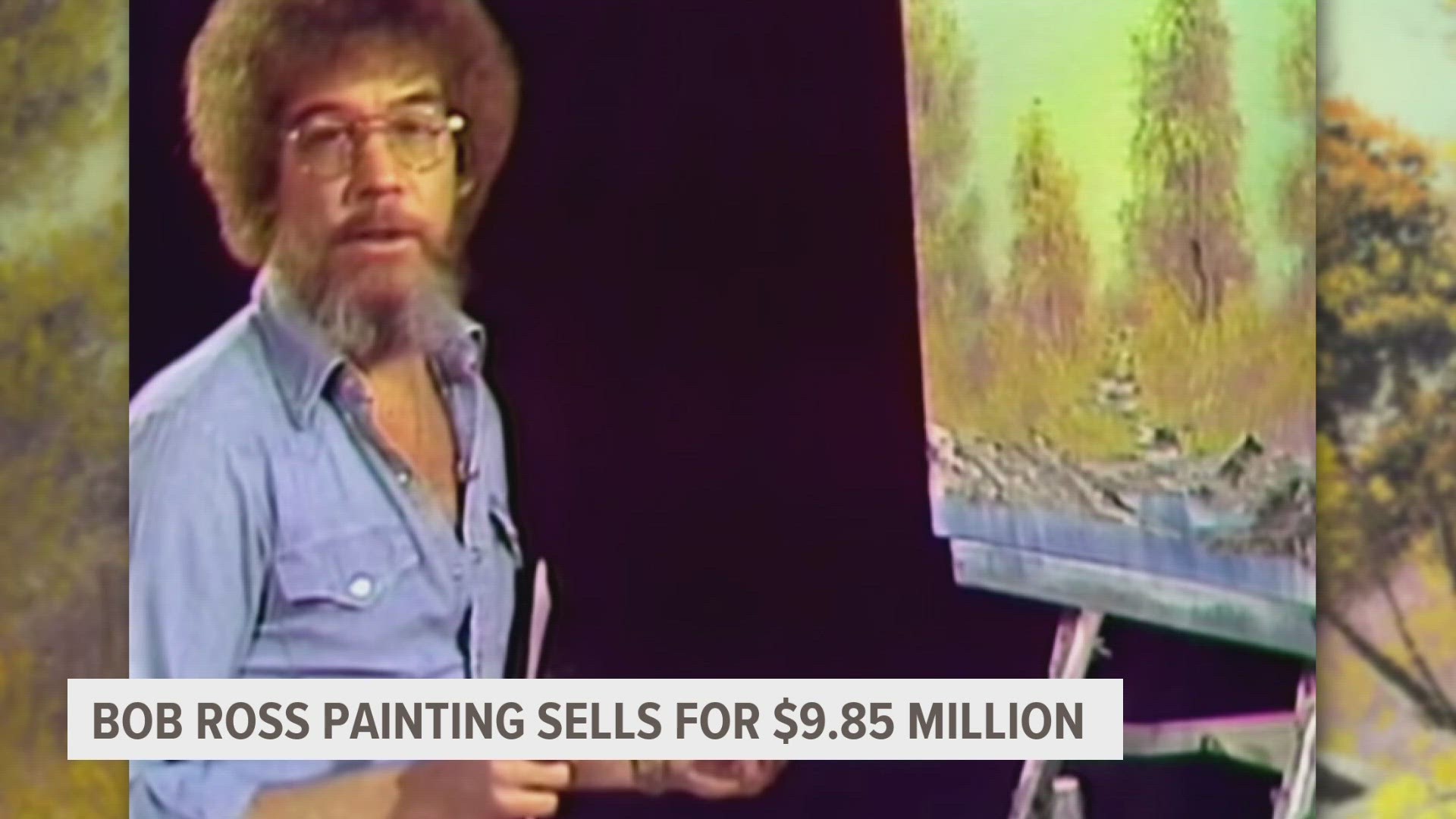
"A Walk in the Woods" is the historic pilot episode painting of Bob Ross’s iconic television series The Joy of Painting, which first aired on public television stations in January 1983. Created using Ross's signature Wet-on-Wet technique, this serene landscape features a quiet winter stream winding through a peaceful forest, establishing the soothing tone, encouraging philosophy, and accessible oil painting methodology that would captivate millions of viewers worldwide for over a decade.
The Historical Significance of "A Walk in the Woods"
When Bob Ross stepped in front of the Public Broadcasting Service (PBS) cameras in the fall of 1982 to film the first season of The Joy of Painting, he chose "A Walk in the Woods" as the subject for Episode 1. Produced by Muncie Broadcasting Corporation in Muncie, Indiana, this inaugural broadcast laid the foundation for an educational phenomenon. Before the television show, Ross had refined his rapid-painting technique while traveling the United States as a U.S. Air Force master sergeant and later while studying under Bill Alexander, the German painter who originally popularized the Alla Prima wet-on-wet style on American television.
"A Walk in the Woods" is more than just an artwork; it represents the birth of a cultural touchstone. The painting immediately established the format that would remain unchanged across 31 seasons and over 400 episodes. In roughly 27 minutes, Ross demonstrated that anyone—regardless of prior artistic training—could express themselves through oil painting. By demystifying the artistic process and replacing intimidation with reassurance, Ross turned "A Walk in the Woods" into a masterclass in accessible creativity.
Artistic Elements and Compositional Analysis
Comprehending "A Walk in the Woods" requires examining its specific compositional choices and structural layers. The canvas is divided into a balanced landscape that draws the viewer's eye along a natural path, creating a powerful sense of depth and perspective.
The Foreground and Middle Ground
The painting opens in the immediate foreground with dark, rich evergreens framing the left and right sides of the canvas. These framing elements act as theatrical curtains, pushing the viewer’s gaze toward the center of the image. A gentle, snow-covered bank sits beside a winding brook that cuts diagonally across the lower half of the composition. The movement of the water is suggested with crisp, horizontal highlights applied using a palette knife, simulating frozen edges and running current.
The Background and Atmosphere
Moving backward into the middle ground, Ross introduces a cluster of slender deciduous trees—often referred to as birch or poplar trees—whose stark, dark bark stands out against the muted background. The background itself dissolves into a soft, misty forest using muted tones of blue, gray, and white. This atmospheric perspective creates the illusion of deep space, making a small canvas feel like an expansive wilderness.
Materials and Techniques Used in the Original Episode
To recreate or understand the structural execution of "A Walk in the Woods," one must examine the specific materials, canvas preparations, and brushwork favored by Bob Ross during the early 1980s. Ross relied on heavy-duty, student-to-professional grade oil paints and stretched canvases coated with commercial gesso.
The Magic White Base Coat
The cornerstone of the Wet-on-Wet (or Alla Prima) method is the application of a thin, even coat of liquid medium across the dry canvas before applying any color. For "A Walk in the Woods," Ross utilized Liquid White (or a mixture of titanium white and linseed oil) brushed thinly over the surface. This wet foundation allows subsequent oil colors to slide and blend directly on the canvas, eliminating the need to wait days for layers to dry between painting sessions.
Essential Pigments
The color palette for this specific winter landscape is relatively restrained compared to Ross's later, more vibrant tropical or autumnal scenes. The primary pigments include:
- Phthalo Blue: Used for deep shadows in the snow and atmospheric distance.
- Titanium White: Essential for highlights, snowbanks, and mist.
- Midnight Black: Combined with blues and browns to create dark, grounding shadows.
- Van Dyke Brown: Used for tree trunks, earth tones, and the rich soil beneath the snow.
- Cadmium Yellow: Applied sparingly to give subtle warmth to select highlights and underlying foliage tones.
Step-by-Step Breakdown of the Painting Process
Reconstructing the creation of "A Walk in the Woods" reveals the methodical, rhythmic sequence that Bob Ross perfected. Each step builds logically upon the previous wet layer, requiring confidence and a light touch.
| Step | Phase | Primary Tool | Description |
|---|---|---|---|
| 1 | Sky and Background | 2-Inch Brush | Apply a thin coat of Liquid White. Blend a touch of Phthalo Blue and Titanium White across the top corners, working downward into a soft, hazy horizon. |
| 2 | Distant Evergreens | 1-Inch Brush | Tap the corner of the brush into dark paint to create loose, distant evergreen silhouettes fading into the background mist. |
| 3 | The Snow-Covered Ground | 2-Inch Brush / Palette Knife | Swipe white and light blue mixtures across the lower canvas to establish snowdrifts and rolling terrain. |
| 4 | The Winding Brook | Palette Knife | Scrape away paint or apply dark brown and white strokes to carve out the winding stream and its icy banks. |
| 5 | Foreground Trees | Script Liner / Palette Knife | Paint dark trunks with Van Dyke Brown and pull sharp highlights down one side using a knife to simulate cylindrical bark. |
Cultural Legacy and Where the Original Painting Resides
Following the completion of the pilot episode in late 1982, the original "A Walk in the Woods" painting embarked on a journey that mirrored the unexpected rise of its creator. For decades, the artwork remained stored away in production archives alongside hundreds of other paintings created during The Joy of Painting.
In recent years, the cultural cachet of Bob Ross skyrocketed, transforming his original canvases from television props into highly coveted pieces of American pop-culture history. While many Joy of Painting canvases were donated to public television stations, auctioned off for charity, or kept by members of the production crew, "A Walk in the Woods" has found institutional preservation. In September 2023, the Smithsonian's National Museum of American History in Washington, D.C., announced that it had acquired the original painting for its permanent collection, securing its place alongside other defining artifacts of American television and cultural history.
Common Challenges When Replicating the Painting
For aspiring artists attempting to recreate "A Walk in the Woods," several technical hurdles frequently emerge due to the nature of oil painting and the specific demands of the Wet-on-Wet technique.
- Over-Blending the Canvas: Applying too much Liquid White causes colors to turn into muddy gray pools rather than distinct shapes. The golden rule of the technique is to apply the liquid base coat "thinner than an old dime."
- Muddy Colors: Mixing wet dark colors directly into wet light colors without wiping the brush between strokes destroys contrast. Painters must load brushes cleanly and rely on light pressure.
- Stiff Bristles: Standard watercolor or acrylic brushes lack the stiffness required to manipulate heavy-body oil paints over a slick, wet surface. Using firm, natural-bristle Bob Ross landscape brushes is essential for achieving the characteristic texture of evergreen foliage.
Frequently Asked Questions
What season and episode is "A Walk in the Woods" from?
"A Walk in the Woods" is Season 1, Episode 1 of The Joy of Painting. It serves as the official pilot episode of the series, broadcast initially in January 1983 across PBS affiliate stations in the United States.
Can beginners successfully paint "A Walk in the Woods"?
Yes. The painting was specifically designed by Bob Ross to be approachable for absolute beginners. By utilizing a wet-white base coat, novices can blend colors smoothly and build confidence within a single painting session, aligning with the core educational mission of the television program.
What paints were used in the original Bob Ross method?
Bob Ross used heavy-body oil paints formulated specifically to have a thick, paint-tub consistency similar to smooth peanut butter. This consistency allows the paint to stick to a wet canvas without sliding off or running down the surface.
Where can I see the original "A Walk in the Woods" painting today?
The original painting is part of the permanent collection at the Smithsonian's National Museum of American History in Washington, D.C., where it is displayed alongside other artifacts celebrating American media and culture.
How long did it take Bob Ross to paint this episode?
Like nearly all episodes of The Joy of Painting, the actual painting process was completed in approximately 27 minutes to fit standard television broadcast slots, though the preparatory steps and canvas priming were completed before filming began.
Practical Next Steps for Enthusiasts
For those inspired by "A Walk in the Woods" to pick up a brush, start by sourcing proper student-grade oil paints, odorless thinner for cleaning brushes, and a firm stretched canvas. Practice applying a very thin, translucent layer of Liquid White before attempting any sky or cloud effects. Focus on maintaining a light touch, letting the bristles do the work, and remembering Bob Ross's most famous guiding philosophy: there are no mistakes, just happy accidents.