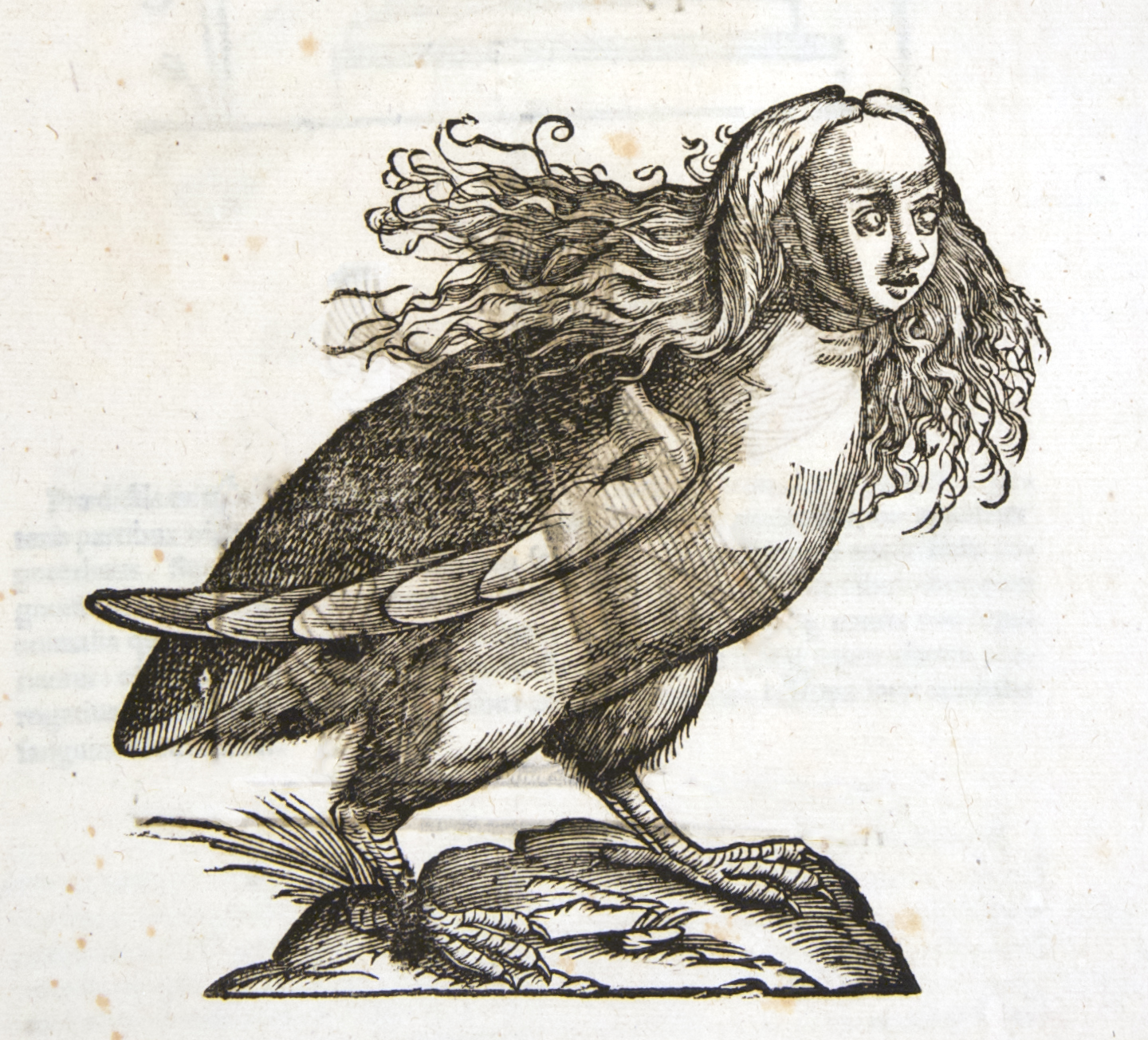
Harpies and sirens are not the same, despite both being avian-human hybrids in ancient Greek mythology. Harpies are personifications of storm winds and filth, known for "snatching" food or people as divine punishment. Sirens are musical enchanters who use their irresistible voices to lure sailors to their deaths on rocky shores.
The Origins and Etymology of the Harpy
To understand why harpies and sirens are distinct, we must look first at the harpy, or Harpyia. The name is derived from the Greek verb harpazein, which literally means "to snatch" or "to seize." In the earliest layers of Greek mythology, specifically in Hesiod’s Theogony (composed around the 8th century BCE), harpies were not the repulsive monsters often depicted in later Roman literature. Instead, they were described as "fair-haired" and swifter than the winds or birds.
Originally, they were personifications of the sudden, violent gusts of wind that could cause a person to disappear or a ship to be lost. They were the daughters of the sea god Thaumas and the oceanid Electra, making them sisters to Iris, the goddess of the rainbow. This divine lineage suggests that in the Archaic period, they were viewed as natural phenomena—sometimes terrifying, but not inherently "ugly" or "evil" in a moral sense.
However, as Greek mythology evolved into the Hellenistic and Roman periods, the harpy’s image shifted dramatically. Writers like Virgil, in his epic the Aeneid, transformed them into "vultures with the faces of women," characterized by pale, hunger-stricken faces and crooked talons. They became associated with filth and defilement, famously polluting the feasts of King Phineus. This transition from "wind spirit" to "disgusting bird-monster" is one of the most significant evolutions in mythological history, cementing the harpy's role as a creature of punishment and wretchedness.
The Siren's Call: Musical Enchanters of the Sea
The sirens (Seirenes) occupy a completely different functional and symbolic space. While they share the bird-woman hybridity of the harpies, their power lies in their voice rather than their speed or physical aggression. In Homer’s Odyssey, the sirens are not even physically described; their presence is defined entirely by their song. They inhabit an island (often identified as Anthemoessa) surrounded by the bleaching bones of the sailors they have seduced and destroyed.
Unlike the harpies, who were born of sea and storm deities, sirens were often considered the daughters of the river god Achelous and one of the Muses (typically Melpomene or Terpsichore). This parentage is crucial to their identity; as the offspring of a Muse, their musical talent is divine, but as creatures of the wild, they use that talent for predatory ends.
The sirens' song was not merely a beautiful melody; it was a promise of forbidden knowledge. In the Odyssey, they claim to know "all that happens on the fertile earth." They represent the danger of intellectual or sensory temptation—the idea that some truths or pleasures are too great for the human mind to withstand. While harpies take things away (snatching), sirens draw things toward them (attracting). This fundamental difference in "direction"—outward theft versus inward attraction—is the primary distinction between the two entities.
Physical Evolution: Why Birds Became Mermaids
One of the greatest sources of modern confusion regarding "are harpies and sirens the same" is the radical change in how sirens are depicted. In ancient Greek art—found on vases and funerary monuments—sirens were consistently shown as large birds with the heads of women. Sometimes they were depicted with human arms or playing musical instruments like the lyre or flute. At this stage, they were visually almost identical to harpies, which is why casual observers of ancient art often struggle to tell them apart.
The shift toward the "mermaid" (half-fish, half-woman) image did not occur until the early Middle Ages. This transition is often traced back to the Liber Monstrorum (Book of Monsters), an 8th-century Anglo-Latin catalog. The text began to conflate the sea-dwelling nature of the sirens with the physical attributes of marine life. Over centuries, the bird-woman siren was phased out in Western European folklore, replaced by the fish-tailed temptress we recognize today.
Harpies, conversely, never underwent a "beautification" or a shift in habitat. They remained firmly avian and terrestrial (or aerial). Because modern audiences often think of sirens as mermaids, the original bird-like sirens of Greek myth are frequently misidentified as harpies. If you see a creature in an ancient Greek painting that is part-bird and part-woman, you must look at the context: if she is eating or attacking, she is likely a harpy; if she is singing or playing music, she is a siren.
Functional Distinctions: Punishment vs. Temptation
To truly separate these two entities, we must examine their roles within the narratives of Greek heroes. Their functions are rarely, if ever, interchangeable.
The Harpy as an Agent of Divine Wrath
Harpies are usually sent by the gods (often Zeus or Hera) to torment mortals. The most famous example is the story of King Phineus of Thrace. Phineus was gifted with the power of prophecy but abused it by revealing too much of the gods' plans. As punishment, he was blinded and settled in a place where harpies would descend upon his table every time he tried to eat. They would either snatch the food away or vomit a foul-smelling substance over it, leaving him perpetually starving.
In this context, the harpy is a "snatcher" of sustenance and a symbol of divine reach. They are not trying to kill Phineus outright; they are ensuring his ongoing misery. This role as a "divine hound" is seen again in the Aeneid, where the harpy Celaeno delivers a terrifying prophecy to Aeneas and his men after they attempt to eat the harpies' cattle.
The Siren as a Fatal Obstacle
Sirens do not act as agents of a specific god's wrath; they are a natural (or supernatural) hazard of the sea. Their goal is the death of the sailor, but they do not use force to achieve it. The danger of the siren is entirely consensual—the sailor chooses to steer toward the song.
When Odysseus encountered the sirens, he had his men plug their ears with beeswax while he was lashed to the mast. He wanted to hear the song without the ability to act on the impulse to join them. This highlights the siren's role as a test of character and willpower. In the Argonautica, the hero Orpheus saved his crew from the sirens by playing a song even more beautiful than theirs, effectively drowning out their lethal melody.
Comparative Analysis: Harpies vs. Sirens
The following table summarizes the technical and mythological differences between these two types of creatures as they were understood in the classical world.
| Feature | Harpies (Harpyiai) | Sirens (Seirenes) |
|---|---|---|
| Primary Meaning | "The Snatchers" | "The Entanglers" / "The Enchanters" |
| Domain | The air, storm winds, and Thrace | The sea and rocky islands (Anthemoessa) |
| Typical Parentage | Thaumas and Electra | Achelous and a Muse (Melpomene) |
| Physical Form | Bird-woman (often depicted as ugly/filthy) | Bird-woman (originally); Mermaid (later) |
| Main "Weapon" | Claws, speed, and foul stench | Divine song and forbidden knowledge |
| Narrative Role | Punishers and thieves of food/souls | Temptresses and lethal obstacles |
| Key Mythic Encounter | Phineus and the Argonauts; Aeneas | Odysseus; Orpheus and the Argonauts |
| Symbolism | Divine retribution; sudden loss; storms | Temptation; the lure of the unknown; death |
Literary Sources and Historical Accounts
The distinction between these creatures is maintained across centuries of classical literature. To see the "technical" differences, one can look at specific primary texts:
- Hesiod’s Theogony (c. 700 BCE): This is the foundational text for harpies. Hesiod describes them through the Perseus Project as winged beings who "keep pace with the blasts of the winds."
- Homer’s Odyssey (c. 8th Century BCE): Book 12 provides the definitive account of the sirens. It emphasizes their "honeyed voices" and the meadow of rotting corpses that surrounds them.
- Apollonius Rhodius’ Argonautica (3rd Century BCE): This text features both creatures. The Boreads (winged sons of the North Wind) chase the harpies away from Phineus, and later, the Argonauts must pass the sirens. The fact that both appear in the same epic as separate challenges proves they were viewed as entirely different species.
- Virgil’s Aeneid (1st Century BCE): Virgil provides the most vivid "horror" description of harpies. In Book III, he describes the encounter on the Strophades islands, where the harpy Celaeno serves as a spokesperson for her sisters.
- Ovid’s Metamorphoses (1st Century CE): Ovid provides a "reason" for the sirens' form, claiming they were the companions of Persephone who asked for wings so they could search for her across the seas after her abduction by Hades.
Why the Confusion Persists
If the differences are so stark, why are they still confused in 2026? There are three main reasons:
- Iconographic Overlap: For nearly a millennium, Greek and Roman artists used the same "shorthand" for both: a woman’s head on a bird’s body. Without labels or specific narrative clues (like a table of food for harpies or a lyre for sirens), it is impossible to distinguish them visually in many surviving artifacts.
- The "Mermaid" Shift: Because sirens became mermaids in popular culture, the "bird-woman" slot in our collective imagination was left vacant. When people see a bird-woman in a movie or game, they default to "harpy" because that is the only bird-woman they know.
- Victorian Generalization: 19th-century mythographers and poets often grouped "monstrous women" together, focusing on their shared status as "femme fatales" or "hybrid horrors" rather than their specific Greek functions.
Frequently Asked Questions
Are harpies and sirens related?
In the genealogical sense of Greek mythology, they are not closely related. Harpies are descendants of sea and storm deities (Thaumas and Electra), while sirens are the offspring of a river god (Achelous) and a Muse. While they both belong to the broader category of "mythological hybrids," they do not share a common direct ancestor in the way that the Gorgons or the Graeae do.
Can sirens fly if they have bird bodies?
In original Greek mythology, yes. Because they were depicted as birds (often with large wings), they were capable of flight. This is explicitly mentioned in myths where they competed with the Muses; after losing the musical contest, the Muses plucked the sirens' feathers to make crowns for themselves, which supposedly hindered the sirens' ability to fly and forced them to stay on their islands.
Do harpies always smell bad?
The "stench" of the harpies is a later addition to mythology, primarily popularized by Roman writers like Virgil and Apollonius Rhodius. In the earliest Greek accounts, they were simply fast wind-spirits. The idea that they defile everything they touch with a "foul secretion" became their most defining trait in the Middle Ages and Renaissance.
Which creature is more dangerous?
This depends on the context. A harpy is a physical threat that can steal your food, your life, or your soul at the command of the gods. A siren is a psychological threat; she cannot harm you if you simply do not listen or if you stay away from her island. However, the siren's lethality is "perfect"—virtually no one (except Odysseus and the Argonauts) survived an encounter with them.
Did harpies and sirens ever meet?
There are no recorded myths in classical antiquity where harpies and sirens interact or fight. They inhabit different geographical and narrative spheres. Harpies are mobile, traveling wherever they are sent to punish someone, while sirens are sedentary, bound to their specific island in the Tyrrhenian Sea.
Final Recommendation: Distinguishing the Two in Practice
When identifying these creatures in literature, art, or modern media, focus on the intent. If the creature is portrayed as a scavenger, a predator, or an agent of filth and hunger, it is a harpy. If the creature is portrayed as a singer, a guardian of secrets, or an alluring danger that uses beauty (visual or auditory) to kill, it is a siren.
For those interested in exploring the primary evidence further, the Theoi Project remains the most comprehensive digital archive of classical references to these creatures, providing side-by-side comparisons of their descriptions in ancient Greek and Latin texts.