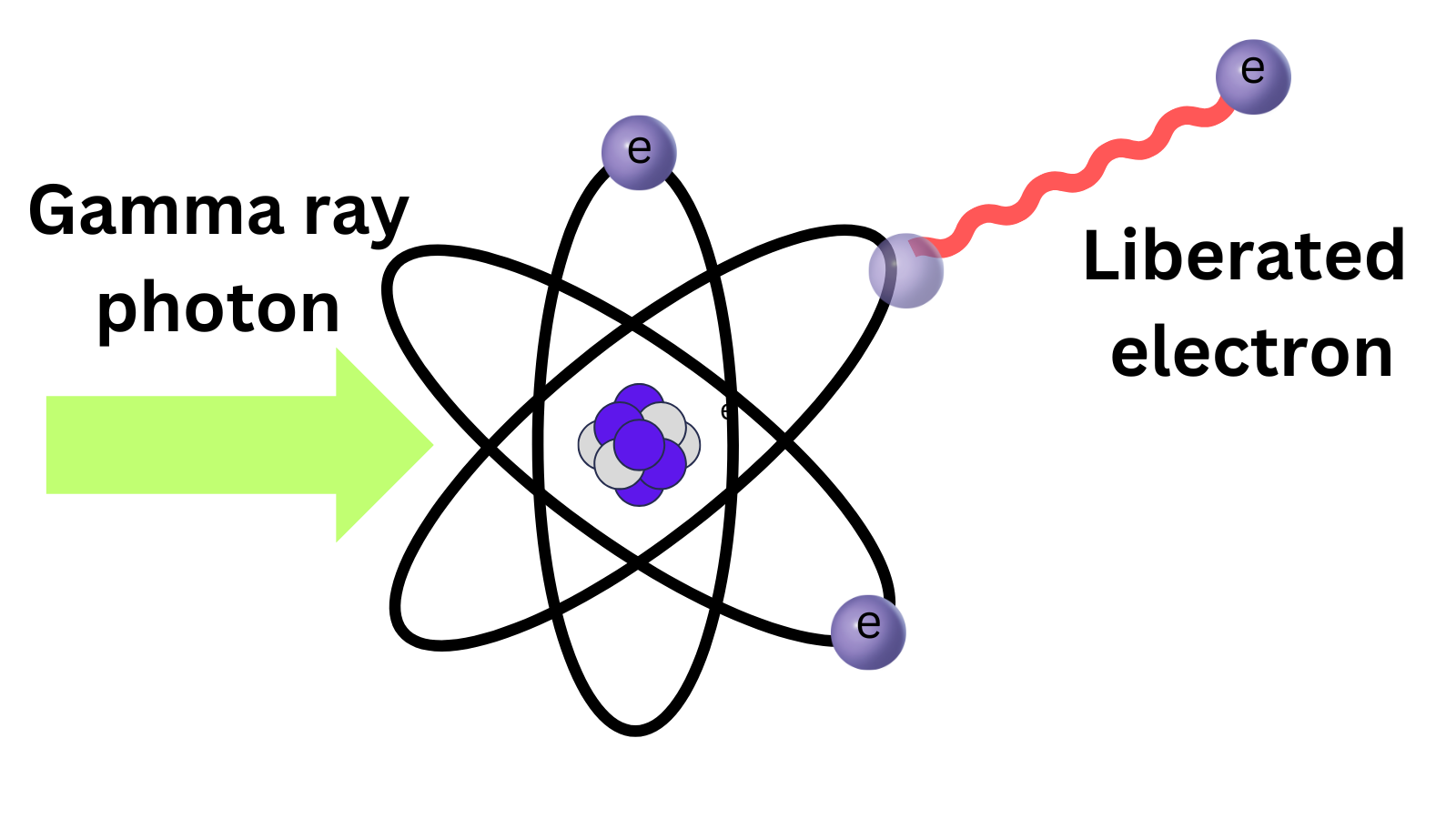
Yes, gamma rays are a highly potent form of ionizing radiation. Because they possess extremely high frequencies and short wavelengths, they carry sufficient energy to liberate electrons from atoms or molecules, creating ions. This process of ionization can cause significant chemical changes in matter, particularly within the biological tissue of living organisms.
Gamma radiation represents the highest-energy end of the electromagnetic spectrum. Unlike alpha or beta particles, which are composed of matter, gamma rays are packets of pure energy called photons. Their ability to penetrate deeply into various materials makes them both an invaluable tool in modern medicine and industry, as well as a significant safety concern requiring rigorous shielding and management protocols. To understand why gamma rays are ionizing, one must examine the specific physical interactions they have with atomic structures and the energy thresholds required to disrupt chemical bonds.
The Fundamentals of Ionizing Radiation
To answer whether gamma rays are ionizing, we must first define what ionization entails. Ionization is the process by which an atom or a molecule acquires a negative or positive charge by gaining or losing electrons. For electromagnetic radiation to be "ionizing," a single photon must carry enough energy to overcome the binding energy of an electron in an atom.
In the electromagnetic spectrum, radiation is divided into non-ionizing and ionizing categories. Non-ionizing radiation includes radio waves, microwaves, infrared, and visible light. These have enough energy to excite electrons to higher energy states or cause molecular vibrations, but they cannot strip electrons away. Ionizing radiation begins at the high-frequency end of the ultraviolet (UV) spectrum and extends through X-rays and gamma rays.
Gamma rays are distinct because their energy typically exceeds tens of kiloelectron volts (keV) and can reach into the megaelectron volt (MeV) range. In the context of 2026 physics standards, gamma rays are characterized by wavelengths shorter than 10 picometers. This extreme energy density allows a single gamma photon to interact violently with the electron cloud of an atom, leading to the ejection of electrons and the subsequent disruption of molecular stability.
How Gamma Rays Ionize Matter: Three Primary Mechanisms
Gamma rays do not interact with matter in the same way that charged particles like alpha or beta radiation do. Because gamma photons have no electrical charge and no mass, they can travel long distances through air and solid objects before hitting an atom. When they finally do interact, they primary use three mechanisms to cause ionization: the photoelectric effect, Compton scattering, and pair production.
The Photoelectric Effect
The photoelectric effect occurs most frequently when low-energy gamma rays (usually below 0.5 MeV) encounter atoms with high atomic numbers. In this interaction, a gamma photon is completely absorbed by an inner-shell electron. The energy of the photon is transferred entirely to the electron, which is then ejected from the atom as a "photoelectron." This leaves the atom in an ionized state with a vacancy in its inner shell, which is eventually filled by an outer-shell electron, often releasing a characteristic X-ray in the process.
Compton Scattering
Compton scattering is the dominant interaction mechanism for gamma rays of intermediate energy (ranging from approximately 0.5 MeV to 5 MeV), which covers most radioactive isotopes used in industrial and medical applications. In this scenario, a gamma photon strikes an outer-shell electron but is not fully absorbed. Instead, it transfers a portion of its energy to the electron, ejecting it from the atom, while the remaining energy continues as a lower-energy (longer wavelength) gamma photon scattered at a different angle. This creates a cascade effect where a single high-energy gamma ray can cause multiple ionization events.
Pair Production
Pair production is a unique high-energy phenomenon that occurs when a gamma photon with energy exceeding 1.02 MeV passes near the nucleus of an atom. The intense electric field of the nucleus causes the photon to disappear, and its energy is converted into mass—specifically, an electron and a positron (an anti-electron). This process directly illustrates Einstein’s mass-energy equivalence ($E=mc^2$). Both the electron and the positron can go on to cause further ionization in surrounding matter.
Sources of Gamma Radiation in 2026
Gamma radiation is produced by several distinct processes, ranging from the subatomic level to cataclysmic cosmic events. Understanding these sources is essential for managing exposure and utilizing gamma rays for beneficial purposes.
Radioactive Decay
The most common source of gamma rays on Earth is the stabilization of unstable atomic nuclei. After an atom undergoes alpha or beta decay, the "daughter" nucleus is often left in an excited, high-energy state. To reach its stable ground state, the nucleus releases the excess energy in the form of a gamma photon. Common isotopes used for this purpose include:
- Cobalt-60: Widely used in medical radiotherapy and industrial sterilization.
- Cesium-137: Used in industrial gauges and some types of radiotherapy.
- Technetium-99m: A vital tracer used in millions of diagnostic medical procedures annually.
Cosmic and Astrophysical Sources
The Earth is constantly bombarded by high-energy radiation from space. Gamma rays are produced by some of the most energetic phenomena in the universe, including supernovae, pulsars, and black holes. While our atmosphere shields us from most of this radiation, high-altitude flights and space exploration missions in 2026 require specialized monitoring to protect crews from cosmic gamma-ray bursts and background radiation.
Nuclear Fission and Fusion
Gamma rays are a significant byproduct of nuclear reactions. In nuclear power plants, the splitting of heavy nuclei (fission) releases prompt gamma radiation. Similarly, solar fusion in the core of the sun generates gamma rays, although these are repeatedly absorbed and re-emitted as lower-energy light by the time they reach the sun's surface.
Biological Impacts of Ionizing Gamma Radiation
Because gamma rays are ionizing, they pose a specific set of risks to living organisms. Unlike non-ionizing radiation, which primarily causes heating (like a microwave), ionizing radiation changes the fundamental chemistry of cells.
Direct vs. Indirect Damage
When gamma radiation enters the human body, it can damage DNA in two ways. Direct damage occurs when a gamma photon or a secondary electron produced by ionization directly strikes a DNA molecule, breaking the sugar-phosphate backbone or damaging the nitrogenous bases. Indirect damage is more common; the gamma ray ionizes water molecules in the cell (radiolysis), creating highly reactive free radicals like hydroxyl ($OH\cdot$). These radicals then attack the DNA.
Cellular Responses and Mutation
Cells have sophisticated repair mechanisms to fix DNA breaks. However, if the ionization is too intense or the repair is faulty, several outcomes may occur:
- Cell Death: If the damage is too severe to repair, the cell may undergo apoptosis (programmed cell death). This is the goal in cancer treatment.
- Senescence: The cell stops dividing but remains metabolically active.
- Mutation: The cell survives but carries altered genetic information. If this mutation occurs in genes regulating cell growth, it can eventually lead to cancer.
Acute vs. Chronic Exposure
As of 2026, safety standards emphasize the difference between acute high-dose exposure and chronic low-dose exposure. Acute exposure can lead to Radiation Sickness (Acute Radiation Syndrome), characterized by nausea, hair loss, and immune system failure. Chronic exposure at lower levels increases the statistical probability of developing secondary cancers over a lifetime, a risk managed by the "As Low As Reasonably Achievable" (ALARA) principle.
Comparison of Ionizing Radiation Types
To understand the specific niche of gamma rays, it is helpful to compare them to other common forms of ionizing radiation.
| Property | Alpha Particles | Beta Particles | Gamma Rays | X-Rays |
|---|---|---|---|---|
| Physical Nature | Helium Nucleus (2p, 2n) | Electron or Positron | Electromagnetic Photon | Electromagnetic Photon |
| Charge | +2 | -1 or +1 | 0 (Neutral) | 0 (Neutral) |
| Mass | Heavy (4 amu) | Very Light | No Mass | No Mass |
| Ionizing Power | Extremely High | Moderate | Low (per interaction) | Low (per interaction) |
| Penetration Depth | Very Low (Paper) | Moderate (Aluminum) | Very High (Lead/Concrete) | High (Soft Tissue) |
| Origin | Nucleus | Nucleus | Nucleus | Electron Shells |
Applications of Gamma Ionization in 2026
Despite the risks, the ionizing nature of gamma rays is harnessed for several critical technological and medical advancements.
Oncology and the Gamma Knife
In 2026, stereotactic radiosurgery, often referred to as "Gamma Knife" surgery, remains a gold standard for treating deep-seated brain tumors. By focusing hundreds of low-intensity gamma-ray beams from different angles onto a single point, doctors can deliver a lethal dose of ionizing radiation to a tumor while sparing the surrounding healthy tissue. The ionization causes double-strand DNA breaks in the cancerous cells, preventing them from replicating.
Medical Sterilization
Gamma radiation is a primary method for sterilizing single-use medical supplies such as syringes, bandages, and surgical implants. Because gamma rays are highly penetrating, they can sterilize products inside their final shipping packaging. The ionization destroys the DNA and cellular structures of bacteria, viruses, and fungi, ensuring the products are sterile without the need for high heat or moisture, which could damage sensitive materials.
Food Irradiation
To combat foodborne illnesses and extend shelf life, gamma rays are used to irradiate food products. This process, strictly regulated by international standards in 2026, involves passing food through a radiation field. The ionization kills pathogens like E. coli and Salmonella and inhibits the sprouting of vegetables. It is important to note that this process does not make the food radioactive; it simply uses the energy of gamma rays to disrupt biological contaminants.
Industrial Non-Destructive Testing (NDT)
Gamma radiography is used to inspect the integrity of metal structures, pipelines, and welds. A gamma source is placed on one side of a structure, and a detector or film is placed on the other. Because denser areas or flaws in the metal absorb gamma rays differently, the resulting image reveals internal cracks or voids that are invisible to the naked eye.
Safety, Shielding, and Protection
Because gamma rays are highly penetrating and ionizing, protective measures are vital for workers in the medical, nuclear, and industrial sectors. Protection strategies generally follow three pillars: Time, Distance, and Shielding.
- Time: Reducing the time spent near a gamma source directly reduces the total dose of ionization absorbed by the body.
- Distance: Gamma radiation follows the Inverse Square Law. Doubling the distance from a source reduces the radiation intensity by a factor of four.
- Shielding: Unlike alpha particles which are stopped by skin or beta particles stopped by plastic, gamma rays require dense, high-atomic-number materials. Lead is the most common shielding material due to its high electron density, which increases the probability of photoelectric and Compton interactions. For large-scale installations like nuclear reactors, several meters of concrete or deep pools of water are used to attenuate gamma radiation.
In 2026, personal dosimetry is mandatory for radiation workers. Modern digital dosimeters provide real-time tracking of ionizing radiation exposure, ensuring that individuals stay well below the annual dose limits established by organizations like the International Commission on Radiological Protection (ICRP).
Frequently Asked Questions
Can gamma rays make you radioactive?
No, gamma rays do not make objects or people radioactive. Ionization involves the removal of electrons, but it does not change the nucleus of the atoms it strikes (unless the energy is exceptionally high, which is rare in standard applications). Once the gamma source is removed or shielded, the radiation field disappears instantly, and no residual radioactivity remains in the target material.
Are X-rays and gamma rays the same thing?
While they are both ionizing electromagnetic radiation and can have overlapping energy levels, they differ by their origin. Gamma rays originate from within the atomic nucleus during radioactive decay or nuclear reactions. X-rays originate from the electron shells or from the deceleration of charged particles (Bremsstrahlung). In practical application, they behave very similarly, but their source identifies them.
Is ionizing radiation from gamma rays always dangerous?
Risk is a function of dose and duration. We are all exposed to low levels of ionizing gamma radiation daily from natural sources like potassium-40 in our bodies and cosmic rays from space. At these very low background levels, the body’s repair mechanisms are highly effective. Danger arises from high-intensity acute exposure or long-term chronic exposure exceeding safety thresholds.
Why is lead used to block gamma rays?
Lead is effective because it is very dense and has a high atomic number (Z=82). This means it has a high concentration of electrons in a small space. Since gamma rays ionize matter by interacting with electrons, providing a "dense forest" of electrons increases the likelihood that the gamma photon will be absorbed or scattered before it passes through the shield.
Can you feel gamma radiation?
No, humans have no sensory organs to detect ionizing radiation. You cannot see, feel, smell, or taste gamma rays. Detection requires specialized equipment like Geiger-Müller counters, scintillation detectors, or semiconductor diodes, which can measure the ionization events caused by the radiation.
Summary and Next Actions
Gamma rays are unequivocally ionizing, a property derived from their position as the highest-energy photons in the electromagnetic spectrum. This ability to ionize matter allows them to be used for life-saving medical treatments and essential industrial processes, but it also necessitates strict adherence to safety protocols to prevent biological damage.
If you are concerned about gamma radiation in your environment or workplace, the first step is to consult with a qualified Radiation Safety Officer (RSO) or a medical physicist. For those interested in the field, pursuing certifications through the Health Physics Society or similar regulatory bodies in your jurisdiction is the best way to understand the practical management of ionizing radiation. In 2026, the integration of real-time dosimetry and automated shielding systems has made working with gamma sources safer than ever, provided that the fundamental physics of ionization are respected and understood.