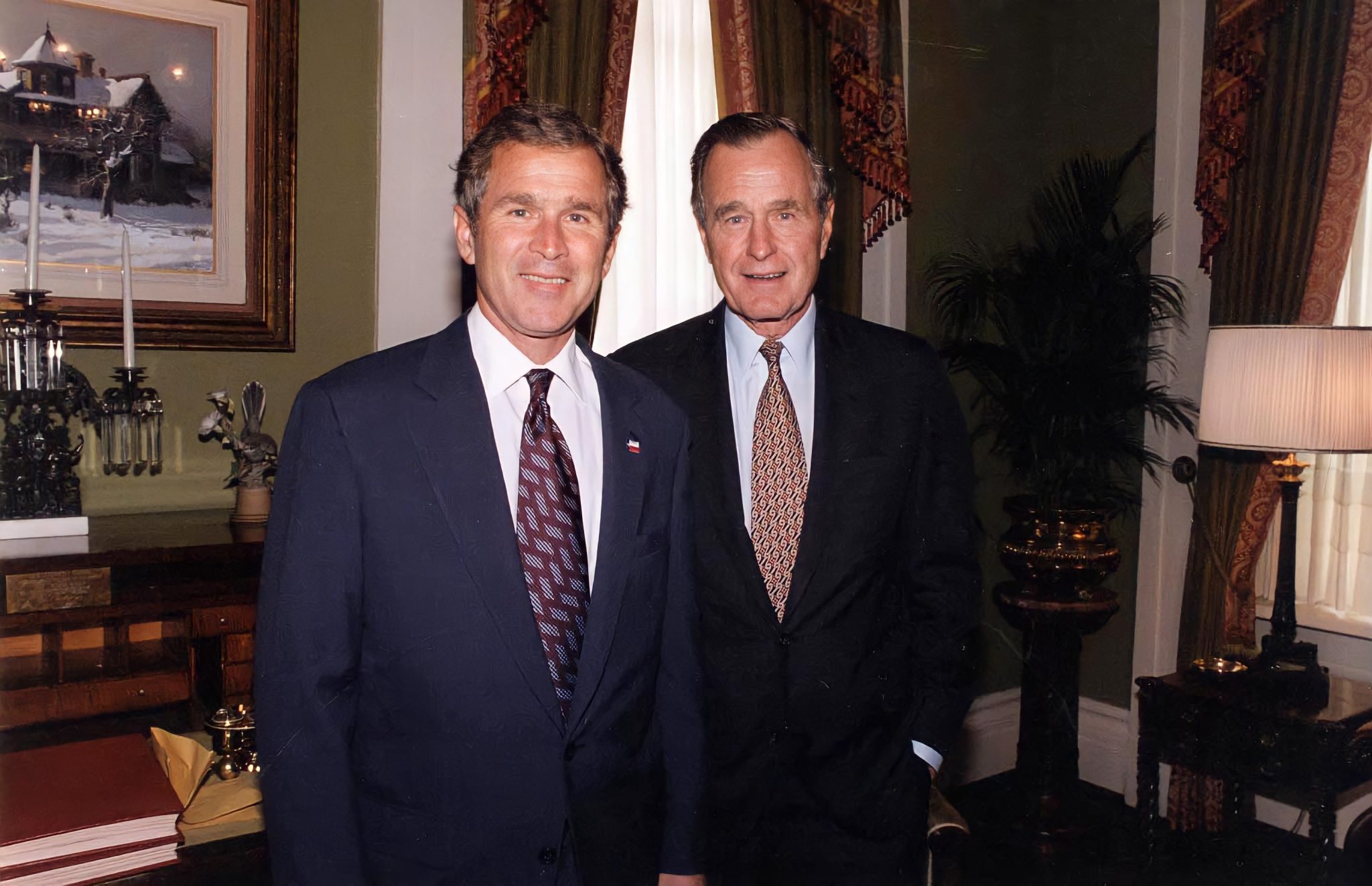
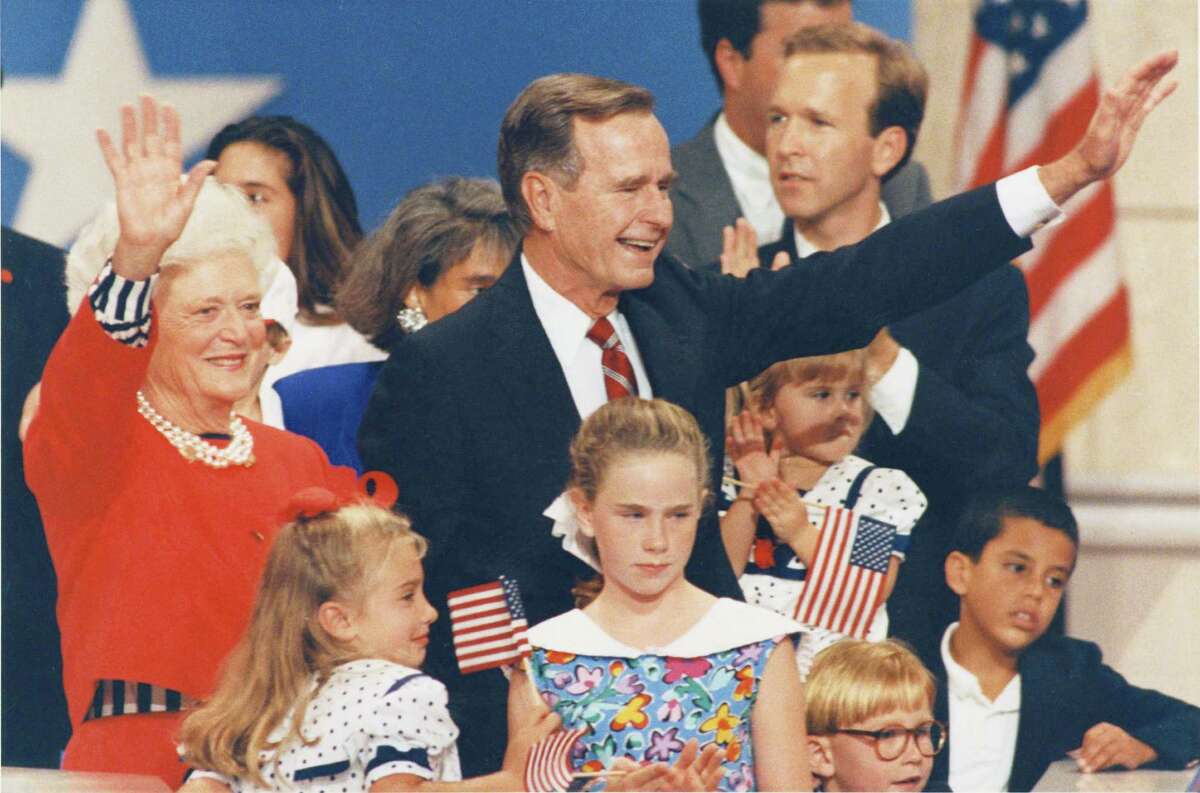
George H.W. Bush and George W. Bush are father and son. This direct lineage represents one of the most prominent political dynasties in United States history. George H.W. Bush served as the 41st U.S. President (1989–1993), while his eldest son, George W. Bush, served as the 43rd U.S. President (2001–2009).
The relationship between George Herbert Walker Bush and George Walker Bush is more than just a shared name and a shared office. It is a connection rooted in a multi-generational legacy of public service, New England aristocratic roots, and Texas oil-patch reinvention. To understand how these two men are related is to understand the trajectory of American conservatism in the late 20th and early 21st centuries. While they shared a deep personal bond and many political allies, their presidencies were marked by distinct challenges, different governing styles, and unique historical contexts.
The Genealogical Link: From Prescott Bush to the White House
The family connection begins long before the first Bush entered the Oval Office. The foundation of the Bush political dynasty was laid by Prescott Sheldon Bush, the father of George H.W. Bush and the grandfather of George W. Bush. Prescott Bush was a wealthy investment banker and a U.S. Senator from Connecticut, representing the "Wall Street" wing of the Republican Party.
The 41st President: George Herbert Walker Bush
George H.W. Bush was born in 1924 in Milton, Massachusetts. He was the second son of Prescott Bush and Dorothy Walker. The name "Walker" comes from his maternal grandfather, George Herbert Walker, a wealthy businessman who founded the Walker Cup in golf. After serving as a young naval aviator in World War II, George H.W. Bush moved his young family to Texas to seek his fortune in the oil industry. This move was a pivotal moment in the family history, transitioning the family's identity from New England elites to Texas entrepreneurs.
The 43rd President: George Walker Bush
George W. Bush was born in 1946 in New Haven, Connecticut, while his father was completing his studies at Yale University. He was the first of six children born to George H.W. and Barbara Pierce Bush. Growing up primarily in Midland and Houston, Texas, George W. Bush identified even more strongly with the "Texas" identity than his father did. He followed in his father’s footsteps to Yale and later earned an MBA from Harvard Business School—making him the first U.S. president with an MBA.
Key Differences in Nomenclature and Identity
A common point of confusion for those researching the Bush family is the similarity in their names. It is important to note that George W. Bush is not a "Junior" in the strictest legal sense.
- George Herbert Walker Bush (41): His full name includes "Herbert," a tribute to his maternal side. In political circles and historical texts, he is often referred to as "Bush 41" or "H.W." to distinguish him from his son.
- George Walker Bush (43): His full name omits the "Herbert." Because of this slight variation, he is not "George H.W. Bush Jr." He is commonly referred to as "Bush 43" or simply "W" (pronounced "Dubya" in a Texas accent).
This distinction was often emphasized by the family to highlight that while the son followed the father's path, he was his own man with his own distinct identity.
A Comparison of the Two Bush Presidencies
While the family connection is direct, their time in the White House occurred during vastly different eras of American and global history. George H.W. Bush’s presidency was defined by the end of the Cold War and the liberation of Kuwait, whereas George W. Bush’s presidency was defined by the September 11 terrorist attacks and the subsequent War on Terror.
| Feature | George H.W. Bush (41st) | George W. Bush (43rd) |
|---|---|---|
| Relationship | Father | Eldest Son |
| Term in Office | 1989–1993 | 2001–2009 |
| Political Party | Republican | Republican |
| Military Service | Navy (WWII Hero) | Air National Guard |
| Prior Office | Vice President, CIA Director, UN Ambassador | Governor of Texas |
| Signature Conflict | Gulf War (Operation Desert Storm) | Iraq War, War in Afghanistan |
| Economic Context | Late 80s recession, "Read my lips" tax pledge | Bush Tax Cuts, 2008 Financial Crisis |
| Alma Mater | Yale University | Yale University, Harvard Business School |
The Influence of Barbara Bush: The Family Matriarch
One cannot explain the connection between the two George Bushes without discussing Barbara Pierce Bush. As the wife of the 41st President and the mother of the 43rd, she held a unique position in American history, matched only by Abigail Adams.
Barbara Bush was known for her bluntness, her commitment to literacy, and her fierce protection of her family’s reputation. She played a significant role in shaping the character of her children. While George H.W. Bush was often seen as the more diplomatic and "proper" statesman, George W. Bush inherited much of his mother's quick wit and plain-spoken manner. This "Barbara Bush influence" helped the younger Bush connect with a broader base of populist Republican voters who sometimes viewed the elder Bush as too "Eastern Establishment."
The Historical Significance of the Father-Son Duo
Before the Bushes, the only other father-son pair to serve as U.S. Presidents were John Adams (2nd President) and John Quincy Adams (6th President). The Bush family connection achieved this milestone nearly 175 years after the Adams family.
This historical rarity led to much analysis regarding the "dynastic" nature of the Bushes. Unlike the Adamses, who were separated by several other presidencies, the Bushes held office within eight years of each other. This proximity meant that many of the advisors who served the father—such as Dick Cheney and Colin Powell—returned to serve the son, albeit often in different or more senior capacities. This created a sense of continuity in Republican foreign policy, even though the two men often disagreed on the nuances of international intervention.
Parallel Paths to the Presidency
The family connection extended into their professional trajectories. Both men were successful in the energy sector before entering politics, though George H.W. Bush’s success was more substantial and provided the financial foundation for the family's future. Both men served as catalysts for the Republican Party’s shift toward the Sun Belt (the South and Southwest).
George H.W. Bush’s path was more traditional for a statesman of his era: Congressman, Ambassador, Chairman of the Republican National Committee, Director of Central Intelligence, and eight years as Vice President under Ronald Reagan.
George W. Bush’s path was more focused on executive experience at the state level. After a failed run for Congress in 1978 and a successful stint as a part-owner of the Texas Rangers baseball team, he was elected Governor of Texas in 1994. His success as a "Compassionate Conservative" governor provided the springboard he needed to seek the presidency in 2000, eventually winning one of the most contested elections in U.S. history.
The Extended Bush Family Network
The connection between the two presidents is the centerpiece of a much larger web of political and social influence. The Bush family is often described as a "political machine" due to the involvement of other family members in public life.
- Jeb Bush: The second son of George H.W. Bush served as the Governor of Florida (1999–2007) and ran for the Republican presidential nomination in 2016. At one point, many believed Jeb, rather than George W., would be the one to follow their father into the White House.
- Neil Bush: A businessman and philanthropist, primarily known for his work in education and his involvement in the savings and loan crisis of the 1980s.
- Marvin Bush: The youngest son, who has largely remained in the private sector, focusing on investment management.
- Dorothy Bush Koch: The only daughter, who has authored books about her father’s life and legacy.
- George P. Bush: The son of Jeb Bush, who served as the Commissioner of the Texas General Land Office, representing the third generation of the family to hold significant elective office.
Personal Relationship and Public Perception
Despite the inevitable comparisons, the personal relationship between George H.W. and George W. Bush remained remarkably strong. In his biography of his father, titled 41: A Portrait of My Father, George W. Bush wrote about the deep admiration he held for his "dad." He often pushed back against the narrative that he was trying to "redeem" his father’s one-term presidency or that there was a rivalry between them.
However, historians often note the "oedipal" themes in their political choices. For instance, while George H.W. Bush was praised for his restraint in not toppling Saddam Hussein during the 1991 Gulf War (preferring to maintain international coalitions), George W. Bush chose to remove Hussein from power in 2003, a move that some saw as a correction or completion of his father’s earlier work.
The Bush Legacy in 2026
As of 2026, the legacy of the Bush family connection continues to be a subject of intense study. With the passing of George H.W. Bush in 2018 and Barbara Bush in the same year, George W. Bush has taken on the role of the family elder. The "Bush brand" of Republicanism—characterized by internationalism, a strong military, and traditional conservative values—stands in contrast to the more populist and nationalist movements that have reshaped the party in recent years.
The connection between these two men serves as a reminder of a specific era in American politics where lineage, service, and a certain "New England-meets-Texas" decorum defined the highest office in the land.
Frequently Asked Questions
Did George H.W. Bush live to see his son become President?
Yes, George H.W. Bush was present at both of his son’s inaugurations in 2001 and 2005. He lived to see his son complete two full terms in office, a feat the elder Bush did not achieve himself, having lost his re-election bid in 1992.
Are there any other presidents in the Bush family?
As of 2026, only George H.W. Bush and George W. Bush have served as President. While other family members, most notably Jeb Bush, have sought the office, the presidency has remained limited to the father and his eldest son.
Why do people use "41" and "43" to describe them?
Since they share almost identical names, "41" and "43" are used as shorthand based on their order in the chronological list of U.S. Presidents. This nomenclature became popular within the family and among staff to avoid confusion during meetings or when referencing historical documents.
What was the main policy difference between the father and son?
While both were Republicans, George H.W. Bush was often viewed as a "realist" in foreign policy, focusing on stability and international norms. George W. Bush was seen as more of an "idealist" or "neoconservative," particularly in his efforts to spread democracy in the Middle East through proactive intervention.
How did the Bush family get started in Texas?
George H.W. Bush moved to Midland, Texas, in 1948 to work for Dresser Industries, a company where his father sat on the board. He eventually co-founded Zapata Petroleum. This move was essential to the family's political rise, as it allowed them to build a base in a state that was becoming a powerhouse in Republican politics.
Recommendation for Further Exploration
To truly understand the nuances of the Bush family connection, it is recommended to read the primary source material written by the family members themselves. All the Best, George Bush is a collection of the 41st President’s letters and diary entries that provides insight into his personal thoughts. Conversely, Decision Points by George W. Bush offers a detailed look at the 43rd President’s perspective on his own administration and his relationship with his father during the crises of the early 2000s. Visiting the George H.W. Bush Presidential Library in College Station, Texas, and the George W. Bush Presidential Center in Dallas, Texas, offers a side-by-side look at how their respective legacies are preserved.