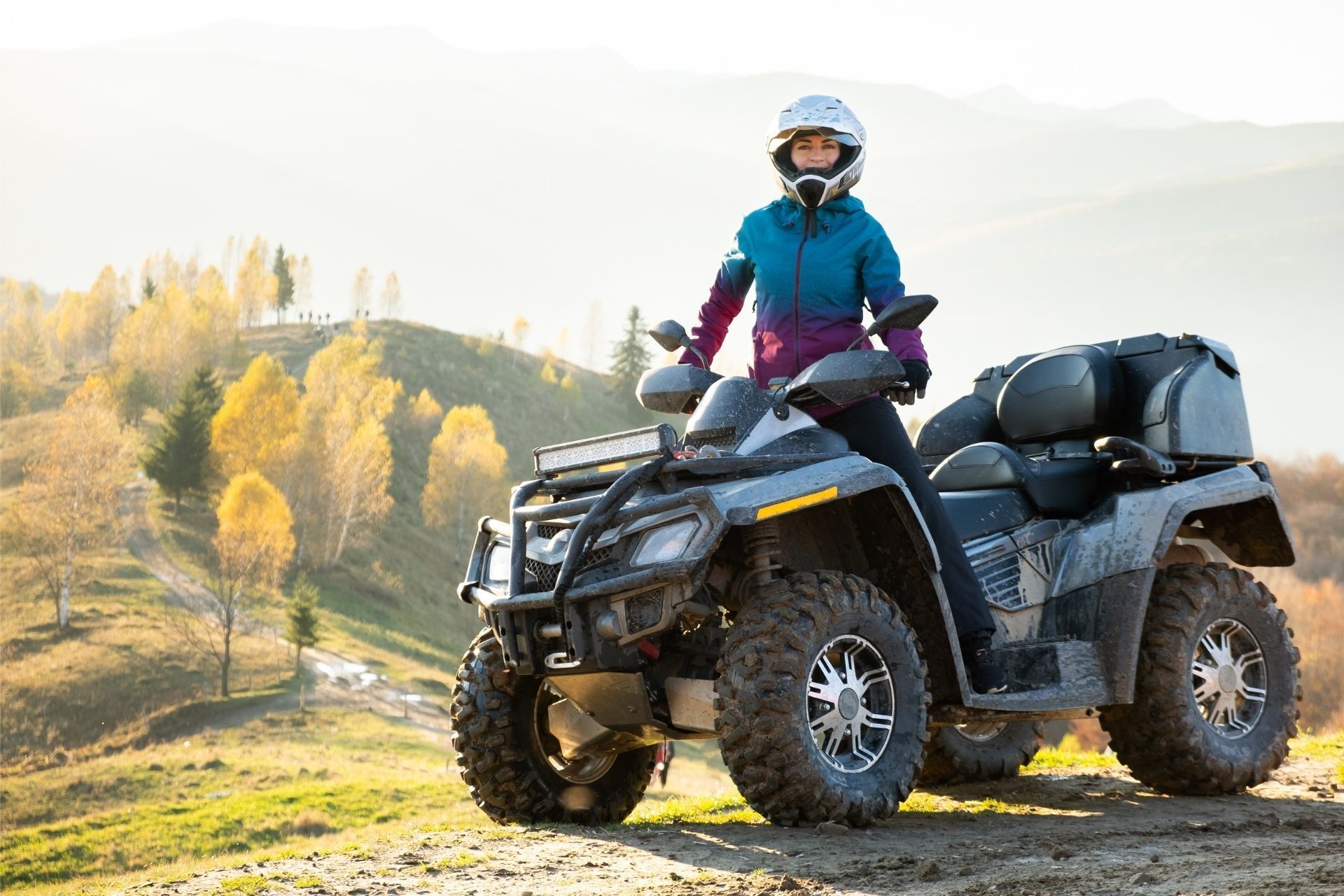
ATV and UTV insurance is specialized property and casualty coverage designed to protect all-terrain vehicles (ATVs) and utility terrain vehicles (UTVs or side-by-sides) against liability, collision damage, theft, and trail accidents. Standard homeowners policies rarely cover off-property riding, making dedicated off-road vehicle insurance essential for operating legally on public lands, protecting custom modifications, and mitigating severe financial losses.
What Is ATV and UTV Insurance and How Does It Work?
Off-road vehicle insurance operates similarly to motorcycle or auto insurance, providing financial protection tailored to the unique risks of operating motorized vehicles on trails, dunes, farms, and public roads. While all-terrain vehicles (ATVs) and utility terrain vehicles (UTVs) share similarities, insurance providers evaluate their risk profiles differently based on vehicle design, passenger capacity, and intended usage.
An ATV (all-terrain vehicle) features straddle seating, handlebar steering, and is designed for single riders or occasionally a driver and passenger. Because ATVs lack protective cabs and roll cages, bodily injury risks during rollovers or ejections are statistically high. In contrast, a UTV (utility terrain vehicle, commonly called a side-by-side or SxS) features bucket or bench seating, steering wheels, foot pedals, seatbelts, and a Roll-Over Protection Structure (ROPS). While UTVs offer superior structural protection, their higher horsepower, greater payload capabilities, passenger capacity (up to six people), and elevated purchase prices result in distinct underwriting considerations and coverage needs.
Off-road insurance policies pay for damage to your vehicle, injuries sustained by you or your passengers, and bodily injury or property damage you cause to others while operating your machine. Coverage follows the vehicle across designated operating territories—including designated trail systems, private land, state parks, and, where legally permitted, paved public roads.
Homeowners Policy vs. Standalone Off-Road Insurance
A common misconception among powersports owners is assuming their standard home insurance policy automatically covers an ATV or UTV. Relying on a homeowners policy (such as a standard HO-3 form) leaves significant coverage gaps that expose vehicle owners to immense out-of-pocket expenses.
| Homeowners Policy Limits | Standalone ATV/UTV Policy |
|---|---|
| Coverage usually restricted to your owned property boundaries | Comprehensive protection across trails, public lands, & transport |
| Strictly limited to property maintenance or yard work usage | Bodily injury and property damage liability anywhere legally ridden |
| Zero liability or physical damage coverage on public trails/lands | Full coverage for aftermarket accessories, winches, and apparel |
Under most standard homeowners policies, personal property coverage explicitly excludes motor vehicles subject to motor vehicle registration or designed primarily for use off public roads, unless the vehicle is used solely to service the insured premises (such as a riding lawnmower or a utility quad used exclusively for snow removal and farm maintenance on your own acreage).
The moment you load your ATV or UTV onto a trailer and haul it to a public trail system, state park, or off-road park, homeowners coverage typically vanishes completely. If you cause an accident off your property, your home liability insurance will generally deny the claim. Furthermore, home policies rarely cover specialized off-road equipment, custom suspensions, or trailside breakdown recovery. Purchasing a dedicated standalone off-road insurance policy—or, in limited cases, adding a specific powersports endorsement to an existing policy—is the only reliable method to establish full-scope protection.
Core Coverage Types in Off-Road Vehicle Policies
A comprehensive off-road vehicle policy consists of several core coverages that safeguard both your financial assets and your physical machine. Understanding how each component functions ensures you select appropriate policy limits.
Liability Coverage (Bodily Injury and Property Damage)
Liability coverage pays for injuries or property damage you cause to third parties while operating your ATV or UTV. If you lose control on a shared trail and strike another rider, or accidentally damage private property like fences or parked vehicles, liability coverage steps in to cover medical bills, vehicle repairs, legal defense fees, and court judgments up to your policy limits.
Policies express liability limits in split figures, such as 25/50/25 ($25,000 for bodily injury per person, $50,000 total bodily injury per accident, and $25,000 for property damage). Given the high cost of medical care and modern powersports machinery, carrying higher limits—such as 100/300/50 or pairing your policy with a personal umbrella insurance policy—is strongly recommended.
Collision Coverage
Collision coverage pays to repair or replace your ATV or UTV if it is damaged in an accident involving an object or another vehicle, regardless of who was at fault. Common off-road collision claims include:
- Rollovers on steep inclines, rock crawls, or sand dunes.
- Collisions with trees, boulders, hidden stumps, or trail debris.
- Impact with another ATV, UTV, or dirt bike on blind corners.
Collision payouts are subject to your chosen deductible (typically ranging from $250 to $1,000). Claim payments are calculated based on either Actual Cash Value (ACV)—which factors in vehicle depreciation—or an Agreed Value policy structure often preferred for customized or vintage machines.
Comprehensive Coverage
Comprehensive coverage protects your vehicle against non-collision perils while it is parked, stored, transported, or operated. Off-road vehicles face severe risks outside of active riding, making comprehensive coverage vital. Perils covered include:
- Theft: ATVs and UTVs are high-value targets for theft due to their portability and high resale demand for parts.
- Vandalism and Malicious Mischief: Intentional damage while parked at trailheads, campsites, or open driveways.
- Fire and Explosion: Engine fires caused by fuel line leaks, electrical short circuits, or debris build-up around hot exhaust pipes.
- Severe Weather: Damage from hail, falling tree limbs, floods, or garage fires during winter storage.
- Animal Strikes: Unavoidable collisions with deer, wild hogs, or livestock on open ranges.
Medical Payments (MedPay) and Personal Injury Protection (PIP)
Medical Payments coverage helps pay for immediate medical expenses incurred by you or your passengers following an off-road accident, regardless of legal fault. Covered expenses typically include ambulance transport, emergency room treatment, X-rays, surgical care, and follow-up physical therapy. In states operating under no-fault insurance structures, Personal Injury Protection (PIP) may offer broader protection, including lost wages and essential replacement services.
Uninsured and Underinsured Motorist Coverage (UM/UIM)
Uninsured/Underinsured Motorist coverage steps in if you or your passengers are injured by another off-road operator who carries insufficient insurance or no insurance at all. Because many recreational riders mistakenly assume insurance is unnecessary, collision risks with uninsured operators on public lands are high. UM/UIM ensures your medical bills, lost income, and pain and suffering expenses are reimbursed even when the responsible party lacks coverage.
Specialized Endorsements and Add-On Protections
Standard off-road policies focus on factory-stock vehicles. However, few powersports owners leave their machines completely stock. Insurance companies offer specialized add-on endorsements to cover aftermarket upgrades, specialized gear, and logistical support.
- Custom Parts & Equipment (CPE)
- Covers aftermarket cages, winches, lights, & long-travel
- Safety Gear & Apparel Protection
- Reimburses damaged helmets, suits, chest protection, & boots
- Roadside Assistance & Trail Towing
- Covers recovery from accessible trailheads & flatbed transport
- Transport Trailer Coverage
- Protects dedicated haulers against road damage and theft
Custom Parts and Equipment (CPE)
Factory policies cover the vehicle as built by the original equipment manufacturer (OEM). If you add thousands of dollars in aftermarket modifications, standard coverage will not reimburse those items during a total loss. CPE endorsements cover:
- Suspension lift kits, long-travel arms, and upgraded shocks.
- Aftermarket roll cages, doors, bumpers, and skid plates.
- Electric winches, LED light bars, custom wheels, and mud tires.
- Enclosed cab kits, heater modules, and marine-grade audio systems.
Most insurers include a baseline CPE limit (often $1,000 to $3,000) within standard comprehensive and collision coverage, but higher limits can be purchased up to $30,000 or more.
OEM Parts Guarantee
An Original Equipment Manufacturer (OEM) parts endorsement guarantees that during a covered repair, the body shop uses genuine manufacturer parts rather than lower-cost aftermarket or reconditioned alternatives, ensuring your machine retains its factory tolerances and performance.
Trailside Assistance and Emergency Towing
Trailside assistance coverage reimburses the costs of towing your disabled ATV or UTV to the nearest repair facility or trailhead. Coverage extends to emergency delivery of fuel, oil, or battery jump-starts. Note: Towing services generally apply to publicly accessible roads, paved highways, and recognized trailhead parking areas; specialized off-road recovery deep within non-navigable wilderness terrain may require dedicated off-road rescue memberships.
Protective Gear and Apparel Coverage
Helmets, riding boots, chest protectors, roost deflectors, and fire-retardant suits can cost hundreds or thousands of dollars. This endorsement covers loss or physical damage to safety gear resulting from a covered accident.
State Laws, Public Lands, and Legal Requirements
The legal requirement to carry ATV or UTV insurance depends on vehicle classification, operating location, state legislation, and financing status.
State and Federal Land Regulations
Many state forestry divisions, national parks, and state-managed trail systems require proof of liability insurance prior to issuing trail permits or granting entry. For example, several state parks require all off-highway vehicles (OHVs) to carry minimum liability limits equivalent to standard state auto requirements. Agencies like the U.S. Forest Service and the Bureau of Land Management enforce local regional rules regarding land access, vehicle registration, and financial responsibility.
Street-Legal Conversions
An increasing number of jurisdictions permit UTVs and quads to operate on public, paved municipal or county roads if they meet specific equipment standards (such as turn signals, rearview mirrors, windshields, horns, and illuminated license plate brackets). If a vehicle is registered for street use, state law mandates that the owner carry compulsory motor vehicle liability insurance matching or exceeding standard auto liability minimums.
Lender Mandates
If you finance or lease your ATV or UTV through a bank, credit union, or powersports manufacturer financing program, the lender will mandate full coverage (comprehensive and collision protection) until the lien is paid in full. Financial institutions require this to protect their financial stake in the collateral, often specifying maximum allowable deductibles (typically $500 or $1,000).
Off-Road Insurance Coverage Breakdown
The table below contrasts standard coverage features between basic homeowners insurance endorsements and dedicated standalone off-road policies.
| Coverage Feature | Standard Homeowners Policy | Standalone ATV/UTV Policy | Key Considerations |
|---|---|---|---|
| Off-Property Liability | Excluded | Included | Essential for riding on state trails, public lands, and organized events. |
| Off-Property Collision Damage | Excluded | Included | Pays for damages from tree impacts, rollovers, and multi-vehicle crashes. |
| Comprehensive (Theft & Fire) | Extremely Limited | Included | Protects vehicle while parked at campsites, trailheads, or enclosed garages. |
| Aftermarket Accessories (CPE) | Excluded | Optional / Included | Required for customized suspensions, winches, lights, and cab enclosures. |
| Passenger Injury (MedPay/PIP) | Excluded | Optional | Pays medical bills for passengers injured during riding or rollovers. |
| Trailside Recovery & Towing | Excluded | Optional | Covers towing costs from trailheads or roadside breakdown points. |
| Street-Legal Operations | Excluded | Included | Satisfies mandatory state auto liability laws for road-registered UTVs. |
Factors That Determine ATV and UTV Insurance Costs
Off-road insurance rates vary widely based on vehicle specs, operator details, and usage patterns. On average, standard ATV insurance policies cost between $200 and $500 annually, while high-performance UTV or side-by-side policies typically range from $400 to $1,500+ per year.
- Vehicle Characteristics
- Engine Displacement (cc) & Turbocharged Performance
- Machine Classification (Utility Quad vs. High-HP Sport SxS)
- Total Market Value & Aftermarket Accessories
- Operator Demographics
- Rider Age & Driving History (Auto and Powersports Records)
- Household Operators & Passenger Allowances
- Usage & Location
- Storage Environment (Locked Garage vs. Open Storage)
- Regional Theft Rates & Primary Riding Locations
Primary underwriting factors include:
- Engine Displacement and Horsepower: High-displacement machines (e.g., 900cc to 1000cc+ turbocharged sport UTVs) cost substantially more to insure than utility ATVs under 450cc due to higher top speeds and greater risk of severity in accidents.
- Vehicle Classification: Multi-passenger side-by-sides carry higher liability risks than single-rider utility quads because they carry multiple occupants.
- Operator Age and History: Younger riders (under age 25) face significantly higher premiums due to statistical risk profiles. Insurers evaluate motor vehicle reports (MVR) for traffic violations, driving under the influence (DUI) convictions, and prior insurance claims.
- Geographic Location and Storage: Storing your vehicle in a secure, locked garage in a low-crime rural area yields lower comprehensive rates than keeping it on an open trailer or open driveway in a high-theft urban center.
- Deductible Selection: Choosing higher deductibles (e.g., $1,000 instead of $250) lowers your annual policy premium.
Effective Ways to Lower Insurance Premiums
- Complete Safety Courses: Finishing an approved safety training course through institutions like the ATV Safety Institute (ASI) or ROHVA (Recreational Off-Highway Vehicle Association) often yields policy discounts.
- Bundle Policies: Combining your off-road coverage with auto, home, or motorcycle policies from the same carrier frequently secures multi-policy discounts ranging from 5% to 20%.
- Seasonal Lay-Up Options: If you live in a region where snow or extreme heat prevents riding for part of the year, ask for a seasonal lay-up policy. This maintains comprehensive coverage year-round (protecting against theft and garage fires) while temporarily reducing liability and collision premiums during off-season storage.
- Install Theft Deterrents: Equipping your machine with GPS tracking devices, wheel locks, or audible alarm systems can qualify your vehicle for comprehensive premium discounts.
Common Claims Scenarios and Coverage Application
Understanding how policy mechanics translate into real-world claims helps prevent surprise claim denials.
Scenario 1: Rollover on a Mountain Trail
- The Incident: While navigating a steep, rocky incline on public forestry land, your UTV rolls onto its side, cracking the outer body plastics, bending the suspension control arms, and damaging the aftermarket roll cage.
- Coverage Applied: Collision Coverage pays to repair the damaged structural components and bodywork, minus your deductible. If you purchased a Custom Parts and Equipment (CPE) endorsement, the policy also pays to repair or replace the damaged aftermarket roll cage up to your specified limit.
Scenario 2: Trailhead Theft During Overnight Camping
- The Incident: You lock your ATV to an open transport trailer parked outside a hotel or campsite trailhead overnight. By morning, thieves have cut the locks and stolen the quad.
- Coverage Applied: Comprehensive Coverage investigates the loss and pays you the vehicle's Actual Cash Value (or Agreed Value), minus your deductible. Homeowners insurance will not cover this loss.
Scenario 3: Trail Collision Involving Passenger Injury
- The Incident: You misjudge a corner on a multi-use trail and collide head-on with another rider. The collision damages both machines, breaks your passenger's arm, and injures the other rider.
- Coverage Applied: Your Bodily Injury Liability covers the medical bills and legal claims of the other rider. Your Medical Payments (MedPay) coverage helps pay for your passenger's immediate emergency room bills. Collision coverage repairs your machine, while your liability coverage pays for the damage done to the other rider's vehicle.
Frequently Asked Questions
Is ATV or UTV insurance mandatory?
Insurance is not universally required on private property in every jurisdiction. However, it is legally mandatory if you finance the vehicle, operate on public trails or state parks that mandate financial responsibility, or ride a street-legal UTV on paved public roads.
Does auto insurance cover an ATV or UTV while being towed?
Your auto insurance policy's liability coverage generally extends to the transport trailer towing your off-road vehicle if an accident occurs on the highway. However, your auto policy will not cover physical collision or comprehensive damage to the ATV or UTV sitting on that trailer. That requires a standalone off-road insurance policy.
Can I insure a highly customized UTV with aftermarket parts?
Yes, but you must report modifications to your insurer and purchase a Custom Parts and Equipment (CPE) endorsement. Standard policies only cover factory specifications; without CPE, aftermarket suspension systems, light bars, sound systems, and custom cabs will not be compensated after a loss.
What is the difference between Actual Cash Value and Agreed Value?
Actual Cash Value (ACV) pays out the replacement cost of the machine minus depreciation at the time of the loss. Agreed Value coverage establishes a fixed, pre-agreed payout amount between you and the insurer when the policy is written, making it ideal for customized, rare, or restored vehicles.
Does insurance cover me if someone else rides my quad or side-by-side?
Most off-road policies include permissive use, meaning coverage extends to guest drivers who operate your vehicle with your explicit permission. However, coverage limits, deductibles, and restrictions vary by insurer, so review your policy wording regarding non-listed operators.
Recommended Next Steps for Vehicle Owners
To ensure your off-road vehicle is properly protected, complete the following checklist before your next ride:
- Audit Existing Policies: Contact your homeowners insurance agent to verify the exact limitations of your current coverage regarding off-property off-road vehicle operations.
- Itemize Modifications: Document all aftermarket upgrades, custom accessories, winches, and safety gear. Keep purchase receipts and take clear photos to calculate your required Custom Parts and Equipment (CPE) limit.
- Determine Legal Requirements: Check local legislation and state trail authority guidelines for the public lands where you plan to ride to confirm minimum mandatory liability limits and permit requirements.
- Compare Standalone Quotes: Obtain quotes from established powersports insurers, evaluating options for liability limits, deductibles, trailside towing, and seasonal lay-up features.
Disclaimer: Insurance regulations, legal mandates, and policy terms vary by state, province, and individual carrier. This guide provides general educational information. Consult a licensed insurance professional or attorney to tailor coverage to your specific circumstances.