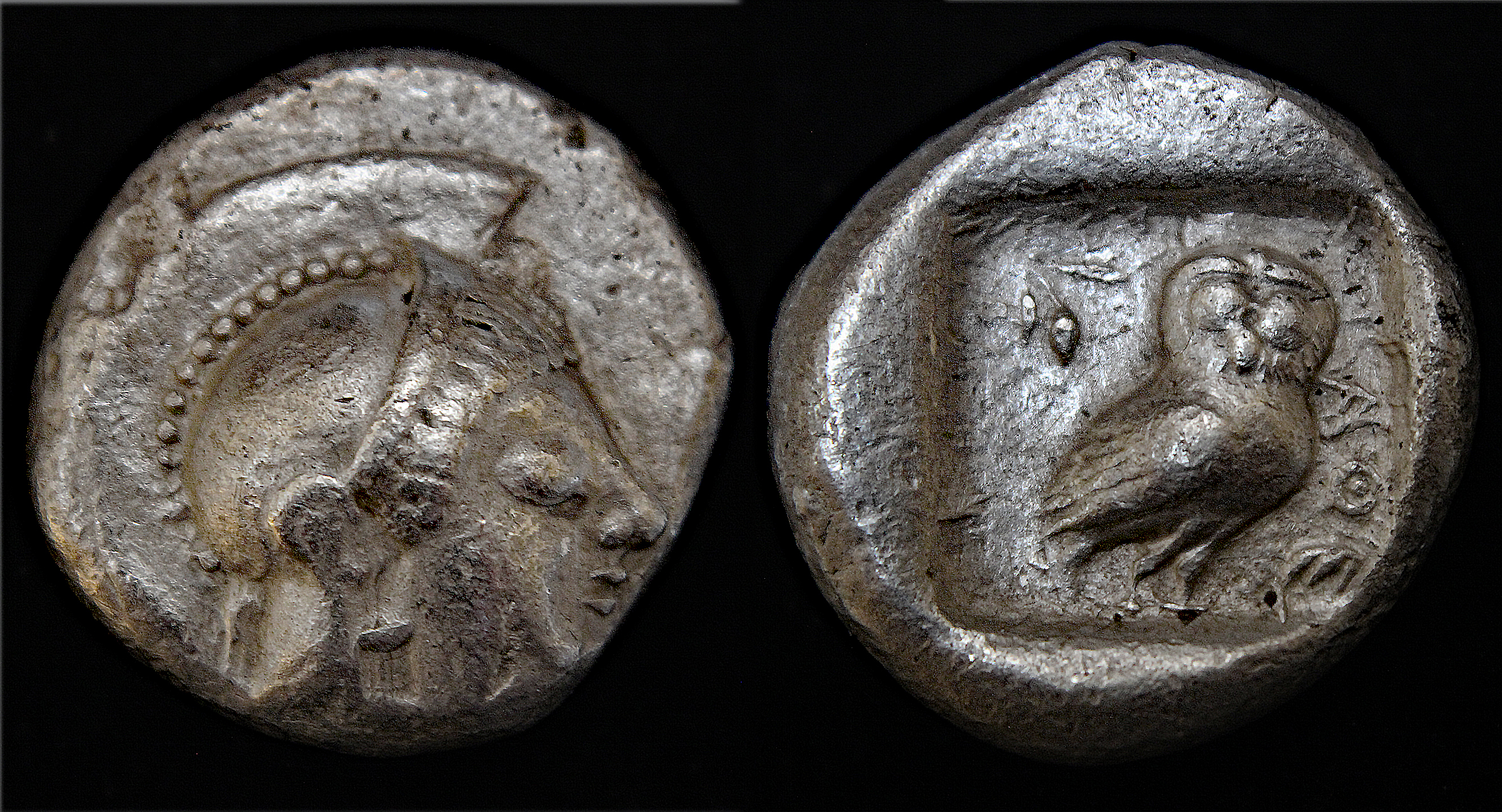
Athenian rulers encompasses the diverse array of monarchs, archons, tyrants, and elected generals who governed Athens from its mythical origins to the Hellenistic period. These leaders managed the city-state's transition from an absolute monarchy and aristocratic oligarchy to the world’s first recorded functional democracy.
The history of Athenian governance is not a linear progression of power but a series of experimental shifts in how authority was derived and exercised. To understand Athenian rulers, one must distinguish between the legendary kings of the prehistoric era, the aristocratic archons of the early city-state, the populist tyrants of the 6th century BCE, and the democratic statesmen who led Athens through its Golden Age.
The Era of the Legendary Kings (c. 1550–1068 BCE)
The earliest Athenian rulers were kings (basileis), whose reigns are often shrouded in mythology and oral tradition. While the historical accuracy of individual reigns is debated, the existence of a Mycenaean-era monarchy in Athens is supported by archaeological evidence on the Acropolis.
The Foundation Myths: Cecrops and Erechtheus
The first king of Athens was said to be Cecrops, a culture-hero often depicted as half-man and half-serpent. His rule established the foundational identity of the Athenians as "autochthonous" (sprung from the earth). Following him, Erechtheus (often conflated with Erichthonius) was a central figure in Athenian religious life, with the Erechtheion temple still standing today as a testament to his enduring legacy in the city’s civic identity.
Theseus and the Synoikismos
Perhaps the most significant legendary ruler was Theseus. Beyond his mythological exploits with the Minotaur, Theseus is credited with the synoikismos—the political unification of the various scattered townships of Attica into a single state centered on Athens. This administrative consolidation was the prerequisite for Athens' eventual rise as a Mediterranean power.
The Transition from Monarchy
The monarchy gradually weakened as the land-owning aristocracy, known as the Eupatridai ("the well-born"), began to strip the king of his powers. The last king of Athens is traditionally identified as Codrus, who allegedly sacrificed himself to save the city from a Dorian invasion in 1068 BCE. Following his death, the title of "King" was reduced to a ceremonial and religious office (the Archon Basileus), while political power shifted to the Archons.
The Rise of the Archonship and Aristocratic Rule
By the 8th century BCE, Athens was an oligarchy ruled by the Eupatridai. The central mechanism of this rule was the Archonship. Initially, Archons served for life, then for ten-year terms, and finally, by 683 BCE, for a single year.
The Nine Archons
Authority was divided among nine annual officials to prevent any single individual from seizing absolute power. The three primary roles included:
- The Eponymous Archon: The chief magistrate who gave his name to the year. He handled civil litigation and family matters.
- The Polemarch: The "war leader" responsible for the Athenian military and legal cases involving non-citizens (meticians).
- The Archon Basileus: The "King Archon" who oversaw religious sacrifices and trials involving homicide or impiety.
- The Six Thesmothetai: Junior archons responsible for recording laws and presiding over the court system.
During this period, retired archons became life members of the Areopagus, a powerful council that functioned as the supreme court and the ultimate guardian of the constitution. This system ensured that the "rulers" of Athens remained a closed loop of aristocratic elites.
The Lawgivers: Draco and Solon
The 7th and 6th centuries BCE saw intense social unrest as the gap between the wealthy Eupatridai and the debt-ridden peasantry widened. This instability led to the appointment of "Lawgivers" tasked with reforming the state.
Draco’s Harsh Code (621 BCE)
Draco was the first recorded legislator of Athens. He replaced the oral tradition of blood feuds with a written legal code. Although his laws are famous for their severity—assigning the death penalty for even minor thefts (the origin of the term "Draconian")—they represented a significant step toward the rule of law. By making laws public, Draco limited the ability of aristocratic judges to interpret the law arbitrarily.
Solon’s Economic and Political Revolution (594 BCE)
Recognizing that Draco’s laws had not solved the underlying social crisis, the Athenians appointed Solon as Archon with extraordinary powers to reform the constitution. Solon’s "shaking off of burdens" (Seisachtheia) cancelled all existing debts and abolished debt-slavery, which had seen many free Athenians sold into foreign lands.
Solon restructured Athenian society into four classes based on wealth rather than birth:
- Pentakosiomedimnoi: Those producing 500 measures of grain/oil.
- Hippeis: The cavalry class (300 measures).
- Zeugitai: The small farmers/hoplites (200 measures).
- Thetes: The laboring class (fewer than 200 measures).
This shifted the definition of an "Athenian ruler" from one based on bloodline to one based on economic contribution, laying the groundwork for broader political participation.
The Age of Tyrants: Peisistratus and His Sons
Despite Solon’s reforms, factional fighting continued, allowing Peisistratus to seize power as a "Tyrant" in 546 BCE. In the context of 6th-century Greece, a tyrannos was not necessarily a cruel ruler but one who seized power unconstitutionally.
Peisistratus was a populist ruler who maintained the outward forms of Solon’s constitution while ensuring his supporters held the key magistracies. His reign was a period of stability and growth. He initiated massive public works projects, established the Panathenaic Games, and supported the arts. After his death in 527 BCE, his sons Hippias and Hipparchus took over. However, Hippias became increasingly paranoid and oppressive following the assassination of his brother, eventually leading to his expulsion in 510 BCE with the help of Spartan intervention.
The Birth of Democracy: Cleisthenes (508 BCE)
The vacuum left by the tyrants was filled by Cleisthenes, a reformist aristocrat who realized that the only way to achieve stability was to empower the common citizens (the demos).
Cleisthenes is often called the "Father of Democracy." He broke the power of the old aristocratic clans by reorganizing the entire population into ten new tribes based on geography rather than kinship. Each tribe was a mix of people from the coast, the city, and the inland regions. He also introduced Ostracism, a process where citizens could vote once a year to exile any individual they feared was becoming a tyrant for ten years.
Under Cleisthenes, the primary "ruler" of Athens became the Ekklesia (the Assembly), where every male citizen had a vote. However, the daily administration was handled by the Boule (a council of 500) and the ten elected Strategoi (Generals).
The Golden Age and the Rise of the Strategoi
As the 5th century BCE progressed, the office of the Archon lost its prestige and became an office chosen by lot. Real executive power shifted to the Strategoi. Unlike other offices, the ten generals could be re-elected indefinitely, allowing for long-term leadership.
Pericles: The Uncrowned King
The most dominant Athenian ruler of this era was Pericles. Re-elected as Strategos almost every year from 443 to 429 BCE, he guided Athens during its peak of cultural and imperial power. Pericles was a master orator who persuaded the Assembly to support his vision of a naval empire and the rebuilding of the Acropolis.
Thucydides, the contemporary historian, noted that while Athens was a democracy in name, it was in fact "ruled by its first citizen." Pericles' leadership style relied on his ability to lead through persuasion rather than decree, yet his influence was so total that the era is known as the "Age of Pericles."
Leadership During the Peloponnesian War
Following the death of Pericles in 429 BCE, a new breed of leaders emerged, often referred to as "demagogues" (leaders of the people). Figures like Cleon and Alcibiades represented a more aggressive and volatile form of leadership. Alcibiades, in particular, was a brilliant but erratic ruler who shifted allegiances between Athens, Sparta, and Persia, illustrating the precarious nature of leadership in a direct democracy during wartime.
Athenian Leadership Comparison Table
The following table summarizes the primary types of Athenian rulers and their sources of authority throughout the city's history.
| Period | Title | Primary Source of Power | Key Figure(s) | Impact on Governance |
|---|---|---|---|---|
| c. 1550–1068 BCE | King (Basileus) | Hereditary / Divine Right | Theseus, Codrus | Unified Attica (Synoikismos). |
| c. 1068–594 BCE | Archon | Aristocratic Birth (Eupatridai) | Draco | Transitioned from oral tradition to written law. |
| 594–546 BCE | Reformer / Archon | Mandated Legislative Reform | Solon | Abolished debt slavery; established wealth classes. |
| 546–510 BCE | Tyrant (Tyrannos) | Populist Support / Force | Peisistratus | Standardized laws and grew the economy. |
| 508–322 BCE | General (Strategos) | Annual Election by the Demos | Pericles, Phocion | Shifted power to the Assembly and navy. |
The Decline and Macedonian Overlordship
The defeat of Athens in the Peloponnesian War (404 BCE) led to the brief, bloody rule of the Thirty Tyrants, a pro-Spartan oligarchy. Although democracy was restored, the 4th century BCE saw Athens struggling to regain its hegemony.
The final era of independent Athenian rulers was defined by the rivalry between leaders like Demosthenes, who urged resistance against the rising power of Macedon, and Aeschines, who favored diplomacy. After the Battle of Chaeronea in 338 BCE, Athens fell under the shadow of Philip II and Alexander the Great. While Athens maintained local magistrates for centuries under Macedonian and later Roman rule, the era of the sovereign Athenian ruler effectively ended.
Frequently Asked Questions
Did Athens ever have female rulers?
No. In the patriarchal society of Ancient Athens, women were excluded from political life. They could not vote, attend the Assembly, or hold any magistracy. The only public roles for women were religious, such as the High Priestess of Athena Polias, who held significant social influence but no formal political "rule."
What was the harshest period of Athenian rule?
The rule of the Thirty Tyrants (404–403 BCE) is generally considered the most brutal. Following the city's surrender to Sparta, this oligarchy executed approximately 1,500 citizens and residents, confiscated property, and dismantled democratic institutions before being overthrown by a democratic uprising.
How were Athenian rulers held accountable?
Unlike many ancient civilizations, Athens had a rigorous system of accountability called Euthunai. At the end of their term, every official—including the powerful Strategoi—had to submit to a public audit of their finances and actions. If found guilty of corruption or incompetence, they could be fined, exiled, or even executed.
Who was the longest-serving ruler of Athens?
In the democratic era, Pericles held the most consistent influence, serving as one of the ten generals for roughly 15 consecutive years and exercising dominant influence for over 30 years. In the legendary era, many kings were credited with multi-decade reigns, though these are historically unverifiable.
Could a non-citizen become a ruler in Athens?
Absolutely not. Citizenship was a strict requirement for any leadership role. Under the laws passed by Pericles in 451 BCE, an individual was only considered a citizen if both their father and mother were Athenian citizens. This restricted leadership to a specific, hereditary group of the population.
Recommended Next Steps for Research
To gain a deeper understanding of Athenian rulers, readers should investigate the primary sources that shaped our modern knowledge of these figures. A critical next action is to examine Plutarch's "Parallel Lives", specifically the biographies of Solon, Themistocles, and Pericles. These texts provide the most detailed—though often anecdotal—accounts of the character and leadership styles of Athens' most influential men.
For those interested in the archaeological evidence of Athenian governance, a study of the Athenian Agora (the marketplace and center of civic life) provides physical context for where these leaders deliberated. Modern excavations by the American School of Classical Studies at Athens continue to reveal the boundary stones, ostraca (voting shards), and law courts where the drama of Athenian leadership unfolded.