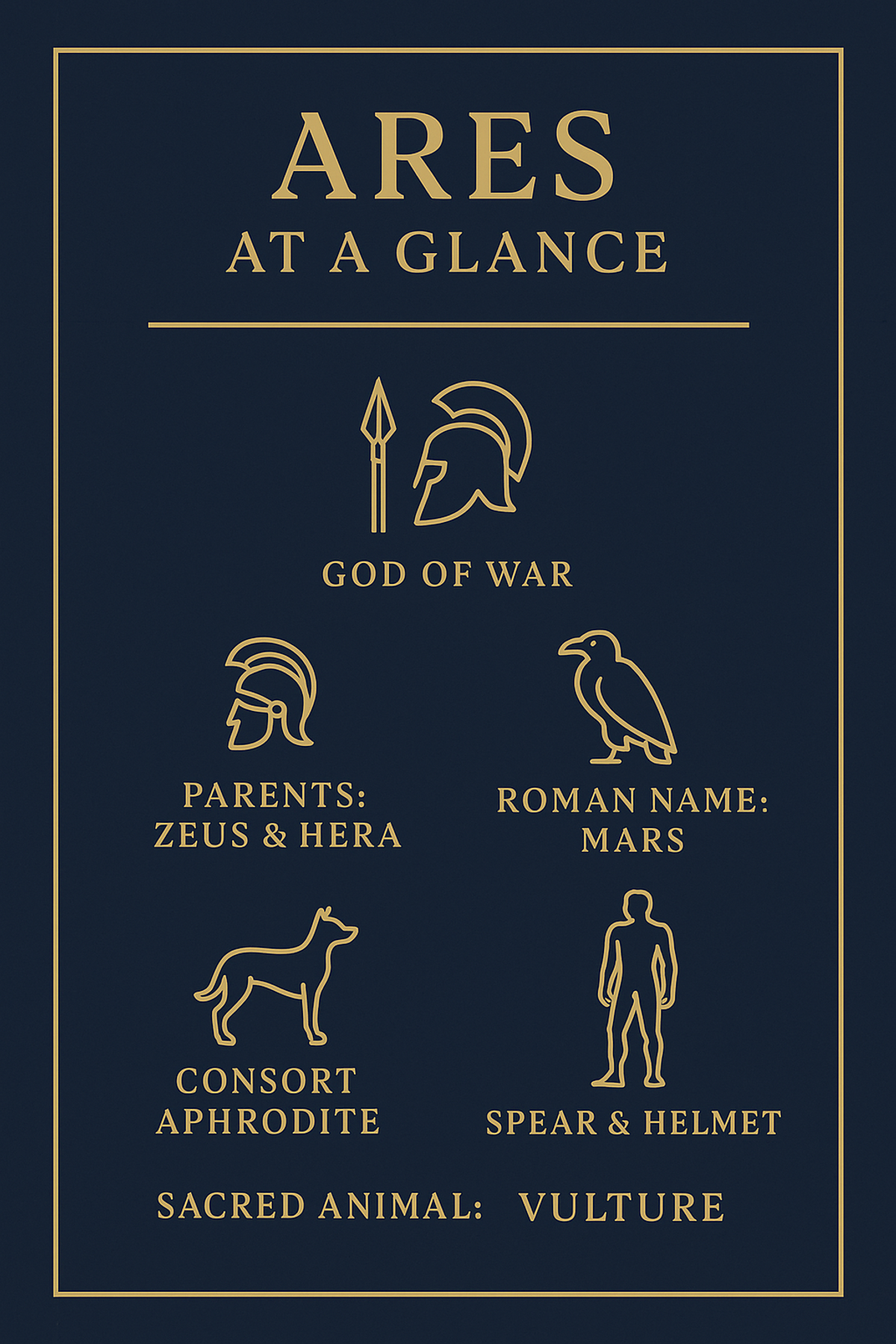
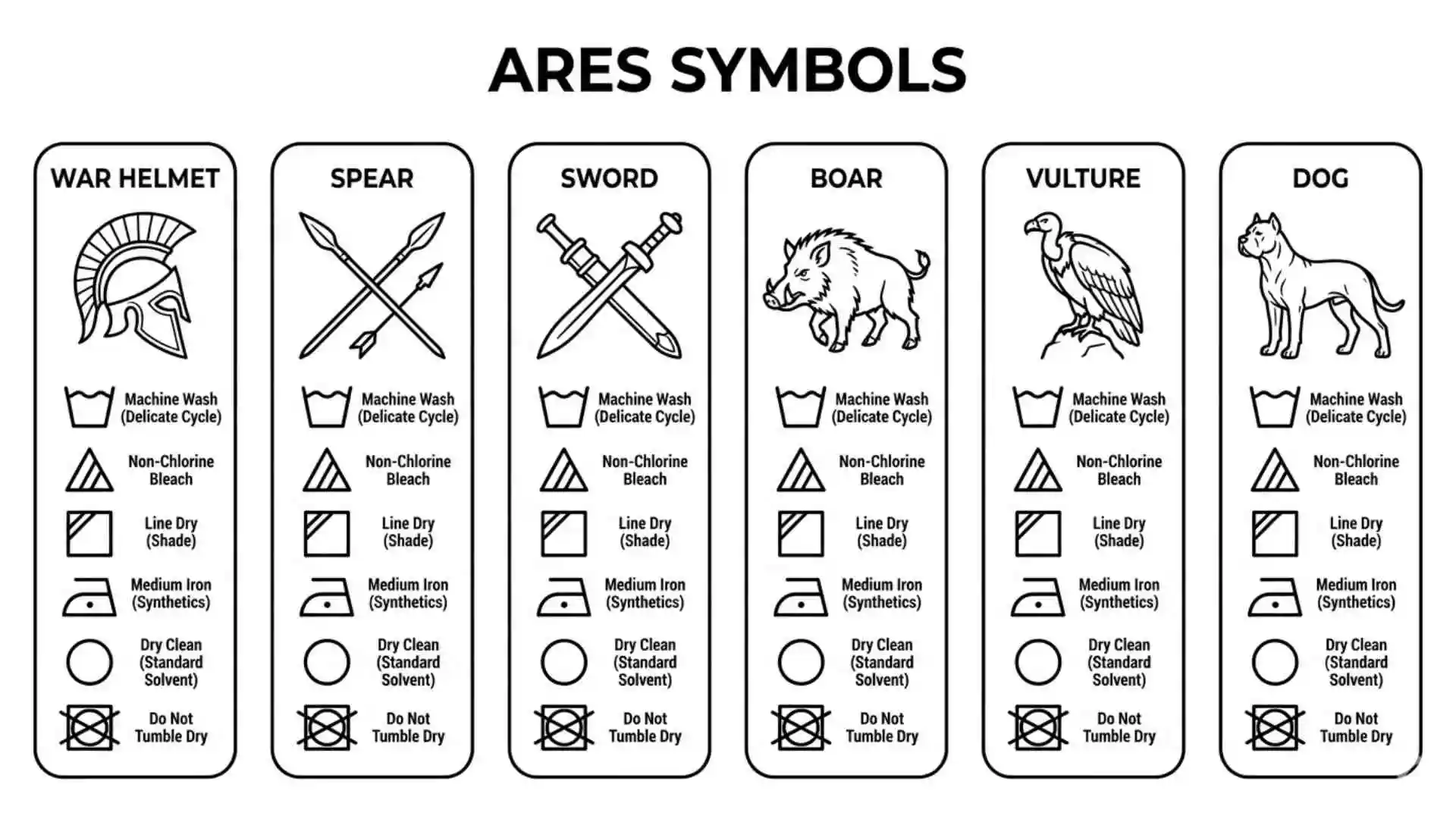
The primary symbols of Ares include the spear, the bronze-tipped helmet, and the shield, which collectively represent the physical brutality and defensive necessity of ancient combat. His animal symbols, most notably the vulture and the dog, signify the grim aftermath of battle and the feral, unyielding aggression required of a warrior in the heat of conflict.
In the pantheon of Greek mythology, few figures evoke as much visceral reaction as Ares, the Olympian god of war. While his sister Athena represents the strategic, intellectual, and "civilized" side of military engagement, Ares is the embodiment of the bloodlust, the physical chaos, and the sheer terror of the battlefield. To understand the meaning behind the symbols of Ares is to understand how the ancient Greeks conceptualized the most destructive aspects of human nature. As of 2026, scholarly interest in these symbols remains high, as they provide a lens into the psychological and social pressures of the ancient Mediterranean world.
The Identity of Ares in Greek Mythology
Ares was the son of Zeus and Hera, though he was often disliked by his parents and the other gods. Zeus famously told Ares in the Iliad that he was the most hateful of all the gods who dwell on Olympus because he loved nothing but "strife, wars, and battles." This reputation is fundamental to his symbolism. Unlike other deities who had complex portfolios, Ares was singular in his focus. He represented the Ares Enyalius—the spirit of the killing frenzy.
The symbols associated with him are not merely decorative; they are functional tools of his trade. In a world where warfare was a seasonal reality, the icons of Ares served as a reminder of the cost of conflict. He was often depicted accompanied by his sons, Phobos (Fear) and Deimos (Terror), who served as living symbols of the psychological impact of war. Understanding the meaning of these symbols requires looking beyond the object to the emotion it was intended to provoke.
Primary Weapons and Military Symbols
The most immediate symbols of Ares are the tools of the hoplite—the infantryman of the Greek city-states. These objects were sacred to him and often appeared in his iconography across pottery, sculpture, and coinage.
The Spear: The Reach of Destruction
The spear is the preeminent symbol of Ares. While the sword was a secondary weapon in Greek warfare, the spear was the primary instrument of the phalanx. For Ares, the spear represents directness and physical force. It is a weapon that requires strength and forward momentum, mirroring the god’s own personality. In mythological texts, the spear of Ares is often described as bronze, gleaming with a terrifying light that could blind his enemies. It symbolizes the extension of the warrior's will and the inevitability of the strike.
The Helmet (Korys): The Mask of the Warrior
The bronze helmet, often topped with a plume of horsehair, is a symbol of the warrior's transformation. When a soldier donned the helmet, his individual identity vanished, replaced by the "face of war." The helmet signifies protection and intimidation. In Greek art, Ares is rarely depicted without his helmet, emphasizing that he is always ready for combat. The plume, often dyed blood-red, added to the height and presence of the wearer, serving as a psychological tool to cow opponents.
The Shield (Aspis): The Wall of Bronze
The shield represents the defensive side of the Ares archetype. However, for Ares, the shield was not just for protection; it was a tool for the "shield push," a maneuver in the phalanx intended to crush the enemy. Symbolically, the shield represents the boundary between life and death. It is the thin layer of bronze that keeps the chaos of the battlefield at bay. When Ares is depicted with his shield, it often bears terrifying motifs, such as the face of a Gorgon or a snarling lion, intended to paralyze onlookers with fear.
Animal Symbols of Ares
Ares is associated with several animals that reflect his "wild" and "scavenger" nature. These animals were chosen by the Greeks because their behaviors mirrored the darker realities of war.
The Vulture: The Scavenger of the Fallen
The vulture is perhaps the most somber of Ares' symbols. Vultures are attracted to the smell of death and are often the first to arrive on a battlefield after the fighting has ceased. To the Greeks, the vulture was a symbol of the aftermath of war. It represented the grim reality that war does not end with a hero's death but with the consumption of the fallen. This connection reinforces Ares' role as a god who finds satisfaction in the destruction of life, regardless of the cause or the glory involved.
The Dog: Feral Aggression
While dogs today are seen as loyal companions, the dogs of Ares were the half-wild hounds that roamed the outskirts of ancient cities and followed armies to feed on scraps—and sometimes remains. The dog as a symbol of Ares represents unbridled aggression and instinctual violence. These were not the hunting dogs of Artemis or the guard dogs of Hades; they were symbols of the "dog-eat-dog" nature of total war. In some Thracian cults, dogs were even sacrificed to Ares, a rare practice in Greek religion that highlighted the god's outside status.
The Wild Boar: The Unstoppable Charge
The wild boar is a symbol of raw, physical power and unpredictable danger. Boars are known for their ferocity when cornered and their ability to gore even the most skilled hunters. In mythology, Ares was said to have transformed into a boar to kill Adonis, the lover of Aphrodite, out of jealousy. The boar represents the blind rage that characterizes Ares—a force that charges forward without regard for its own safety or the collateral damage it causes.
Comparative Table of Ares' Symbols
The following table categorizes the symbols of Ares by their primary function and the specific meaning they convey in Greek mythology and art.
| Symbol | Category | Core Meaning | Psychological Association |
|---|---|---|---|
| Spear | Weapon | Offensive power; direct conflict | Aggression and lethal intent |
| Helmet | Armor | Protection; loss of individuality | Fear and intimidation |
| Shield | Armor | Defense; the barrier of the phalanx | Security and resilience |
| Vulture | Animal | Death; the aftermath of combat | Despair and the end of life |
| Dog | Animal | Feral instinct; persistence | Cruelty and relentless pursuit |
| Boar | Animal | Physical strength; jealousy | Uncontrollable rage |
| Flaming Torch | Object | The signal for battle; destruction | Chaos and the start of strife |
Ares vs. Athena: Divergent War Symbolism
A common point of confusion is the distinction between Ares and Athena, as both are deities of war. Their symbols, however, clarify their different domains. Athena’s primary symbol is the Owl, representing wisdom and the ability to "see" through the fog of war to find a strategic path. She also carries the Aegis, a magical protective cloak or shield that represents divine authority and the protection of the state.
Ares, by contrast, has no symbols of wisdom. His icons are entirely focused on the physicality of the fight. While Athena’s war is a means to an end (peace, justice, or the defense of a city), Ares’ war is the end in itself. His symbols reflect a god who is "drunk on blood," as Homer describes him. This distinction was vital to the ancient Greeks, who respected the necessity of strategic war (Athena) but feared and often reviled the senseless violence of war (Ares).
The Symbolic Relationship Between Ares and Aphrodite
Despite his violent nature, Ares was the long-term lover of Aphrodite, the goddess of love. Their union is symbolically significant. It represents the union of War and Love, or Strife and Harmony. In art, this is often depicted by Ares laying down his weapons and helmet at the feet of Aphrodite.
When Ares is shown without his symbols in the presence of Aphrodite, it signifies the taming of aggression. However, their children also carry symbolic weight. Together they had Harmonia (Harmony), but also the aforementioned Phobos and Deimos. This suggests that the relationship between love and war is complex; it can lead to balance, but it can also produce the most intense forms of human emotion—fear and terror. This duality is a recurring theme in the study of Ares' iconography through 2026.
Historical Evolution: From Greek Ares to Roman Mars
It is essential to distinguish the symbols of the Greek Ares from those of the Roman Mars. While Mars inherited many of Ares' symbols (the spear and helmet), their meanings shifted significantly in the Roman context.
- Civic Duty: For the Romans, Mars was a father of the state (through Romulus and Remus). His symbols became icons of civic virtue and military discipline rather than just bloodlust.
- Agricultural Roots: Mars was originally associated with agriculture. Therefore, his symbols sometimes included the woodpecker and the wolf, which had protective connotations for farmers and the city of Rome.
- The Shield of Numa: The Romans possessed the Ancile, a sacred shield said to have fallen from heaven. This made the shield a symbol of divine favor and national security in a way the Greek aspis never was for Ares.
In the transition from Greece to Rome, the symbols of war became more standardized and "sanitized," reflecting a society that viewed military conquest as a structured, divine mission rather than a chaotic tragedy.
Ares in 2026: Symbolic Resilience in Modern Culture
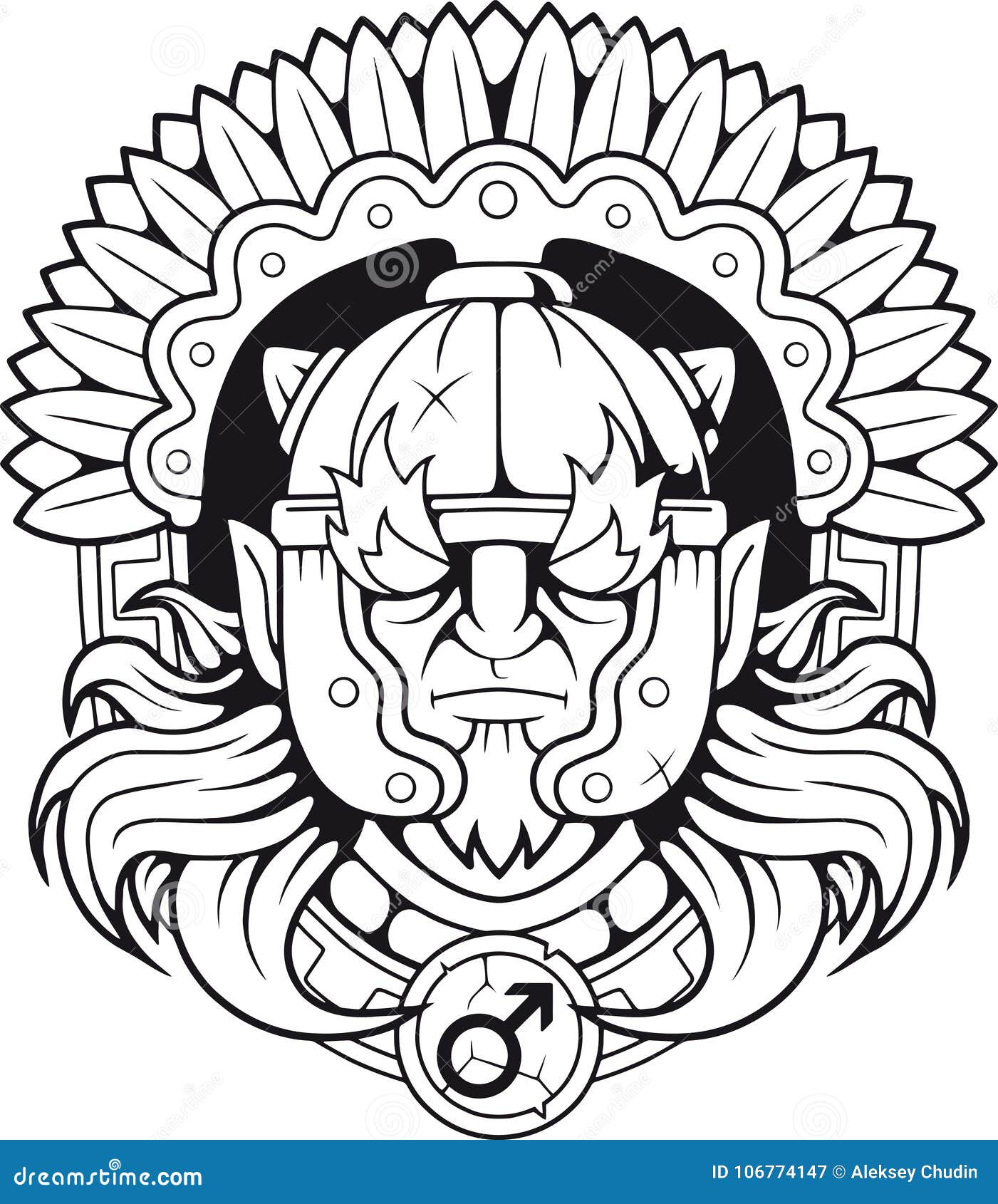
In the modern era, the symbols of Ares have found a permanent place in the collective consciousness. The spear and shield of Ares/Mars are the basis for the modern biological symbol for the male gender (♂). This serves as a testament to the enduring link between the Ares archetype and traditional concepts of masculinity and strength.
As of 2026, these symbols are frequently utilized in branding, sports logos, and entertainment. Whether it is a professional sports team using the plumed helmet to signify toughness or a video game character wielding the "Blades of Chaos," the core meaning remains the same: uncompromising power. Digital archaeology and 3D reconstructions of ancient sites, such as the Temple of Ares in the Athenian Agora, have allowed modern audiences to see these symbols as the Greeks did—integrated into a physical space where they commanded respect and instilled a healthy dose of religious awe.
Frequently Asked Questions
What is the single most important symbol of Ares?
The spear is widely considered the most important symbol of Ares. It represents the god's primary function as the bringer of violent, direct conflict. Unlike the bow (which was seen as a coward's weapon by some Greeks) or the sword (a backup weapon), the spear was the defining tool of the heroic warrior in the Homeric age and the citizen-soldier in the Classical age.
Why is the dog a symbol of Ares instead of a more "noble" animal?
In ancient Greece, dogs were not always seen as "man's best friend." While they were used for hunting and guarding, they were also scavengers that roamed in packs. The dog symbol reflects the feral, predatory nature of war. Ares' dogs represent the lack of restraint and the "hunger" of the battlefield, emphasizing that war reduces men to their most animalistic instincts.
Is the "Mars" symbol actually the symbol of Ares?
Yes, the astrological and biological symbol for Mars (a circle with an arrow pointing out at an angle) is a stylized representation of Ares' shield and spear. It was used in medieval alchemy to represent the metal iron (which weapons are made of) and eventually became the standard symbol for the planet Mars and the male sex.
Did Ares have any symbols that weren't related to war?
Very few. Ares was one of the most specialized gods in the Greek pantheon. Occasionally, he is associated with the flaming torch, which was used to signal the beginning of a battle, but even this is tangentially related to his martial role. Unlike Apollo or Athena, who had symbols related to music, art, or weaving, Ares remained almost exclusively tied to the icons of the warrior.
How do archaeological findings in 2026 impact our understanding of these symbols?
Recent digital restorations of Thracian and Macedonian burial sites have shown that symbols of Ares were often used in funerary contexts for high-ranking soldiers. These findings suggest that while the general population might have feared Ares, the warrior class viewed his symbols as marks of honor and divine protection in the afterlife, adding a layer of professional pride to the god's dark reputation.
Practical Recommendation for Researchers and Artists
When utilizing the symbols of Ares for creative or academic purposes, it is vital to maintain the tension between protection and destruction. To depict Ares with only a shield suggests a defensive posture that doesn't fit his mythos; he must also have the spear. Conversely, focusing solely on the vulture ignores the god's role as a protector of his children and a passionate lover. For the most accurate representation, focus on the bronze-tipped spear and the plumed helmet, as these are the most universally recognized and historically supported icons of the god. For more in-depth primary source material, researchers should consult the Theoi Project or the Perseus Digital Library for classical texts that describe these symbols in their original context.