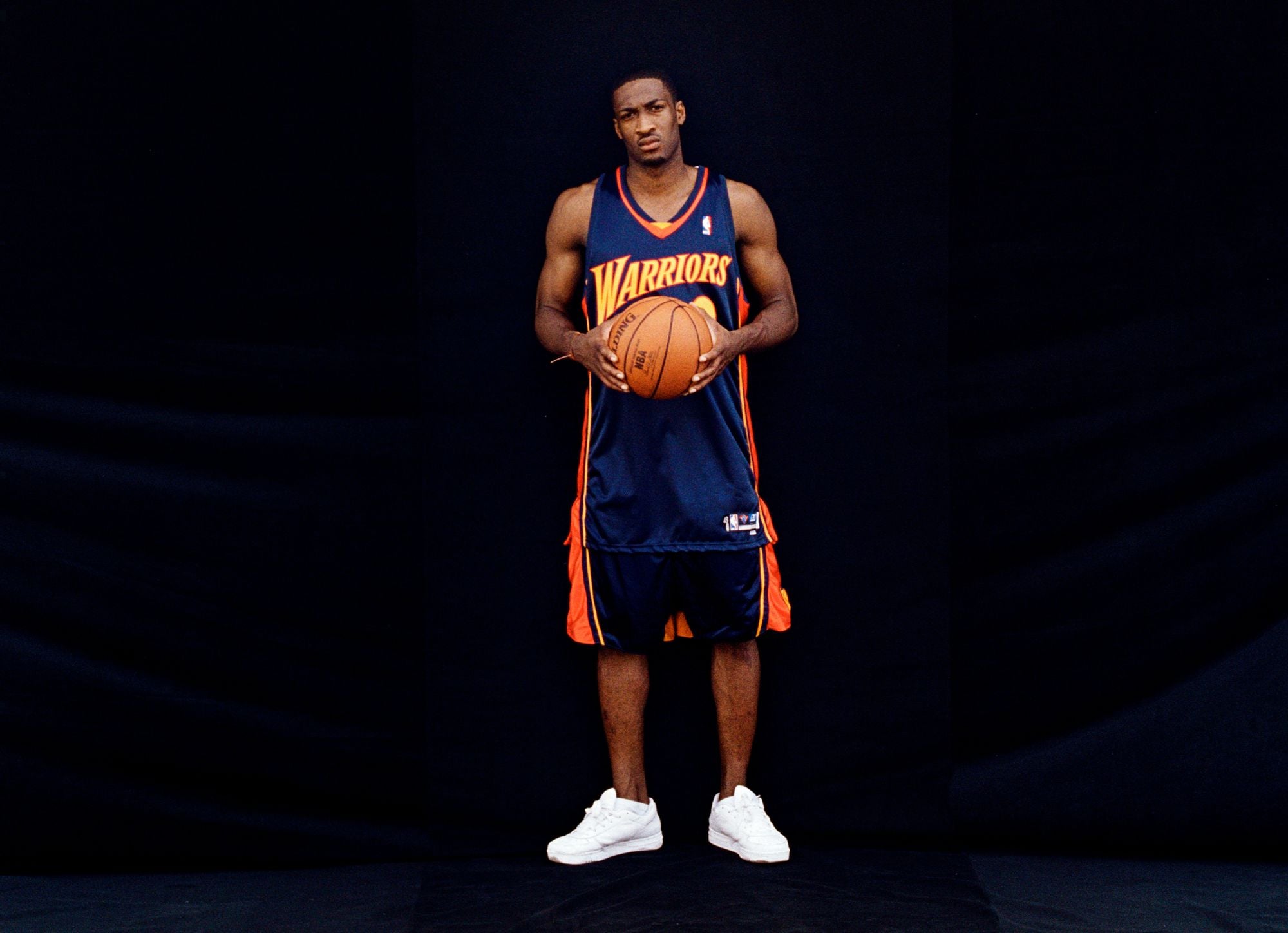
Gilbert Arenas was arrested on two major occasions during and after his NBA career: first in 2010 for felony gun possession following a locker room confrontation, and again in 2013 for transporting a massive quantity of illegal fireworks. These incidents led to significant legal penalties, including a halfway house sentence and a landmark NBA suspension.
The 2009 Locker Room Incident: The Genesis of a Crisis
The most significant legal event in Gilbert Arenas’ life began in December 2009. What started as a dispute over a card game during a team flight escalated into one of the most infamous locker room incidents in the history of professional sports. The conflict involved Arenas and his then-teammate, Javaris Crittenton, centering on a gambling debt of approximately $1,100.
The tension culminated on December 21, 2009, when Arenas brought four firearms into the Washington Wizards’ locker room at the Verizon Center. According to reports and subsequent legal filings, Arenas placed the unloaded weapons on a chair near Crittenton’s locker with a note telling him to "pick one." Crittenton responded by brandishing his own loaded firearm. While no shots were fired, the presence of multiple firearms in a professional sports facility triggered an immediate investigation by the Metropolitan Police Department and the U.S. Attorney’s Office.
Under District of Columbia law, gun regulations are among the strictest in the United States. Carrying a pistol without a license and possession of unregistered firearms are serious offenses. Because the Verizon Center was located on city property, the jurisdictional weight of the crime was substantial. The incident essentially ended the "Agent Zero" era in Washington and became a cautionary tale regarding athlete conduct and firearms safety.
Legal Proceedings and Felony Charges
In January 2010, the legal system took formal action. Gilbert Arenas was charged with carrying a pistol without a license, a felony in the District of Columbia. On January 15, 2010, Arenas pleaded guilty to the charge. This plea was a strategic move to avoid more severe sentencing, but it carried the permanent weight of a felony conviction on his record.
The sentencing phase, presided over by D.C. Superior Court Judge Wendell Gardner, was a moment of high public interest. Prosecutors sought a three-month jail term to signal that athletes are not above the law. However, Arenas’ legal team argued for leniency, citing his lack of a prior criminal record and his extensive charitable work in the D.C. community.
In March 2010, Judge Gardner sentenced Arenas to:
- 30 days in a halfway house (a reentry center).
- Two years of supervised probation.
- 400 hours of community service, which could not involve basketball-related activities.
- A $5,000 fine to be paid to a fund for victims of violent crime.
The sentencing was seen as a middle ground. While Arenas avoided a traditional prison cell, the requirement to live in a halfway house and the imposition of a felony conviction significantly impacted his reputation and his standing within the league.
The NBA’s Response: A Landmark Suspension
While the D.C. court handled the criminal aspect, the NBA, under Commissioner David Stern, addressed the violation of league policy. The NBA’s Collective Bargaining Agreement (CBA) strictly prohibits players from possessing firearms while on league property or while traveling on league business.
Stern initially suspended Arenas indefinitely without pay on January 6, 2010, citing that Arenas’ "ongoing conduct" led the Commissioner to conclude that he was "not currently fit to take the court." This "fitness" argument was a reference to Arenas’ perceived lack of remorse in the immediate aftermath, specifically an incident where he was photographed making "finger guns" toward teammates during a pre-game introduction.
The suspension eventually encompassed the remainder of the 2009-2010 season, totaling 50 games. At the time, this was one of the longest non-drug-related suspensions in NBA history. The financial toll was immense; Arenas forfeited approximately $7.5 million in salary. The incident also effectively ended the Wizards' willingness to build around Arenas, leading to his eventual trade to the Orlando Magic.
The 2013 Illegal Fireworks Arrest
After his NBA career began to wind down, Arenas faced another significant legal hurdle. In June 2013, the California Highway Patrol (CHP) stopped Arenas while he was driving a Ford F-650 truck on the 101 Freeway in Los Angeles. The initial reason for the stop was a speeding violation and the vehicle's lack of visible license plates.
Upon inspecting the vehicle, officers discovered a massive haul of illegal fireworks—estimated to be roughly 100 pounds. In the state of California, many types of fireworks that are legal in other states (such as those that leave the ground or explode) are classified as "dangerous fireworks" and are strictly prohibited without specific pyrotechnic licenses.
Arenas was arrested and booked on a felony charge of possession of destructive devices. He was later released on a $50,000 bond. This incident reinforced a public narrative of Arenas as a figure who struggled with boundary-setting and an understanding of legal constraints, even if his intent was not malicious. He eventually reached a plea deal in this case, receiving three years of summary probation after pleading no contest to a misdemeanor count of possessing dangerous fireworks.
Summary of Legal Incidents and Outcomes
The following table summarizes the primary instances where Gilbert Arenas faced arrest and formal legal charges.
| Year | Primary Charge | Jurisdiction | Legal Outcome | Professional Impact |
|---|---|---|---|---|
| 2010 | Carrying a Pistol Without a License (Felony) | District of Columbia | 30 days in a halfway house; 2 years probation; 400 hours community service. | 50-game NBA suspension; traded from Washington Wizards. |
| 2013 | Possession of Dangerous Fireworks (Misdemeanor/Plea) | Los Angeles, California | 3 years summary probation; fines; destruction of seized materials. | Further damage to post-career public image. |
The Impact on Personal Legacy and Wealth
The legal troubles of Gilbert Arenas did more than just disrupt his playing time; they fundamentally shifted his financial trajectory and his relationship with corporate partners. At the height of his career, Arenas had a massive $111 million contract and a signature shoe deal with Adidas.
Following the 2010 arrest, Adidas dropped Arenas, citing the "moral turpitude" clause commonly found in endorsement contracts. This loss of passive income, combined with the $7.5 million lost to suspension and the subsequent "amnesty" buyout of his contract by the Orlando Magic, changed his financial standing.
However, as of 2026, Arenas has successfully pivoted into a media role. His podcast, Gil's Arena, has become a cornerstone of modern basketball commentary. He often uses his past arrests as teaching moments or as "raw" content that appeals to a younger, digital-native audience. By leaning into his history rather than running from it, he has reclaimed his narrative, though the "Agent Zero" moniker remains forever linked to the events of the 2009-2010 season.
Comparing the Jurisdictional Differences
One of the most complex aspects of Arenas’ 2010 arrest was the specific nature of D.C. gun laws. To understand why he was arrested while many other players also owned firearms, one must look at the technical requirements of the National Capital Revitalization and Self-Government Improvement Act and the D.C. Code.
- Registration: In D.C., every firearm must be registered with the Metropolitan Police Department. Arenas’ firearms were registered in Virginia, but not in the District.
- Transportation: Firearms must be transported unloaded, in a locked container, and separate from ammunition. Arenas had the weapons in his locker, which did not meet these requirements.
- Prohibited Locations: Bringing a firearm onto the premises of a business or public arena is a specific violation that carries enhanced penalties.
In the 2013 California case, the legal nuance involved the "Safe and Sane" fireworks designation. California law distinguishes between consumer fireworks and those classified as "dangerous." Arenas’ possession of "aerial shells" and "large cakes" put him well over the legal limit for a private citizen, highlighting a recurring theme in his legal history: a lack of attention to local regulatory statutes.
Common Misconceptions About the Arrests
Over the years, several myths have persisted regarding Arenas’ legal history.
- The "April Fool's" Defense: Arenas initially claimed the locker room incident was a joke gone wrong. While he maintained this in the court of public opinion, his legal defense in court was far more somber, focusing on his ignorance of D.C. law rather than a "prank" narrative.
- The Loaded Gun Myth: It is a common misconception that Arenas had loaded guns in the locker room. Court records indicate that his weapons were unloaded, though Javaris Crittenton’s weapon was reportedly loaded. This distinction was vital in Arenas avoiding a longer prison sentence.
- The Permanent Ban: Many believe Arenas was banned from the NBA for life. In reality, he was suspended for 50 games and returned to play for the Wizards, Magic, and Grizzlies before eventually retiring from the league.
Frequently Asked Questions
Did Gilbert Arenas go to prison after his arrest?
Gilbert Arenas did not go to a traditional state or federal prison. He was sentenced to 30 days in a halfway house, which is a residential facility designed to transition individuals back into society while maintaining strict supervision. He was required to check in and out and adhere to a strict curfew, but it was not the same environment as a high-security correctional facility.
How many times has Gilbert Arenas been arrested?
Arenas has had two major high-profile arrests. The first was in January 2010 related to the felony gun charge in Washington, D.C. The second occurred in June 2013 in Los Angeles for the possession and transport of illegal fireworks. While he has had other minor traffic-related interactions with law enforcement, these two represent his primary criminal record.
What happened to Javaris Crittenton after the locker room incident?
Javaris Crittenton’s legal path was much darker than Arenas’. Following his suspension and exit from the NBA, Crittenton was involved in a 2011 shooting in Atlanta that resulted in the death of a mother of four. In 2015, he pleaded guilty to voluntary manslaughter and aggravated assault with a firearm and was sentenced to 23 years in prison.
Was Gilbert Arenas able to keep his guns?
As a result of his felony conviction in 2010, Arenas was legally prohibited from possessing firearms under federal law (18 U.S.C. § 922(g)). A felony conviction typically strips an individual of their Second Amendment rights, meaning the firearms involved in the incident were forfeited, and he was barred from future ownership.
How did the 2010 arrest affect his NBA contract?
The arrest allowed the Washington Wizards to explore "voiding" his contract under the moral turpitude clause. Ultimately, the NBA and the Players Association reached an agreement where the contract remained valid, but Arenas served a massive unpaid suspension. Later, the Orlando Magic used the "Amnesty Clause" to waive him, which meant they still had to pay his salary, but it did not count against their salary cap.
Final Recommendations for Further Research
For those looking to understand the legal specifics of the Gilbert Arenas arrests, it is recommended to review the official sentencing memos from the D.C. Superior Court (Case No. 2010-CF1-000571). These documents provide the most accurate account of the evidence presented and the judge's reasoning for the halfway house sentence. Additionally, the 2011 NBA Collective Bargaining Agreement includes several "Arenas-inspired" clauses regarding player conduct and firearms that are essential reading for sports law enthusiasts.
To see the long-term impact on his career, one should look at his post-2010 shooting percentages and games played, which show a sharp decline compared to his All-Star years. This serves as a reminder of how legal issues can derail even the most elite athletic trajectories.