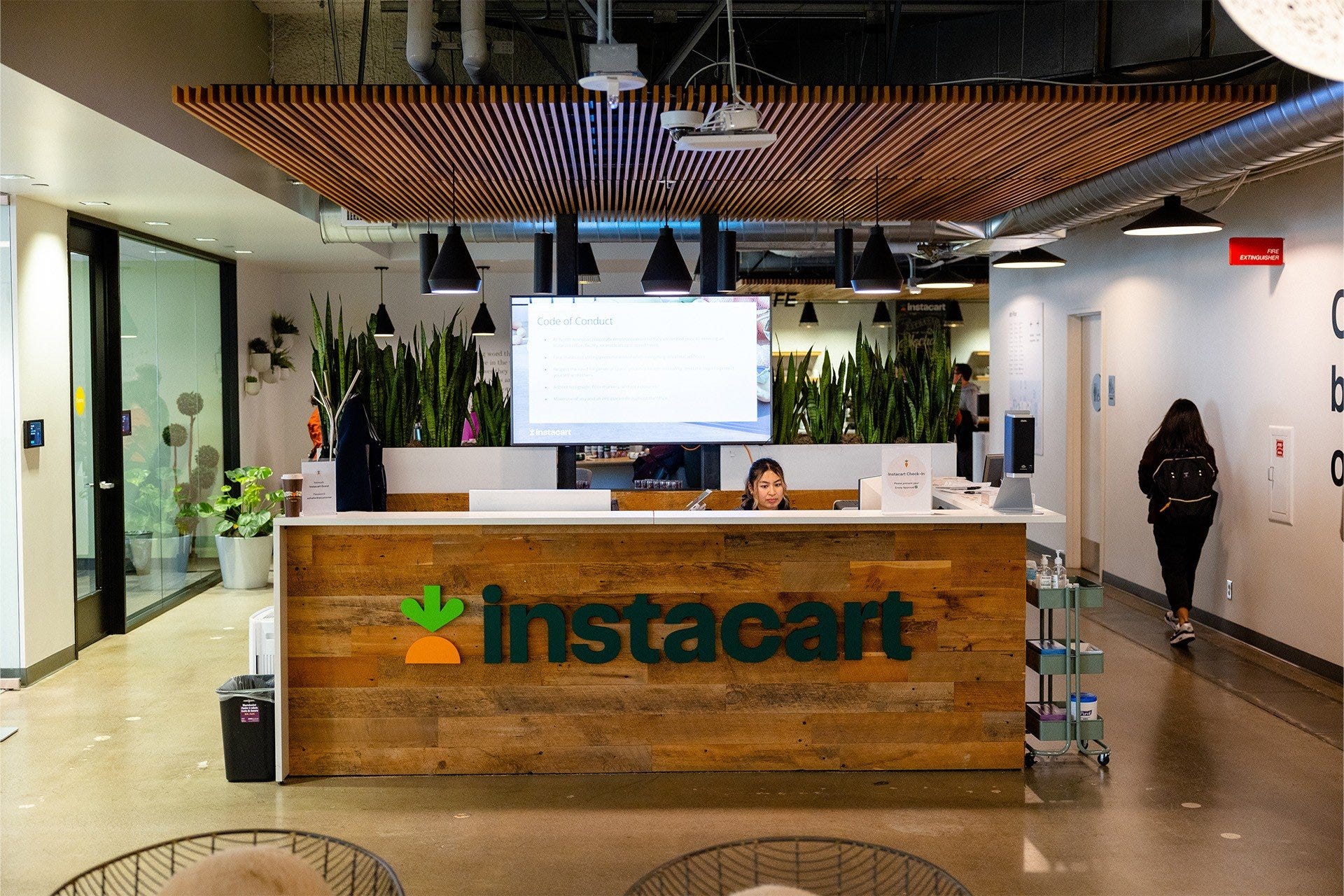
Apoorva Mehta revolutionized online grocery shopping by founding Instacart in 2012 with an asset-light, gig-economy business model. Departing from the capital-intensive warehouse strategies that doomed early dot-com pioneers, Instacart connected existing brick-and-mortar grocers with independent shoppers. This innovation reshaped hyper-local e-commerce, retail media monetization, and micro-fulfillment logistics.
The Early Era of Grocery Delivery: Webvan and the Asset-Heavy Trap
To understand how Apoorva Mehta changed online grocery delivery, one must first look at the industry's early failures. During the late 1990s dot-com boom, companies like Webvan attempted to solve digital grocery ordering by constructing massive, multi-million-dollar automated warehouses. Webvan spent hundreds of millions of dollars on infrastructure, proprietary distribution fleets, and automated sorting hardware before establishing a predictable customer base.
- Webvan Model (1990s):
- Own Warehouses
- Own Delivery Fleet
- High Burn Rate
- Failure
- Instacart Model (2012):
- Partner Stores
- Gig Workers (Shoppers)
- Asset-Light
- Scale
This asset-heavy strategy proved fatal. Grocery operates on thin profit margins—often between 1% and 3% for traditional retailers. Owning cold-storage warehouses, maintaining delivery vans, and managing complex inventory logistics created enormous fixed costs. When demand fell short of projections, Webvan filed for bankruptcy in 2001, leaving behind a cautionary tale that discouraged tech investors from entering the grocery sector for over a decade.
The fundamental breakdown of early grocery e-commerce stemmed from three primary structural challenges:
- High Capital Costs: Building custom fulfillment centers required upfront investment before generating revenue.
- Inventory Risk: Buying and holding perishable food meant stocking unsold items that spoiled, leading to significant product losses.
- Density Dependency: Warehouses required high consumer order density within strict geographic radii to cover route logistics costs.
Apoorva Mehta’s Vision and the Launch of Instacart
Before launching Instacart, Apoorva Mehta worked as a supply chain engineer at Amazon, where he developed fulfillment algorithms and optimized inventory movement. After leaving Amazon, Mehta moved to San Francisco and attempted to launch dozens of startup ideas, ranging from social networks for enterprise teams to event-advertising platforms. None succeeded until he turned his focus to his own daily frustration: buying groceries without a car.
Mehta recognized that the modern urban landscape already possessed an extensive, highly distributed network of warehouses: traditional brick-and-mortar grocery stores. Instead of building new distribution hubs, a platform could use existing store inventory and crowdsourced labor to pick, pack, and deliver items on demand.
- Instacart Platform Infrastructure:
- Store APIs & POS Feeds
- Algorithmic Order Batching System
- Retail Partner Locations
- Independent Shopper Mobile App
In 2012, Mehta developed the prototype for Instacart and applied to the Y Combinator accelerator program. After missing the formal application deadline, he demonstrated his platform by ordering a six-pack of beer through his prototype app and having it delivered directly to a partner at Y Combinator headquarters. Instacart was accepted into the summer 2012 batch, marking the start of a fundamental shift in last-mile logistics.
The Asset-Light Blueprint: How Instacart Re-Engineered Grocery Logistics
Instacart’s early breakthrough relied on a zero-inventory, asset-light architecture. Rather than acting as a direct merchant, Instacart positioned itself as an enterprise technology and logistics intermediary between consumers, local retailers, and personal shoppers.
1. POS Integration and Inventory Synchronization
Instacart integrated directly into the point-of-sale (POS) systems and inventory databases of supermarket chains. This gave the platform real-time visibility into product availability across thousands of store locations. Early technical hurdles included mapping millions of unique Stock Keeping Units (SKUs), handling localized price variations, and accounting for items sold by weight, such as produce and meats.
2. Crowdsourced Pick-and-Pack Labor
Instead of employing dedicated warehouse workers, Instacart created a mobile application for independent contract shoppers. When a customer submitted an order, the system routed it to a nearby shopper, who walked the aisles of the local partner store, picked the items, scanned their barcodes, and delivered them using their personal vehicle.
3. Dynamic Routing and Order Batching
As order volume increased, Instacart deployed machine learning algorithms to maximize operational efficiency. The platform analyzed real-time variables to route orders effectively:
$$\text{Efficiency Score} = f(\text{Store Layout}, \text{Shopper Proximity}, \text{Traffic Conditions}, \text{Item Availability})$$
By batching multiple customer orders into a single picking trip at a store, Instacart increased fulfillment density while reducing cost per order.
Transforming Retailers from Targets to Partners
Initially, major grocers viewed third-party delivery applications with skepticism, worried that intermediary platforms would come between them and their customers. However, Instacart offered traditional grocers a turn-key digital storefront without requiring millions in software development or logistics investments.
When major retail chains like Kroger, Aldi, Costco, and Safeway partnered with Instacart, online grocery moved from a niche service to an industry standard.
- Instacart Ecosystem:
- Enterprise SaaS Platform
- Retail Media Network (Ads)
- White-Label Storefronts
Over time, Instacart expanded its offering into three distinct core technology services:
- Enterprise Marketplace Access: Retailers listed their inventory on the main Instacart app and web portal, gaining immediate exposure to millions of registered shoppers.
- White-Label E-Commerce Storefronts: Through Instacart Platform (formerly Instacart Enterprise), grocers used Instacart's backend tech to power their own branded websites and mobile apps.
- Retail Media Networks (RMNs): Instacart introduced sponsored product listings, brand placement auctions, and targeted consumer analytics. This enabled Consumer Packaged Goods (CPG) brands to run targeted advertising campaigns directly at the digital point of purchase.
This expansion turned Instacart from a simple delivery service into an essential enterprise software and advertising partner for the grocery industry.
Pandemic Acceleration, IPO, and Executive Transition
The onset of the COVID-19 pandemic in early 2020 compressed years of projected e-commerce adoption into a few months. As millions of households turned to doorstep delivery, Instacart experienced unprecedented demand surges. The platform hired hundreds of thousands of new shoppers, expanded retail partnerships, and achieved cash-flow profitability ahead of schedule.
During this period of rapid operational scaling, Instacart's governance and strategy evolved:
- Executive Transition: In July 2021, Apoorva Mehta announced he would step down as CEO, transitioning to Executive Chairman. Former Meta executive Fidji Simo was appointed CEO to drive the company’s enterprise SaaS platform and high-margin advertising business.
- Board Resignation: Mehta stepped down from his role as Executive Chairman following Instacart's public listing, allowing new corporate governance structures to take effect.
- Public Debut (IPO): Operating under its formal corporate entity, Maplebear Inc., Instacart completed its initial public offering on the Nasdaq under the ticker symbol CART in September 2023, as detailed in its official SEC Form S-1 Registration Statement.
Comparing Grocery Delivery Models Across Eras
The operational design of online grocery delivery has gone through three distinct evolutionary stages:
| Feature / Metric | Dot-Com Era (e.g., Webvan) | Gig Economy Era (Instacart Launch) | Modern Era (Enterprise Platform) |
|---|---|---|---|
| Primary Infrastructure | Centralized mega-warehouses | Existing brick-and-mortar stores | Micro-Fulfillment Centers (MFCs) & stores |
| Fulfillment Labor | Hourly warehouse employees | Crowdsourced gig workers | Hybrid (In-store shoppers + robotics) |
| Capital Expenditures | Extremely High (Custom builds) | Extremely Low (Asset-light) | Moderate (Targeted automation) |
| Inventory Ownership | Owned by delivery firm | Owned by retail partner | Owned by retail partner |
| Primary Revenue Streams | Retail price markup | Delivery fees & commission | Enterprise SaaS, ads, & delivery fees |
| Order-to-Door Speed | Next-day or multi-day slots | 1 to 2 hours | 15 to 30 minutes (Ultra-fast options) |
| Catalog Scalability | Limited by warehouse SKUs | Full store catalog access | Real-time integrated POS inventory |
Tech and Operations in Modern Grocery Delivery
The modern online grocery ecosystem relies on integrated technologies designed to preserve low-margin profitability while meeting consumer expectations for fast delivery:
Automated Micro-Fulfillment Centers (MFCs)
To address crowded store aisles and out-of-stock items, modern delivery networks use localized, automated micro-fulfillment centers. These compact, robotic warehouses are attached to existing retail stores or built nearby. Autonomous robots retrieve high-volume packaged goods, while human workers pick delicate produce and items sold by weight, cutting total picking time per order by over 60%.
Retail Media and Monetization
High-volume delivery platforms rely on advertising margins to maintain financial stability. By placing native video ads, sponsored search placements, and personalized cross-selling promotions on their consumer platforms, grocery delivery companies operate lucrative retail media networks. CPG brands pay premium prices for real-time customer data and closed-loop attribution tracking.
- Customer Searches "Pasta"
- Algorithmic Product Ranking Engine:
- Sponsored Brand (Retail Media Ad) — High-Margin Ad Monetization
- Frequently Bought Organic Brand — Personalized Recommendation
- Store Brand Pasta (Private Label) — Margin Optimization Engine
AI-Powered Dynamic Replacement Systems
Out-of-stock items remain a major operational hurdle in online grocery delivery. Modern platforms use artificial intelligence to analyze real-time store inventory, purchase trends, and customer preferences. If a specific product is unavailable, the shopper app automatically suggests the best replacement, reducing order cancellations and customer service claims.
Implementation Roadmap for Grocers and Retail Operations
For regional and national grocery chains evaluating digital distribution models, success requires a clear e-commerce strategy:
- Phase 1: Integration
- POS Data Sync
- Phase 2: Fulfillment Setup
- In-Store vs. MFC Picking
- Phase 3: Digital Monetization
- Ads & Subscription Strategy
Phase 1: POS and Inventory Integration
- Establish standardized, low-latency API connections between physical store POS databases and digital ordering storefronts.
- Implement real-time barcode scanning to keep online product listings accurate and minimize out-of-stock items.
Phase 2: Fulfillment Logistics
- Review store layout and order volumes to determine whether in-store manual picking, dedicated dark-store picking, or automated micro-fulfillment centers (MFCs) offer the best return on investment.
- Set clear picking parameters for temperature-sensitive items, ensuring cold-chain safety for meat, dairy, and frozen goods from aisle to delivery.
Phase 3: Margin Optimization
- Launch enterprise ad tools to monetize digital storefront visits through sponsored brand placements.
- Offer membership plans and subscription models (such as Instacart+) to increase customer order frequency, boost retention, and improve lifetime value (LTV).
Frequently Asked Questions
What was Apoorva Mehta’s role in creating Instacart?
Apoorva Mehta founded Instacart in 2012, serving as its original CEO and principal software designer. He developed the platform's asset-light business model, connecting gig shoppers with existing retail grocers via a mobile application. Mehta led the company through its major growth stages before handing over the CEO role to Fidji Simo in 2021 and stepping down from the board after Instacart's public listing in late 2023.
How did Instacart solve the profitability issues that broke Webvan?
Instacart avoided the high capital expenses that led to Webvan's failure by operating an asset-light model. Instead of buying land, building custom cold-storage warehouses, and owning a fleet of delivery vans, Instacart integrated directly with existing grocery stores and relied on independent shoppers. This structure eliminated major fixed expenses and inventory risks, allowing the company to scale efficiently across urban and suburban markets.
How do online grocery platforms earn revenue beyond delivery fees?
Modern platforms use multiple high-margin revenue streams, including:
- Retail Commission Fees: Charging partner grocers a percentage on orders processed through the platform.
- Retail Media Networks (Ads): Selling sponsored search positions, digital endcaps, and targeted ad placements to CPG manufacturers.
- Enterprise SaaS Fees: Licensing proprietary storefront software, order-routing tech, and white-label tools directly to grocers.
- Consumer Subscriptions: Collecting recurring monthly or annual membership fees for benefits like waived delivery charges.
What is a Micro-Fulfillment Center (MFC) and why is it important?
A Micro-Fulfillment Center (MFC) is a compact, highly automated storage facility located inside or adjacent to a local retail store. MFCs use autonomous robotics to retrieve items quickly, cutting manual picking times for fast-moving goods. They help relieve store aisle congestion, lower labor costs, and speed up fulfillment for 15-to-30-minute delivery orders.
Why do delivery apps charge higher prices than physical stores?
Price differences happen because grocers set their own digital pricing strategies on third-party marketplaces to offset platform commissions, picking fees, and packaging costs. While some retail partners offer price parity with physical stores, others add a small markup to digital inventory to preserve their operating margins.
Strategic Recommendations for Retail Executives
To maintain a competitive grocery e-commerce operation, retail operators should focus on these actionable steps:
- Audit POS Data Integrity: Ensure store product catalogs, weight measurements, and stock updates sync smoothly with digital storefronts to prevent missing items.
- Develop a Multi-Channel Strategy: Combine third-party platform traffic with white-label, store-branded digital storefronts to keep direct ownership of core customer relationships.
- Invest in Retail Media Tools: Partner with delivery platforms or adopt scalable ad networks to unlock high-margin ad revenue from CPG brands.
- Optimize Last-Mile Fulfillment Hubs: Identify high-volume store locations for micro-fulfillment automation or dedicated staging zones to lower order-picking costs.