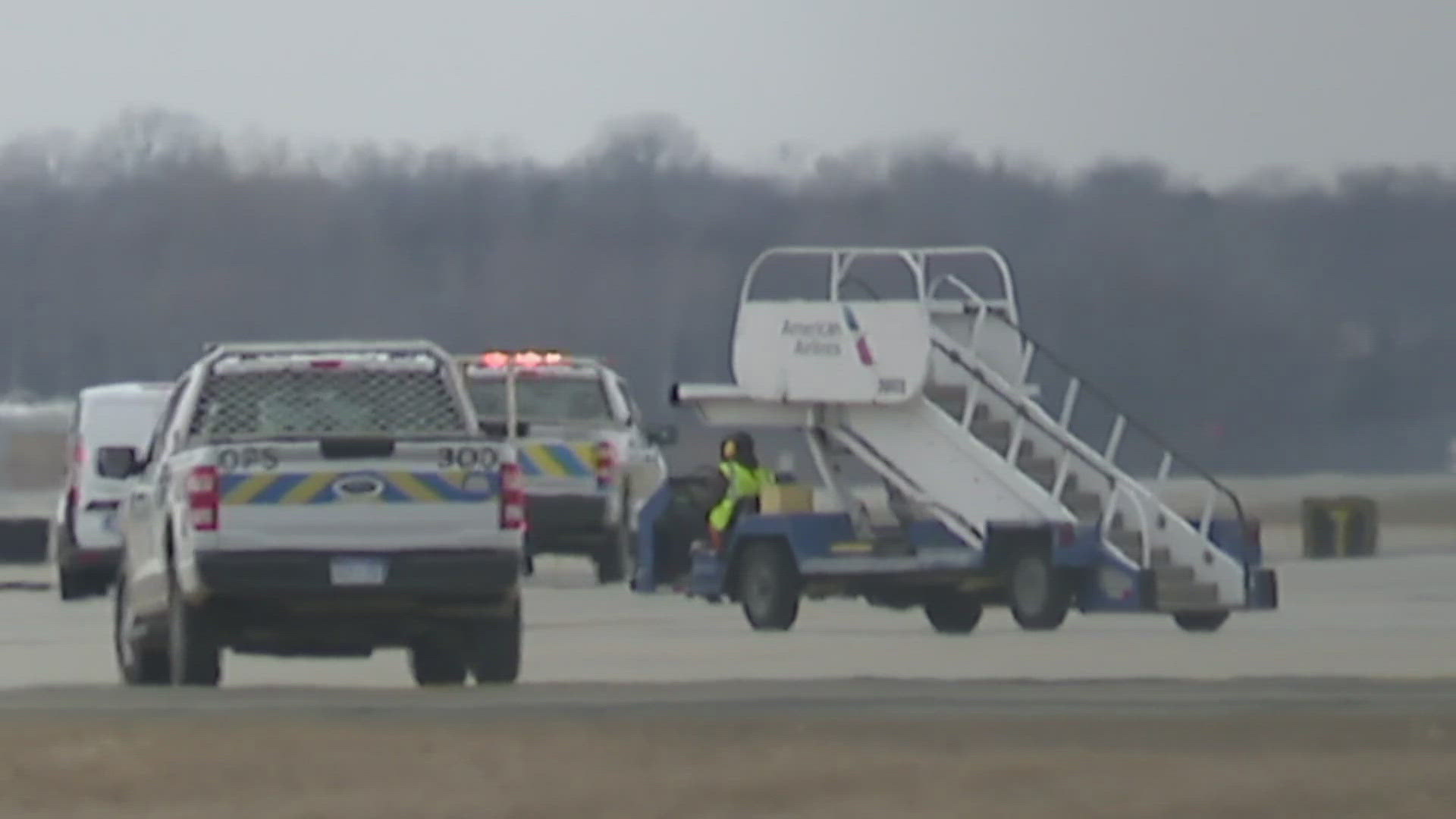
An American Airlines flight was forced to make an emergency diversion after a passenger observed a text message on another traveler’s phone that appeared to be a security threat. Investigations later revealed the message was a misunderstanding, highlighting the tension between heightened aviation security protocols and digital privacy in 2026.
The Anatomy of the Diversion: What Happened on Flight 3581
In an incident that has become a case study for aviation security experts, American Airlines Flight 3581—operated by Envoy Air—was en route from Greensboro, North Carolina, to Chicago, Illinois. During the flight, a passenger became alarmed after glancing at the mobile device of a nearby traveler. The observer believed they saw language indicative of a physical threat to the aircraft or its occupants.
Upon receiving the report from the concerned passenger, the cabin crew immediately notified the flight deck. Following established post-9/11 security mandates, the Pilot in Command (PIC) declared an emergency and requested a diversion to the nearest suitable airfield, which was Indianapolis International Airport. The aircraft landed safely, and the passenger in question was removed for questioning by federal authorities.
This specific event underscores the "zero-tolerance" environment that remains a cornerstone of the aviation industry in 2026. While the situation was ultimately deemed a "misunderstanding"—reportedly involving a text about a video game or a poorly worded private joke—the operational response was massive. The diversion involved local law enforcement, the Transportation Security Administration (TSA), and the Federal Bureau of Investigation (FBI).
The Psychology of "See Something, Say Something" in the Digital Age
The "See Something, Say Something" campaign, initiated by the Department of Homeland Security, has been highly effective in turning the general public into an extra layer of security. However, when applied to the digital screens of fellow passengers, this vigilance can lead to significant friction.
In the confined space of an airplane cabin, privacy is functionally non-existent. Passengers are often seated just inches apart, making "shoulder surfing"—the act of looking at someone else's screen—almost inevitable. When a passenger sees words like "bomb," "explode," or "kill" on a screen, they rarely have the context required to determine if the message is a threat, a quote from a movie, a gaming strategy, or a medical discussion.
Airlines and security agencies emphasize that it is better to report a false alarm than to ignore a genuine threat. This creates a psychological environment where passengers feel a moral and civic obligation to report anything suspicious, regardless of the potential for a misunderstanding. As of 2026, aviation experts continue to debate where the line should be drawn between public safety and the right to private communication.
Standard Operating Procedures (SOP) During In-Flight Security Threats
When a threat—digital or verbal—is reported to the flight crew, a specific chain of command and set of procedures are triggered. These are designed to remove ambiguity and prioritize the safety of the hull and its passengers above all else.
1. Verification and Assessment
The cabin crew is trained to gather as much information as possible without escalating the situation. They seek to identify the individual, the nature of the message, and whether there are any visible signs of weaponry or suspicious behavior. However, the crew is not tasked with "solving" the mystery; their job is to report the data to the cockpit.
2. Pilot Authority
Under federal law, the Pilot in Command has the final authority on the operation of the aircraft. If the pilot deems the report credible enough to warrant concern, they will not take risks. In the 2024 Greensboro-Chicago incident, the pilot opted for an immediate diversion to Indianapolis, a decision supported by airline management and safety regulators.
3. Air Traffic Control (ATC) Coordination
Once a diversion is decided, ATC clears the airspace to provide the aircraft with the most direct path to the ground. Other flights may be put into holding patterns or rerouted to accommodate the emergency landing.
4. Ground Response
Law enforcement meets the aircraft at a remote area of the tarmac, often referred to as the "penalty box." This keeps the potentially compromised aircraft away from the main terminal and other planes. Passengers are usually deplaned under heavy security, and the aircraft is swept by K9 units and explosives experts.
The Operational and Financial Costs of a Misunderstanding
A single diversion is not merely an inconvenience; it is a logistical nightmare with significant financial repercussions. While safety is priceless, the industry meticulously tracks the costs associated with these events.
| Expense Category | Estimated Cost (USD) | Description |
|---|---|---|
| Fuel Burn & Dumping | $10,000 – $25,000 | Extra fuel used for the diversion and potential fuel dumping to meet landing weight. |
| Airport Landing Fees | $2,000 – $5,000 | Fees paid to the diversion airport for emergency services and gate use. |
| Passenger Re-accommodation | $15,000 – $40,000 | Vouchers for food, hotels, and re-booking on other flights for 100+ passengers. |
| Crew Timing | $5,000 – $15,000 | Costs associated with crews "timing out" and requiring replacements. |
| Law Enforcement Resources | $5,000+ | Public funds utilized for FBI, TSA, and local police response. |
In total, a "misunderstanding" diversion can cost an airline anywhere from $50,000 to $100,000, depending on the aircraft size and the length of the delay. Furthermore, the downstream effects—such as the aircraft not being in Chicago for its next scheduled flight—can cause a ripple effect of cancellations across the network.
Legal Consequences for Passengers Involved
The legal fallout from a misunderstanding depends largely on intent. The legal system distinguishes between a "hoax" and a "misunderstanding."
The "Sender" of the Message
If a passenger intentionally sends a threatening message knowing it will cause fear, they can be charged with a felony under Title 49 of the U.S. Code § 46507, which deals with "False information and threats." This can result in fines and up to five years in prison. However, if the message was truly a private communication misunderstood by a third party, the sender is usually released without charges, though they may be placed on the airline’s internal "no-fly" list.
The "Reporter" of the Message
Passengers who report what they believe to be a threat are generally protected under "Good Samaritan" principles, provided the report was made in good faith. If a person maliciously makes a false report to harass another passenger, they can face criminal charges for filing a false police report and civil lawsuits for damages from the airline.
Preventing Security Misunderstandings: Best Practices for 2026
As we move through 2026, both airlines and tech companies have introduced measures to mitigate these incidents. For travelers, the responsibility of maintaining "digital situational awareness" has become part of modern etiquette.
- Privacy Screens: The use of physical privacy filters on smartphones and laptops is highly recommended. These filters make the screen appear black when viewed from an angle, preventing "shoulder surfing."
- Contextual Awareness: Passengers are encouraged to be mindful of their surroundings when discussing sensitive topics, even in text form. Words that could be flagged by a nervous neighbor are best avoided in public spaces.
- AirDrop and Bluetooth Security: In previous years, "AirDrop pranks" (sending threatening images to strangers) led to several diversions. Most modern operating systems now default to "Contacts Only" for file sharing to prevent these anonymous disruptions.
- Airline Communications: Some carriers have added "Digital Safety" sections to their pre-flight briefings, reminding passengers that their actions—including digital ones—can impact the safety and schedule of the flight.
The Role of Technology in Resolving Disputes
In 2026, the investigation of these incidents is faster than ever. Digital forensics allows the FBI to quickly verify the context of a text message. If a passenger claims a message was about a video game, agents can often verify the timestamps and the conversation thread within minutes of the plane landing. This rapid verification helps in deciding whether to release the aircraft and the passengers or to proceed with a criminal investigation.
Despite the speed of technology, the physical reality of moving a 100,000-pound aircraft to an unplanned city remains a slow and costly process. The human element—fear, vigilance, and the desire for safety—will always outweigh the speed of digital verification in the heat of the moment.
Frequently Asked Questions
Can I be arrested for someone else reading my private texts?
Generally, no, unless the texts contain evidence of a crime or a specific, credible threat. If a passenger misinterprets your private conversation and reports it, you will likely be questioned by security or law enforcement. Once the lack of intent and threat is established, you are typically released. However, the airline may still refuse to fly you for the remainder of your journey.
Does American Airlines reimburse passengers for delays caused by security diversions?
Security diversions are often classified as "extraordinary circumstances" or "events outside the airline’s control." Consequently, airlines are generally not legally required to provide compensation like they would for a mechanical failure. However, most carriers, including American Airlines, will provide basic assistance such as re-booking and meal vouchers as a gesture of goodwill.
What should I do if I see a suspicious message on another passenger's phone?
Aviation experts suggest looking for "clusters" of suspicious behavior rather than a single word. If you are genuinely concerned, discreetly notify a flight attendant. Do not confront the passenger directly, as this could escalate a potential threat or turn a misunderstanding into a physical altercation.
Are airlines implementing software to monitor passenger texts?
No. In 2026, privacy laws and technical limitations prevent airlines from monitoring private SMS or encrypted messaging (like iMessage or WhatsApp) sent over the aircraft's Wi-Fi. The "monitoring" is entirely social, relying on the eyes of fellow passengers and crew members.
Is the passenger who caused the diversion liable for the costs?
If the diversion was the result of a deliberate hoax, the airline and the government can sue the individual for the costs of the response and operational losses. If it was a genuine misunderstanding, the passenger is rarely held financially liable, as doing so might discourage people from reporting actual threats in the future.
Final Recommendation for Travelers
While you cannot control who looks at your phone, you can control the visibility of your data. To avoid being the center of a security diversion, utilize a privacy screen protector and remain aware that in the high-stakes environment of commercial aviation, there is no such thing as a "private" conversation if it is visible to a neighbor. If you are a passenger who sees something concerning, report it to the crew immediately, but try to provide as much context as possible to help them make an informed assessment.