A universal life insurance policy is characterized by flexible premiums, an adjustable death benefit, and an unbundled structure where the cash value earns interest. The one feature it typically does not have is a fixed, level premium requirement for the life of the policy, as found in traditional whole life insurance.
Universal life (UL) insurance represents a significant evolution in the insurance industry, designed to provide policyholders with greater autonomy over their financial planning. Unlike traditional whole life insurance, which remains rigid in its structure, universal life was developed to adapt to the changing life stages of the insured. To understand what universal life insurance is not, one must first master the specific technical mechanics that define it. In the context of 2026, where financial agility is a priority for many policyholders, these nuances are more relevant than ever.
The Core Characteristics of Universal Life Insurance
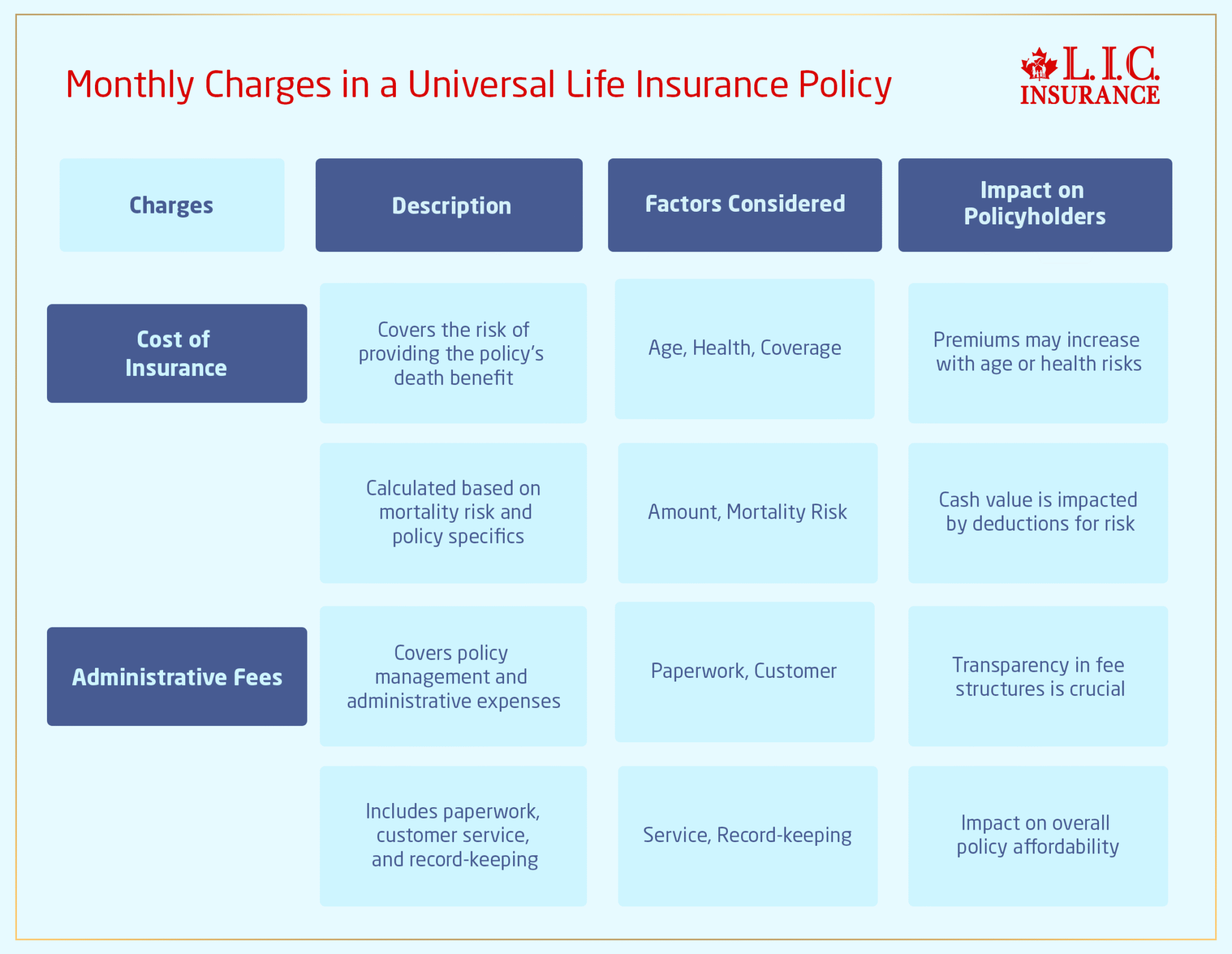
Universal life insurance is a form of permanent life insurance that combines a death benefit with a savings component, known as cash value. The most defining trait of a UL policy is its "unbundled" nature. In a traditional whole life policy, the premium, death benefit, and cash value are bundled together; you pay one set price, and the insurer manages the rest. In a universal life policy, these components are separated, allowing the policyholder to see exactly how much of their premium is going toward the cost of insurance (mortality charges), administrative fees, and the cash value account.
1. Flexible Premium Payments
Perhaps the most touted feature of universal life insurance is the flexibility of premium payments. Within certain limits set by the insurer and the Internal Revenue Service (IRS) guidelines (such as the 7-pay test to avoid becoming a Modified Endowment Contract), policyholders can increase, decrease, or even skip premium payments entirely.
This flexibility is possible because the policy relies on the cash value to cover the monthly cost of insurance. If a policyholder faces a temporary financial hardship in 2026, they may choose to stop paying premiums and allow the accumulated cash value to sustain the policy. Conversely, if they have surplus funds, they can increase their payments to build the cash value more aggressively, providing a larger nest egg for the future.
2. Adjustable Death Benefit
Universal life insurance allows the policyholder to adjust the face amount of the policy as their needs change. For instance, a young parent might start with a high death benefit to ensure their children are provided for. As the children grow and become financially independent, the policyholder may choose to decrease the death benefit, which in turn reduces the cost of insurance (COI) charges deducted from the cash value.
It is important to note that increasing the death benefit usually requires "evidence of insurability," such as a new medical exam. This prevents individuals from significantly increasing their coverage only after they have been diagnosed with a terminal illness.
3. Interest-Sensitive Cash Value Accumulation
The cash value in a universal life policy earns interest based on the insurer’s current portfolio performance or a specific financial index. While the policy typically guarantees a minimum interest rate (often between 2% and 4%), the "current" rate can be significantly higher depending on market conditions. In the economic environment of 2026, these rates are closely monitored by policyholders seeking to outpace inflation.
4. Transparency and Unbundling
Every month, the insurance company provides a statement that details the financial activity within the policy. This includes the interest credited to the cash value, the mortality charges (the actual cost of the insurance protection), and the administrative expenses. This transparency is a hallmark of universal life and is a primary reason why it is favored by those who want a clear view of where their money is going.
What is NOT a Characteristic of Universal Life Insurance?
When faced with the question "all of these are characteristics of a universal life insurance policy except," the answer usually points toward the rigidities of whole life insurance or the limitations of term insurance.
Fixed, Level Premiums
Universal life insurance does not require a fixed, level premium. In a whole life policy, if you miss a premium payment, the policy may lapse or trigger an automatic premium loan. In a universal life policy, the "premium" is more of a suggestion or a target. As long as the cash value is sufficient to cover the monthly deductions for mortality and expenses, the policy remains in force. Therefore, the characteristic of required fixed premiums is the most common "exception" to the list of UL traits.
Guaranteed Death Benefit Regardless of Cash Value
Unlike whole life insurance, which guarantees the death benefit as long as the fixed premiums are paid, a universal life policy’s death benefit is contingent upon the cash account's health. If the cash value drops to zero because of poor interest performance or insufficient premium payments, the policy will lapse, and the death benefit will disappear. While some modern UL policies offer "No-Lapse Guarantees" via riders, this is an add-on feature rather than an inherent characteristic of the base universal life structure.
Bundled Pricing
As established, universal life is unbundled. Therefore, any description of a policy where the costs of insurance and the savings components are inseparable and opaque would not apply to universal life.
Comparing Universal Life with Other Permanent Insurance Models
To further clarify what universal life is and is not, it is helpful to compare it against the other two primary forms of permanent life insurance available in 2026: Whole Life and Variable Life.
| Feature | Universal Life | Whole Life | Variable Life |
|---|---|---|---|
| Premium Flexibility | Highly Flexible | Rigid/Fixed | Rigid/Fixed |
| Death Benefit | Adjustable | Fixed (usually) | Fixed Minimum |
| Cash Value Growth | Current Interest Rate | Guaranteed/Dividends | Market Performance |
| Investment Risk | Borne by Insurer/Policyholder | Borne by Insurer | Borne by Policyholder |
| Transparency | High (Unbundled) | Low (Bundled) | High (Unbundled) |
| Minimum Interest Guarantee | Yes | Yes | No |
The Mechanics of Death Benefit Options
Universal life insurance typically offers two (and sometimes three) death benefit options, which further distinguishes it from other types of insurance.
- Option A (Level Death Benefit): Under this option, the death benefit remains level. As the cash value increases, the "amount at risk" to the insurance company decreases. This makes the policy more cost-effective over time because the mortality charges are based only on the amount at risk (Death Benefit minus Cash Value).
- Option B (Increasing Death Benefit): This option provides a death benefit equal to the face amount plus the accumulated cash value. This is more expensive than Option A because the amount at risk to the insurer remains constant, but it results in a larger payout to beneficiaries.
Understanding these options is crucial for answering "except" questions, as a characteristic of universal life is having the choice between these structures, whereas whole life typically only offers a level face amount (though dividends can be used to purchase paid-up additions).
Common Misconceptions and Exam Pitfalls
In insurance licensing exams, the question regarding universal life characteristics is designed to test the student’s ability to distinguish UL from Whole Life. Common distractors include:
- "It has a fixed maturity date like term insurance." This is false. Universal life is permanent insurance and can remain in force until the insured reaches the maturity age (often age 100 or 121 in 2026-era policies).
- "The policyowner can direct the specific investments of the cash value." This is actually a characteristic of Variable Universal Life, not standard Universal Life. In a standard UL policy, the insurance company manages the investment portfolio and credits interest to the policyholder.
- "It is a form of temporary insurance." Universal life is permanent. It is intended to provide lifelong coverage as long as the cash value remains positive.
Technical Considerations: Cost of Insurance (COI)
One of the most misunderstood characteristics of universal life is the rising Cost of Insurance (COI). Even though the premiums are flexible, the actual cost to provide the death benefit increases as the insured gets older. In 2026, actuaries use updated mortality tables that reflect longer life expectancies, but the principle remains: as you age, the insurer deducts more from your cash value every month to cover the risk of death.
If the interest credited to the account is lower than the COI, and the policyholder is not adding enough premium, the cash value will begin to erode. This "downward spiral" is a critical risk factor that policyholders must monitor. It is a defining characteristic of the product's internal mechanics, emphasizing that while premiums are flexible, the costs are not.
Legal and Regulatory Context in 2026
Universal life insurance is regulated at the state level in the United States, but it must also comply with federal tax laws. According to the National Association of Insurance Commissioners (NAIC), insurers must provide clear disclosures regarding the potential for policy lapse.
Furthermore, Section 7702 of the Internal Revenue Code defines what qualifies as life insurance for tax purposes. If a universal life policy accumulates cash value too quickly relative to the death benefit, it may be classified as a Modified Endowment Contract (MEC). This removes the tax-free nature of loans and withdrawals, a significant disadvantage for those using the policy as a supplemental retirement vehicle.
Practical Application: Who Should Choose Universal Life?
Because universal life insurance lacks the "forced savings" aspect of fixed premiums, it is generally best suited for individuals who are:
- Disciplined Savers: Those who will proactively fund the policy even when payments aren't strictly required.
- Business Owners: Individuals with fluctuating incomes who need the ability to skip payments during lean months and "catch up" during profitable ones.
- Estate Planners: Those who need a permanent death benefit to cover estate taxes but want the ability to adjust the coverage amount as tax laws change.
Conversely, if an individual prefers a "set it and forget it" approach, the flexible nature of universal life might be a disadvantage rather than a benefit. The lack of a fixed premium—the very thing that makes it a UL policy—might lead to a lapsed policy if the owner is not diligent.
FAQs
Can I withdraw money from a universal life policy?
Yes, universal life insurance allows for both policy loans and partial surrenders (withdrawals). Unlike a loan, a partial surrender reduces the death benefit and the cash value permanently. It is a characteristic of UL that these withdrawals are generally tax-free up to the "basis" (the total amount of premiums paid into the policy).
What happens if the interest rate drops to zero?
Most universal life policies have a guaranteed minimum interest rate. If the market rates drop below this floor, the insurer must still credit the account with the guaranteed minimum. However, even with the guarantee, if the interest credited is less than the monthly cost of insurance and fees, the cash value will decline unless additional premiums are paid.
Is universal life insurance the same as "adjustable life"?
No, though they share similarities. Adjustable life insurance allows changes to the premium and death benefit, but it is often structured more like a whole life policy with fixed segments. Universal life is specifically distinguished by its unbundled interest-sensitive cash value account.
Why is universal life called "unbundled"?
It is called unbundled because the three main components—mortality (risk), expenses (admin), and interest (savings)—are clearly separated in the monthly statement. In whole life insurance, these are combined into a single premium figure, and the policyholder does not see the specific breakdown of costs.
Can a universal life policy lapse?
Yes. If the cash value account reaches zero and the policyholder does not make a payment to cover the monthly cost of insurance and administrative fees, the policy will enter a grace period and eventually lapse. This is why monitoring the annual statement is vital.
Final Recommendation
When identifying the characteristics of a universal life insurance policy, remember the "Three Flexibilities": flexible premiums, adjustable death benefits, and flexible cash value access. If you are analyzing a policy or preparing for a professional exam, look for the outlier that suggests rigidity—such as "fixed level premiums for life"—as that is the standard answer for what is not a characteristic of universal life.
For those currently holding or considering a UL policy in 2026, the most important action is to request an "in-force illustration" from your insurer. This document provides a projection of how your policy will perform based on current interest rates and your current payment schedule, ensuring that your flexible policy doesn't accidentally lapse due to underfunding.