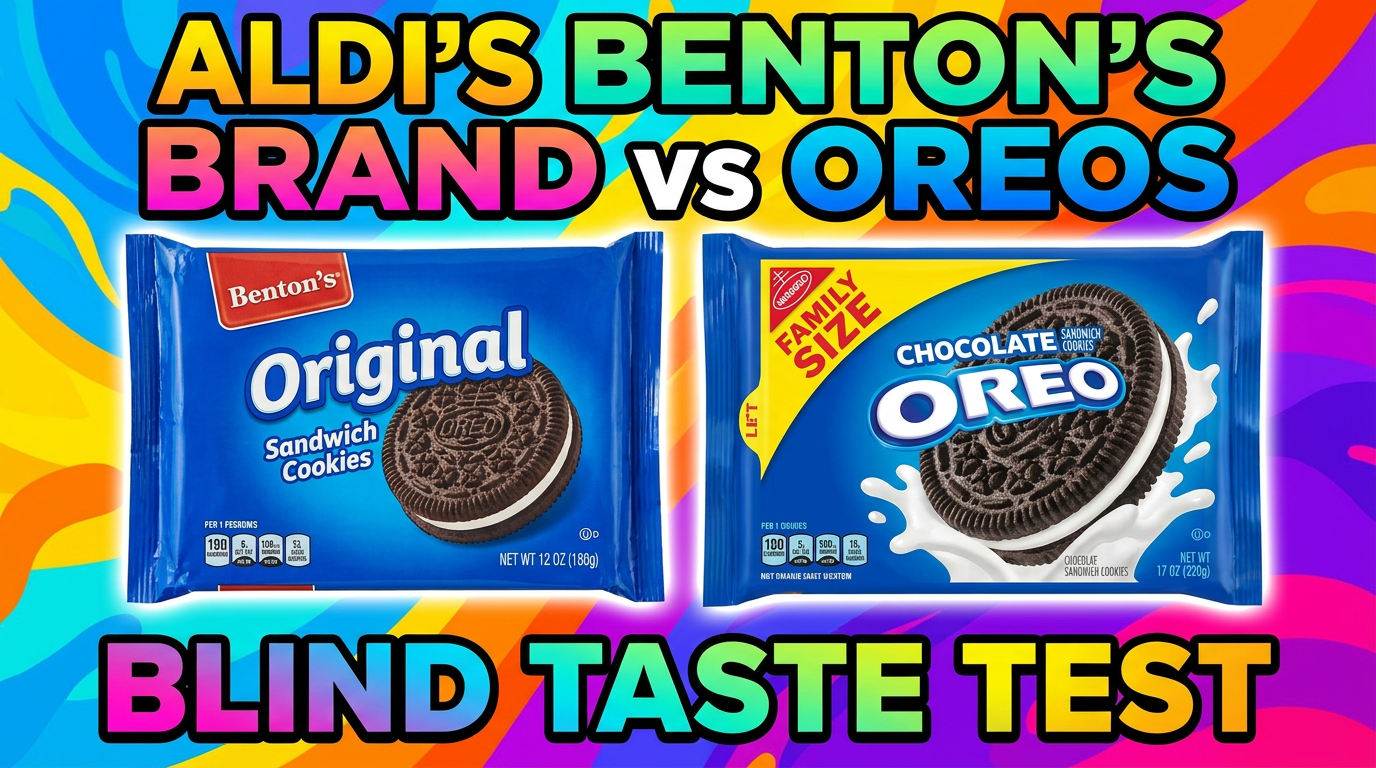
In the battle of the chocolate sandwich cookie, the choice between the iconic Nabisco Oreo and Aldi’s Benton’s brand often comes down to personal priorities. While Oreo remains the gold standard for texture and flavor variety, Aldi’s Benton’s offers a near-identical sensory experience at approximately half the price, making it the clear economic victor for budget-conscious households in 2026.
The Great Sandwich Cookie Rivalry
The chocolate sandwich cookie is a staple of the global snack market, dominated for over a century by the Oreo brand, owned by Mondelez International. However, as grocery prices have fluctuated over the last several years, private-label alternatives have transitioned from "budget compromises" to legitimate competitors. Aldi’s proprietary brand, Benton’s, has emerged as the primary challenger to the Oreo throne.
To understand which cookie deserves a spot in your pantry, one must look beyond the packaging. The rivalry is not merely about flavor; it is an intersection of food science, supply chain logistics, and brand psychology. Oreo leverages a massive marketing machine and a constant stream of "Limited Edition" releases to maintain its cultural relevance. Conversely, Aldi utilizes a "no-frills" operational model, stripping away the marketing costs to pass the savings directly to the consumer.
Wallet Impact: The Economics of the Cookie Jar
In 2026, the price gap between name-brand and private-label snacks remains one of the most compelling reasons for the shift in consumer loyalty. A standard 14.3-ounce package of Oreos typically retails between $4.80 and $5.90, depending on the retailer and regional location. In contrast, the Benton’s Chocolate Sandwich Cookies at Aldi generally range from $2.15 to $2.85 for a similarly sized 14.3-ounce package.
This price discrepancy is not accidental. Aldi’s business model involves stocking a limited selection of items—about 90% of which are private labels. By controlling the manufacturing contracts for Benton’s, Aldi avoids the "brand tax" associated with Nabisco’s national advertising campaigns, slotting fees at traditional supermarkets, and complex distribution networks.
When calculating the annual cost for a household that consumes one package per week, the savings are stark. Switching to the Aldi version can save a consumer upwards of $150 per year on a single snack item. For families managing tight 2026 budgets, this "wallet win" is often the deciding factor before a single cookie is ever tasted.
Ingredient Analysis: What is Inside the Wafer?
When we examine the ingredient lists of both cookies, the similarities are striking, but the subtle differences explain the variations in taste and mouthfeel. Both cookies rely on a foundation of unbleached enriched flour, sugar, and palm oil.
The Cocoa Profile
The hallmark of a great sandwich cookie is the "black" cocoa wafer. Oreo uses a specific Dutch-processed cocoa (alkalized cocoa) that gives it a deep, almost bitter chocolate profile that balances the high sweetness of the cream. Benton’s also uses alkalized cocoa, but the concentration and "Dutching" level vary slightly, leading to a wafer that some tasters describe as having a more traditional "cocoa" flavor rather than the specific, charred-chocolate note associated with Oreos.
Sweeteners and Oils
Both brands have largely moved away from high fructose corn syrup (HFCS) in many markets, favoring cane sugar or beet sugar for a cleaner sweetness. However, the fat profile is where the texture diverges. Oreo has perfected the use of palm and/or canola oil to create a cream filling that remains stable at room temperature but melts quickly on the tongue. Benton’s filling occasionally feels slightly denser or "waxier" to some palates, a result of different ratios of solid fats used to maintain structural integrity at a lower price point.
Dietary Considerations
A significant point of interest for many consumers is that both Oreo and Aldi’s Benton’s cookies are often considered "accidentally vegan." Neither cookie traditionally uses lard or dairy in its standard chocolate-and-cream formulation. However, strict vegans often favor Oreo due to the brand's clearer transparency regarding the sourcing of its bone-char-free sugar, whereas private labels like Benton’s may source from various suppliers, making it harder to verify every sub-ingredient's processing methods.
The Taste Test: Sensory Experience and "Dunkability"
Taste is subjective, but the "Dunk Test" provides a more objective measure of performance. A sandwich cookie’s primary job is to withstand submersion in milk without disintegrating instantly or remaining impossibly hard.
- The Snap: A fresh Oreo has a distinct, audible snap when broken. This indicates a low moisture content in the wafer, achieved through a precise baking duration. Benton’s cookies are remarkably close in this regard, though they can sometimes feel slightly more brittle, leading to more "crumbles" at the bottom of the package.
- The Cream-to-Wafer Ratio: Oreo maintains a strict ratio in its "Original," "Double Stuf," and "Mega Stuf" varieties. Benton’s "Double Filled" version mirrors the Oreo Double Stuf closely, though some enthusiasts note that the Benton’s cream is slightly less aerated, making it feel heavier.
- Milk Absorption: In controlled dunking tests, an Oreo typically reaches its optimal saturation point—where the wafer is soft but still holds the cream—at approximately 4 to 6 seconds. Benton’s wafers tend to be slightly more porous, reaching this state 1-2 seconds faster. For some, this is an advantage; for others who prefer a crunchier dunk, it requires a more rapid transition from glass to mouth.
Variety and Innovation: The Oreo Edge
Where Aldi struggles to compete is in the realm of variety. Oreo has mastered the art of the "Limited Time Offering" (LTO). From seasonal flavors like Pumpkin Spice and Peppermint Bark to viral collaborations with movies and musicians, Oreo creates a sense of urgency and "snack-tivism."
Aldi generally sticks to the basics: Original, Double Filled, and occasionally a Mint or Golden variety. While these cover 90% of consumer needs, the "taste win" often goes to Oreo for those who enjoy experimenting with flavors like Carrot Cake, Peanut Butter, or the "Most Oreo" Oreo. If you are looking for a specific, niche flavor profile, the name brand is the only reliable source.
Comparison Table: Oreo vs. Benton’s (Aldi)
The following data compares the flagship chocolate sandwich cookie from each brand based on standard 2026 market availability.
| Feature | Nabisco Oreo (Original) | Aldi Benton’s (Chocolate Sandwich) |
|---|---|---|
| Approx. Price (14.3 oz) | $4.80 - $5.90 | $2.15 - $2.85 |
| Primary Sweetener | Sugar / High Fructose Corn Syrup | Sugar |
| Core Fat Source | Palm and/or Canola Oil | Palm Oil |
| Flavor Varieties | 50+ (Seasonal/Limited) | 3-5 (Core Varieties) |
| Texture (Wafer) | Crisp, firm snap | Slightly more brittle |
| Cream Texture | Light, aerated, fast-melting | Dense, slightly waxier |
| Vegan-Friendly | Yes (Accidentally Vegan) | Yes (Accidentally Vegan) |
| Availability | All major retailers | Exclusive to Aldi |
Sustainability and Ethical Sourcing
As of 2026, both Mondelez (Oreo) and Aldi have made significant public commitments to ethical sourcing, particularly regarding cocoa and palm oil. This is an increasingly important factor for modern consumers who want their snacks to be "guilt-free" beyond just calories.
- Mondelez International: Through its Cocoa Life program, Oreo aims to source 100% of its cocoa sustainably. They also hold a high rating from the Roundtable on Sustainable Palm Oil (RSPO), ensuring that their oil does not contribute to illegal deforestation.
- Aldi: Aldi has been a leader in the discount sector for sustainability. They require their private-label suppliers to adhere to strict social responsibility standards. Most of Aldi’s chocolate products in the U.S. and Europe carry the Fairtrade or Rainforest Alliance seal, and they were among the first major retailers to transition to 100% RSPO-certified sustainable palm oil for their exclusive brands.
For the ethically-minded shopper, Aldi often provides a more transparent "win" by placing these certifications directly on the front of the Benton's packaging, whereas name brands sometimes relegate this information to corporate social responsibility (CSR) reports.
Culinary Versatility: Baking with the "Knock-off"
For many, the chocolate sandwich cookie is not just a snack but a baking ingredient. Whether it is for an Oreo cheesecake crust, "Slutty Brownies," or a cookies-and-cream milkshake, the choice of brand can affect the outcome.
In recipes where the cookie is pulverized (such as a pie crust), the difference between Oreo and Benton’s is virtually indistinguishable. The fat and sugar content are close enough that the structural integrity of the crust remains identical. However, for toppings—where the visual of the cookie matters—the "Oreo" logo embossed on the wafer carries a certain prestige. If you are serving a dessert to guests, the brand recognition of Oreo may be worth the extra cost. If you are making a family treat where the cookies are blended or crushed, the Aldi version is a more logical choice that yields the same flavor profile for half the cost.
Frequently Asked Questions
Are Aldi cookies just Oreos in different packaging?
No. While there are rumors that name brands manufacture store brands, Aldi’s Benton’s cookies have a distinct recipe. The ingredient ratios for the cocoa and the specific blend of oils in the cream differ from the proprietary Nabisco formula. They are a "copycat" product, not the exact same product in a different wrapper.
Is the Benton's brand vegan?
Yes, in most cases, Benton’s Chocolate Sandwich Cookies do not contain animal-derived ingredients. However, as with Oreos, they are produced in facilities that may handle milk, so there is a risk of cross-contamination. Consumers with severe dairy allergies should always check the "May Contain" statement on the specific batch.
Why is there such a large price difference?
The price difference is primarily due to overhead and marketing. Oreo spends millions on global advertising and pays for premium shelf space in grocery stores. Aldi eliminates these costs by selling their own brand and using a high-efficiency retail model (e.g., customers bagging their own groceries and "renting" carts).
Do Benton's cookies get soggy in milk faster than Oreos?
Yes, empirical dunking tests suggest that Benton’s wafers have a slightly higher porosity. This means they absorb milk more quickly than Oreos. If you like a very soft cookie, this is a benefit. If you prefer a crunch after a long soak, the Oreo is engineered to stay firm longer.
Which cookie has more "Stuf"?
When comparing "Double Stuf" Oreos to Benton’s "Double Filled," the weight of the cream is nearly identical. However, because the Benton’s cream is denser and less whipped, it may visually appear to have slightly less volume than the more aerated Oreo version.
The Final Verdict: Which Cookie Wins?
Choosing between Aldi and Oreo depends entirely on your specific use case. If you are a purist who values the specific, dark-alkaline snap of a wafer and the light, fluffy melt of the original cream, Oreo remains the champion of taste. Its consistency and wide array of flavors make it an unbeatable choice for enthusiasts and those who value brand nostalgia.
However, if you are looking for a high-quality snack that provides 95% of the Oreo experience at 50% of the cost, Aldi’s Benton’s wins the wallet battle. For baking, lunchboxes, and everyday milk-dunking, the difference in flavor is so marginal that it is difficult to justify the "name-brand tax" in a 2026 economy.
Next Action: To decide for yourself, conduct a "blind taste test" at home. Buy one package of each, remove them from their packaging, and see if your family can actually tell the difference. You may find that your wallet can win without your taste buds ever losing.