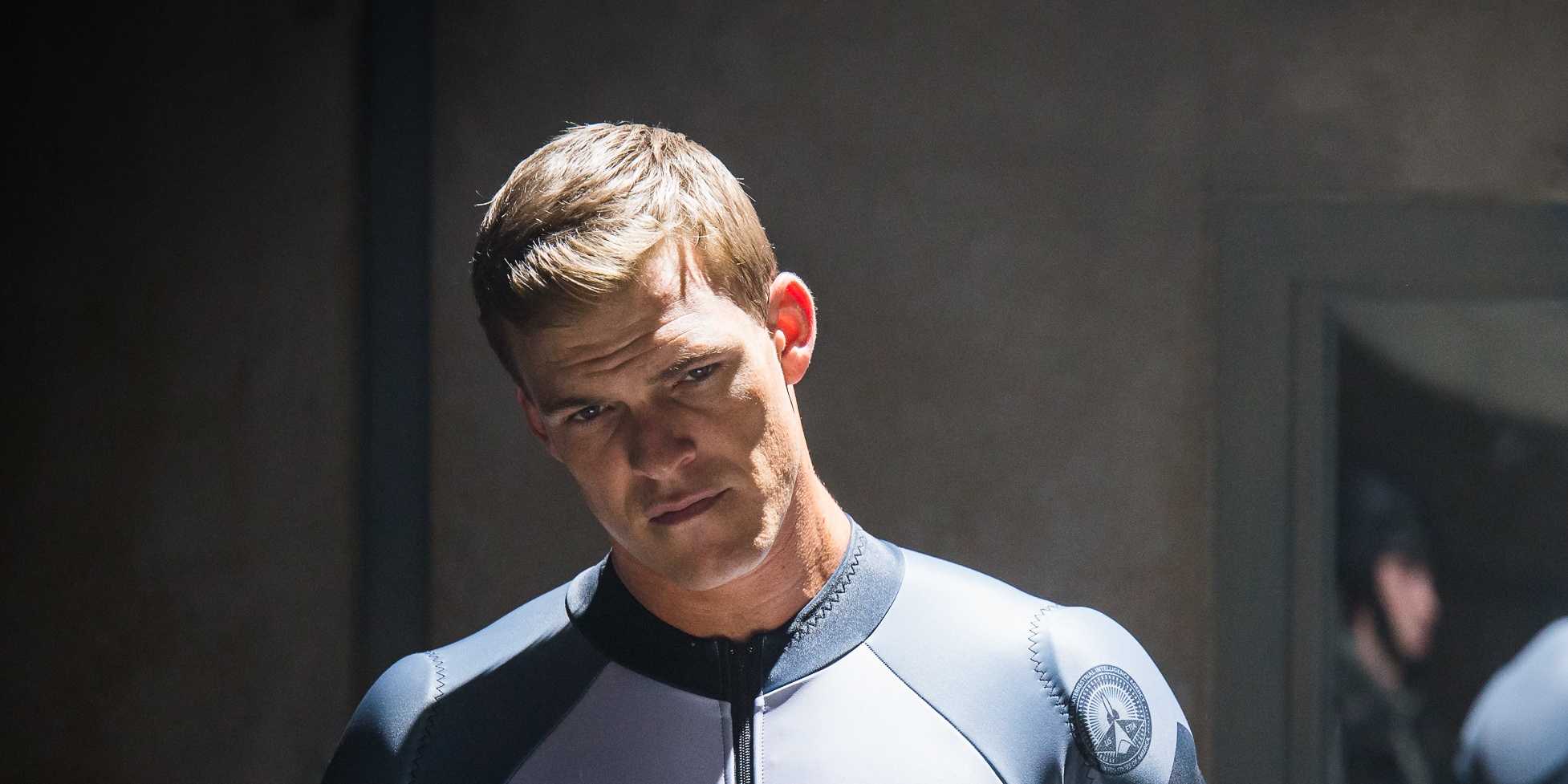
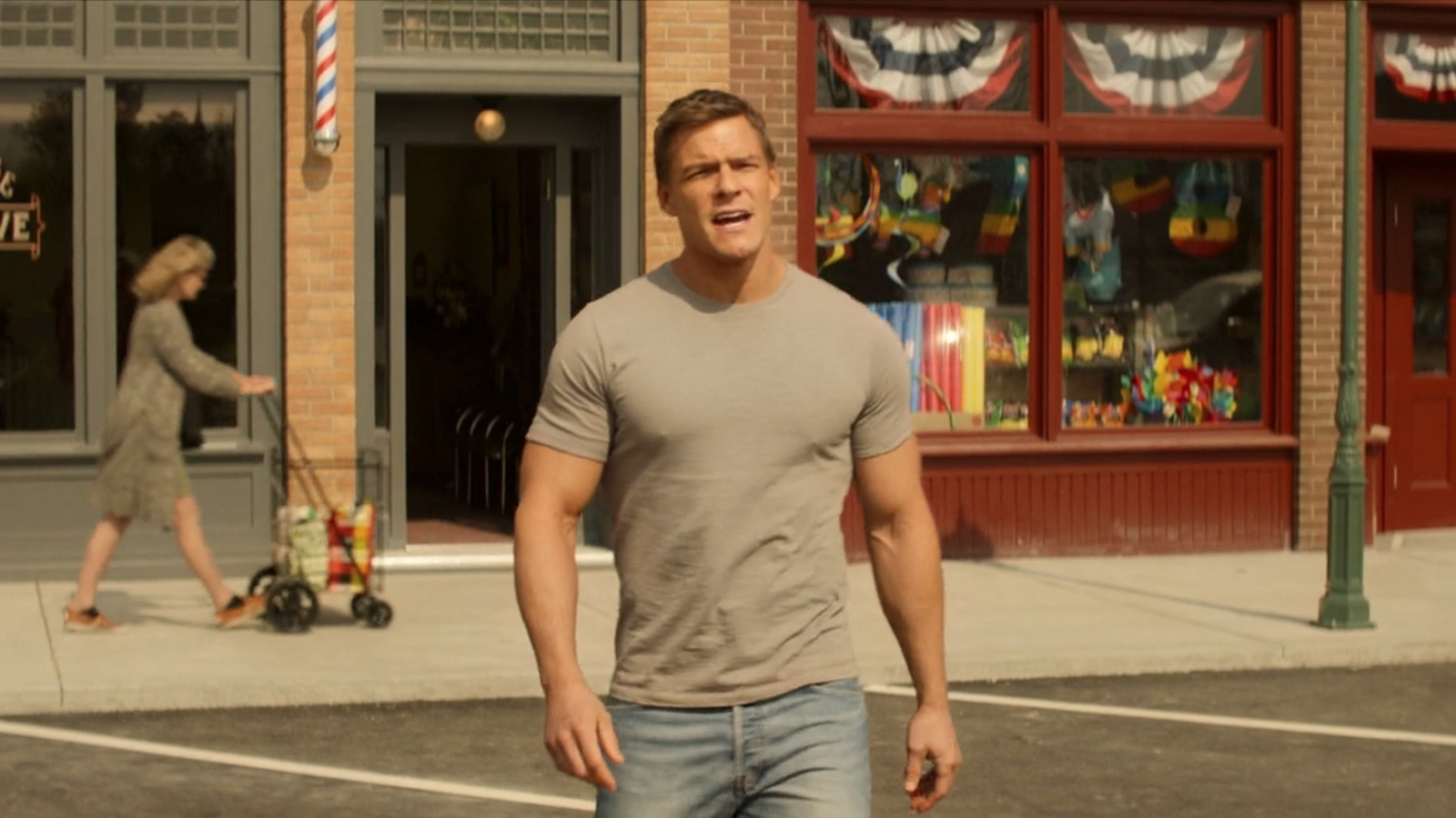
In the landscape of modern action cinema, few actors have undergone a transformation as dramatic as Alan Ritchson. While he first gained prominence as Arthur Curry (Aquaman) in Smallville, his later portrayal of Jack Reacher on Prime Video redefined his career. The shift represents a move from youthful, supporting superhero tropes to a commanding, book-accurate leading man.
The Smallville Era: Diving Into the DC Universe
When Alan Ritchson first appeared on the CW’s Smallville in 2005, the superhero television landscape was vastly different. Ritchson was cast as Arthur "AC" Curry, marking the first time the character of Aquaman was portrayed in a live-action, recurring capacity for a modern audience. At the time, Ritchson was primarily known as a contestant on American Idol, and his casting was a significant gamble for the showrunners.
His debut in the Season 5 episode "Aqua" introduced a version of the King of the Seven Seas that was decidedly "early 2000s." Sporting a bright orange and green hooded vest and board shorts, Ritchson’s Arthur Curry was a cocky, eco-conscious swimmer who frequently clashed—and occasionally bonded—with Tom Welling’s Clark Kent.
Arthur Curry’s Impact on Alan Ritchson’s Career
The role of Aquaman was intended to be a stepping stone. Shortly after his debut, a pilot for a standalone Aquaman series (initially titled Mercy Reef) was commissioned. However, in a surprising turn of events, Ritchson was not cast in the lead for the pilot; the role went to Justin Hartley (who would later return to Smallville as Oliver Queen/Green Arrow).
Despite this setback, Ritchson’s recurring appearances in later seasons as a member of the proto-Justice League solidified his place in DC fandom. He brought a specific brand of physicality to the role—lean, athletic, and overtly "Californian." During this era, Ritchson stood at approximately 6'2" and weighed around 200 pounds. He was fit, but he possessed the "swimmer’s build" that the character required, rather than the massive, intimidating frame he would later cultivate.
The Reacher Revolution: Redefining the Action Hero
Fast forward to 2022, and the entertainment world witnessed a radical reinvention. When Amazon Prime Video announced a new adaptation of Lee Child’s Jack Reacher novels, the pressure was on to find an actor who could satisfy book purists. The previous film adaptations starring Tom Cruise, while commercially successful, had been criticized for Cruise’s lack of physical stature—a defining trait of the character in the novels.
Alan Ritchson’s casting was a direct response to those criticisms. In the novels, Jack Reacher is described as a 6'5", 250-pound "unstoppable force." Standing at 6'3" and having packed on significant muscle mass, Ritchson looked as though he had stepped directly off the pages of Killing Floor.
Solving the Tom Cruise Dilemma
The primary "problem" with the previous cinematic iteration of Reacher was not Cruise's acting ability, but the fundamental physics of the character’s interactions. In the books, Reacher wins fights often through sheer mass and terrifying efficiency. Ritchson’s version of the character brought this to life.
By the time Reacher reached its third and fourth seasons, which we can look back on from our current 2026 perspective, Ritchson had become the definitive face of the franchise. His performance balanced the character's extreme stoicism with a dry, calculating intellect. Unlike the youthful arrogance of his Smallville days, his Reacher was a man of few words but immense presence.
Physical Transformation: The Anatomy of a Modern Titan
The most discussed aspect of the "Smallville vs. Reacher" debate is undoubtedly the physical change. Ritchson’s body underwent a metamorphosis that few actors have achieved without the aid of significant time and dedicated professional resources.
The Training and Nutritional Shift
During Smallville, Ritchson’s training was focused on cardiovascular health and functional lean muscle to maintain a swimmer’s aesthetic. For Reacher, the goal was hypertrophy—the enlargement of muscle tissue. Ritchson has been candid in interviews about the grueling nature of this transition. For the first season of Reacher, he reportedly gained 30 pounds of muscle in an eight-month period.
In 2026, looking back at his fitness journey, Ritchson has also been one of the few high-profile actors to speak openly about the use of Hormone Replacement Therapy (HRT). He noted that the toll of maintaining a 240-pound frame in his 40s was unsustainable through diet and exercise alone. This honesty provided a rare glimpse into the "superhero physique" industrial complex, contrasting sharply with the "natural" image often projected during his early career.
| Feature | Arthur Curry (Smallville) | Jack Reacher (Reacher) |
|---|---|---|
| Character Archetype | Youthful, Cocky Superhero | Stoic, Drifting Investigator |
| Physical Build | Lean Swimmer (approx. 200 lbs) | Massive Powerhouse (approx. 240 lbs) |
| Combat Style | Super-strength, swimming-based | Brutal Krav Maga, Boxing, Efficiency |
| Primary Motivation | Environmental activism, Justice | Truth, personal code of honor |
| Wardrobe | Orange/Green synthetic gear | Thrifted flannels and Carhartt jackets |
| Tone of Performance | Optimistic, energetic | Cynical, observant, minimalist |
Character Analysis: AC vs. Jack Reacher
Beyond the muscles, the psychological profile of these two characters reveals Ritchson’s growth as an actor.
The Youthful Idealism of Arthur Curry
In Smallville, Arthur Curry was defined by his emotions. He was passionate about the ocean and impulsive in his actions. This required Ritchson to use a higher vocal register and more expressive facial movements. His chemistry with the cast was based on brotherhood and shared burdens. AC was a team player, even if he initially resisted the "superhero" label.
The Stoic Minimalism of Jack Reacher
Jack Reacher is the antithesis of the "buddy-cop" or "team leader" dynamic. He is a loner by choice. This role required Ritchson to master the art of "acting without doing." Much of Reacher’s character is conveyed through his eyes and the way he occupies space. He doesn't need to shout to intimidate; he simply needs to stand still.
This transition from high-energy performance to high-presence performance marks Ritchson’s maturation. While Smallville proved he could handle the physicality of an action role, Reacher proved he could carry the narrative weight of a complex, multifaceted protagonist who isn't always "likable" in the traditional sense.
The Road Between: Blue Mountain State and Titans
To understand how Ritchson moved from Smallville to Reacher, one must look at the "connective tissue" of his career. Between these two iconic roles, he played Thad Castle in Blue Mountain State and Hank Hall (Hawk) in Titans.
- Blue Mountain State: This comedy role was pivotal. It allowed Ritchson to lean into physical comedy and absurdism. It proved he wasn't just a "pretty face" and could handle the demands of a leading role, even in a different genre.
- Titans: This was his return to DC. As Hawk, Ritchson played a character dealing with chronic pain and anger. This was the first time audiences saw him play a "heavy" character—someone whose size was a burden as much as a tool. The grit he displayed in Titans was the unofficial audition for Reacher.
The 2026 Perspective: Ritchson’s Legacy in Action Cinema
As of 2026, Alan Ritchson has carved out a unique niche. He has avoided the "superhero fatigue" that plagued many of his contemporaries by pivoting toward the "dad-core" action thriller genre exemplified by Reacher. He is no longer just "the guy who played Aquaman"; he is the blueprint for the modern literary action star.
His success has sparked a trend in Hollywood often referred to as "the Ritchson Effect," where casting directors prioritize actors who physically embody the dimensions of literary characters, rather than relying solely on "A-list" name recognition. This has led to more faithful adaptations of thrillers and action novels across various streaming platforms.
Frequently Asked Questions
Did Alan Ritchson do his own stunts in both shows?
While Ritchson has always been highly athletic, the nature of his stunts changed significantly. In Smallville, much of his work involved wirework and green-screen swimming sequences. In Reacher, the stunts are much more grounded in hand-to-hand combat. Ritchson performs a high percentage of his own fight choreography, which adds to the visceral feel of the series.
Why wasn't Alan Ritchson cast in the Aquaman movie?
By the time the DC Extended Universe (DCEU) was casting for the Justice League and Aquaman films, the producers wanted a complete "reimagining" of the character. Jason Momoa was chosen to bring a rugged, warrior-like energy that deviated from the classic comic book look. Ritchson has expressed that he was happy to see the character succeed on the big screen, as it paved the way for more diverse superhero interpretations.
How much weight did Alan Ritchson gain for Reacher?
For the first season of Reacher, Ritchson gained roughly 30 pounds, moving from his walking weight of around 205-210 lbs to a massive 235-240 lbs. He has maintained this "Reacher weight" for subsequent seasons through a combination of high-calorie intake and heavy compound lifting, though he has adjusted his routine in recent years to prioritize joint health and longevity.
Is Jack Reacher more powerful than Smallville's Aquaman?
In a literal sense, no. Arthur Curry in Smallville possessed superhuman strength, the ability to breathe underwater, and super-speed in aquatic environments. Jack Reacher is a peak-human character but possesses no supernatural abilities. However, in terms of narrative "power" and character depth, many fans argue that Reacher is the more formidable and interesting character due to his brilliant tactical mind.
Final Recommendation: Where to Start?
If you are a fan of Ritchson’s current work but have never seen his early days, it is worth revisiting Smallville Season 5. It provides a fascinating look at the raw potential of an actor who would eventually become an industry powerhouse. However, for those seeking the definitive Alan Ritchson experience, Reacher remains the gold standard. It is the perfect marriage of actor and material, proving that sometimes, the right role just requires a little more time—and a lot more muscle.