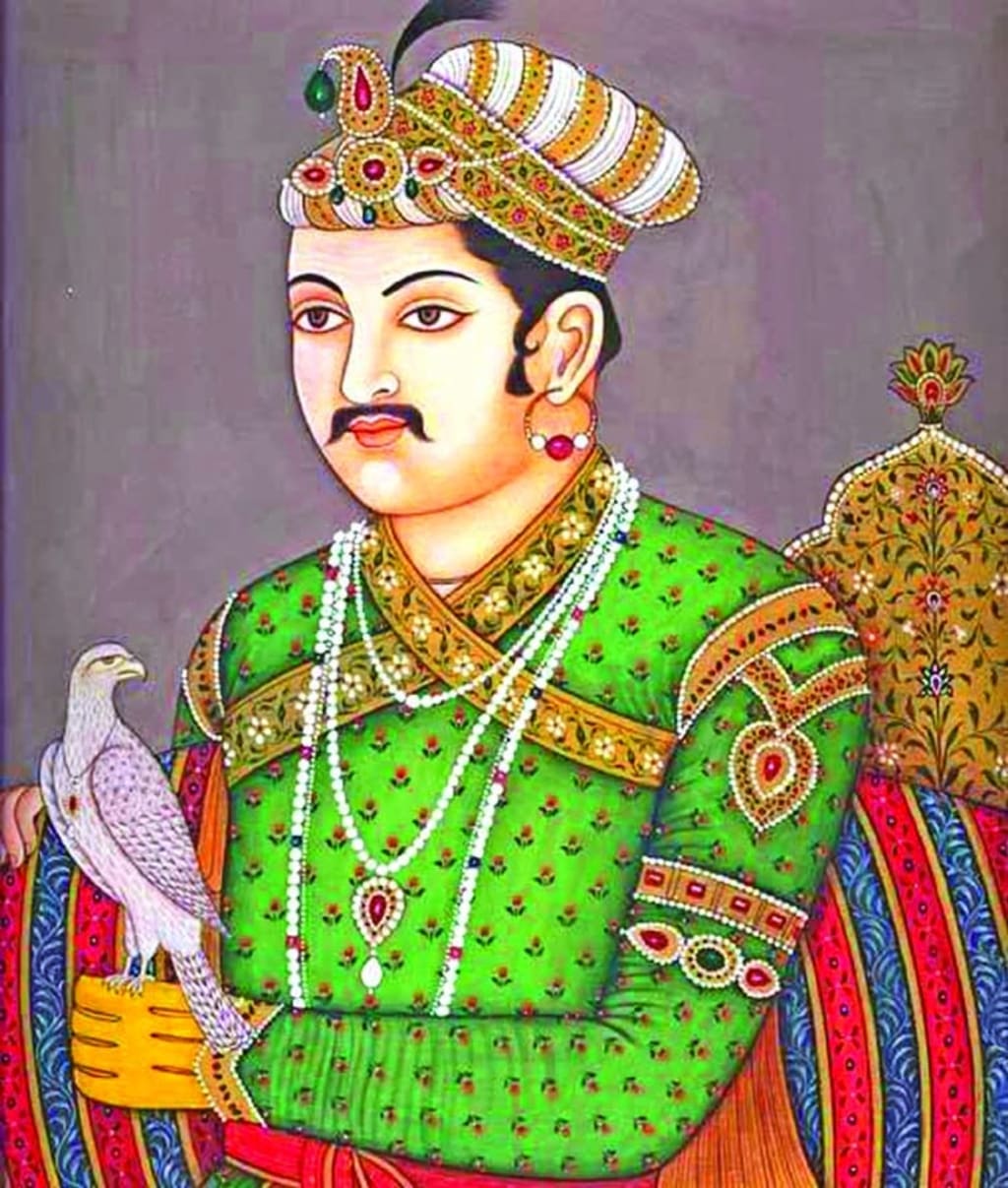
Akbar the Great's accomplishments center on the successful unification of the Indian subcontinent through revolutionary administrative reforms, unprecedented religious tolerance, and strategic military conquests. His legacy is defined by the creation of the Mansabdari system, the establishment of a centralized government, and the promotion of a syncretic cultural identity that stabilized the Mughal Empire for centuries.
Strengthening the Foundation: Administrative and Revenue Reforms
One of the most significant aspects of Akbar the Great's accomplishments was his ability to transform a loosely held military occupation into a sophisticated, centralized state. Recognizing that a vast empire could not be managed through brute force alone, Akbar overhauled the entire administrative machinery.
The centerpiece of his administration was the Mansabdari system. This was a unique hierarchical grading system that determined the rank (Zat) and military responsibilities (Sawar) of government officials and military commanders. Unlike the feudal systems prevalent in Europe or the previous Iqtadari system in India, Mansabdars were not hereditary lords of the land. Instead, they were civil servants and military officers who were paid in either cash or through Jagirs (land assignments) from which they collected revenue. This ensured that the elite remained dependent on the Emperor’s favor, effectively curbing the power of local chieftains and preventing the fragmentation of the state.
Equally vital was the Zabt or Dahshala system of land revenue, developed under the guidance of his brilliant finance minister, Raja Todar Mal. Before Akbar, revenue collection was often arbitrary and based on guesswork, leading to peasant distress or state deficits. Todar Mal implemented a rigorous system of land survey and classification. Land was categorized based on its fertility and the frequency of cultivation (e.g., Polaj, Parauti, Chachar, and Banjar). Revenue was calculated based on the average produce and prices over the previous ten years. This provided the state with a predictable income while offering the peasantry protection against over-taxation during lean years. As of 2026, many of the land record terms and surveying principles established during this era still resonate in the historical administrative lexicon of South Asia.
Military Conquests and Geopolitical Expansion
Akbar’s military accomplishments provided the physical boundaries within which his administrative and cultural reforms could take root. When he ascended the throne at the age of 13 in 1556, the Mughal "empire" was little more than a tenuous hold on parts of Delhi and Punjab.
The Second Battle of Panipat (1556) was the first major turning point. Defeating the forces of Hemu established Mughal dominance in Northern India. However, Akbar’s genius lay not just in winning battles but in his grand strategy of integration. His conquest of Rajputana serves as a prime example. Rather than merely crushing the defiant Rajput kingdoms, Akbar used a combination of overwhelming force and sophisticated diplomacy. After the brutal siege of Chittor and Ranthambore, he offered the Rajputs honorable terms of surrender, including high-ranking positions in the Mughal court and the right to retain their ancestral lands. This turned former enemies into the empire’s most loyal military commanders.
His expansionist reach extended across the subcontinent:
- Gujarat (1572-1573): This conquest was economically pivotal, as it gave the Mughals control over lucrative maritime trade routes with the Middle East and Europe.
- Bengal (1576): By securing the eastern frontier, Akbar integrated one of the wealthiest agricultural regions in the world into his tax base.
- The Northwest (1585-1595): He successfully annexed Kabul, Kashmir, and Sindh, securing the volatile frontiers against Central Asian incursions.
- The Deccan (late 1590s): Towards the end of his reign, he pushed into the Deccan plateau, capturing Ahmadnagar and Berar, laying the groundwork for future Mughal expansion in the south.
Religious Syncretism and Social Reformations
Perhaps the most enduring of Akbar the Great's accomplishments was his transition from a traditional conqueror to a philosopher-king who championed Sulh-i-kul (Universal Peace). In a land characterized by profound religious diversity, Akbar realized that the long-term stability of his rule depended on the inclusion and respect of all faiths.
In 1575, he constructed the Ibadat Khana (House of Worship) at Fatehpur Sikri. Initially intended as a space for Islamic theological debate, it was soon opened to scholars of Hinduism, Jainism, Zoroastrianism, Christianity, and Sikhism. These debates led Akbar to conclude that no single religion possessed the absolute truth. This intellectual journey culminated in the formulation of the Din-i-Ilahi (Divine Faith), which was not a formal religion but a syncretic ethical code emphasizing piety, prudence, and kindness.
His social reforms were equally radical for the 16th century:
- Abolition of the Jizya (1564): He eliminated the discriminatory tax on non-Muslim subjects, signaling a shift toward a state where citizenship was not tied to religious identity.
- Abolition of the Pilgrimage Tax: He removed taxes on Hindu pilgrims visiting sacred sites.
- Legal Reforms: Akbar intervened in social practices, discouraging child marriage and the practice of Sati (widow burning), while legalizing widow remarriage.
- Translation Bureau (Maktab Khana): He commissioned the translation of major Sanskrit epics, including the Mahabharata and the Ramayana, into Persian to foster mutual understanding between the Muslim elite and the Hindu population.
Architectural Grandeur and Cultural Renaissance
The architectural and cultural advancements under Akbar represent a "Golden Age" of Indo-Islamic synthesis. Unlike the strictly Persian styles of his predecessors, Akbar’s buildings integrated indigenous Indian elements, such as red sandstone, decorative motifs from Hindu temples, and traditional Indian eaves (chhatris).
Fatehpur Sikri, the imperial capital he built near Agra, remains the greatest testament to his vision. The city includes the Buland Darwaza, a massive gateway built to commemorate his victory over Gujarat, and the tomb of the Sufi saint Salim Chishti. His renovations and expansions of the Agra Fort and the construction of the Allahabad Fort demonstrated his commitment to both aesthetic beauty and military utility. More information on the preservation of these sites can be found through the UNESCO World Heritage Centre.
Culturally, Akbar was a patron of the arts, literature, and music, despite being illiterate himself (likely due to dyslexia). He gathered the Navratnas (Nine Gems) in his court—a group of extraordinary individuals who excelled in their respective fields.
- Abul Fazl: The court historian who wrote the Akbarnama and Ain-i-Akbari, providing a detailed record of Akbar's reign.
- Tansen: The legendary musician who revolutionized Indian classical music.
- Birbal: Famed for his wit and administrative skills.
- Raja Todar Mal: The architect of the empire's financial stability.
Economic Policies and Infrastructure Development
The economic accomplishments of Akbar's reign provided the wealth necessary to sustain his vast military and architectural projects. By standardizing weights, measures, and currency, he facilitated a boom in internal and external trade.
The Mughal silver Rupee became one of the most stable currencies in the world, facilitating trade with the Portuguese, English, and Dutch merchants who were beginning to arrive on Indian shores. Akbar also prioritized the security of trade routes, building a network of Sarais (rest houses) and ensuring the safety of caravans, which encouraged merchants from as far as Persia and the Ottoman Empire to trade in India.
Comparison of Pre-Akbar and Post-Akbar Administrative Systems
| Feature | Pre-Akbar (Sultanate/Early Mughal) | Akbar’s Reforms (Late 16th Century) | Impact on Empire |
|---|---|---|---|
| Land Revenue | Irregular, based on crop-sharing or estimates. | Zabt/Dahshala: Based on 10-year averages and measured land. | Increased state revenue and farmer predictability. |
| Official Hierarchy | Feudal/Hereditary land grants (Iqta). | Mansabdari System: Merit-based, non-hereditary ranks. | Centralized power and reduced noble rebellions. |
| Religious Policy | Jizya tax enforced; state-sponsored Islam. | Sulh-i-kul: Abolition of Jizya; religious pluralism. | Greater social cohesion and Rajput loyalty. |
| Military | Dependent on tribal levies and mercenaries. | Integrated standing army with specialized Rajput and Persian units. | Unmatched military expansion and internal security. |
| Currency | Varied and inconsistent. | Standardized Silver Rupee and Gold Mohur. | Facilitated global trade and economic stability. |
Frequently Asked Questions
What was the most important military victory for Akbar?
The Second Battle of Panipat in 1556 is widely considered his most critical victory. At that time, the Mughal presence in India was extremely fragile. By defeating Hemu, the general of the Suri dynasty, Akbar reclaimed Delhi and Agra, providing the essential foundation for all his future expansions and administrative reforms.
Was Akbar's "Din-i-Ilahi" a new religion?
No, most modern historians categorize Din-i-Ilahi more as an ethical code or a spiritual brotherhood than a formal religion. It did not have a priesthood, a holy book, or specific places of worship. It was intended to bridge the gap between his diverse subjects by emphasizing common moral values like honesty, courage, and tolerance.
How did Akbar manage to control the powerful Rajput kings?
Akbar used a policy of "matrimonial alliances and meritocracy." He married several Rajput princesses, such as Jodha Bai (Heer Kunwari), allowing them to maintain their Hindu customs within the palace. Furthermore, he gave Rajput kings high-ranking positions in the Mansabdari system, treating them as partners in the empire rather than conquered subjects.
Why did Akbar build Fatehpur Sikri if he eventually abandoned it?
Akbar built Fatehpur Sikri to serve as a grand capital and to honor the Sufi saint Salim Chishti, who had predicted the birth of his son. However, the city faced a severe water shortage due to its geographical location and the failure of its complex water system. By 1585, the capital was shifted to Lahore to manage the frontiers, and later back to Agra.
Did Akbar really have "Nine Gems" (Navratnas)?
The concept of the Nine Gems is a mix of historical fact and legendary tradition. While all nine individuals (like Birbal, Tansen, and Todar Mal) were real and held significant influence in his court, the specific grouping of "nine" is a later literary construct used to symbolize a perfect, balanced court. Their individual accomplishments, however, were vital to the empire's success.
How did Akbar's illiteracy affect his accomplishments?
Despite being unable to read or write, Akbar possessed a phenomenal memory and a deep thirst for knowledge. He had books read aloud to him daily and engaged in deep intellectual discourse with scholars. His "illiteracy" perhaps made him more reliant on diverse perspectives, fostering the environment of inquiry that led to his most significant religious and social reforms.
Practical Recommendations for Studying Akbar's Legacy
To fully grasp the depth of Akbar the Great's accomplishments, one should examine the primary sources translated into English, specifically the Ain-i-Akbari by Abul Fazl. This text provides the most granular detail on the administrative and economic structures of the time. For those interested in the physical legacy, a visit to the Agra Fort and Fatehpur Sikri in Uttar Pradesh, India, offers a direct encounter with the synthesis of Persian and Indian aesthetics that Akbar pioneered. Researchers should also look into the Metropolitan Museum of Art’s archives for a visual understanding of the "Akbar style" in miniature paintings and decorative arts, which flourished under his direct patronage.