Eminem signed with Dr. Dre’s Aftermath Entertainment in 1998 after catching the legendary producer's attention with The Slim Shady EP. Distributed through Interscope Records, this historic record deal launched Eminem into international stardom, generated hundreds of millions of album sales, and created one of the most successful producer-artist partnerships in music history.
The Origins of the Partnership: How Dr. Dre Discovered Eminem
Before joining Aftermath Entertainment, Marshall Mathers III was an under-the-radar battle rapper from Detroit struggling to establish his career. Following the commercial disappointment of his 1996 debut independent album, Infinite, Mathers developed the alter ego Slim Shady. This darker, uncensored persona manifested on The Slim Shady EP, recorded independently and released locally on Web Entertainment in late 1997.
To promote the EP, Eminem traveled to Los Angeles to compete in the 1997 Rap Olympics, where he placed second in the freestyle battle competition. An intern from Interscope Records picked up a copy of The Slim Shady EP at the event and passed it to Interscope co-founder Jimmy Iovine. Recognizing the extraordinary lyricism and unique vocal delivery, Iovine played the tape for Dr. Dre, who had founded Aftermath Entertainment in 1996 following his high-profile departure from Death Row Records.
- 1997 Rap Olympics
- Interscope (Jimmy Iovine)
- Dr. Dre / Aftermath
- 1998 Official Signing
At the time, Aftermath Entertainment was facing industry scrutiny. The label's debut compilation, Dr. Dre Presents the Aftermath (1996), and The Firm's self-titled 1997 album had underperformed relative to the massive commercial expectations set during Dr. Dre's G-funk era. Many industry executives questioned whether Dr. Dre could build a dominant label without the roster he left behind at Death Row.
Dr. Dre met Eminem in Los Angeles shortly after hearing the tape. During their initial studio session, Dre played a drum loop that would become the foundation for "My Name Is," and Eminem instantly penned the opening lines. Recognizing a rare combination of raw talent, rhythmic precision, and irreverent humor, Dr. Dre officially signed Eminem to Aftermath Entertainment in 1998, laying the groundwork for a major shift in popular culture.
Label Dynamics: The Aftermath, Interscope, and Shady Records Ecosystem
Understanding Eminem’s record releases requires examining the structural framework between Aftermath Entertainment, Interscope Records, and Shady Records. Rather than operating as an isolated record label, Aftermath functioned as a specialized imprint under the umbrella of Interscope Records, which provided worldwide distribution, marketing clout, and retail logistics through Universal Music Group.
- Universal Music Group (Parent Corporation)
- Interscope Records (Major Label & Distributor)
- Aftermath Entertainment (Dr. Dre's Imprint)
- Shady Records (Eminem & Paul Rosenberg Joint Venture)
- Aftermath Entertainment (Dr. Dre's Imprint)
- Interscope Records (Major Label & Distributor)
In 1999, following the massive success of The Slim Shady LP, Eminem and his manager, Paul Rosenberg, established their own label, Shady Records. Rather than breaking away from Aftermath, Shady Records was structured as a joint venture with Aftermath and Interscope. This hybrid arrangement allowed Eminem to sign and develop new talent while maintaining his personal recording contract directly with Aftermath Entertainment.
The Key Players in the Ecosystem
- Dr. Dre (Founder, Aftermath Entertainment): Served as chief executive producer, mentor, beatmaker, and final audio authority on Eminem’s major label work.
- Jimmy Iovine (Co-Founder, Interscope Records): Provided executive oversight, political protection against public censorship efforts, and strategic media placement.
- Paul Rosenberg (Manager & President, Shady Records): Managed Eminem's career operations, business deals, brand extensions, and day-to-day label administration.
- Eminem (Artist & Co-Founder, Shady Records): Functioned as Aftermath’s flagship recording artist and a talent scout for Shady Records' roster.
This tri-tier structure proved remarkably effective. Interscope absorbed the financial liability and physical distribution challenges, Aftermath managed creative direction and executive production, and Shady Records served as a boutique hub for emerging talent, most notably signing 50 Cent in a joint venture between Shady and Aftermath in 2002.
Discography and Key Releases Under Aftermath Entertainment
Every solo studio album released by Eminem from 1999 onward has come out through Aftermath Entertainment in conjunction with Interscope Records and Shady Records. This body of work represents one of the highest-selling discographies in recording history, yielding multiple RIAA Diamond certifications and Grammy Awards.
| Album Title | Release Year | Primary Production Roles | Major RIAA Certifications / Milestones | Key Hits Produced by Dr. Dre |
|---|---|---|---|---|
| The Slim Shady LP | 1999 | Dr. Dre, Bass Brothers, Eminem | 5× Platinum | "My Name Is", "Guilty Conscience", "Role Model" |
| The Marshall Mathers LP | 2000 | Dr. Dre, Mel-Man, Bass Brothers, The 45 King | Diamond (10×+ Platinum) | "The Real Slim Shady", "Who Knew", "Kill You" |
| The Eminem Show | 2002 | Eminem, Dr. Dre, Jeff Bass | Diamond (10×+ Platinum) | "Business", "Say What You Say" |
| Encore | 2004 | Eminem, Dr. Dre, Luis Resto | 5× Platinum | "Just Lose It", "Encore", "Ass Like That" |
| Relapse | 2009 | Dr. Dre (Executive & Primary Producer) | 3× Platinum | "Crack a Bottle", "We Made You", "3 a.m." |
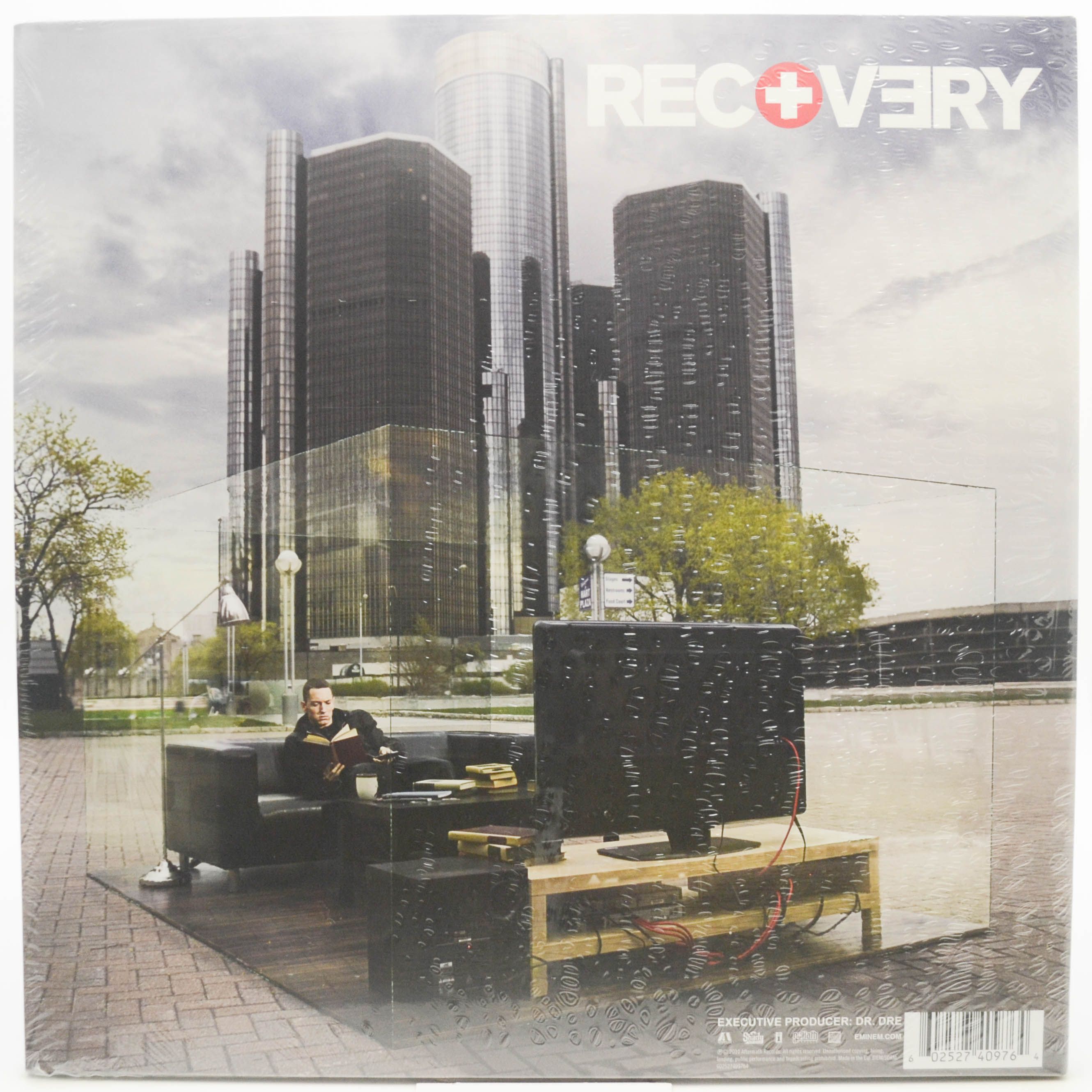
| Recovery | 2010 | Just Blaze, Alex da Kid, Boi-1da, Emile | 8× Platinum | "Not Afraid" (Executive oversight by Dre) |
| The Marshall Mathers LP 2 | 2013 | Rick Rubin, Dr. Dre, Eminem, Alex da Kid | 4× Platinum | "Berzerk" (Executive produced by Dre & Rubin) |
| Revival | 2017 | Rick Rubin, Eminem, Skylar Grey, Rock Mafia | Platinum | "Framed" |
| Kamikaze | 2018 | Eminem, Tay Keith, Mike Will Made-It, Boi-1da | Platinum | "Venom" (Executive produced by Dr. Dre) |
| Music to Be Murdered By | 2020 | Dr. Dre, Eminem, D.A. Got That Dope, Alchemist | Platinum | "Godzilla", "Premonition" |
| The Death of Slim Shady | 2024 | Eminem, Dr. Dre, Luis Resto, Dem Jointz | Gold / Multi-Platinum (Pending) | "Houdini", "Tobey" |
Dr. Dre’s Production Impact on Eminem’s Sound
The collaboration between Eminem and Dr. Dre went far beyond a standard business relationship. Dre brought a distinct sonic signature that grounded Eminem’s complex, high-velocity rhyme schemes in heavy, head-nodding rhythm tracks.
- Eminem's Lyricism
- Rapid-fire cadences
- Multisyllabic rhyming
- Complex storytelling
- Dr. Dre's Sonic Architecture
- Deep basslines & crisp snare drums
- Minimalist synth melodies
- Precise EQing & vocal placement
- Signature Aftermath Sound
The Anatomy of the Aftermath Sound Design
- Sonic Space for Syllables: Dr. Dre’s beats often feature clean, uncluttered instrumentation—frequently driven by prominent kick drums, snappy snares, and distinct basslines. This minimalist approach left frequency space for Eminem’s voice, allowing listeners to hear every multisyllabic rhyme clearly.
- Vocal Engineering and Layering: Under Dre’s guidance, Eminem refined his studio technique. Dre insisted on precise vocal doubling, meticulous punch-ins, and distinct ad-lib tracks that emphasized key rhymes without muddying the main vocal track.
- Melodic Hooks and Call-and-Response: Key collaborations such as "Guilty Conscience" showcased a narrative, theatrical style where Dre played the straight-laced alter ego or moral voice to Eminem’s chaotic Slim Shady character.
- Executive Arrangement: Even on tracks produced by Eminem himself or outside beatmakers (such as Just Blaze or Rick Rubin), Dr. Dre frequently handled executive mix consultation, adjusting drum levels, transitions, and sonic balance to maintain high production values.
During the recording of 2009’s Relapse, Dr. Dre personally produced 19 of the 20 tracks, marking a return to their hands-on dynamic following Eminem’s hiatus from the music industry. This album highlighted Dre’s evolving crisp percussion style paired with Eminem’s intricate accent-driven cadences.
Business and Cultural Legacy: 50 Cent, Shady Records, and Label Expansion
The commercial success of the Eminem-Aftermath partnership allowed the label to expand its reach. In 2002, after listening to 50 Cent’s Guess Who's Back? mixtape, Eminem flew the Queens rapper to Los Angeles to meet Dr. Dre.
Recognizing 50 Cent's talent, Aftermath Entertainment and Shady Records signed him to a joint-venture recording contract worth a reported $300,000.
- Shady Records and Aftermath Entertainment (Joint Signing)
- 50 Cent
- "Get Rich or Die Tryin'" (2003) (Over 12 Million Copies Sold)
The resulting album, 50 Cent's 2003 major-label debut Get Rich or Die Tryin', was co-executive produced by Dr. Dre and Eminem. Supported by hit singles like "In Da Club" and "21 Questions," the album sold over 12 million copies worldwide, establishing Aftermath and Shady Records as an undisputed power pairing in mainstream hip-hop.
Key Label Achievements
- Cross-Roster Collaborations: The trio of Dr. Dre, Eminem, and 50 Cent created iconic tracks such as "Patiently Waiting," "Crack a Bottle," and "Encore," solidifying Aftermath's market dominance through the 2000s.
- Artist Development Pipeline: Shady Records used Aftermath's distribution muscle to launch projects for acts like D12, Obie Trice, Slaughterhouse, Yelawolf, and Grizzly, showcasing the label's ability to cross over underground talent to commercial audiences.
- Grammy and Sales Records: Albums released under the Aftermath/Shady/Interscope partnership have accumulated scores of Grammy Awards and multiple RIAA Diamond awards (10 million units sold in the U.S.), a feat achieved by few label partnerships in history.
Common Misconceptions About Eminem and Aftermath
Given the length and complexity of Eminem’s career, several misconceptions persist regarding his contract and executive roles within Aftermath Entertainment.
Misconception 1: Eminem Owns Aftermath Entertainment
Fact: Aftermath Entertainment was founded by, and remains owned by, Dr. Dre (Andre Young). Eminem does not own Aftermath. However, Eminem co-owns Shady Records alongside his manager, Paul Rosenberg. Shady Records operates under Aftermath and Interscope for distribution.
Misconception 2: Eminem Left Aftermath to Form Shady Records
Fact: Eminem never left Aftermath. Shady Records was created as a subsidiary joint venture in 1999. Every Eminem solo studio album—from The Slim Shady LP (1999) through The Death of Slim Shady (Coup de Grâce) (2024)—has been officially released under the combined imprint line of Web/Shady/Aftermath/Interscope.
Misconception 3: Dr. Dre Produces Every Track on Eminem's Albums
Fact: While Dr. Dre serves as an executive producer across Eminem's catalog, Eminem himself has produced a large portion of his own discography (including hit tracks like "Lose Yourself" and "Without Me"). Outside producers like Jeff Bass, Luis Resto, Just Blaze, Emile Haynie, and Rick Rubin have also contributed extensive production work.
Strategic Legacy and Current Status
Decades after their initial meeting, the professional alliance between Eminem and Aftermath Entertainment remains intact. Rather than dissolving or transferring to another major label, Eminem has maintained full loyalty to Dr. Dre and Interscope throughout his career—an anomaly in an industry often defined by contract disputes, artist-label litigation, and label transfers.
Key Milestones of the Aftermath/Eminem Era:
- 1998: Signed to Aftermath Entertainment by Dr. Dre
- 1999: Released "The Slim Shady LP" & Founded Shady Records
- 2000: "The Marshall Mathers LP" achieves record-breaking sales
- 2002: Jointly signed 50 Cent; released "The Eminem Show"
- 2009: Reunited for "Relapse" after career hiatus
- 2022: Co-headlined the Pepsi Super Bowl LVI Halftime Show alongside Dr. Dre
- 2024: Released "The Death of Slim Shady (Coup de Grâce)" via Aftermath/Interscope
Their continued collaboration was highlighted during the 2022 Pepsi Super Bowl LVI Halftime Show, where Eminem performed alongside Dr. Dre, Snoop Dogg, Mary J. Blige, and 50 Cent, earning an Emmy Award for Outstanding Variety Special (Live).
With the release of The Death of Slim Shady (Coup de Grâce) in 2024, Eminem reaffirmed his ongoing artistic tie to Aftermath Entertainment. Dr. Dre contributed tracks and executive counsel to the project, demonstrating that the foundation built in 1998 remains active, viable, and commercially potent.
Frequently Asked Questions
How did Dr. Dre discover Eminem?
Dr. Dre discovered Eminem after Interscope Records co-founder Jimmy Iovine played him a copy of The Slim Shady EP. The tape had been acquired by an Interscope intern at the 1997 Rap Olympics in Los Angeles, where Eminem finished in second place. Impressed by his lyricism and flow, Dre met Eminem shortly after and signed him to Aftermath Entertainment in 1998.
Is Eminem still signed to Aftermath Entertainment?
Yes, Eminem remains signed to Aftermath Entertainment, distributed through Interscope Records. His solo releases continue to carry the joint imprint line of Shady Records, Aftermath Entertainment, and Interscope Records.
What is the difference between Aftermath Entertainment and Shady Records?
Aftermath Entertainment is a record label founded by Dr. Dre in 1996 under Interscope Records. Shady Records is a record label founded by Eminem and Paul Rosenberg in 1999 as a joint venture with Aftermath and Interscope. Eminem is an artist on Aftermath, while Shady Records acts as his own imprint to sign and release music for other artists (such as 50 Cent, D12, and Westside Gunn historically).
Which Eminem albums did Dr. Dre produce?
Dr. Dre served as executive producer on all of Eminem's major-label studio albums. He was heavily involved as a primary track producer on The Slim Shady LP (1999), The Marshall Mathers LP (2000), Encore (2004), and produced almost the entirety of Relapse (2009). On later albums, Dre contributed key tracks, mix oversight, and executive advice.
What was the first song Eminem and Dr. Dre recorded together?
The first song Eminem and Dr. Dre recorded together was "My Name Is." During their very first meeting at Dr. Dre’s home studio, Dre placed a snippet of a sample (Labiff's "I Got The...") on a drum machine, and Eminem immediately began freestyle-writing the chorus and verses.
Summary and Key Takeaways
For music fans, historians, and industry analysts examining hip-hop history, the Eminem and Aftermath Entertainment relationship provides a blueprint for successful artist development:
- Verify Imprint Details: Recognize that Eminem’s releases carry the unified imprint Shady/Aftermath/Interscope, reflecting a joint business structure rather than competing labels.
- Study Production Synergies: Analyze how Dr. Dre's clean sonic engineering balanced Eminem's complex, multisyllabic lyricism.
- Examine Career Longevity: Note how mutual loyalty between Dre, Iovine, and Mathers created one of the most stable, lucrative corporate partnerships in modern music history.