AARP-endorsed Medicare Supplement insurance plans, provided by UnitedHealthcare, are standardized insurance policies designed to fill the "gaps" in Original Medicare coverage. These plans help beneficiaries manage out-of-pocket costs such as deductibles, copayments, and coinsurance, offering predictable monthly premiums and the flexibility to see any provider who accepts Medicare.
Understanding the Relationship Between AARP, UnitedHealthcare, and Medicare
To navigate the landscape of supplemental insurance, it is essential to distinguish between the various entities involved. Medicare is the federal health insurance program for people age 65 or older and certain younger people with disabilities. Original Medicare (Parts A and B) covers a significant portion of inpatient and outpatient services, but it does not cover everything.
A Medicare Supplement insurance plan—often referred to as Medigap—is a private insurance policy designed to work alongside Original Medicare to pay for costs not covered by the government program. AARP does not act as the insurance carrier; instead, AARP endorses a suite of Medicare Supplement insurance plans underwritten by UnitedHealthcare Insurance Company. This arrangement provides members with access to plans that meet specific standards of coverage, quality, and member support, while the administrative and financial underwriting is managed by UnitedHealthcare.
Standardized Medigap Plans Explained
In the United States, Medicare Supplement plans are standardized by the federal government and state regulators. This means that, regardless of which insurance company you purchase a plan from, a "Plan G" offers the exact same core benefits as any other company's "Plan G." The primary differences between carriers often come down to pricing, customer service reputation, financial stability, and additional value-added benefits or programs.
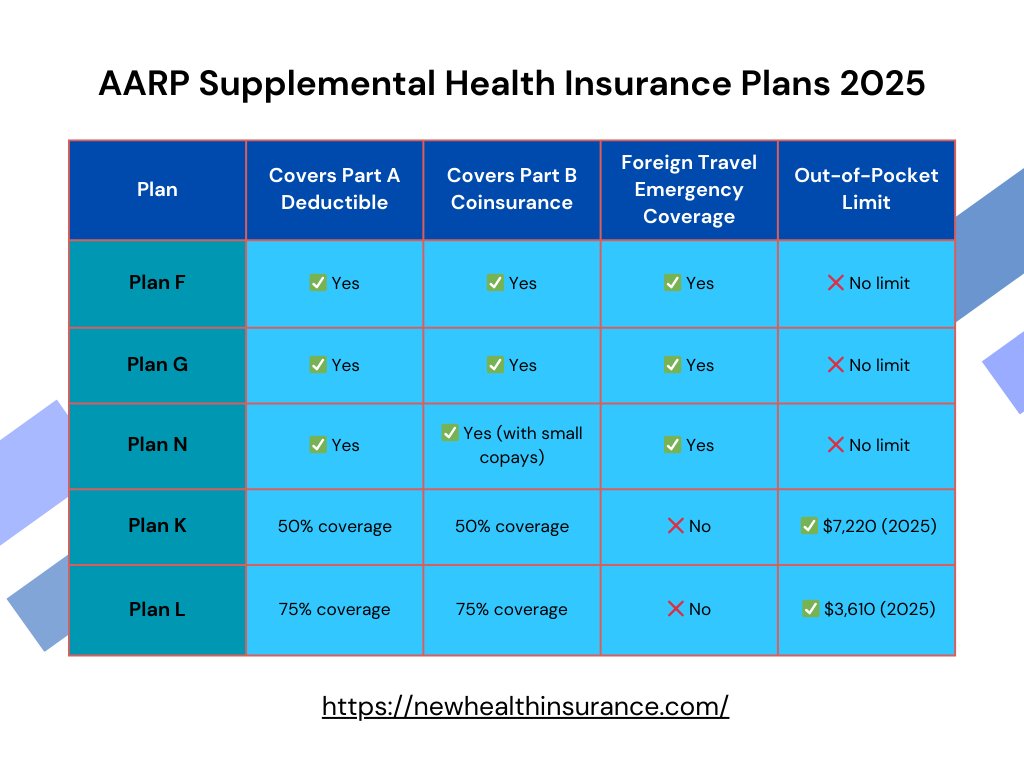
The various lettered plans (A, B, C, D, F, G, K, L, M, and N) represent different levels of coverage. Plan G, for instance, has become one of the most popular choices in 2026 because it covers most out-of-pocket costs associated with Medicare Part B, excluding the annual Part B deductible. Plan N is often chosen by those looking for a lower monthly premium in exchange for modest copayments at the doctor’s office or emergency room.
Comparison of Common Plan Features
The following table outlines how standard Medigap benefits typically distribute across common plan types. Note that availability can vary by state and individual eligibility.
| Benefit | Plan A | Plan B | Plan D | Plan G | Plan N |
|---|---|---|---|---|---|
| Part A Coinsurance & Hospital Costs | Yes | Yes | Yes | Yes | Yes |
| Part B Coinsurance or Copayment | Yes | Yes | Yes | Yes | Yes* |
| Blood (First 3 Pints) | Yes | Yes | Yes | Yes | Yes |
| Part A Hospice Care Coinsurance | Yes | Yes | Yes | Yes | Yes |
| Skilled Nursing Facility Coinsurance | No | No | Yes | Yes | Yes |
| Part A Deductible | No | Yes | Yes | Yes | Yes |
| Part B Excess Charges | No | No | No | Yes | No |
| Part B Deductible | No | No | No | No | No |
*Plan N requires copayments of up to $20 for some office visits and up to $50 for emergency room visits.
Eligibility and Enrollment Prerequisites
To be eligible for an AARP-endorsed Medicare Supplement plan through UnitedHealthcare, you must first be enrolled in Medicare Part A and Part B. These plans are intended to supplement Original Medicare; therefore, they cannot be used in conjunction with a Medicare Advantage (Part C) plan. If you are currently enrolled in a Medicare Advantage plan and wish to switch to a Supplement plan, you generally must disenroll from the Advantage plan first.
The Importance of the Initial Enrollment Period
The most advantageous time to enroll in a Medigap policy is during your Medigap Open Enrollment Period. This period lasts for six months and begins on the first day of the month in which you are both 65 years of age or older and enrolled in Medicare Part B.
During this window, you have a federal "guaranteed issue" right. This means that insurance companies cannot deny you coverage or charge you higher premiums due to pre-existing health conditions. Outside of this window, or without a specific qualifying life event that grants guaranteed issue rights, you may be subject to medical underwriting. During underwriting, the insurance company evaluates your health history to determine your eligibility and premium rates, which can lead to higher costs or a denial of coverage.
Costs and Financial Considerations
When analyzing the costs of AARP-endorsed UnitedHealthcare plans, it is important to look beyond just the monthly premium. While the premium is the fixed monthly cost for maintaining the policy, other factors impact your total annual health expenditure:
- Premium Rating Methods: Insurance companies use different methods to set premiums. "Community-rated" plans typically charge everyone the same premium regardless of age. "Issue-age-rated" premiums are based on your age when you first buy the policy. "Attained-age-rated" premiums start lower but increase as you grow older.
- Out-of-Pocket Obligations: Depending on the lettered plan you select, you may be responsible for deductibles or copayments. Choosing a plan with a higher premium, such as Plan G, often results in lower unpredictable expenses, whereas a lower-premium plan like Plan N involves more frequent, smaller costs.
- Inflation and Rate Adjustments: Premiums are subject to annual adjustments approved by state departments of insurance. These adjustments account for medical inflation, changes in healthcare utilization, and the demographics of the plan’s risk pool.
Strategic Benefits of AARP Endorsement
Beyond the financial coverage, plans endorsed by AARP often include features designed specifically for the needs of older adults. UnitedHealthcare frequently integrates value-added services such as health and wellness programs, access to fitness centers through programs like Renew Active, and customer service teams trained to assist members with navigating Medicare-related inquiries.
These programs are not technically part of the standardized Medigap coverage defined by the government, but they represent the added value provided by the specific partnership between AARP and UnitedHealthcare. Members are encouraged to review the current year’s summary of benefits to understand which specific wellness extras are included in their state.
Common Mistakes and How to Avoid Them
Navigating supplemental insurance is complex, and common errors can have long-term financial consequences.
- Confusing Medigap with Medicare Advantage: Perhaps the most frequent mistake is thinking that a Medicare Supplement plan is the same as a Medicare Advantage plan. They are mutually exclusive. A Medicare Advantage plan is an alternative to Original Medicare, while a Supplement plan is an add-on to Original Medicare.
- Missing the Open Enrollment Window: Delaying enrollment can lead to significant financial penalties or the inability to obtain coverage due to health status. If you are approaching age 65, it is advisable to begin researching plan options at least three months prior to your birth month.
- Focusing Only on Premiums: Choosing a plan solely based on the lowest monthly premium can be a mistake if the plan leaves you exposed to high out-of-pocket costs throughout the year. It is important to calculate the "total cost of care," including potential copayments and deductibles, before selecting a plan tier.
- Failure to Review Annual Changes: Medicare benefits and the premiums for supplemental plans can change annually. Even if you are satisfied with your current plan, reviewing the notice of change document provided by your insurer each fall ensures you are prepared for any adjustments in premiums or coverage terms.
Frequently Asked Questions
Does my AARP-endorsed Medigap plan cover prescription drugs?
No. Medicare Supplement plans do not cover prescription drugs. To obtain coverage for medications, you must enroll in a standalone Medicare Part D prescription drug plan. It is common for beneficiaries to combine a Medigap policy for medical services with a separate Part D plan for pharmacy needs.
Can I change my Medigap plan after my Open Enrollment Period?
Yes, but you may be subject to medical underwriting. Unlike Medicare Advantage plans, which have a specific Annual Enrollment Period, you can technically apply for a Medigap plan at any time. However, unless you have a guaranteed issue right—such as moving out of a service area or losing other coverage—the insurer can review your health history to decide if they will accept your application and what your premium will be.
Do I need a referral to see a specialist?
No. One of the primary advantages of Original Medicare supplemented by a Medigap plan is the freedom to choose your providers. As long as the specialist accepts Medicare, you can visit them without a referral. This is a significant distinction from many Medicare Advantage plans, which often utilize narrow networks and require referrals.
Will my premiums increase just because I use my benefits?
No. Insurance companies cannot raise your premiums based on your personal health usage or the number of claims you file. Premium increases generally occur at the policy level for all members in a specific age bracket or geographic region, or due to general inflation and regulatory adjustments.
What happens if I move to a different state?
If you move, you should contact UnitedHealthcare to update your address. While your Medigap plan is portable—meaning it works anywhere in the U.S. where Medicare is accepted—the premium structure for your plan may differ in your new state. In some cases, you may be eligible to switch plans if your new location requires it or offers better options.
Practical Next Steps for Interested Applicants
If you are considering an AARP-endorsed UnitedHealthcare Medicare Supplement plan, your first step should be to visit the official Medicare website to verify your current coverage status. Utilize the "Medicare Plan Finder" tool to understand the costs associated with your specific medical needs.
Next, request a personalized quote through the UnitedHealthcare/AARP insurance portal. During this process, ensure you have your Medicare card information ready. Review the "Outline of Coverage" provided for each plan level, as this document explicitly states what the policy covers and what costs remain your responsibility. If you have specific health conditions or are concerned about underwriting, reach out to a licensed insurance agent who specializes in Medicare to discuss your rights and ensure you are within a guaranteed issue period.
Disclaimer: This information is for educational purposes and does not constitute medical, legal, or financial advice. Insurance regulations and plan availability can change by jurisdiction. Always consult official documentation from the Centers for Medicare & Medicaid Services (CMS) or your state insurance department before making changes to your healthcare coverage.