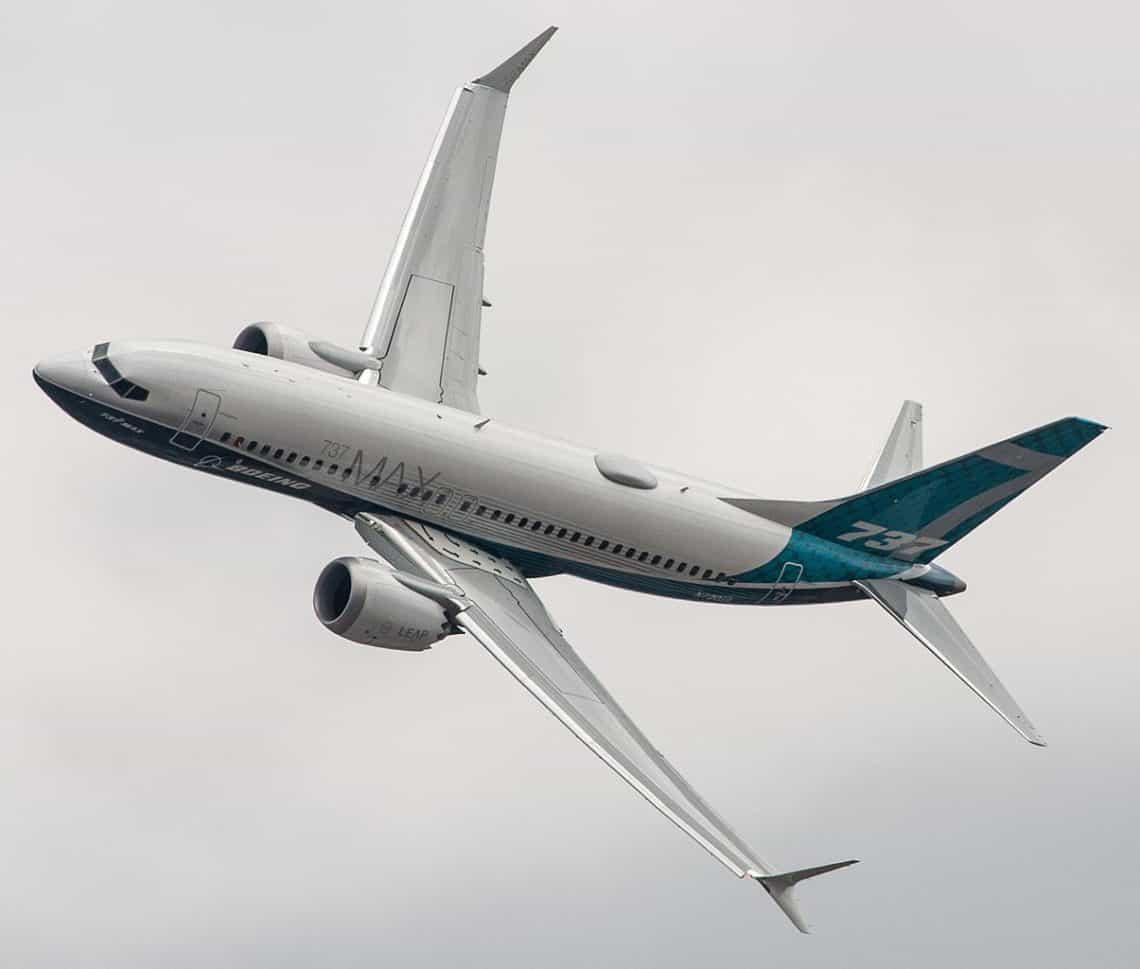
The Boeing 737 MAX series features a standardized wingspan of 117 feet 10 inches (35.92 meters) across all four primary variants: the MAX 7, MAX 8, MAX 9, and MAX 10. This uniform width is largely defined by the inclusion of Boeing’s Advanced Technology (AT) winglets and the necessity of remaining within ICAO Aerodrome Reference Code C constraints.
The 737 MAX represents the fourth generation of the world’s most prolific narrow-body aircraft family. While much of the public discourse surrounding this aircraft has focused on its flight control systems and engines, the wing design is a masterpiece of aerodynamic engineering. By 2026, the 737 MAX has become the backbone of short-to-medium haul aviation, and its wingspan plays a critical role in its operational efficiency and global reach. Understanding the 737 MAX wingspan requires looking beyond a simple measurement; it involves analyzing the "Advanced Technology" winglets, the structural changes required for the LEAP-1B engines, and the logistical constraints of global airport infrastructure.
The Standardized Wingspan Across Variants
Unlike the fuselage length, which varies significantly between the smallest MAX 7 and the stretched MAX 10, the wingspan remains constant across the entire family. Boeing designed the 737 MAX to utilize a single, optimized wing template to simplify manufacturing and ensure that every model in the lineup can operate from the same gates and taxiways.
The 117 feet 10 inches (35.92 meters) measurement includes the tip-to-tip distance, accounting for the unique dual-feather winglets. This is a slight increase from the previous generation, the 737 Next Generation (NG), which typically measured 112 feet 7 inches (34.3 meters) with blended winglets, or slightly more with retrofitted split scimitar winglets.
Why Uniformity Matters
By maintaining a consistent wingspan, Boeing ensures that airlines can swap different MAX models on the same routes without worrying about gate compatibility. For an airline like Southwest or Ryanair, which operates high-frequency point-to-point schedules, the ability to park a MAX 7 or a MAX 10 in the same physical space is a massive logistical advantage.
Advanced Technology (AT) Winglets: The Key Feature
The most visually striking aspect of the 737 MAX wing is the Advanced Technology (AT) Winglet. While it may look similar to the "Split Scimitar" winglets seen on many 737-800NG aircraft, the AT winglet is a distinct, factory-integrated component designed specifically for the MAX's aerodynamic profile.
Aerodynamic Function
The primary purpose of any winglet is to reduce induced drag. As a wing generates lift, high-pressure air from beneath the wing seeks to move to the low-pressure area above it, creating "wingtip vortices." These vortices act as a form of drag, pulling back on the aircraft and forcing the engines to work harder.
The AT winglet on the 737 MAX uses a dual-feather design. The upper part of the winglet provides traditional lift-induced drag reduction, while the lower "ventral" fin further optimizes the pressure distribution across the wingtip. Boeing claims this design provides a 1.5% to 1.8% fuel burn improvement over the older blended winglets found on the 737 NG series.
Laminar Flow Technology
The AT winglets utilize advanced natural laminar flow patterns. By carefully shaping the surfaces and using advanced coatings, Boeing engineers ensured that air remains in a smooth, layered (laminar) state for as long as possible before becoming turbulent. This precision is a major reason why the 737 MAX achieved significantly higher efficiency ratings upon its release and continues to be a leader in narrow-body fuel economy in 2026.
Airport Compatibility and ICAO Code C
One of the most rigid constraints in aircraft design is the International Civil Aviation Organization (ICAO) Aerodrome Reference Code. This coding system categorizes aircraft based on their wingspan and outer main gear wheel span to determine which taxiways and gates they can safely use.
The 737 MAX is firmly categorized as a Code C (Group III) aircraft. Code C encompasses aircraft with a wingspan between 24 meters (78.7 feet) and 36 meters (118.1 feet).
The 36-Meter Threshold
Boeing purposefully designed the MAX wingspan to sit at 35.92 meters—just 0.08 meters (about 3 inches) below the maximum limit for Code C. Had Boeing gone even slightly wider, the 737 MAX would have been bumped into Code D (Group IV), which includes much larger aircraft like the Boeing 767.
If the 737 MAX were a Code D aircraft, it would be banned from thousands of smaller gates and narrow taxiways at major hubs like London Heathrow, Chicago O'Hare, and Tokyo Haneda. This would have destroyed the aircraft’s value proposition for low-cost carriers that rely on quick turnarounds at congested airports.
Structural Reinforcements and Engine Integration
While the wingspan is a headline figure, the internal structure of the 737 MAX wing underwent significant changes compared to the 737 NG. These changes were necessitated by the move to the CFM International LEAP-1B engines.
Larger Engines, New Placement
The LEAP-1B engines have a significantly larger fan diameter (69 inches) compared to the CFM56-7B engines (61 inches) on the NG. To maintain ground clearance, Boeing had to move the engines further forward and slightly higher on the wing.
This change in engine placement shifted the center of gravity and the torsional loads on the wing. Consequently, the internal wing box—the structural heart of the wing where it connects to the fuselage—was reinforced with thicker skins and stronger alloys. Despite these reinforcements, the external dimensions, specifically the wingspan, remained locked at the 117' 10" specification.
Comparison of 737 Generations
| Feature | 737 Classic (300/400/500) | 737 Next Gen (600/700/800/900) | 737 MAX (7/8/9/10) |
|---|---|---|---|
| Standard Wingspan | 94 ft 9 in (28.88 m) | 112 ft 7 in (34.3 m) | 117 ft 10 in (35.92 m) |
| Winglet Type | None (Standard) | Blended or Split Scimitar | Advanced Technology (AT) |
| ICAO Code | Code C | Code C | Code C |
| Fuel Efficiency | Baseline | +14% over Classic | +14-20% over NG |
| Main Material | Aluminum Alloys | Advanced Aluminum | Aluminum & Composites |
Performance Impacts of the Wingspan
The specific width of the 737 MAX wing, combined with its high-aspect-ratio design, directly influences the aircraft’s flight envelope.
Takeoff and Landing Performance
The 737 MAX's wing provides excellent lift-to-drag ratios during the climb phase. Because the wingspan is maximized for its category, the aircraft can operate out of "hot and high" airports (like Denver or Mexico City) more effectively than older narrow-body jets. The wing generates sufficient lift to allow for lower takeoff speeds, which reduces wear on the tires and brakes.
Payload and Range
The lift generated by the 35.92-meter span allows the MAX 8 to carry a maximum takeoff weight (MTOW) of roughly 181,000 lbs (82,190 kg). This lifting capacity is what enables the 737 MAX to perform "long-thin" routes—flights that cover long distances (up to 3,500 nautical miles) with a relatively small number of passengers—such as transatlantic flights from the US East Coast to Western Europe.
Comparison with the Airbus A320neo
The primary competitor to the 737 MAX is the Airbus A320neo family. The wingspan comparison between these two is a focal point for airline procurement teams.
The A320neo has a wingspan of 117 feet 5 inches (35.80 meters) when equipped with "Sharklets" (Airbus’s version of winglets). This makes the 737 MAX slightly wider by exactly 5 inches. Both aircraft are designed to the same 36-meter Code C limit, highlighting how both Boeing and Airbus have pushed the boundaries of narrow-body wing design to the absolute physical limit allowed by airport infrastructure.
Maintenance and Operational Considerations
Maintaining a wing of this complexity requires specialized procedures. As of 2026, fleet managers have developed robust protocols for the 737 MAX wing.
- Winglet Sensitivity: The AT winglets are made of lightweight composite materials. While they are durable in flight, they are susceptible to "ground rash" (collisions with catering trucks or fuel ladders). Because the winglets extend both above and below the wing tip, ground crews must be extra cautious compared to the older "top-only" blended winglets.
- Ice Protection: The 737 MAX continues to use engine bleed air for wing thermal anti-ice (WTAI). The spanwise distribution of this heat is critical for maintaining the aerodynamic profile in icing conditions.
- Inspection Cycles: The increased weight of the LEAP-1B engines means that the wing-to-fuselage attachment points are subject to more rigorous ultrasonic inspections during heavy maintenance checks (C-checks and D-checks) than previous 737 generations.
Future of the 737 MAX Wing
While the 737 MAX wingspan is fixed for the current production models, there has been industry speculation regarding further enhancements. However, any increase in wingspan would require folding wingtip technology (similar to the Boeing 777X) to remain within Code C gates. As of 2026, Boeing has not officially moved toward a folding-wing narrow-body, as the current AT winglet design continues to meet the efficiency targets required by the global market.
Frequently Asked Questions
Does the 737 MAX 10 have a wider wingspan than the MAX 8?
No. All variants of the 737 MAX (7, 8, 9, and 10) share the exact same wingspan of 117 feet 10 inches. The difference between the models lies in the length of the fuselage and the landing gear configuration, not the width of the wings.
Why does the 737 MAX have "split" winglets?
The "Advanced Technology" winglets are split into upper and lower sections to maximize the effective span of the wing without actually making the wing longer. This design spreads the aerodynamic load more efficiently and significantly reduces induced drag, which saves fuel.
Can the 737 MAX fit in the same gates as the 737-800?
Yes. Both the 737-800 (NG) and the 737 MAX are ICAO Code C aircraft. While the MAX is slightly wider, it remains under the 36-meter limit, allowing it to use the same gate infrastructure as its predecessor.
What is the 737 MAX wingspan in meters?
The 737 MAX wingspan is 35.92 meters.
How does the 737 MAX wingspan affect its fuel economy?
The wingspan, specifically the AT winglets at the tips, reduces the energy lost in wingtip vortices. This allows the aircraft to cruise more efficiently, contributing to the overall 14-20% improvement in fuel efficiency compared to the 737 Next Generation models.
Practical Recommendation for Operators
For airlines transitioning to the 737 MAX in 2026, it is essential to update ground handling safety protocols specifically for the lower ventral fin of the AT winglet. Because this component sits lower than traditional winglets, it is at a higher risk for contact with ground support equipment. Ensuring that "no-go" zones are clearly marked for ground crews can prevent costly composite repairs and aircraft AOG (Aircraft on Ground) time.