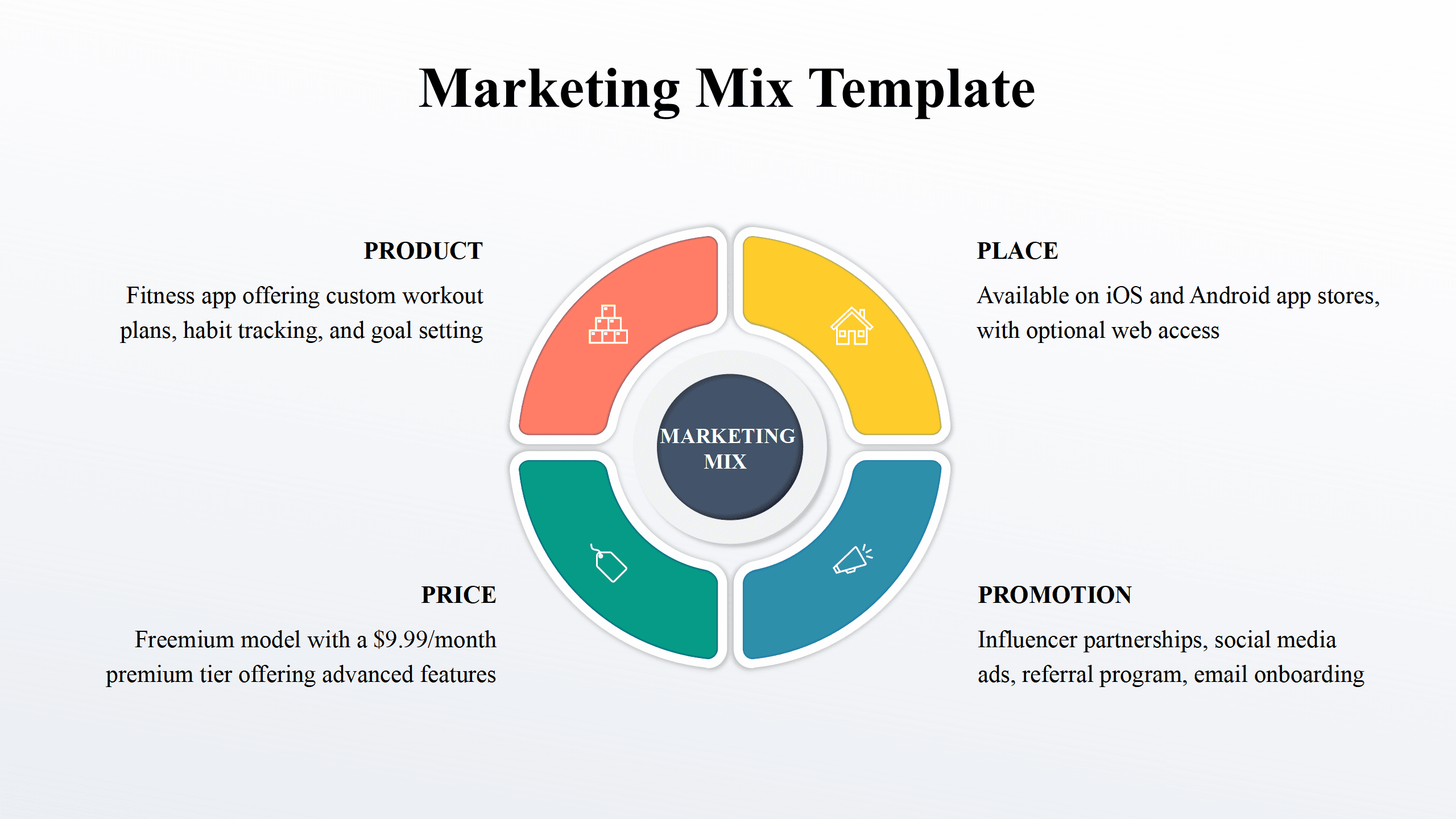
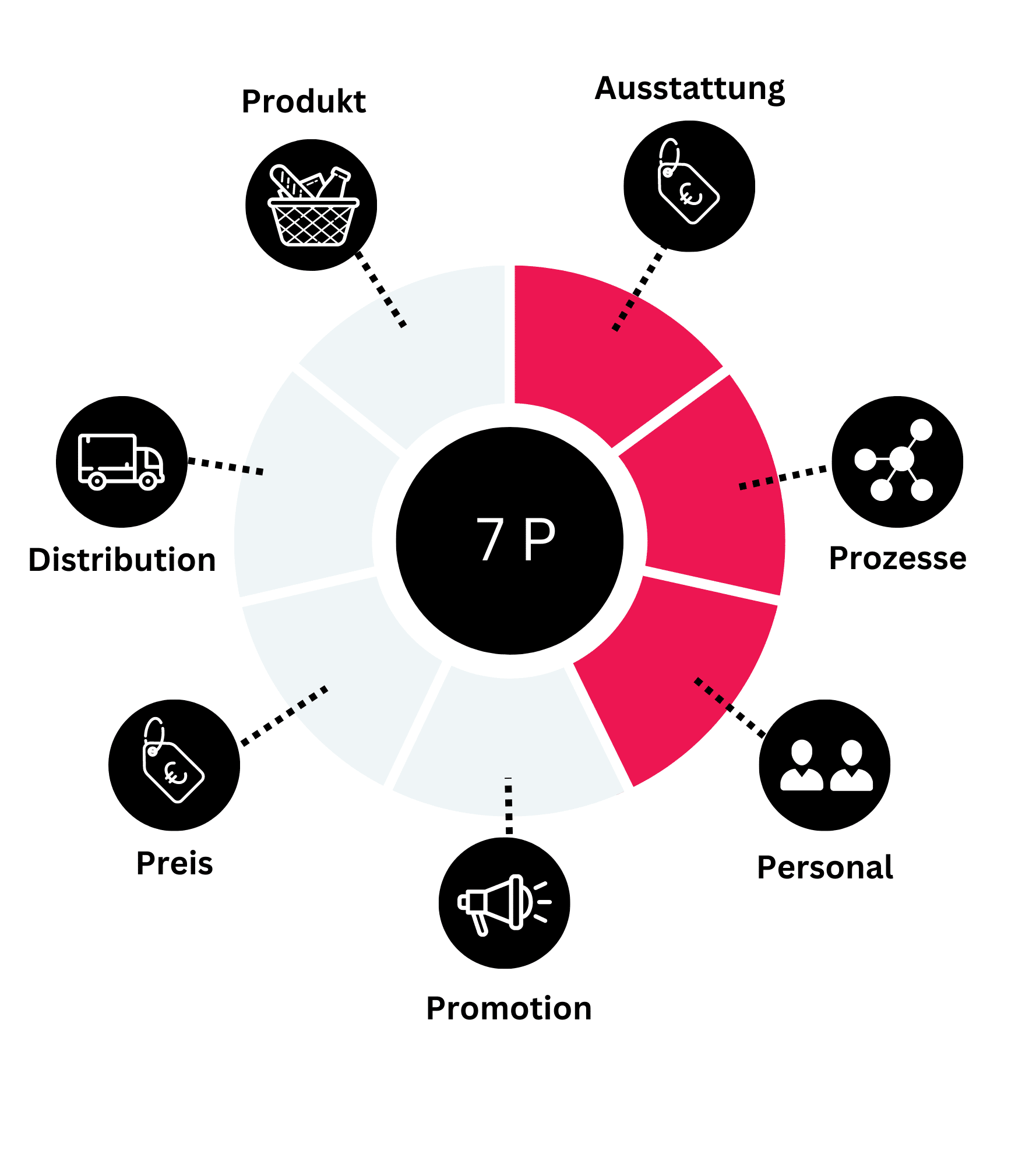
The modern marketing mix, commonly referred to as the 7Ps, consists of Product, Price, Place, Promotion, People, Process, and Physical Evidence. This framework expands the traditional 4Ps to account for the complexities of a service-oriented, digital-first economy, allowing businesses to create cohesive strategies that prioritize customer experience, operational efficiency, and brand trust.
For decades, the "4Ps" served as the bedrock of marketing theory. However, as the global economy shifted toward services, software, and highly personalized digital interactions, the original model proved insufficient. In 2026, successful market penetration requires a more holistic view. By integrating the additional three elements—People, Process, and Physical Evidence—organizations can address the human and operational factors that define modern brand loyalty.
1. Product: The Core Solution and Value Proposition
In the 2026 landscape, a "product" is rarely just a physical item on a shelf. It encompasses everything from tangible goods and digital downloads to ongoing software services and experiential offerings. The modern definition of a product focuses on the solution it provides to a specific customer pain point.
To excel in this element, businesses must look beyond features and focus on the "Jobs to be Done" framework. A product's success is now measured by its utility, usability, and the emotional resonance it holds for the user. In the age of hyper-personalization, products are often modular or customizable, allowing users to tailor the experience to their specific needs.
Prerequisites for Product Development:
- Deep Market Research: Utilizing AI-driven sentiment analysis to understand evolving consumer needs.
- Iterative Design: Adopting agile methodologies to update digital products based on real-time user data.
- Sustainability Integration: In 2026, environmental impact is a core product feature, not an afterthought.
Common mistakes in this area include "feature creep," where adding too many functions dilutes the core value proposition, and failing to account for the product's lifecycle. A modern product strategy must include a roadmap for updates, support, and eventual sunsetting or recycling.
2. Price: Strategic Value Exchange and Dynamic Models
Price is the only element of the marketing mix that generates revenue; the others represent costs. However, pricing in 2026 is no longer a static "cost-plus" calculation. It has evolved into a sophisticated lever for brand positioning and market share acquisition.
Modern pricing strategies often utilize dynamic pricing algorithms that adjust based on demand, competitor activity, and even individual user behavior. Furthermore, the rise of the subscription economy has shifted the focus from transactional sales to Customer Lifetime Value (CLV).
Key Pricing Strategies in 2026:
- Value-Based Pricing: Setting prices based on the perceived value to the customer rather than the cost of production.
- Freemium Models: Offering a basic version for free while charging for advanced features, common in SaaS industries.
- Tiered Subscription Pricing: Providing multiple entry points to accommodate different budget levels and usage needs.
The psychological impact of pricing cannot be overstated. A price point acts as a signal of quality. Underpricing can lead to a perception of low quality, while overpricing without sufficient "Physical Evidence" (see Element 7) leads to high churn rates. Transparency remains a critical factor in 2026; consumers are increasingly wary of hidden fees and "dark patterns" in digital checkout processes.
3. Place: Omnichannel Accessibility and Distribution
"Place" refers to where and how a customer purchases and consumes a product. In 2026, the distinction between physical and digital storefronts has nearly vanished, replaced by a "phygital" reality. A customer might discover a product on social media, research it via a voice-activated assistant, and eventually purchase it through an automated kiosk or a traditional retail store.
To optimize the "Place" element, brands must ensure omnichannel consistency. This means the inventory, pricing, and brand voice must be synchronized across all touchpoints. The goal is to reduce friction in the path to purchase, making it as easy as possible for the customer to buy whenever and wherever they choose.
Critical Components of Modern Distribution:
- Direct-to-Consumer (DTC) Channels: Allowing brands to own the customer data and maintain higher margins.
- Third-Party Marketplaces: Leveraging platforms like Amazon or specialized industry hubs for wider reach.
- Localized Logistics: Using micro-fulfillment centers to meet the 2026 expectation of near-instant delivery.
The logistical "Process" (Element 6) heavily influences "Place." If a product is technically "available" but takes two weeks to ship in an era of same-day expectations, the "Place" strategy has failed.
4. Promotion: Engagement, Content, and Community
Promotion has shifted from a one-way broadcast to a multi-dimensional conversation. While traditional advertising still exists, the modern marketing mix emphasizes content marketing, social proof, and community engagement.
In 2026, hyper-targeted communication is the standard. Brands use data analytics to ensure that the right message reaches the right person at the optimal time. This is no longer just about "selling" but about "serving." Educational content, interactive webinars, and influencer collaborations are used to build trust long before a sale is attempted.
Modern Promotional Tactics:
- Influencer and Affiliate Marketing: Utilizing trusted voices to provide authentic recommendations.
- Search Engine Optimization (SEO): Ensuring visibility when customers are actively looking for solutions.
- Social Commerce: Integrating shopping capabilities directly into social media platforms.
A common pitfall is over-reliance on a single channel. A robust promotion strategy must be diversified to protect against algorithm changes on major platforms. Furthermore, with the 2026 emphasis on data privacy, "permission-based marketing" is essential. Brands must earn the right to communicate with their audience by providing consistent value.
5. People: The Human Element of the Brand
The "People" element includes everyone involved in the delivery of the product or service—from the front-line customer service agents to the software engineers and the CEO. In a service-led economy, the people represent the brand. A single poor interaction with a staff member can negate millions of dollars spent on "Promotion."
Training and company culture are the backbones of this element. When employees are engaged and empowered, they provide better customer experiences. In 2026, the definition of "People" also extends to brand advocates and the community surrounding a product.
Requirements for the 'People' Element:
- Consistent Training: Ensuring all staff understand the brand values and the "Process" (Element 6).
- Soft Skills Mastery: Empathy and problem-solving are more valuable than ever as AI handles routine queries.
- Employee Advocacy: Encouraging staff to share their expertise and passion on professional networks.
Businesses that neglect this element often suffer from high turnover and inconsistent service quality. In the digital space, "People" also includes the support teams reachable via chat or video, where a human touch remains a significant competitive advantage over purely automated systems.
6. Process: Efficiency and Customer Journey Flow
Process refers to the systems and procedures that deliver the product or service to the customer. It is the "behind-the-scenes" work that ensures a seamless experience. A flawed process—such as a complicated checkout screen, a slow website, or a confusing return policy—will drive customers away regardless of how good the "Product" is.
In 2026, process optimization is driven by automation and AI. The goal is to remove every possible point of friction. Customer Journey Mapping is a vital tool here, helping brands visualize every step a customer takes and identifying where they might get frustrated or drop off.
Key Aspects of Process Optimization:
- Onboarding: How quickly can a new user find value in the product?
- Service Delivery: Is the service performed consistently every time?
- Feedback Loops: How does the company collect and act on customer complaints or suggestions?
A robust process ensures scalability. If a company's promotional efforts are successful and lead to a surge in orders, the process must be strong enough to handle the volume without a dip in quality. Standard Operating Procedures (SOPs) are not just for internal use; they are the blueprint for the customer’s experience.
7. Physical Evidence: Reassurance in a Digital World
Physical Evidence provides the cues that help customers evaluate a product before they buy it and reassure them after the purchase. In the traditional sense, this meant the layout of a retail store or the quality of a business card. In 2026, physical evidence has largely moved into the digital and psychological realm.
For a digital service, physical evidence includes the user interface (UI) design, the speed of the website, and the presence of "trust signals" like security badges or verified reviews. For a physical product, it includes the unboxing experience and the tactile quality of the packaging.
Types of Physical Evidence:
- User Interface (UI) and Experience (UX): A clean, professional app design signals a high-quality product.
- Case Studies and Testimonials: Documented success stories serve as evidence of the product's efficacy.
- Branding Consistency: Consistent logos, fonts, and colors across all platforms create a sense of stability and professionalism.
Without physical evidence, customers feel a sense of risk. This is particularly true for high-priced services where the "Product" is intangible. Providing "tangible" markers—such as detailed reports, digital certificates, or even high-quality video demonstrations—helps bridge the gap between promise and delivery.
Comparing Traditional vs. Modern Marketing Mix Elements
The following table highlights the evolution of these elements into the 2026 business environment.
| Element | Traditional Focus (4Ps) | Modern Focus (7Ps / 2026) | Primary Goal |
|---|---|---|---|
| Product | Tangible features and functions. | Solutions, UX, and sustainability. | Solving customer problems. |
| Price | Standard retail pricing. | Dynamic, value-based, and subscription models. | Maximizing lifetime value. |
| Place | Physical store locations. | Omnichannel, digital, and localized delivery. | Frictionless accessibility. |
| Promotion | Mass media advertising (TV/Print). | Personalization, community, and social proof. | Building trust and engagement. |
| People | Sales staff and management. | Brand advocates, culture, and empathy. | Delivering consistent brand humanism. |
| Process | Manufacturing and logistics. | Automation, UX flow, and feedback loops. | Operational excellence. |
| Physical Evidence | Storefronts and packaging. | Digital interfaces, reviews, and unboxing. | Reducing perceived purchase risk. |
Strategic Implementation: Integrating the 7Ps
The 7Ps are not isolated silos; they are interconnected gears. A change in one element inevitably affects the others. For example, if you increase your Price, your People must provide a higher level of service, and your Physical Evidence must look more premium to justify the cost.
To implement this mix successfully in 2026, businesses should start with a comprehensive audit of their current standing in each category.
- Identify the Weakest Link: Most businesses excel at two or three Ps but neglect the others. Often, "Process" or "People" are the hidden culprits behind stagnant growth.
- Align with Brand Identity: Every element must reflect the core brand promise. A discount brand (Price) should have an efficient, no-frills "Process."
- Monitor and Adapt: The marketing mix is a living document. Use 2026 analytics tools to monitor how changes in "Promotion" affect "Product" feedback.
The most successful brands are those that create a seamless loop between these elements. When the Process is smooth, the People are happy; when the People are happy, the Promotion becomes more authentic; when the Promotion is authentic, the perceived value of the Product increases.
Frequently Asked Questions
What is the main difference between the 4Ps and the 7Ps?
The 4Ps (Product, Price, Place, Promotion) focus primarily on the marketing of tangible goods. The 7Ps add People, Process, and Physical Evidence to address the unique challenges of the service industry and the digital economy. While the 4Ps focus on the transaction, the 7Ps focus on the entire customer experience and relationship.
Which of the 7Ps is most important for a startup in 2026?
While all are essential, "Product" and "Process" are often the most critical for startups. A startup must first solve a real problem (Product) and then ensure they can deliver that solution reliably as they scale (Process). However, "Price" is often the most immediate lever for survival and market positioning.
How does AI affect the modern marketing mix?
AI impacts every element of the mix in 2026. It drives "Product" innovation through data insights, enables "Price" optimization via dynamic algorithms, automates "Promotion" through personalized content, and streamlines "Process" via chatbots and automated workflows. AI helps marketers move from broad generalizations to individual-level precision.
Can the 7Ps be applied to B2B marketing?
Absolutely. In fact, the 7Ps are often more relevant in B2B (Business-to-Business) because the sales cycles are longer and involve more human interaction. "People" (the sales and support teams) and "Process" (the onboarding and implementation) are frequently the deciding factors in B2B contract renewals.
How does "Physical Evidence" work for a completely digital product?
For digital products, physical evidence includes things like the design quality of the website, the speed of the interface, SSL certificates for security, the presence of well-known logos of existing clients, and the clarity of the documentation. It is anything "visible" that proves the service is real, reliable, and high-quality.
Practical Recommendation for 2026
To stay competitive, conduct a Quarterly 7P Audit. Assign a lead for each element to report on its current performance and alignment with the overall business strategy. In the 2026 economy, the fastest-growing companies are not necessarily those with the best "Product" alone, but those that offer the most frictionless "Process" and the most trustworthy "People." Focus your immediate efforts on reducing friction in your customer journey and ensuring your digital "Physical Evidence" (reviews and UI) accurately reflects the value you provide.