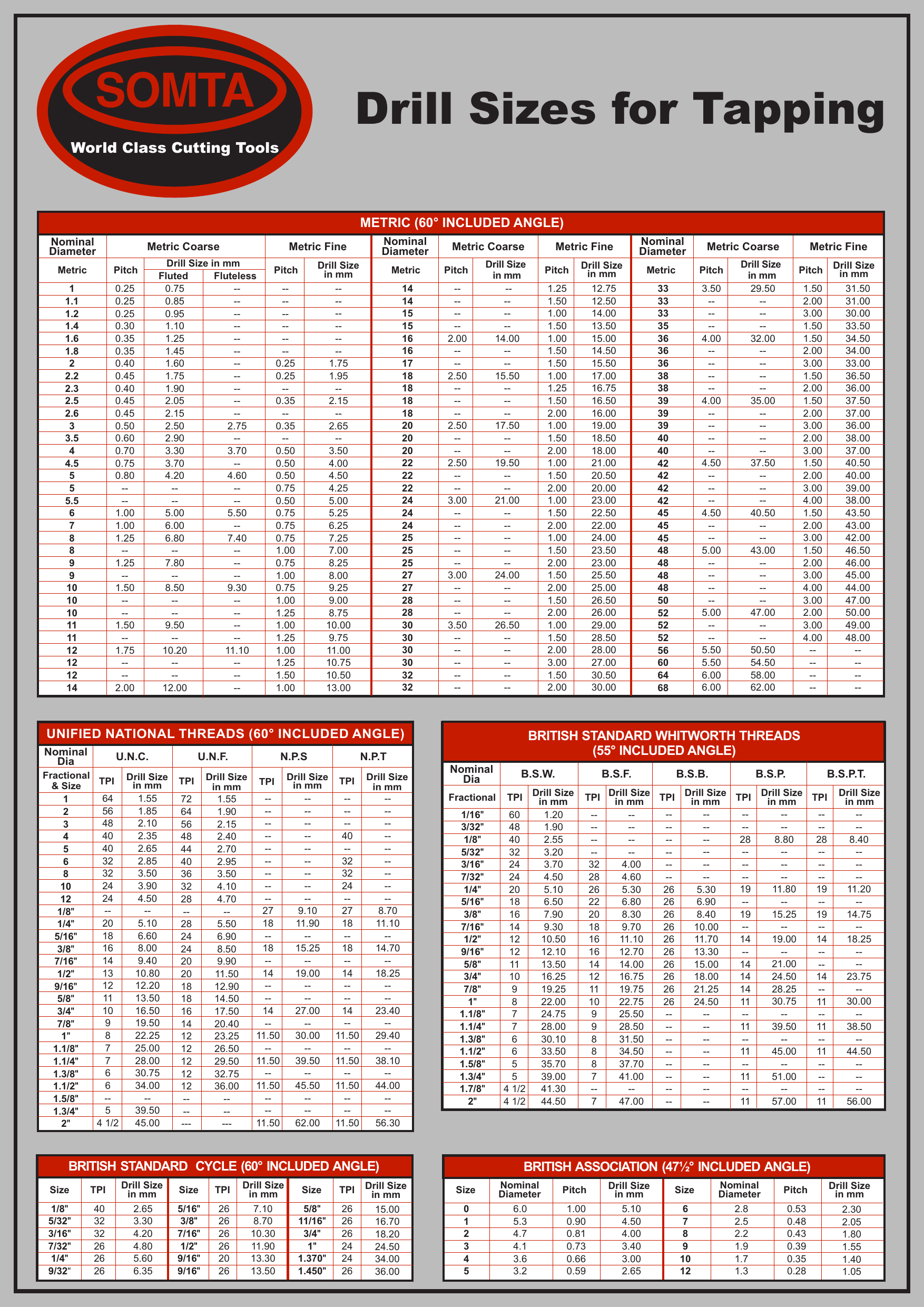
To create a 6-32 internal thread, the standard drill bit size required is a #36 high-speed steel drill bit, which has a decimal diameter of 0.1065 inches. This combination provides a 75% thread depth, which is the industry standard for most structural and mechanical applications in aluminum, brass, and mild steel.
The 6-32 screw is one of the most ubiquitous fasteners in North American manufacturing, electrical work, and consumer electronics. As of 2026, it remains a cornerstone of the Unified Thread Standard (UTS), specifically within the Unified National Coarse (UNC) series. Understanding the precise dimensions, drilling requirements, and material behaviors associated with this tap size is essential for ensuring mechanical integrity and avoiding the common pitfall of tool breakage.
The Anatomy of the 6-32 Fastener Designation
To understand the 6-32 tap size, one must first deconstruct the nomenclature used in the Unified Thread Standard. The designation consists of two primary numbers: the nominal size and the thread density.
The Major Diameter (#6)
In the American system, machine screws smaller than 1/4 inch are designated by a number (0 through 12). The number 6 does not directly represent a fraction of an inch. Instead, it follows a specific mathematical formula:
Diameter = (Screw Number × 0.013") + 0.060"
For a #6 screw, the calculation is (6 × 0.013) + 0.060, resulting in a major diameter of 0.1380 inches (approximately 3.505 mm). This is the measurement across the widest part of the thread.
Threads Per Inch (32)
The second number, 32, indicates the number of threads per inch (TPI). This defines the "pitch" of the screw, which is the distance from the crest of one thread to the next. For a 6-32 tap, the pitch is 1 divided by 32, or 0.03125 inches. Because 32 TPI is relatively low for this diameter compared to the Fine (UNF) alternative—which is 6-40—the 6-32 is classified as a "Coarse" thread.
Essential 6-32 Technical Specifications
Precision machining requires moving beyond nominal sizes into decimal and metric equivalents. Whether you are programming a CNC machine or using a manual tap handle in 2026, these dimensions are the bedrock of a successful assembly.
| Feature | Decimal (Inches) | Metric (Millimeters) |
|---|---|---|
| Major Diameter | 0.1380" | 3.505 mm |
| Minor Diameter (approx.) | 0.0997" | 2.532 mm |
| Pitch (1/TPI) | 0.03125" | 0.794 mm |
| Tap Drill (75% Thread) | 0.1065" (#36) | 2.705 mm |
| Tap Drill (50% Thread) | 0.1130" (#33) | 2.870 mm |
| Close Fit Clearance Hole | 0.1440" (#27) | 3.658 mm |
| Free Fit Clearance Hole | 0.1495" (#25) | 3.797 mm |
The minor diameter is particularly important because it represents the size of the hole after the threads have been cut. If your drill bit is smaller than the minor diameter, the tap will seize and likely snap.
Selecting the Correct Tap Drill Size
Choosing a drill bit for a 6-32 tap is not as simple as picking the "nearest" size. The relationship between the hole diameter and the tap diameter determines the "percentage of thread."
The 75% Thread Rule
In most engineering contexts, a 75% thread is the goal. This provides an optimal balance between the strength of the thread and the ease of tapping. Using a #36 drill (0.1065") achieves this. If you are working with very hard materials, such as stainless steel or titanium, you might opt for a slightly larger drill bit, like a 7/64" (0.1094"), to reduce the torque required by the tap, resulting in a thread depth of approximately 65-70%.
Fractional Alternatives
If a numbered drill set is unavailable, enthusiasts often reach for fractional bits.
- 7/64" (0.1094"): This is a common substitute. It is slightly larger than a #36, making the tapping process easier while still providing enough thread engagement for non-critical applications.
- 3/32" (0.0938"): This is too small. Attempting to use a 6-32 tap in a hole drilled to 3/32" will almost certainly result in a broken tap, especially in steel or hard aluminum.
Types of 6-32 Taps and Their Specific Uses
Not all taps are created equal. The geometry of the tap determines how it handles "chips" (the waste material removed during cutting) and how deep it can thread a hole.
Taper Taps
A taper tap has a significant chamfer at the tip, usually spanning 7 to 10 threads. This makes it the easiest tap to start in a hole because it aligns itself gradually. It is the preferred choice for beginners or for starting threads that will be finished by another tap.
Plug Taps
The plug tap is the most common variety found in 6-32 sets. It has a shorter chamfer of 3 to 5 threads. It can start a hole reasonably well and can thread closer to the bottom of a "blind hole" (a hole that doesn't go all the way through) than a taper tap can.
Bottoming Taps
A bottoming tap has almost no chamfer (only 1 to 1.5 threads). It cannot start a thread easily on its own. Its purpose is to follow a taper or plug tap to create threads all the way to the very bottom of a hole. This is critical in thin enclosures where every millimeter of thread engagement counts.
Spiral Point (Gun) Taps
These are designed for machine tapping. The tip is ground at an angle to push chips forward, out the other side of a through-hole. For 6-32 applications in 2026 automated manufacturing, these are preferred because they prevent chip "nesting" which can cause tool failure.
6-32 Application Standards in 2026
The 6-32 size occupies specific niches in various industries. Despite the global move toward metrication, several industries remain firmly committed to this size due to legacy standards and existing infrastructure.
Electrical and Home Construction
In the United States and Canada, the 6-32 screw is the standard for mounting electrical devices. Light switches, duplex outlets, and the cover plates that protect them almost exclusively use 6-32 threads. When an electrical box's threads are stripped, a 6-32 "re-threading" tap is the standard tool used by electricians to restore the junction.
Computer Hardware and Electronics
The 6-32 size is famous in the PC building community. It is the standard fastener for:
- Power Supply Units (PSU): Securing the PSU to the computer chassis.
- 3.5-inch Hard Drives: The mounting holes on the sides and bottom of traditional HDDs.
- Case Panels: Most desktop tower thumb-screws are 6-32.
It is important to note the distinction between 6-32 and M3 (metric). Motherboards and 2.5-inch SSDs typically use M3 screws. Forcing a 6-32 screw into an M3 standoff—or vice versa—will destroy the threads.
Aerospace and Defense
While many aerospace components have moved to the 6-40 (UNF) for its higher vibration resistance, the 6-32 is still found in non-critical bracketry and internal avionics housing where the speed of assembly (fewer turns to seat the screw) is a minor advantage.
Best Practices for Tapping 6-32 Threads
Because a 6-32 tap is relatively thin, it is prone to snapping if handled incorrectly. A broken tap is notoriously difficult to remove, often requiring specialized "tap extractors" or EDM (Electrical Discharge Machining) services.
Lubrication (Cutting Fluid)
Never tap dry. Lubrication reduces friction and helps suspend chips.
- Aluminum: Use kerosene, specialized aluminum cutting fluid (like A9), or even WD-40.
- Steel: Use a high-quality sulfur-based cutting oil.
- Plastic: Usually tapped dry, though a drop of water or light oil can prevent the plastic from melting due to friction.
The "Back-Turn" Technique
When tapping manually, the most important rule is to break the chips. Turn the tap handle clockwise (for right-hand threads) about half a turn to one full turn until you feel resistance. Then, rotate it counter-clockwise about a quarter turn. You will hear or feel a "click"—this is the chip breaking off. This prevents the flutes of the tap from becoming clogged.
Alignment and Squareness
The 6-32 tap must enter the hole perfectly perpendicular to the surface. If the tap is tilted, it will create "drunken threads" that are weak and may cause the screw to cross-thread. Using a tap guide or a drill press (rotating the chuck by hand) can ensure the tap stays square.
Troubleshooting Common 6-32 Issues
Why did my tap break?
The most common cause of 6-32 tap breakage is "chip packing." Because the 32 TPI thread is coarse, it removes a significant amount of material relative to the tap's core diameter. If those chips aren't cleared, they jam the tap. Another common cause is "bottoming out"—hitting the bottom of a blind hole and continuing to apply torque.
The screw is loose in the hole
If the screw feels "wobbly" after tapping, you may have used a drill bit that was too large (e.g., a #30 instead of a #36). Alternatively, if you "walloped" the tap (moved it side-to-side while tapping), you may have oversized the hole. This significantly reduces the pull-out strength of the fastener.
What if the hole is stripped?
If a 6-32 hole in a piece of equipment is stripped, you have three primary options:
- Drill and Tap to 8-32: Move up to the next standard size.
- Helicoil/Thread Insert: Use a 6-32 thread repair kit, which involves drilling a larger hole, tapping it with a special STI (Screw Thread Insert) tap, and inserting a stainless steel wire coil.
- Epoxy/Filler: For non-structural applications in wood or plastic, filling the hole and re-drilling is an option, though less reliable for metal.
Frequently Asked Questions
What is the metric equivalent of a 6-32 tap?
There is no exact metric equivalent for 6-32. The closest metric size is M3.5 x 0.6, which has a major diameter of 3.5 mm (nearly identical to the #6's 3.505 mm). However, the thread pitches are different (0.6 mm vs. 0.794 mm), meaning they are not interchangeable. In the PC world, people often confuse 6-32 with M3, but M3 is significantly smaller (3 mm diameter).
Can I use a 6-32 die on a 1/8" rod?
A 1/8" (0.125") rod is slightly smaller than the 0.138" major diameter of a #6 screw. While you can technically cut threads onto it, the resulting threads will be "flat-topped" and weak. For a full-strength 6-32 thread, you should start with a rod that is exactly 0.138" or use a #6 gauge wire.
Is 6-32 the same as 6-40?
No. While both are #6 screws with a 0.138" diameter, 6-32 is the Coarse (UNC) version and 6-40 is the Fine (UNF) version. They require different drill bits and different taps. A 6-40 screw will not fit into a 6-32 hole.
Which drill bit should I use for a 6-32 clearance hole?
If you want the 6-32 screw to pass through a hole without threading into it, use a #27 drill (0.1440") for a close fit or a #25 drill (0.1495") for a free/loose fit. If you only have fractional bits, 5/32" is a common choice for a loose clearance hole.
Why is 6-32 used for electrical boxes instead of 8-32?
The 6-32 size provides sufficient strength for holding switches and outlets in place while remaining small enough to allow for fine adjustments within the mounting "ears" of the device. The 32 TPI count allows for a decent amount of travel per turn, making installation faster than it would be with a finer thread.
Final Recommendations for 2026 Projects
When working with 6-32 threads in 2026, precision remains the highest priority. Always verify your drill bit with a caliper before starting, as many bits in older kits may be mislabeled or worn. For high-volume work, invest in TiN (Titanium Nitride) coated taps, which offer superior heat resistance and a longer lifespan. If you are working on a PC or delicate electronic assembly, always keep a small dedicated 6-32 and M3 tap set on hand to clean out powder coating or debris from manufacturing, ensuring a smooth and professional fit every time.