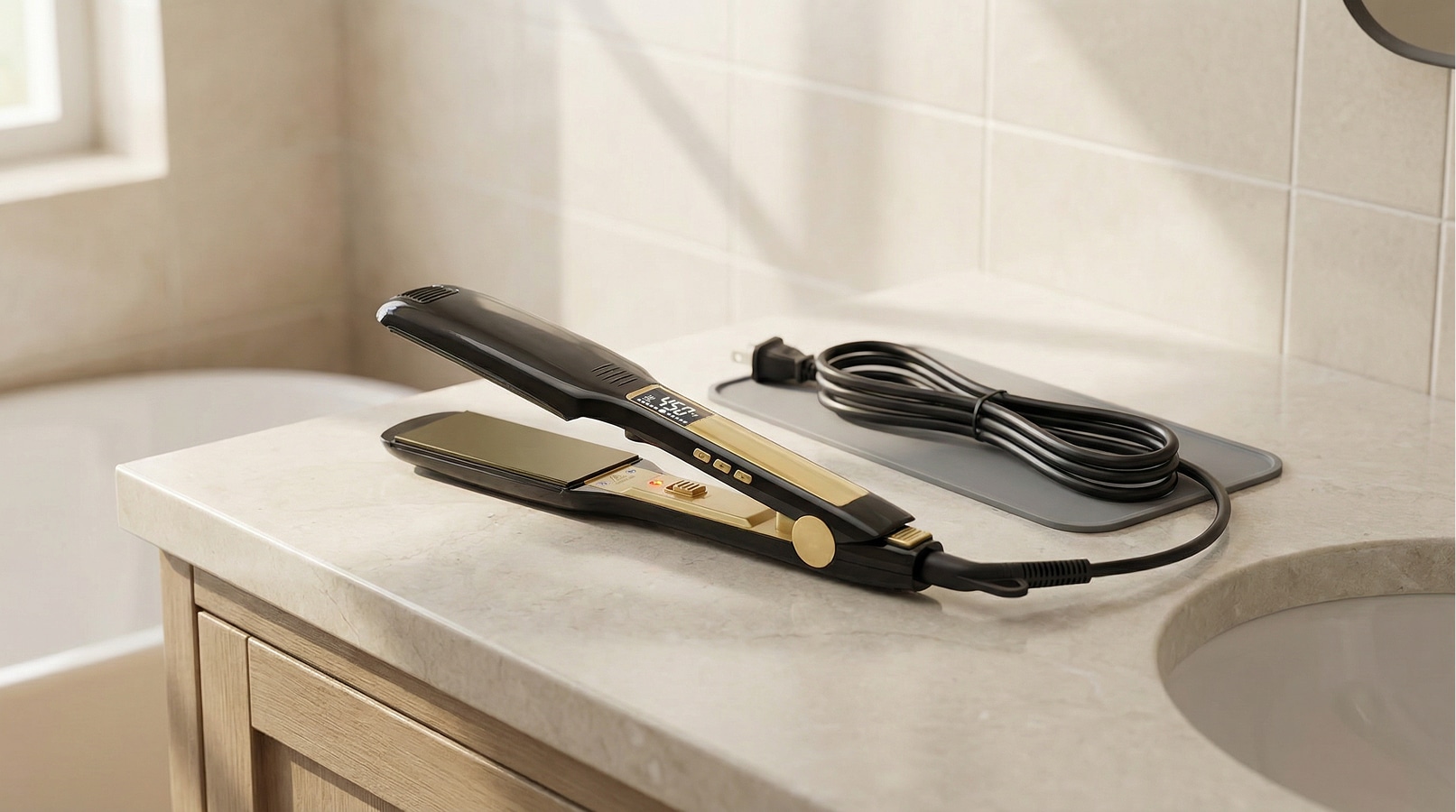
Choosing a hair straightener that consistently delivers sleek, frizz-free results without causing excessive heat damage requires looking beyond marketing claims and examining core technical performance. The market features numerous styling tools, but only a select few combine precise temperature control, even heat distribution, and durable plate construction to guarantee reliable styling performance across different hair types and textures.
When searching for hair styling tools, consumers frequently encounter overwhelming marketing claims about revolutionary technologies and instant transformations. However, achieving reliable results depends on mechanical consistency, thermal stability, and proper heat management. Five specific models stand out for their consistent performance, engineering quality, and ability to deliver professional-grade styling results over years of regular use. Understanding what makes these tools reliable requires evaluating their plate materials, heating mechanisms, temperature settings, and ergonomic designs.
Understanding What Makes a Straightener Reliable
Reliability in a hair straightener is not merely about getting hot; it is about maintaining a stable, uniform temperature across the entire surface of the styling plates from the moment the device is turned on until it is powered down. Inferior styling tools often suffer from hot spots—areas where the temperature spikes significantly—which can scorch and fry the hair cuticle. Conversely, they may experience severe temperature drops when passing through damp or thick sections of hair, forcing the user to make multiple passes over the same strand.
Thermal Regulation and Plate Technology
The backbone of any dependable hair straightener is its heating system. Modern high-performance styling tools utilize advanced microprocessors and ceramic or titanium heating elements to monitor and adjust temperatures dozens of times per second. This constant monitoring ensures that thermal recovery is instantaneous.
Plate material plays a critical role in how heat is transferred to the hair shaft:
- Ceramic Plates: Excellent for even heat distribution and gentle styling. Ceramic naturally emits negative ions, which help seal the hair cuticle, lock in moisture, and reduce frizz. It is ideal for fine, fragile, or chemically treated hair.
- Titanium Plates: Renowned for exceptional durability, rapid heating, and ultra-smooth gliding surfaces. Titanium conducts heat faster and hotter than ceramic, making it the preferred choice for coarse, thick, or stubborn hair textures.
- Tourmaline Infused: Often layered over ceramic plates, tourmaline is a semi-precious mineral that amplifies negative ion production, resulting in an exceptionally glossy finish.
Floating Plates and Ergonomics
Mechanical design is just as important as thermal engineering. Floating plates—plates mounted on flexible springs or cushions—adjust their angle as they clamp down on the hair. This ensures even pressure distribution across the entire width of the section, preventing snagging, pulling, or uneven straightening. Combined with a lightweight, ergonomic body and a 360-degree swivel cord, these design elements reduce hand fatigue and allow for versatile styling, including creating loose waves and curls.
The 5 Standout Straighteners for Consistent Performance
Evaluating dozens of styling tools reveals distinct frontrunners that excel in daily reliability, build quality, and hair protection. The following five models represent the gold standard in hair straightening technology.
1. Dyson Corrale
The Dyson Corrale distinguishes itself through patented flexing plate technology. Unlike traditional solid plates that compress hair into a flat plane, the Corrale's manganese-copper alloy plates flex around the hair strand. This mechanism gathers the hair evenly, allowing the user to achieve the desired smoothness and shine with less heat and fewer passes.
- Key Specifications: Cord-free capability (up to 30 minutes of styling), intelligent heat control measuring plate temperature 100 times per second, three precise heat settings ($165^\circ\text{C}$, $185^\circ\text{C}$, and $210^\circ\text{C}$), and an OLED display.
- Performance Profile: The cordless functionality offers unmatched convenience for travel and quick touch-ups. The flexing plates significantly reduce mechanical damage and hair breakage, making it a premier choice for individuals who style frequently and prioritize hair health.
- Considerations: The battery adds noticeable weight to the handle compared to corded alternatives, and the battery life per charge requires efficient styling habits for those with thick, long hair.
2. GHD Platinum+ Professional Performance Styler
The GHD Platinum+ is engineered with ultra-zone predictive technology. Instead of relying on a single thermostat, this styling tool utilizes infinity sensors across both plates to monitor heat 250 times per second. It recognizes the thickness of the hair section and the speed of the styling pass, adapting the power instantly to maintain the optimum styling temperature of $185^\circ\text{C}$ consistently from root to tip.
- Key Specifications: Optimum styling temperature of $185^\circ\text{C}$ (proven to deliver maximum styling efficacy without compromising structural integrity), wishbone hinge for perfect plate alignment, and automatic sleep mode after 30 minutes of inactivity.
- Performance Profile: By eliminating variable temperature dials, the GHD Platinum+ removes guesswork. It glides effortlessly through all hair textures without snagging, delivering a polished, high-gloss finish in a single pass.
- Considerations: The lack of manual temperature adjustment may deter users who prefer lower heat settings for very fine hair or higher heat for extremely coarse curls, though independent studies validate $185^\circ\text{C}$ as the safe threshold for styling.
3. BaBissPro Nano Titanium-Plated Ultra-Thin Straightening Iron
For individuals with thick, coarse, or highly textured hair, the BaBissPro Nano Titanium straightener is an industry workhorse. Titanium provides exceptional heat conductivity, allowing the iron to reach temperatures up to $450^\circ\text{F}$ ($232^\circ\text{C}$) rapidly and maintain stability under heavy loads.
- Key Specifications: Ultra-smooth titanium plates, Ryton housing that resists high heat, 50 heat settings with digital temperature management, and slim, lightweight design.
- Performance Profile: The slim profile allows stylists and users to get exceptionally close to the roots, making it effective for smoothing stubborn cowlicks and tight curls. The high heat output and rapid thermal recovery cut styling time down significantly for dense hair types.
- Considerations: Because titanium heats up extremely fast and reaches high temperatures, users with fine or damaged hair must exercise caution and use lower settings to prevent heat degradation.
4. T3 Lucea 49-Setting Professional Flat Iron
Customization is the primary advantage of the T3 Lucea. Featuring digital T3 SinglePass technology, this straightener monitors and adjusts heat fluctuations to ensure consistent delivery. What sets it apart is its comprehensive personalization system, offering 49 distinct heat combinations tailored to specific hair textures, lengths, and damage levels.
- Key Specifications: 9 digital heat settings combined with smart microprocessors, CeraGloss ceramic plates, ion generator for frizz reduction, and an auto-world voltage feature for international travel.
- Performance Profile: The T3 Lucea accommodates a diverse range of hair needs. Whether styling fragile, color-treated locks or thick, virgin hair, users can dial in the exact thermal profile required. The ceramic plates provide a smooth, snag-free glide that enhances natural shine.
- Considerations: Navigating the extensive settings requires an initial learning curve, and the premium price point places it firmly in the luxury appliance category.
5. Chi G2 Digital Professional Flat Iron
The CHI G2 represents an evolution of the iconic original ceramic flat iron, incorporating advanced titanium-infused ceramic plates for enhanced durability and smoother performance. It bridges the gap between the gentle nature of ceramic and the strength of titanium.
- Key Specifications: Titanium-infused ceramic plates, digital color-coded temperature display (blue for fine hair, green for medium, red for coarse), maximum temperature of $425^\circ\text{F}$ ($218^\circ\text{C}$), and rapid 40-second heat-up.
- Performance Profile: The color-coded temperature guide simplifies operation, helping users select safe heat levels instantly. The ceramic-titanium hybrid construction ensures that hair is smoothed efficiently while minimizing static electricity and frizz.
- Considerations: The body of the iron can feel slightly bulky during intricate styling maneuvers like curling, making it best suited for traditional straightening and smoothing tasks.
Comparative Analysis of Top Straighteners
| Model | Plate Material | Temperature Control | Standout Feature | Best Suited For |
|---|---|---|---|---|
| Dyson Corrale | Manganese-Copper Alloy | 3 precise settings ($165^\circ\text{C}, 185^\circ\text{C}, 210^\circ\text{C}$) | Cord-free design & flexing plates | Frequent travelers & damage-conscious stylists |
| GHD Platinum+ | Ceramic | Automatic predictive ($185^\circ\text{C}$) | Zone sensors monitor heat 250x/sec | Consistent, foolproof daily styling |
| BaBissPro Nano | Titanium | Up to 50 manual settings ($450^\circ\text{F}$ max) | Ultra-fast heating & slim profile | Thick, coarse, or stubborn hair textures |
| T3 Lucea | CeraGloss Ceramic | 9 digital levels x texture modes (49 total) | Highly customizable heat profiles | Versatile styling across varied hair types |
| CHI G2 | Titanium-Infused Ceramic | Color-coded digital screen ($425^\circ\text{F}$ max) | Hybrid durability & simple interface | Everyday maintenance & frizz reduction |
Key Factors to Evaluate Before Purchasing
Selecting the right styling tool requires a realistic assessment of individual hair characteristics and lifestyle habits. Purchasing solely based on brand popularity or aesthetic design often leads to disappointing results and potential hair damage.
Hair Texture and Density Requirements
- Fine or Damaged Hair: Requires ceramic or tourmaline plates with lower temperature capabilities ($300^\circ\text{F}$ to $340^\circ\text{F}$). High heat strips moisture rapidly from delicate hair strands, leading to split ends and breakage.
- Medium or Wavy Hair: Benefits from versatile middle-range temperatures ($350^\circ\text{F}$ to $380^\circ\text{F}$) using ceramic or titanium-infused plates that balance smoothness with thermal safety.
- Coarse, Curly, or Resistant Hair: Demands high heat capability ($400^\circ\text{F}$ to $450^\circ\text{F}$) delivered by titanium or durable ceramic plates to break down hydrogen bonds efficiently in thick hair shafts.
Safety Features and Maintenance
Reliable styling tools incorporate automatic shut-off mechanisms—typically after 30 to 60 minutes of inactivity—to prevent fire hazards. Additionally, checking the warranty terms provides insight into manufacturer confidence; reputable brands usually offer a two-year limited warranty. Regular maintenance, such as wiping down plates with a microfiber cloth while the iron is cool to remove product buildup, preserves the smooth glide and prevents uneven heating over time.
Frequently Asked Questions
What temperature is safest for daily hair straightening?
Dermatologists and professional stylists generally recommend keeping styling tools at or below $385^\circ\text{F}$ ($195^\circ\text{C}$) for regular use. Research indicates that structural protein degradation in hair accelerates significantly when exposed to temperatures exceeding $210^\circ\text{C}$ ($410^\circ\text{F}$). Always apply a quality thermal protectant spray before styling to create a barrier against moisture loss.
Are titanium plates better than ceramic plates?
Neither material is universally "better"; rather, they serve different purposes. Titanium heats faster and reaches higher temperatures, making it ideal for thick or coarse hair that resists styling. Ceramic heats more evenly and gently emits negative ions, making it the superior choice for fine, fragile, or chemically treated hair prone to heat damage.
Why do some straighteners pull or snag hair?
Pulling usually occurs due to poor plate alignment, lack of floating plate mechanisms, or accumulated styling product residue on the plate surface. High-quality irons utilize floating plates that adjust to the thickness of the hair section, ensuring smooth passage without catching. Cleaning plates regularly with rubbing alcohol removes sticky residue that causes friction.
Can a flat iron be used on damp hair?
Unless explicitly engineered as a wet-to-dry styling tool, applying a standard flat iron to damp or wet hair causes severe thermal damage. When moisture inside the hair shaft is heated instantly past its boiling point, it turns into steam, creating internal bubbles that fracture the hair cuticle—a condition known as bubble hair. Always ensure hair is 100% dry before straightening.
How often should a hair straightener be replaced?
A high-quality hair straightener typically lasts between three to five years with regular use and proper maintenance. Signs that a tool needs replacement include inconsistent heating, visible scratching or chipping of the plate coating, frayed power cords, or failure to reach desired temperatures within a minute.
Conclusion and Next Action
Investing in a reliable hair straightener transforms a frustrating daily routine into a seamless, efficient process while safeguarding hair health. To make the best choice, assess your specific hair texture, determine whether you need manual temperature control or automated thermal regulation, and prioritize safety features like automatic shut-off. Begin by auditing your current styling habits, checking your hair's response to heat, and selecting the model from the evaluated list that aligns closest with your daily styling demands and hair profile.