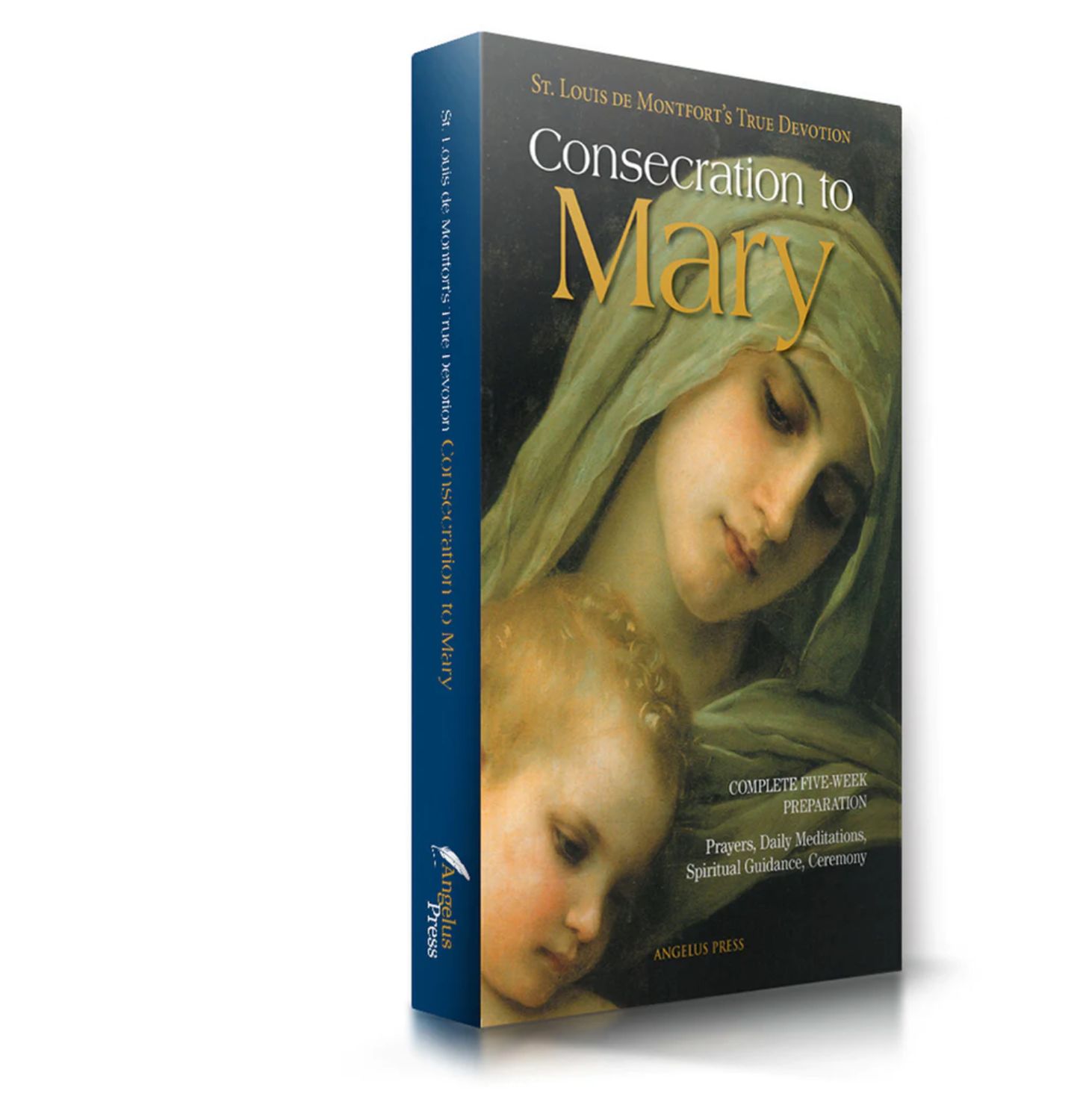
The 33-day consecration to Mary is a spiritual journey of prayer and meditation designed to entrust one’s life entirely to Jesus through the intercession of the Virgin Mary. Most practitioners seek a 33-day consecration to Mary PDF to access the traditional prayers of St. Louis de Montfort or modern adaptations like those by Fr. Michael Gaitley, allowing for structured daily reflection.
Total Consecration to Jesus through Mary, often referred to as "Total Consecration," is a practice with deep roots in Catholic tradition. It is based on the theology that Mary, as the mother of Jesus, is the surest and quickest path to a deeper relationship with Christ. By "consecrating" oneself, a person gives their entire being—body, soul, and merits—to Mary so that she may present them more perfectly to her Son. In 2026, this devotion remains a cornerstone of Marian spirituality, practiced by millions of laypeople, clergy, and religious figures worldwide.
Understanding the Origins: St. Louis de Montfort
The most foundational text for this devotion is True Devotion to Mary, written by St. Louis-Marie Grignion de Montfort in the early 18th century. For over a century, the manuscript remained hidden in a chest until it was discovered in 1842. Since then, it has become the primary manual for those seeking the "Total Consecration."
St. Louis de Montfort’s method is rigorous and deeply theological. He proposed a 33-day period of preparation consisting of specific prayers and readings intended to detach the soul from the world and align it with the spirit of Christ. Because the original text is in the public domain, a 33-day consecration to Mary PDF featuring the de Montfort prayers is widely available and free to download from various Catholic archives and apostolates.
The Totus Tuus Legacy
The significance of this consecration was highlighted in the 20th century by Pope St. John Paul II. His papal motto, Totus Tuus ("Totally Yours"), was taken directly from St. Louis de Montfort’s prayer of consecration. John Paul II frequently credited de Montfort’s book as a turning point in his spiritual life, shifting his understanding of Mary from a mere object of devotion to a functional participant in the mystery of salvation.
Modern Adaptations: 33 Days to Morning Glory
While the traditional Montfortian method remains the gold standard, many modern Catholics find the language of the 18th century challenging. In 2011, Fr. Michael Gaitley, MIC, published 33 Days to Morning Glory. This version focuses on "Marian entrustment" and incorporates the insights of other saints, such as St. Maximilian Kolbe, St. Teresa of Calcutta, and St. John Paul II.
If you are looking for a 33-day consecration to Mary PDF, it is important to distinguish between the traditional de Montfort version and the Gaitley version. While the de Montfort PDF is often available for free legally, the Gaitley version is generally under copyright, though many parishes provide digital access or study guides as part of group retreats.
The Structure of the 33-Day Preparation
The 33-day period is not arbitrary; it is a carefully structured psychological and spiritual "reset." The journey is divided into four distinct segments, each focusing on a different aspect of the interior life.
Part 1: Emptying the Spirit of the World (Days 1–12)
The first 12 days are dedicated to "casting off the spirit of the world." The "spirit of the world" refers to anything that is contrary to the spirit of Jesus Christ—vanity, pride, excessive attachment to material goods, and the desire for human approval. The prayers during this period, such as the Veni Creator Spiritus and the Ave Maris Stella, are meant to purify the soul and create a "blank slate" for the Holy Spirit to work upon.
Part 2: Knowledge of Self (Days 13–19)
The second week focuses on self-examination. Practitioners reflect on their sins, their weaknesses, and their need for God's mercy. This is not meant to be a period of scrupulosity or self-loathing, but rather a realistic assessment of one's spiritual poverty. The goal is to realize that, without God, we can do nothing.
Part 3: Knowledge of Mary (Days 20–26)
During the third week, the focus shifts to the life and virtues of the Blessed Virgin. By studying Mary’s humility, faith, and obedience, the practitioner learns how to better serve God. The meditations highlight Mary’s role as the "Mediatrix of Grace" and the "Neck" of the Mystical Body, connecting the Head (Christ) to the members (the Church).
Part 4: Knowledge of Jesus Christ (Days 27–33)
The final week is the climax of the preparation. It focuses on the mystery of the Incarnation and the Passion of Christ. The practitioner looks at Jesus through the eyes of Mary. The prayers during this period, including the Litany of the Holy Name of Jesus, emphasize that Mary is never an end in herself; she is always the way to Christ.
How to Access a Reliable 33-Day Consecration to Mary PDF
When searching for a digital version of these prayers, it is essential to use reputable sources to ensure the text has not been altered or omitted. Many organizations offer the 33-day consecration to Mary PDF as a free resource to encourage the devotion.
- EWTN (Eternal Word Television Network): As one of the world's largest Catholic media outlets, EWTN provides the full text of the de Montfort preparation online. Their format is easily converted to a PDF for offline use.
- The Montfort Fathers: The religious order founded by St. Louis de Montfort often provides digital booklets that include the necessary daily readings and the final Act of Consecration.
- Catholic Apostolates: Groups like "Fish Eaters" or "Traditional Catholic" sites host public domain versions of the 19th-century translations, which many prefer for their poetic and solemn tone.
Before downloading, check the table of contents. A complete PDF should include:
- The preliminary remarks on the excellence of the devotion.
- Daily prayers for each of the 33 days.
- The Litany of the Holy Ghost, the Litany of the Blessed Virgin, and the Litany of the Holy Name of Jesus.
- The formal "Act of Consecration" text to be signed on the 34th day.
Feast Days and Scheduling for 2026
The consecration is traditionally timed so that the 34th day—the day of the formal Act of Consecration—falls on a Marian Feast Day. This adds a liturgical significance to the personal commitment. To find your start date, count back 33 days from the chosen feast day.
Below is a schedule for common Marian feast days in 2026:
| Marian Feast Day | Consecration Day (Date) | Start Date (33 Days Prior) |
|---|---|---|
| Our Lady of Lourdes | February 11, 2026 | January 9, 2026 |
| The Annunciation | March 25, 2026 | February 20, 2026 |
| Our Lady of Fatima | May 13, 2026 | April 10, 2026 |
| The Visitation | May 31, 2026 | April 28, 2026 |
| Our Lady of Mt. Carmel | July 16, 2026 | June 13, 2026 |
| The Assumption | August 15, 2026 | July 13, 2026 |
| Queenship of Mary | August 22, 2026 | July 20, 2026 |
| Nativity of Mary | September 8, 2026 | August 6, 2026 |
| Our Lady of the Rosary | October 7, 2026 | September 4, 2026 |
| Immaculate Conception | December 8, 2026 | November 5, 2026 |
| Our Lady of Guadalupe | December 12, 2026 | November 9, 2026 |
The Act of Consecration: What Happens on Day 34?
The 33 days are a "preparation for" the consecration, not the consecration itself. The actual Act of Consecration takes place on the morning of the feast day. It is highly recommended that the practitioner follows these steps:
- Go to Confession: It is standard practice to go to the Sacrament of Reconciliation either on the day of consecration or within eight days prior. This ensures the soul is in a state of grace when making the promise.
- Attend Holy Mass: If possible, attend Mass and receive Holy Communion. St. Louis de Montfort suggests receiving Communion with the intention of giving oneself to Jesus as a "slave of love" through Mary.
- Recite the Act of Consecration: After Mass or in a quiet chapel, recite the formal Act of Consecration. It is traditional to have a physical copy of the prayer, sign it, and keep it as a spiritual "birth certificate."
- A Token of Devotion: Some choose to wear a small chain or a Miraculous Medal as an external sign of their interior consecration, though this is not strictly required.
Common Challenges and Troubleshooting
The 33-day journey is a spiritual undertaking, and like any discipline, it can meet with resistance. Understanding these common hurdles can help you persevere.
Spiritual Dryness: Many people start the 33 days with great enthusiasm but find that by day 15, the prayers feel repetitive or "dry." This is often referred to as a trial of faith. The merit of the consecration does not depend on emotional "feelings" but on the resolution of the will. If you feel nothing, continue anyway.
Missing a Day: Life happens. If you forget your prayers on Day 10, do not feel you must start the entire 33-day cycle over. Simply make up the missed prayers the following day and continue. However, if you miss several days or an entire week, it is usually best to wait for the next feast day and restart to maintain the integrity of the preparation.
Technical Issues with PDF Versions: Sometimes, a 33-day consecration to Mary PDF can be poorly formatted for mobile devices. If you are struggling to read the PDF on your phone, consider using a dedicated e-reader app like Kindle or Books, which allows you to highlight text and add digital bookmarks for each day.
Why Do People Choose This Devotion?
In 2026, the world is increasingly fast-paced and digital. The 33-day consecration offers a rare opportunity for silence and structured introspection. People choose this path for several reasons:
- Spiritual Protection: Many believe that entrustment to Mary provides a "mantle of protection" against spiritual warfare and the temptations of modern life.
- Clarity of Vocation: Those struggling with major life decisions—such as marriage, priesthood, or career changes—often use the 33 days to seek divine guidance.
- Holiness in the Ordinary: The devotion teaches that one can serve God in the "little things" of daily life, following Mary’s example of the hidden life in Nazareth.
Frequently Asked Questions
Does the 33-day consecration expire?
The consecration is a lifelong commitment, but it is standard practice to renew it annually. Many people choose to repeat the 33-day preparation every year, often ending on the same feast day as their original consecration, to deepen their understanding and recommit their will.
Can non-Catholics perform the consecration?
While the prayers are deeply rooted in Catholic dogma (such as the Immaculate Conception and the Intercession of Saints), any baptized Christian who believes in the role of Mary in salvation history can technically perform the preparation. However, the requirement for Confession and Mass makes it specifically a Catholic and Orthodox spiritual practice.
Is there a cost to the 33-day consecration?
The spiritual practice itself is free. While you can purchase beautifully bound books and journals, a 33-day consecration to Mary PDF is available for free from many sources. The primary "cost" is the time and discipline required to complete the daily reflections.
What is the "Slavery of Love"?
St. Louis de Montfort uses the term "Holy Slavery" to describe this devotion. In the 18th-century context, this meant a total belonging. Unlike human slavery, which is forced and degrading, this is a voluntary "slavery of love" where one freely gives their will to God, recognizing that true freedom is found in doing His will.
Can I do the consecration with a group?
Yes. Group consecrations are very popular in parishes. Doing the 33 days with a community provides accountability and the opportunity for shared reflection. In these cases, a leader often distributes a shared PDF or booklet to ensure everyone is on the same page.
Final Recommendation
If you are ready to begin, your next step is to select a feast day from the 2026 calendar and download a verified 33-day consecration to Mary PDF. Start by reading the introduction to True Devotion to Mary to understand the "why" before you begin the "how." Whether you choose the traditional Montfortian path or a modern adaptation, the goal remains the same: to give yourself more fully to God by following the example of the one who knew Him best.