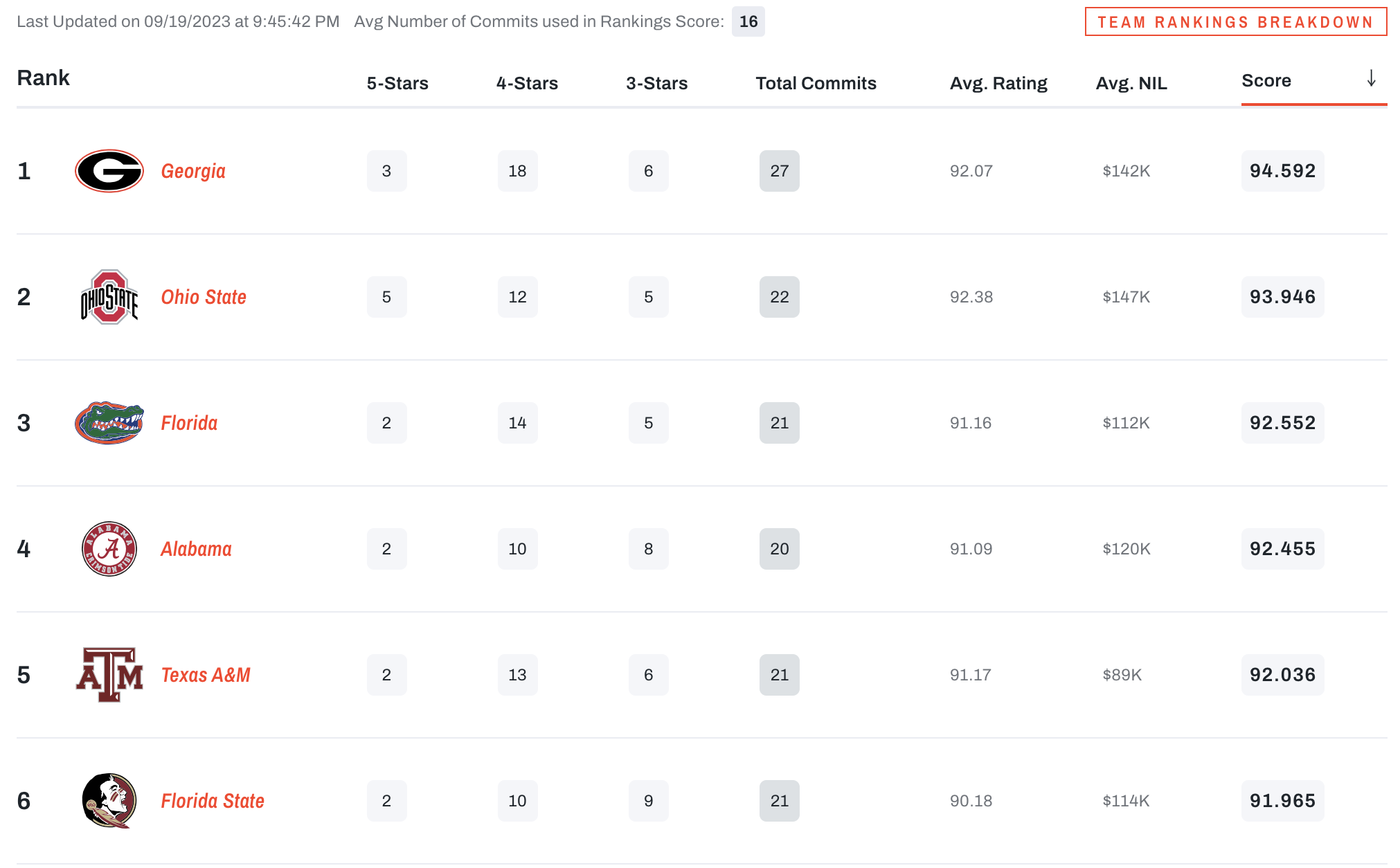
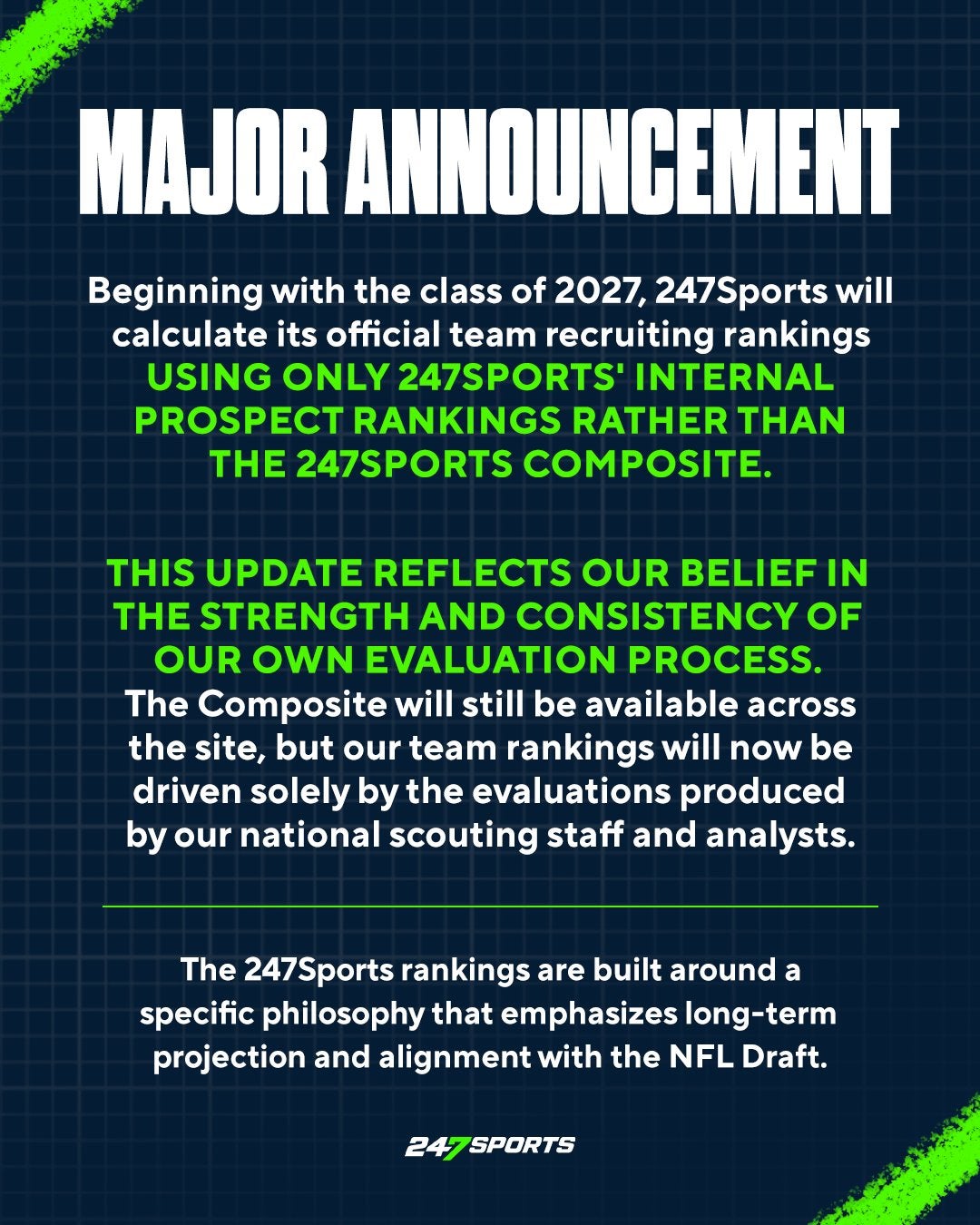
The 247Sports Composite Team Recruiting Rankings provide a mathematical snapshot of a college football program's incoming talent class by aggregating player ratings from major scouting services. By assigning numerical values to recruits based on their specific rankings and weighting them according to a proprietary formula, these rankings offer a standardized way to measure and compare the quality of recruiting efforts across the landscape of college athletics.
Understanding the Methodology: How the Rankings Work
At the core of the 247Sports recruiting model is the "Composite" rating. Unlike a subjective poll or a single-expert opinion, the Composite index is a proprietary algorithm that synthesizes rankings from multiple major recruiting media outlets. This approach is designed to mitigate individual biases, providing a more objective representation of how a prospect is viewed across the industry.
When a high school prospect is evaluated, they receive a numerical rating. These ratings are then converted into points that contribute to a university's total team score. The system is designed to reward both the quality of individual recruits and the total volume of the recruiting class, though quality is weighted significantly more heavily.
The Role of the Composite Formula
The 247Sports Composite index is the gold standard in the industry because it functions as a weighted average. When a major scouting service updates its rankings, the formula adjusts to reflect the new consensus. By pulling data from various reputable sources, the system ensures that a recruit’s status—ranging from a three-star prospect to a coveted five-star recruit—is based on the broader evaluation of professional talent scouts.
For a university to climb the rankings, they must secure commitments from players with higher star ratings. A five-star recruit contributes significantly more "points" to a team's total score than a three-star recruit. This creates a competitive hierarchy where programs with the most elite talent naturally rise to the top of the table.
Breakdown of Star Ratings and Point Values
While the exact proprietary formula is not public, the system relies on a consistent point-per-recruit structure based on star ratings. Understanding these tiers is essential for following the recruiting cycle:
- Five-Star Recruits: These are the elite prospects, typically considered the top 30–35 players in the country. Securing a commitment from one of these players provides a massive boost to a team’s overall score.
- Four-Star Recruits: These athletes are ranked among the top tier of regional and national talent. They form the backbone of a championship-caliber recruiting class.
- Three-Star Recruits: These players represent the bulk of most collegiate rosters. While they carry fewer points individually, they are crucial for depth and positional balance.
- Two-Star and Unrated: While these recruits offer value, their impact on the aggregate team ranking is statistically minimal compared to the upper tiers.
Factors Influencing Team Rankings Throughout the Year
The rankings are dynamic and evolve constantly. Several factors contribute to the fluctuation of team standings throughout the calendar year:
- Commitment Timing: Rankings move as players verbally commit to schools. However, these rankings are "soft" until a National Letter of Intent (NLI) is signed.
- Rankings Updates: Scouting services periodically update their player rankings. If a player committed to University A sees their personal ranking jump from a high three-star to a four-star, University A’s total team score will rise immediately.
- Decommitments: When a player leaves a recruiting class, their associated points are subtracted from the team total. This leads to immediate drops in the standings.
- Transfer Portal Activity: In recent years, the impact of the transfer portal has become a vital component. While the primary "Team Recruiting Rankings" focus on high school prospects, many platforms now offer separate or integrated views to account for the impact of incoming transfers on a team's overall talent profile.
Comparative Analysis: Team Rankings vs. On-Field Success
While recruiting rankings are often used as a predictor for future on-field performance, they are not a guarantee of success. The correlation between a high-ranking recruiting class and a conference championship is strong, but several variables can alter the trajectory of a prospect once they reach campus.
| Metric | High-Ranked Class | Low-Ranked Class |
|---|---|---|
| Primary Predictor | High floor for talent | Developmental reliance |
| Talent Density | High 4/5-star concentration | Heavy reliance on 3-star prospects |
| Development Needs | Refinement and depth | Immediate impact and coaching |
| Coaching Impact | Maximizing existing ceiling | Identifying overlooked talent |
Critics of the system often point to the "developmental gap." A school with a lower-ranked recruiting class may focus on long-term physical development, often finding success through patience, whereas a top-ranked class might face higher pressure to deliver immediate results due to the high expectations placed on elite recruits.
The Impact of Scouting Bias and Geography
One of the nuances of 247Sports rankings is the influence of geography and exposure. Players in high-population states with massive high school football cultures—such as Texas, Florida, and California—are often scouted more heavily. This can lead to a slight bias where players from these regions are more likely to be identified and rated accurately, whereas players from less-scouted areas may remain "underrated" until they reach a major showcase event.
Advanced users of 247Sports monitor these regional trends to identify "sleepers." A program that recruits effectively in under-scouted regions can often gain an advantage by securing high-upside players at a lower cost to their overall team ranking, effectively outperforming their numerical standing on the leaderboard.
Frequently Asked Questions
Why did my team's ranking drop after a player committed? Usually, this occurs because other teams had more significant additions or because of a "reset" in the rankings formula. If other programs in the top 25 secured higher-rated recruits, your team’s relative position will naturally slide down despite no negative action on your end.
Do transfer portal additions count toward the high school recruiting rankings? Standard high school recruiting rankings on 247Sports are generally distinct from transfer portal rankings. While some platforms attempt to blend these, the primary "Team Recruiting Rankings" focus specifically on incoming high school and junior college talent to maintain a historical baseline for comparison.
How often are the rankings updated? Rankings are updated continuously as new commitments occur. However, the "Composite" scores are adjusted in batches following major evaluation periods where scouting services release updated national or regional prospect lists.
What is the difference between a "soft" verbal commitment and a signed NLI? A verbal commitment is a non-binding promise, whereas a signed National Letter of Intent (NLI) is a legally binding contract. The rankings reflect the commitment as soon as it is reported, but the score is only fully "locked in" once the NLI is processed.
Can a team have a high ranking with fewer total recruits? Yes. Because the formula weights higher-rated players significantly more, a team with 15 elite four-star and five-star recruits may outrank a team with 25 three-star recruits. This is known as "quality over quantity."
Strategic Utilization for Fans and Analysts
For those analyzing the recruiting landscape, the goal should be to use the 247Sports rankings as a baseline for understanding the "talent ceiling" of a roster. To effectively track a program, one should look at the average star rating per recruit rather than just the total score. This metric often reveals which coaching staffs are successfully identifying talent and which are merely relying on volume.
As you monitor your team throughout the 2026 cycle, look beyond the raw number. Observe the positional balance of the class—does the team have a glaring hole at quarterback or offensive line that the current recruiting class is failing to address? The rankings are most useful when interpreted through the lens of a team's specific roster needs rather than as a pure status symbol of program prestige.