As of the 2025 financial reporting cycle, the Los Angeles Lakers have officially reached a historic valuation of $10 billion. This milestone makes the franchise one of the most valuable sports entities globally, driven by the NBA’s lucrative new media rights deal, record-breaking local sponsorship revenue, and the team’s unparalleled brand equity within the international basketball market.
The Financial Milestone: How the Lakers Reached $10 Billion
The journey to a $10 billion valuation represents a seismic shift in the economics of professional basketball. For decades, the Lakers were valued based on local ticket sales and regional television contracts. However, the 2025 valuation reflects a modern "platform" model where the team functions as a global media company rather than just a local sports club. Several converging factors allowed the Purple and Gold to cross this threshold.
First, the scarcity of premium sports assets has driven prices to unprecedented heights. There are only 30 NBA teams, and the Lakers are arguably the crown jewel of that list. When the Phoenix Suns sold for $4 billion and the Milwaukee Bucks reached a $3.5 billion valuation in previous years, it set a new "floor" for the league. The Lakers, residing in the nation's second-largest media market and possessing 17 championship banners, naturally command a significant premium over these benchmarks.
Second, the structural changes in the NBA’s Collective Bargaining Agreement (CBA) and revenue-sharing models have provided more stability for owners. While the Lakers are a "payer" in the revenue-sharing system, the overall growth of Basketball Related Income (BRI) has ensured that even with high luxury tax bills, the underlying asset continues to appreciate. The $10 billion figure is not just a reflection of current cash flow, but a projection of the team's ability to generate compounding revenue over the next two decades.
The Catalyst: The 2025 NBA Media Rights Deal
The single most important factor in the 2025 valuation surge was the commencement of the NBA’s new national media rights agreement. Finalized in 2024 and taking full effect for the 2025-26 season, this deal—shared among Disney (ESPN/ABC), NBCUniversal, and Amazon Prime Video—is worth approximately $76 billion over 11 years.
This agreement nearly tripled the annual average value of the previous contract. Because a significant portion of this revenue is distributed equally among all 30 teams, every franchise saw an immediate and massive jump in their baseline valuation. For the Lakers, this guaranteed national revenue acts as a financial hedge against any fluctuations in local performance or regional broadcast challenges.
The inclusion of Amazon as a primary partner was particularly beneficial for the Lakers' valuation. As the league shifted toward a streaming-heavy distribution model, the Lakers’ global fanbase became more accessible than ever. Investors view the Lakers as the team most likely to benefit from international streaming growth, particularly in Asia and Europe, where the brand already has a massive footprint. This "tech-premium" is a major reason why the team reached the $10 billion mark ahead of most analyst projections.
Comparing NBA Heavyweights: 2025 Valuations
The Lakers do not exist in a vacuum; they are part of an elite tier of franchises that includes the Golden State Warriors and the New York Knicks. By 2025, these three teams have effectively distanced themselves from the rest of the league in terms of financial scale.
| Franchise | 2025 Valuation (Estimated) | Primary Revenue Driver | Market Size Rank |
|---|---|---|---|
| Los Angeles Lakers | $10.0 Billion | Global Brand & Local Media | 2 |
| Golden State Warriors | $9.5 Billion | Arena Real Estate (Chase Center) | 6 |
| New York Knicks | $8.2 Billion | MSG Network & Premium Seating | 1 |
| Chicago Bulls | $5.5 Billion | Historical Brand Legacy | 3 |
| Boston Celtics | $5.2 Billion | Championship Pedigree | 10 |
The table above illustrates that while the Knicks benefit from the New York market and the Warriors benefit from owning their state-of-the-art arena, the Lakers’ value is uniquely tied to their brand's global reach. Unlike the Warriors, who generate massive revenue from non-basketball events at Chase Center, the Lakers share Crypto.com Arena. Despite not owning their building, the Lakers' ability to command $10 billion speaks to the sheer power of their intellectual property and local television dominance.
Local Revenue Streams and the Spectrum SportsNet Factor
While national TV deals provide the floor, the Lakers’ local revenue provides the ceiling. The franchise continues to benefit from one of the most lucrative Regional Sports Network (RSN) deals in professional sports. The long-term agreement with Spectrum SportsNet, signed over a decade ago, continues to pump hundreds of millions of dollars into the team’s coffers annually.
In an era where many RSNs are facing bankruptcy or restructuring, the Lakers’ deal has remained resilient due to the high demand for their content in Southern California. The "appointment viewing" nature of Lakers games allows the team to maintain high carriage fees that other teams in smaller markets simply cannot replicate. Furthermore, the team has successfully integrated digital "plus" services, allowing fans to stream games directly through authenticated apps, further monetizing their local rights.
Beyond broadcasting, the Lakers have maximized their sponsorship "patch" and arena-based assets. Their partnership with Bibigo and other global sponsors reflects a shift toward international brands looking to leverage the Lakers’ visibility. In 2025, these "jersey patch" deals have evolved into comprehensive global marketing partnerships that include digital content rights and international touring options, adding tens of millions to the bottom line each year.
Institutional Investment and Private Equity Influence
Another factor pushing the Lakers toward the $10 billion mark is the NBA’s decision to allow private equity firms and sovereign wealth funds to purchase minority stakes in teams. This policy change, which took hold in the early 2020s, created a massive influx of capital and a new class of buyers.
When institutional investors like Dyal HomeCourt or Arctos Sports Partners enter the fray, they bring sophisticated valuation models that often price in future growth more aggressively than individual billionaires might. The presence of these firms has created more liquidity for minority owners, such as the stakes previously held by Philip Anschutz or the current minority owners.
For the Lakers, this means that even a 1% stake in the team is now worth $100 million. This high barrier to entry has turned the franchise into a "Veblen good"—an asset where high prices actually increase the desire for ownership among the world's ultra-wealthy. The prestige of being associated with the Lakers brand provides a "social return on investment" that is difficult to quantify but very real in the world of high-stakes sports business.
The "LeBron Effect" and Post-LeBron Financial Planning
A common question among financial analysts leading up to 2025 was whether the Lakers' valuation was overly dependent on the presence of LeBron James. While James undeniably boosted jersey sales, ticket prices, and global relevance during his tenure, the 2025 valuation proves that the Lakers' brand is "star-agnostic."
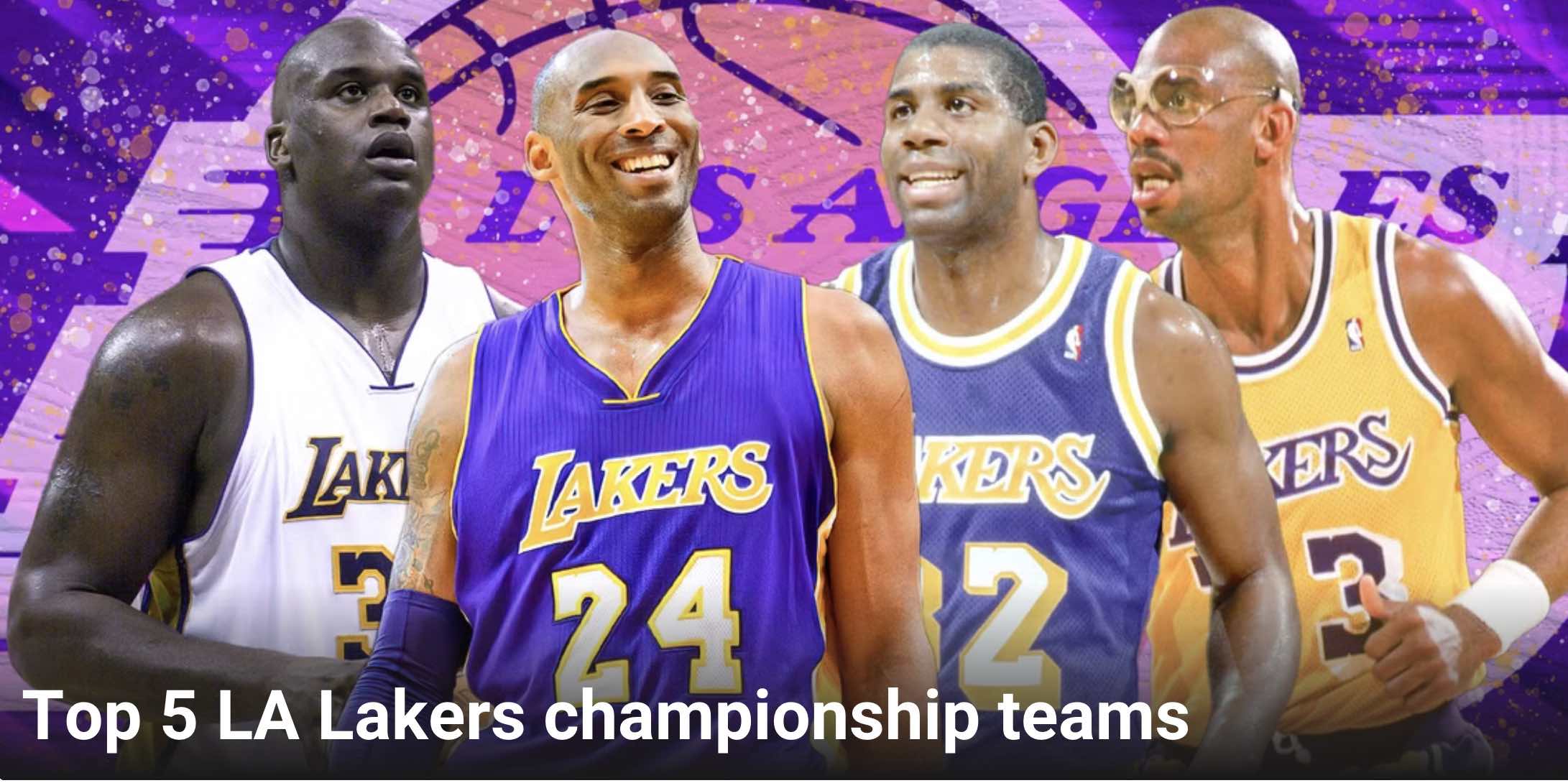
The Lakers have successfully transitioned through multiple eras—from Mikan to West, Magic to Kareem, and Shaq to Kobe. Each time, the franchise has emerged financially stronger. The 2025 valuation reflects the belief that the Lakers will always be a destination for the NBA’s top tier of talent. The "Lakers Premium" is built into the CBA; stars want to be in Los Angeles for the off-court business opportunities, which in turn keeps the team competitive and the valuation high.
The front office has also diversified its revenue streams to ensure stability regardless of the team's win-loss record. By investing in the UCLA Health Training Center and expanding their youth academy footprints globally, the Lakers have built a multi-faceted business that operates 365 days a year, not just during the 82-game regular season.
Challenges to Maintaining the $10 Billion Valuation
Despite the record-breaking valuation, the Lakers face several headwinds as they move through 2026 and beyond. Maintaining a $10 billion price tag requires constant growth, which can be difficult in a saturated media environment.
- The RSN Transition: While the Spectrum deal is currently lucrative, the broader trend of cord-cutting remains a threat. If the traditional cable bundle continues to erode, the Lakers will eventually need to pivot to a fully direct-to-consumer (DTC) model. While they have the scale to do this successfully, the transition period could involve significant capital expenditure and temporary revenue volatility.
- Luxury Tax Constraints: The new "Second Apron" rules in the NBA’s CBA make it increasingly difficult for high-spending teams like the Lakers to build a roster through traditional means. If the team remains in the luxury tax for too many consecutive years, the financial penalties can eat into the profit margins, potentially cooling the enthusiasm of minority investors.
- Real Estate Limitations: Unlike the Golden State Warriors or the Los Angeles Clippers (with Intuit Dome), the Lakers do not own their home arena. This limits their ability to capture 100% of the revenue from concessions, parking, and non-NBA events. To reach the next tier of valuation—perhaps $15 billion—the Lakers may eventually need to explore a stadium project of their own or a more favorable equity split in a future arena renovation.
FAQ: Understanding the Lakers' $10 Billion Valuation
Why are the Lakers worth more than most NFL teams?
While the NFL has higher overall league revenue, NBA teams often command higher valuations relative to their revenue (multiples) because of the NBA's global growth potential and the smaller roster sizes, which lead to lower overhead in certain operational areas. Additionally, the Lakers' brand has more international recognition than almost any NFL franchise except perhaps the Dallas Cowboys.
How does the 2025 media deal affect the average fan?
The massive valuation and the media deal that fueled it mean that fans will see more games on streaming platforms like Amazon Prime Video. It also ensures that the salary cap will continue to rise, allowing the Lakers to keep high-priced stars, though ticket prices at Crypto.com Arena are likely to continue their upward trend to support the valuation.
Does the $10 billion valuation include the arena?
No, the $10 billion valuation is for the franchise itself and its related business entities. Since the Lakers are tenants at Crypto.com Arena (owned by AEG), the physical real estate is not a primary asset on the Lakers' balance sheet, which makes the $10 billion figure even more impressive.
Who are the primary owners of the Lakers in 2025?
The Buss Family Trust remains the controlling owner, with Jeanie Buss serving as the Governor. Minority stakes are held by various entities, including Patrick Soon-Shiong and institutional investors who have joined the ownership group following the NBA’s rule changes regarding private equity.
What happens to the valuation if the team performs poorly?
Historically, the Lakers' valuation has been remarkably resilient to on-court performance. Because the NBA uses a revenue-sharing model and the Lakers have such strong fixed-revenue contracts (like their local TV deal), a few losing seasons do not significantly impact the long-term asset value, although it may temporarily slow the growth of "variable" revenue like playoff ticket sales and merchandise.
Final Recommendation for Investors and Analysts
The Los Angeles Lakers hitting a $10 billion valuation in 2025 is a landmark moment for the sports industry. For those looking to understand the future of sports business, the Lakers serve as the ultimate case study in brand monetization and media rights optimization.
Moving forward, the key metric to watch will be the "Direct-to-Consumer" conversion rate. As the Lakers shift more of their local broadcast rights to digital platforms, their ability to own the relationship with the fan—and the data that comes with it—will determine if the franchise can reach a $15 billion valuation by the 2030s. Stakeholders should focus on the team’s international expansion strategies, particularly in emerging markets where the NBA is aggressively growing its digital footprint.