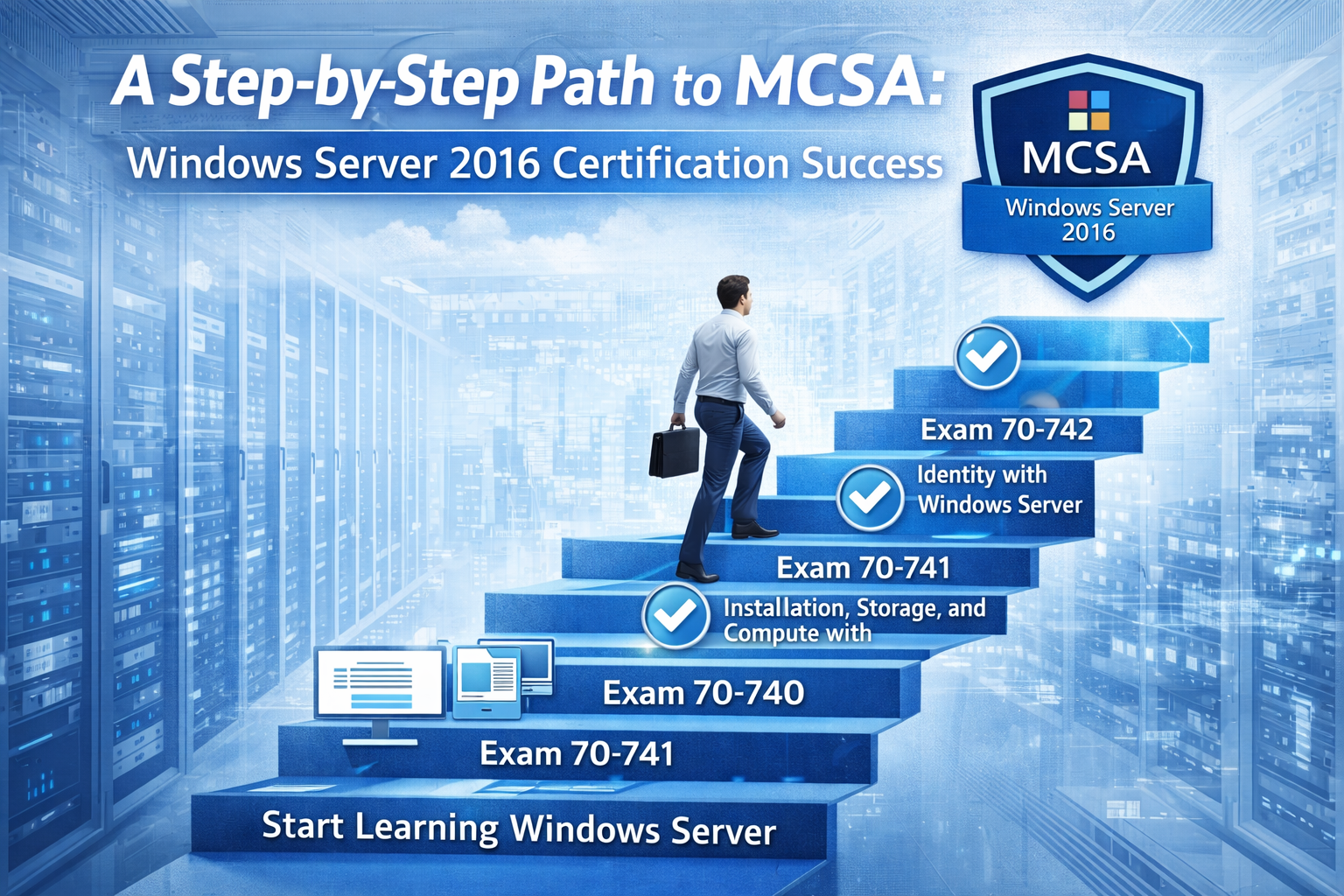
The Microsoft Certified Solutions Associate (MCSA): SQL Server 2016 certification was officially retired by Microsoft on January 31, 2021. As of 2026, this certification is no longer available to earn, and Microsoft does not offer replacement exams that grant the MCSA designation. Professionals holding this credential possess a legacy status that acknowledges their proficiency in database management and administration up to the 2016 product lifecycle.
The Lifecycle of Microsoft SQL Server Certifications
To understand the current standing of the MCSA: SQL 2016, it is essential to recognize the broader shift in how Microsoft managed its certification portfolio. Historically, the MCSA served as the industry standard for demonstrating foundational technical competence. The SQL Server 2016 track was specifically designed to validate skills in database installation, storage, configuration, and security.
When Microsoft announced the retirement of the MCSA, MCSD, and MCSE certification paths, the transition was intended to steer the workforce toward role-based certifications. These newer credentials, such as the Azure Database Administrator Associate, focus on cloud-centric tasks rather than legacy on-premises server management. The 2021 retirement date was a definitive end point; after that period, no new exams could be booked, and no new certificates could be issued. Consequently, anyone searching for a timeline today finds only the historical record of this discontinuation.
Why the 2024 Timeline Remains Relevant in 2026
You may encounter references to a "2024" timeline regarding this certification because, while the exam was retired in 2021, the validation of skills remained a topic of discussion in career-planning documents and legacy training portals well into 2024. Many organizations continued to operate SQL Server 2016 environments long after the certification's retirement.
In 2026, the primary concern for IT professionals is not how to earn this certification, but how to handle it on a professional resume or verify it for potential employers. Because the certification exists in a "legacy" state, it serves as a marker of a professional’s tenure in the industry. It indicates that the individual was actively working with enterprise database solutions during a specific era of Microsoft's infrastructure evolution.
Historical Context and Exam Requirements
For those seeking to understand what the MCSA: SQL 2016 actually validated, it is helpful to look back at the original requirements. To earn this credential, candidates had to pass two foundational exams:
- Exam 70-764: Administering a SQL Database Infrastructure. This exam focused on security, maintenance, and monitoring.
- Exam 70-765: Provisioning SQL Databases. This exam covered the deployment of SQL Server databases both on-premises and in cloud environments.
These exams were retired simultaneously with the certification. There is no official "bridge" or transition program that allows a professional to convert an MCSA: SQL 2016 into a current, active Azure-based certification. While some knowledge overlap exists between 2016 and modern SQL versions, the administrative paradigms—particularly those concerning cloud integration and containerization—have evolved significantly.
Table: Evolution of Microsoft Data Certifications
| Certification Era | Type | Current Status | Primary Focus |
|---|---|---|---|
| MCSA SQL 2016 | Legacy | Retired (2021) | On-Premises DB Admin |
| MCSE Data Platform | Legacy | Retired (2021) | Advanced Architecture |
| Azure Data Engineer | Role-Based | Active | Cloud Data Engineering |
| Azure Database Admin | Role-Based | Active | Cloud/Hybrid DB Admin |
Verifying Legacy Credentials
If you are an employer or a recruiter looking to verify a candidate's claim of having held an MCSA: SQL 2016 certification, you may find that the official Microsoft Transcript portal no longer lists these exams in the same primary dashboard as modern certifications.
Candidates who earned the certification previously should retain their original digital badges or certificates issued through platforms like Credly (formerly Acclaim). In 2026, if you are attempting to prove your historical competence, providing the original certificate or your archived transcript is the only reliable method, as Microsoft’s current verification APIs focus primarily on active, valid credentials.
The Shift from On-Premises to Cloud Paradigms
The primary reason the MCSA: SQL 2016 was phased out relates to the industry-wide shift toward the "Cloud-First" model. SQL Server 2016 was a robust platform that bridged the gap between traditional server racks and virtualized cloud instances. However, as organizations migrated to managed database services like Azure SQL Database and Cosmos DB, the skill set required for a database administrator changed.
Modern certifications emphasize:
- Infrastructure as Code (IaC): Using tools like Terraform or Bicep to manage database environments.
- High Availability in the Cloud: Managing global distribution rather than local failover clusters.
- Security by Default: Understanding Identity and Access Management (IAM) integrated with Microsoft Entra ID (formerly Azure AD).
If you possess the MCSA: SQL 2016, you likely have a strong foundation in T-SQL, query tuning, and index management—skills that remain highly relevant in 2026. However, your technical portfolio will likely need to be supplemented by newer certifications to remain competitive for roles focused on cloud-native architecture.
Common Misconceptions Regarding the 2024 Date
A frequent point of confusion is the belief that Microsoft offered an extension or a final "sunset" grace period for these exams that extended into 2024. This is factually incorrect. The retirement of the MCSA program was global and absolute. Any training providers or websites claiming to offer "MCSA SQL 2016 Certification preparation" in 2026 are likely offering outdated materials that do not align with any active, recognized credential.
If you are currently studying materials labeled for 2024 or later that reference the MCSA, exercise caution. These resources are often repurposed content from the 2016-2020 era. While the technical concepts within SQL Server 2016 (such as AlwaysOn Availability Groups or Columnstore indexes) are still relevant to maintaining older infrastructure, you will not receive a certification upon completion of these study paths.
Recommendations for Current Professionals
If your career goal is to update your qualifications in 2026, the best approach is to treat your historical MCSA as a foundational milestone rather than a current credential. Focus your efforts on the modern pathway:
- Assess Your Gap: If you have deep experience in SQL Server 2016 but little experience in cloud, prioritize the Azure Database Administrator Associate (DP-300).
- Utilize Free Resources: Use Microsoft Learn, which provides comprehensive, free, and updated modules for current database technologies.
- Focus on Certification Renewal: Modern Microsoft certifications require annual renewal via a short assessment on the Microsoft Learn platform. This is a significant departure from the legacy MCSA system, which did not have an expiration or renewal requirement.
Frequently Asked Questions
Is the MCSA: SQL 2016 still recognized by employers in 2026? It is recognized as historical proof of experience. While it is not an "active" certification, it demonstrates that you have professional-level knowledge of core database concepts. Employers value the underlying skills, but you should highlight your ability to apply those skills to modern environments.
Can I still take the 70-764 or 70-765 exams? No. These exams were permanently retired in early 2021. There is no way to register for or take these exams through any official Pearson VUE or Microsoft portal.
Should I include the MCSA on my resume if it is retired? Yes, but label it clearly. List it under a "Professional Certifications" section and note that it is a legacy credential. This provides transparency and allows you to discuss your long-term expertise in database management during interviews.
What is the best alternative to the MCSA for SQL Server? The most direct successor in terms of skill set and career trajectory is the Azure Database Administrator Associate certification. It covers the administration of SQL Server, both in on-premises environments and within the Azure cloud, making it the most logical "next step" for an MCSA holder.
Did Microsoft offer a free transition to a new certification? No, there was no direct transition or grandfathering program that automatically converted retired MCSA certifications into newer role-based credentials. You must pass the new exams to earn current certifications.
Final Next Action
If you are a database professional holding the MCSA: SQL 2016, your immediate next action should be to audit your current skills against the requirements for the DP-300: Administering Microsoft Azure SQL Solutions exam. Preparing for this exam will help you map your legacy on-premises expertise to the modern cloud-first landscape, ensuring your credentials reflect the current state of technology in 2026. Do not spend time or budget on legacy certification bootcamps, as they no longer offer a path to an active credential. Focus instead on acquiring contemporary skills that complement your existing knowledge base.