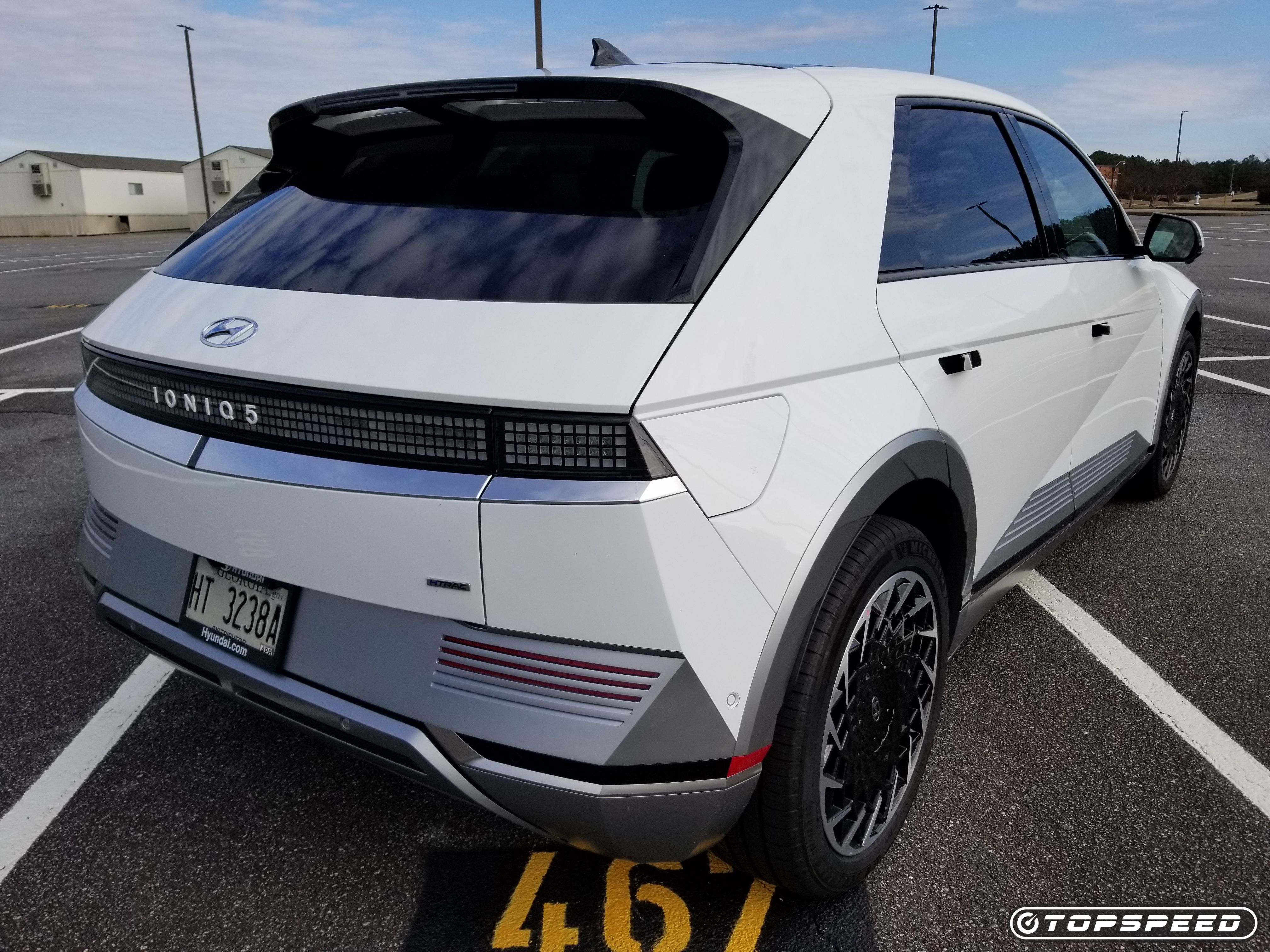
The 2023 Hyundai Ioniq 5 is a versatile all-electric SUV built on the dedicated E-GMP platform, offering a driving range of up to 303 miles and ultra-fast 800V charging capabilities. It distinguishes itself with retro-futuristic "Parametric Pixel" styling, a spacious flat-floor interior, and advanced features like Vehicle-to-Load (V2L) bi-directional power.
The Foundation: Electric Global Modular Platform (E-GMP)
The 2023 Hyundai Ioniq 5 was a significant milestone in the manufacturer’s transition toward full electrification. Central to its performance is the Electric Global Modular Platform (E-GMP). Unlike many early electric vehicles (EVs) that were adapted from internal combustion engine (ICE) chassis, the E-GMP was designed exclusively for battery electric vehicles. This architecture allows for a completely flat floor, a long wheelbase, and short overhangs, which directly translates to more interior cabin space and improved handling dynamics.
By mounting the heavy battery pack low and between the axles, the Ioniq 5 achieves a low center of gravity. This design choice minimizes body roll during cornering and provides a planted feel on the highway. Furthermore, the E-GMP supports an innovative multi-charging system. It is one of the few vehicles in its segment to feature an 800-volt battery system, which is the same voltage level found in high-end luxury EVs. This hardware allows the Ioniq 5 to take full advantage of 350-kW DC fast chargers, significantly reducing the time spent at charging stations compared to competitors using 400-volt architectures.
Battery Options and Powertrain Performance
For the 2023 model year, Hyundai offered the Ioniq 5 with two distinct battery pack sizes and multiple motor configurations to cater to different driving needs. The entry-level SE Standard Range utilized a 58-kWh lithium-ion polymer battery, while the SE, SEL, and Limited trims featured a larger 77.4-kWh "Long Range" battery pack.
The powertrain configurations are split between Rear-Wheel Drive (RWD) and All-Wheel Drive (AWD). The RWD models feature a single rear-mounted motor, which prioritizes efficiency and maximizes range. In contrast, the AWD versions add a second motor to the front axle, providing superior traction and significantly faster acceleration. The AWD system includes a "Disconnector Actuator System" that can physically disconnect the front motor from the drivetrain when it is not needed, such as during steady-state cruising, to improve energy efficiency.
- RWD (Single Motor): Produces 225 horsepower and 258 lb-ft of torque (Long Range version).
- AWD (Dual Motor): Produces a combined 320 horsepower and 446 lb-ft of torque, capable of reaching 60 mph in roughly 5 seconds.
- Standard Range (RWD): Produces 168 horsepower and 258 lb-ft of torque, focusing on affordability for urban commuters.
Range and Ultra-Fast Charging Capabilities
The driving range of the 2023 Ioniq 5 is highly dependent on the battery size and the number of driven wheels. According to EPA estimates, the RWD Long Range model is the efficiency leader, capable of traveling up to 303 miles on a single charge. The AWD Long Range variants, due to the added weight and power draw of the second motor, offer an estimated 266 miles. The SE Standard Range provides a more modest 220 miles.
Charging speed is where the 2023 Ioniq 5 truly outperforms its peer group. On a 350-kW DC fast charger, the battery can replenish from 10% to 80% in approximately 18 minutes. Even on the more common 150-kW fast chargers, the vehicle can achieve this charge in about 25 minutes. For home charging, the Ioniq 5 features a 10.9-kW on-board charger, which can fully recharge the larger battery pack in about 7 hours using a Level 2 AC home charging station. This makes it easy for owners to "refill" the vehicle overnight.
| Feature | SE Standard Range | SE/SEL/Limited RWD | SE/SEL/Limited AWD |
|---|---|---|---|
| Battery Size | 58.0 kWh | 77.4 kWh | 77.4 kWh |
| Horsepower | 168 hp | 225 hp | 320 hp |
| Torque | 258 lb-ft | 258 lb-ft | 446 lb-ft |
| EPA Estimated Range | 220 Miles | 303 Miles | 266 Miles |
| 0–60 MPH (approx.) | 8.5 Seconds | 7.3 Seconds | 5.0 Seconds |
| Max DC Charge Rate | 180 kW | 235 kW | 235 kW |
Exterior Design: The "Parametric Pixel" Aesthetic
The exterior of the 2023 Ioniq 5 is defined by a design language Hyundai calls "Sensuous Sportiness." It features sharp lines, a clamshell hood (the first for a Hyundai), and a V-shape front bumper. The most recognizable element is the Parametric Pixel lighting. These small, square LED modules are used for the daytime running lights, taillights, and even the charging indicator.
The profile of the vehicle is deceptive. While it appears to be a compact hatchback in photos, its dimensions are firmly in the crossover SUV category. It features a wheelbase of 118.1 inches, which is actually longer than that of the much larger Hyundai Palisade. This long wheelbase is made possible by the E-GMP platform, allowing for shorter overhangs and a larger cabin. Aerodynamics play a vital role in EV range, and the Ioniq 5 incorporates flush-fitting door handles and active air flaps at the front to reduce drag as much as possible.
Interior Comfort and "Living Space" Concept
Hyundai designed the interior of the Ioniq 5 to serve as a "living space" rather than just a vehicle cabin. The flat floor allows for a "Universal Island"—a center console that can slide back and forth by up to 5.5 inches. This allows front-seat passengers to exit through the opposite door if parked in a tight space or creates more room for rear passengers.
Sustainability is a major theme within the cabin. Many of the touchpoints are made from eco-friendly materials, including recycled PET bottles, plant-based (bio PET) yarns, and natural wool yarns. The seats and door trim may also feature eco-processed leather dyed with flaxseed oil.
For the driver, the Limited trim offers a "Relaxation" front seat with a leg rest, allowing the driver to recline fully while the vehicle is charging. The cargo space is also generous, providing 27.2 cubic feet behind the rear seats, which expands to 59.3 cubic feet when the seats are folded flat. There is also a small "frunk" (front trunk) under the hood, suitable for storing charging cables or a small gear bag.
Advanced Technology and Infotainment
The dashboard of the 2023 Ioniq 5 is dominated by a dual-screen setup, consisting of a 12.3-inch digital instrument cluster and a 12.3-inch infotainment touchscreen. These screens are housed under a single piece of glass, creating a clean, widescreen look. The system supports Apple CarPlay and Android Auto, though in the 2023 model, these still required a wired connection for most configurations.
One of the standout technological features is the Augmented Reality Head-Up Display (AR HUD), available on the Limited trim. This system projects navigation instructions and safety warnings directly onto the windshield, making them appear as if they are on the road roughly 30 feet in front of the vehicle. This helps the driver keep their eyes on the road while following turn-by-turn directions.
Connectivity is further enhanced by the Bluelink connected car service, which allows owners to remotely start the climate control, schedule charging sessions, and check the vehicle’s status via a smartphone app. Over-the-air (OTA) update capability ensures that the vehicle’s infotainment and maps stay current without requiring a trip to the dealership.
Vehicle-to-Load (V2L) Functionality
A defining feature that sets the 2023 Ioniq 5 apart from many other EVs in 2026 is its Vehicle-to-Load (V2L) capability. This system essentially turns the vehicle into a large mobile power bank. It provides up to 3.6 kW of power, which can be used to run electronic devices, camping gear, or even power another EV in an emergency.
There are typically two V2L outlets. One is located under the rear seats (inside the cabin), and another can be accessed via an external adapter that plugs into the charging port. This feature is particularly useful for outdoor enthusiasts or as a backup power source during a home electricity outage. The V2L system is designed to stop discharging once the vehicle's battery hits a user-defined threshold (usually 15-20%), ensuring there is always enough energy left to drive to a charging station.
Safety and SmartSense Features
Safety is a primary focus for the Ioniq 5, which earned high marks from both the IIHS and NHTSA for the 2023 model year. It comes standard with Hyundai’s SmartSense suite of advanced driver assistance systems (ADAS). Key features include:
- Forward Collision-Avoidance Assist (FCA): Detects vehicles, pedestrians, and cyclists, and can apply emergency braking.
- Highway Driving Assist II (HDA II): A Level 2 semi-autonomous system that combines adaptive cruise control with lane-centering. In the 2023 model, HDA II also includes a lane-change assist feature that can automatically move the vehicle into the next lane when the turn signal is activated.
- Blind-Spot View Monitor (BVM): When the turn signal is used, a live video feed of the blind spot is shown in the digital instrument cluster.
- Remote Smart Parking Assist (RSPA): Allows the driver to move the car forward or backward out of a tight parking space while standing outside the vehicle using the key fob.
Maintenance and Long-Term Reliability
As we look at the 2023 Ioniq 5 from the perspective of 2026, the vehicle has proven to be mechanically robust. Because it lacks an engine, transmission, and exhaust system, traditional maintenance is significantly reduced. Owners primarily need to focus on tire rotations, cabin air filter replacements, and brake fluid checks. The regenerative braking system significantly reduces wear on the physical brake pads and rotors, often allowing them to last twice as long as those on a traditional gasoline vehicle.
Hyundai supported the 2023 Ioniq 5 with an industry-leading warranty, including a 10-year/100,000-mile powertrain and battery warranty for the original owner. This long-term coverage has helped maintain the vehicle's resale value and provided peace of mind regarding the longevity of the lithium-ion battery pack.
Frequently Asked Questions
How does the 2023 Ioniq 5 perform in cold weather?
Electric vehicles generally see a reduction in range during winter due to battery chemistry and the energy required to heat the cabin. However, the 2023 Ioniq 5 SEL and Limited trims come standard with a battery heating system and heat pump. The heat pump is much more efficient than traditional resistive heaters, helping to preserve range in freezing temperatures. Additionally, the "Battery Pre-conditioning" feature allows the car to warm the battery while driving to a DC fast charger, ensuring the fastest possible charging speeds even in the cold.
Is the 2023 Ioniq 5 eligible for federal tax credits?
As of 2026, the eligibility for used 2023 Ioniq 5 models depends on current federal regulations, such as the Inflation Reduction Act (IRA). For the original purchase in 2023, eligibility was often limited based on the vehicle's assembly location (South Korea). Potential buyers in 2026 should check the latest IRS Section 25E guidelines for "Used Clean Vehicle Credits," which may offer incentives for vehicles purchased from a dealer under a certain price cap.
Can the Ioniq 5 tow a trailer?
Yes, the 2023 Ioniq 5 is rated for towing. When equipped with the 77.4-kWh battery, it has a maximum towing capacity of 2,300 pounds. This is sufficient for small utility trailers, jet skis, or lightweight teardrop campers. It is important to note that towing will significantly decrease the vehicle's driving range, often by 30% to 50% depending on the weight and aerodynamics of the trailer.
What are the main differences between the SEL and Limited trims?
The SEL trim is the mid-range option and includes upgrades like HDA II, a power liftgate, and synthetic leather upholstery. The Limited trim adds premium "luxury" features, including the Augmented Reality Head-Up Display, the "Relaxation" front seats, a Bose premium audio system, a Surround View Monitor, and the Vision Roof (a large fixed glass panel). The Limited also features the unique V2L internal outlet and 20-inch wheels (on AWD models), whereas the SEL typically uses 19-inch wheels.
How do I check the battery health of a used 2023 Ioniq 5?
In 2026, many 2023 Ioniq 5s are entering the used market. To verify battery health, you can use an OBD-II scanner with a compatible EV app to check the State of Health (SOH) percentage. Alternatively, a Hyundai dealership can provide a comprehensive battery diagnostic report. Most well-maintained Ioniq 5 batteries show very little degradation (less than 2-5%) within the first three years of ownership.
Final Recommendation
The 2023 Hyundai Ioniq 5 remains a top-tier choice for those seeking a technologically advanced electric vehicle without the premium price tag of a luxury brand. Its 800V charging architecture ensures that it stays relevant even as newer EV models enter the market in 2026. For the best balance of range and features, the SEL RWD configuration is often the most practical choice, providing the maximum 303-mile range and a robust safety suite. If performance and all-weather capability are priorities, the AWD version offers thrilling acceleration at the cost of a slightly shorter range. Before purchasing, verify the vehicle's service history for any software updates related to the Integrated Power Control Unit (ICCU) to ensure optimal charging performance.