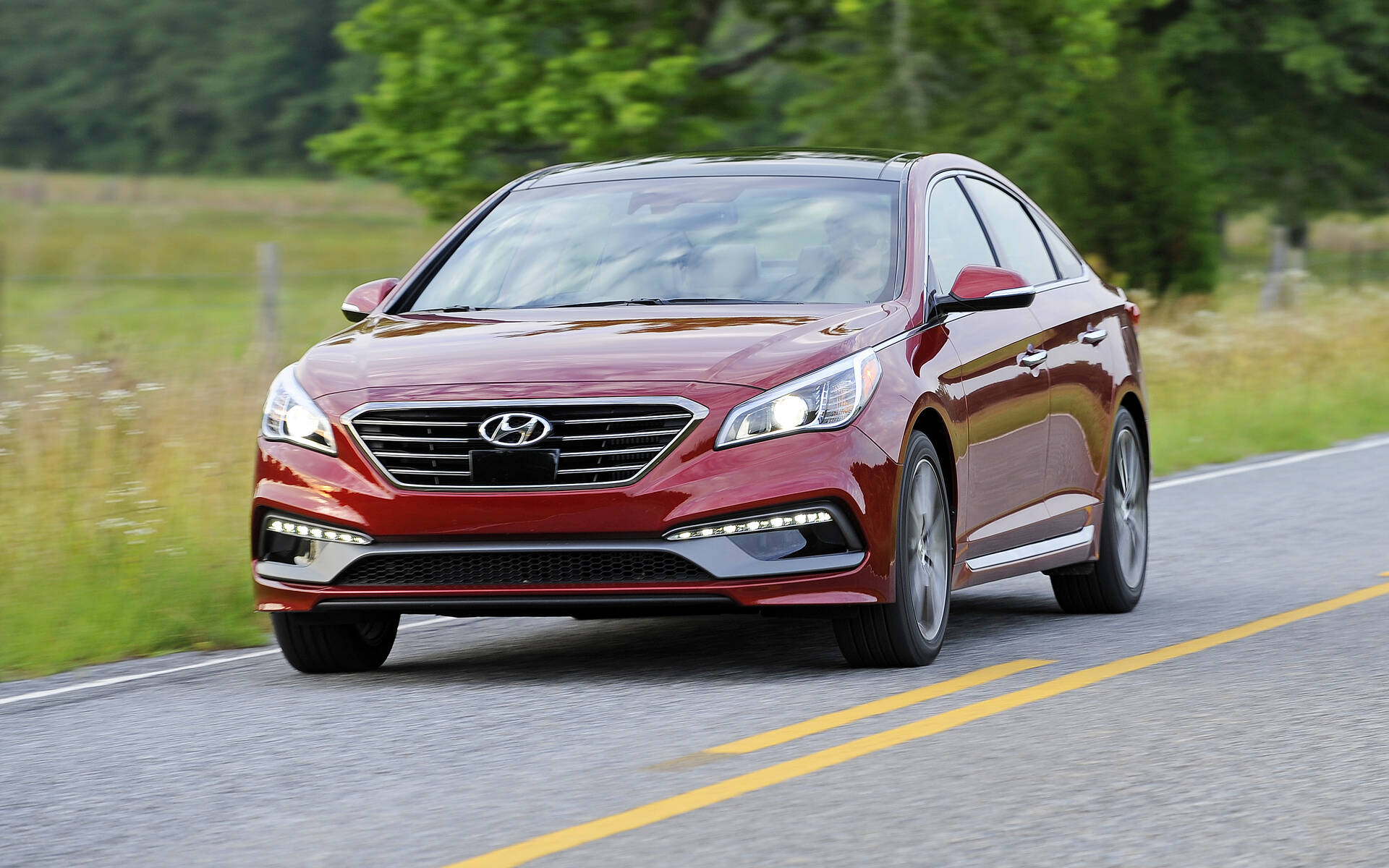
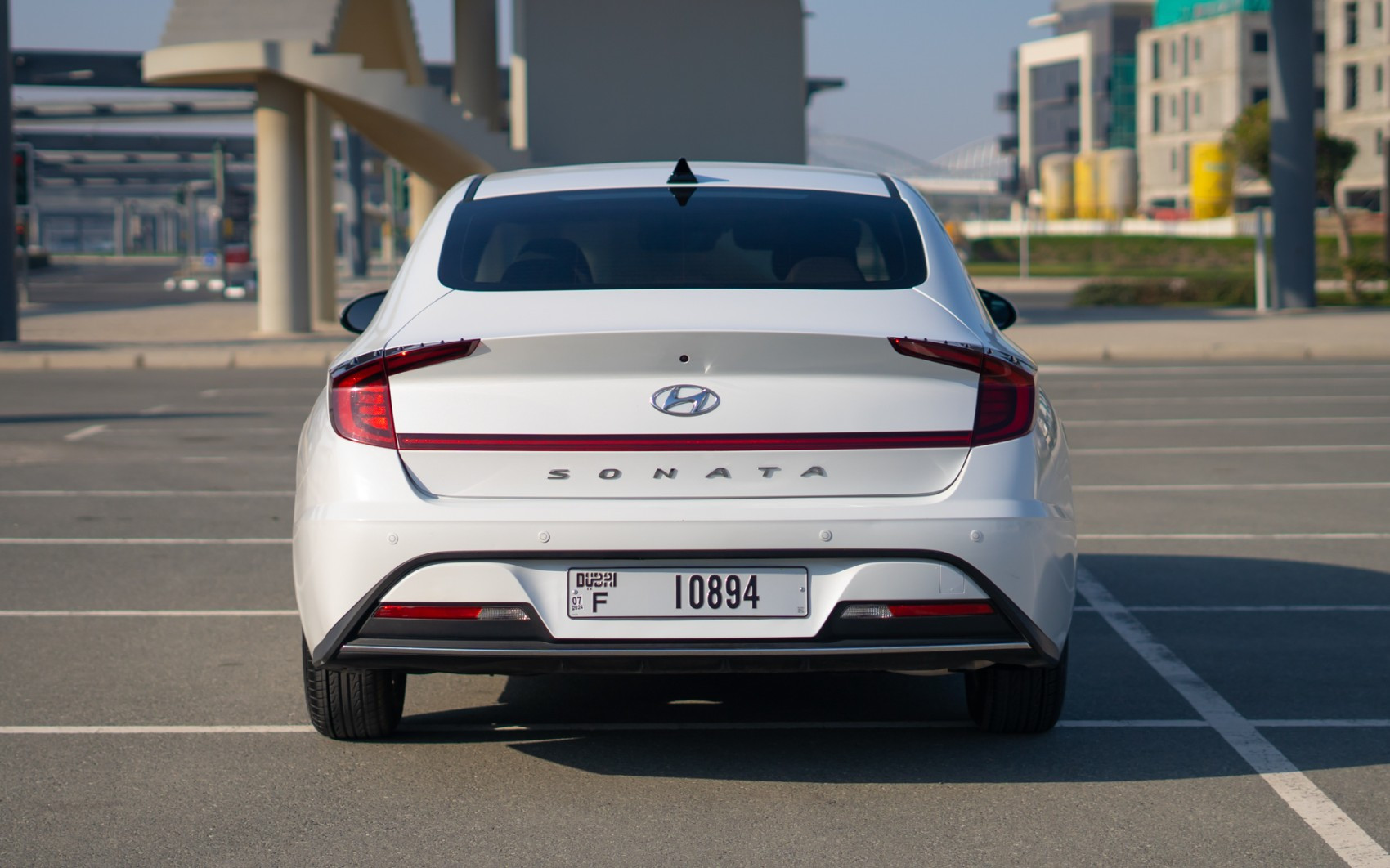
The 2018 Hyundai Sonata Sport generates 185 horsepower from its naturally aspirated 2.4-liter GDI 4-cylinder engine, paired with a smooth 6-speed automatic transmission. This powertrain configuration balances everyday efficiency with responsive mid-range acceleration, catering directly to drivers seeking a stylish midsize sedan with a sporty visual presence and dependable, real-world capability.
Evaluating a midsize family sedan often leads buyers away from raw numbers and toward how those figures translate to daily commuting, highway passing, and fuel economy. The 2018 Hyundai Sonata Sport sits at a unique crossroads in Hyundai's historical lineup. Receiving a major mid-cycle refresh for the 2018 model year, the Sport trim introduced sharper exterior styling, retuned suspension tuning, and a more rigid structural architecture compared to its pre-facelift predecessors.
Understanding the true capability of the 2018 Hyundai Sonata Sport horsepower (HP) rating requires looking beyond the brochure sheet. This comprehensive guide breaks down engine specifications, transmission behavior, trim-level powertrain comparisons, and practical driving dynamics to help prospective owners, automotive enthusiasts, and prospective buyers understand what this vehicle delivers on the road.
The 2018 Hyundai Sonata Sport Powertrain Core
To understand the 185-horsepower rating of the 2018 Hyundai Sonata Sport, one must examine the mechanical components that produce it. Hyundai equips the Sport trim with a 2.4-liter inline 4-cylinder engine featuring Gasoline Direct Injection (GDI).
Engine Architecture and Specifications
- Displacement: 2.4 liters (2,359 cc)
- Valvetrain: Dual Overhead Cam (DOHC) with D-CVVT (Dual Continuously Variable Valve Timing)
- Horsepower: 185 hp @ 6,000 rpm
- Torque: 178 lb-ft @ 4,000 rpm
- Induction: Naturally aspirated (non-turbocharged)
The naturally aspirated design means power delivery is linear. Unlike turbocharged engines that suffer from turbo lag before generating peak boost, the 2.4-liter GDI engine responds immediately when the accelerator pedal is depressed. Peak horsepower arrives at 6,000 revolutions per minute (rpm), while the maximum torque of 178 lb-ft is unlocked lower in the rev range at 4,000 rpm. This torque curve ensures that pulling away from a dead stop or executing a low-speed lane change feels effortless in urban environments.
The Role of Direct Injection
Gasoline Direct Injection injects fuel directly into the combustion chambers rather than the intake manifold. This precise metering increases thermal efficiency, allowing the engine to squeeze more energy out of every drop of regular 87-octane unleaded gasoline. It also contributes to cleaner emissions and a cleaner idle, though it requires routine maintenance—such as intake valve cleaning at higher mileage intervals—to prevent carbon buildup typical of direct-injection powerplants.
Transmission Pairing and Drive Modes
Horsepower figures only tell half the story; how that power reaches the front wheels dictates the actual driving experience. The 2018 Hyundai Sonata Sport mates its 2.4L engine to a traditional 6-speed automatic transmission with SHIFTRONIC manual shift mode.
6-Speed Automatic Performance
While many competitors in the midsize sedan class transitioned to continuously variable transmissions (CVTs) to eke out fractional gains in EPA fuel economy ratings, Hyundai retained a conventional geared automatic for the core Sonata lineup. This transmission provides distinct, crisp gear shifts. It avoids the droning engine noise under heavy acceleration commonly associated with CVTs, offering a more engaging mechanical feel.
Drive Mode Select
The 2018 Sonata Sport includes an integrated Drive Mode Select system, allowing drivers to alter throttle mapping and steering weight on the fly. The system features three primary modes:
- Normal Mode: Balances fuel efficiency and throttle response for everyday commuting.
- Sport Mode: Sharpens throttle sensitivity, holds gears longer into the rpm band before shifting up, and adds welcome weight to the rack-mounted electric power steering.
- Eco Mode: Dampens aggressive throttle inputs to maximize fuel economy during highway cruising or heavy traffic congestion.
While selecting "Sport" mode does not actually increase the engine's 185 horsepower output, it changes how aggressively and quickly that power is delivered to the front wheels.
Comparing the Sonata Sport Powertrain Options for 2018
The term "Sport" in the 2018 Hyundai Sonata lineup can occasionally cause confusion because Hyundai offered multiple engine configurations across the vehicle's hierarchy during this model year. Buyers evaluating horsepower must distinguish between the standard Sport trim and the higher-performance 2.0T (Turbo) variant.
| Trim Level | Engine Type | Horsepower | Torque | Transmission |
|---|---|---|---|---|
| Sonata SE / Eco / SEL / Sport | 2.4L GDI 4-Cylinder | 185 hp @ 6,000 rpm | 178 lb-ft @ 4,000 rpm | 6-speed automatic |
| Sonata Eco | 1.6L Turbocharged 4-Cylinder | 178 hp @ 5,500 rpm | 195 lb-ft @ 1,500-4,500 rpm | 7-speed dual-clutch |
| Sonata Sport 2.0T / Limited 2.0T | 2.0L Turbocharged 4-Cylinder | 245 hp @ 6,000 rpm | 260 lb-ft @ 1,350-4,000 rpm | 8-speed automatic |
Distinguishing Sport from Sport 2.0T
The standard 2018 Sonata Sport reviewed here features the 185-hp 2.4L engine. It relies on aggressive exterior styling—such as a mesh grille, unique front and rear fascias, side sill extensions, a rear lip spoiler, and dual chrome exhaust tips—to project a performance-oriented image.
By contrast, the Sonata Sport 2.0T upgrades to a 2.0-liter turbocharged engine producing 245 horsepower and pairs it with an 8-speed automatic transmission, larger front brakes, sport-tuned suspension geometry, and steering-wheel-mounted paddle shifters. Buyers looking for true straight-line speed will prefer the 2.0T, whereas those seeking a reliable commuter with athletic styling find the standard 185-hp Sport model strikes an ideal financial and operational balance.
Real-World Driving Dynamics and Handling
A car's horsepower rating dictates how fast it can accelerate, but suspension tuning and chassis rigidity determine how it handles corners. For the 2018 model year, Hyundai engineers implemented significant revisions to the Sonata's platform.
Suspension Upgrades
The 2018 refresh brought a 12% increase in torsional rigidity to the front suspension crossmember and thicker trailing arms in the rear multi-link suspension setup. The steering rack software was also updated, resulting in a 2.5% faster steering gear ratio and improved feedback.
On the road, the 2018 Sonata Sport feels planted and stable. Body roll through sweeping highway off-ramps is well-controlled compared to softer-sprung trims like the Limited or SE. The ride quality remains firm enough to feel engaging without sacrificing the long-distance comfort expected from a midsize sedan.
Acceleration and Passing Power
With 185 horsepower moving a curb weight of approximately 3,443 to 3,549 pounds (depending on equipment), the standard Sonata Sport achieves a 0-to-60 mph time in the mid-to-high 7-second range.
- City Driving: The low-end torque delivery makes moving away from traffic lights crisp and predictable.
- Highway Passing: When merging onto fast-moving interstate traffic or passing slower semi-trucks, the 6-speed automatic readily downshifts to place the engine near its 4,000 rpm torque peak, providing adequate, safe passing power without undue engine strain.
Fuel Economy and Efficiency Trade-offs
A common concern among buyers evaluating midsize sedan horsepower is how engine output impacts fuel consumption. Because the 2018 Hyundai Sonata Sport uses a naturally aspirated 2.4-liter engine rather than a complex forced-induction setup, it maintains steady, predictable efficiency numbers that match its output.
EPA Fuel Economy Estimates
- City: 25 mpg
- Highway: 35 mpg
- Combined: 28 mpg
These figures make the standard 185-hp Sport model an economical daily driver. Real-world fuel economy frequently aligns closely with EPA estimates on flat highway stretches, provided the vehicle is maintained with clean air filters, properly inflated tires, and fresh engine oil. Utilizing Eco mode during long highway commutes can help optimize these figures further.
Frequently Asked Questions
Does the 2018 Hyundai Sonata Sport require premium fuel to achieve its 185 horsepower?
No. The standard 2.4-liter GDI engine in the 2018 Hyundai Sonata Sport is engineered to run on standard regular 87-octane unleaded gasoline. The engine management computer is calibrated for regular fuel, meaning owners do not need to spend extra money on premium gasoline to achieve the factory-rated 185 horsepower output.
How can I tell if my 2018 Sonata Sport has 185 hp or 245 hp?
The easiest way to verify the horsepower rating is to check the trunk badge and engine bay. Standard Sport models feature the 185-hp 2.4L engine and standard dual exhaust tips without special badging. The higher-performance Sport 2.0T variant features distinct "Turbo" badge styling on the rear decklid, a flat-bottom steering wheel with paddle shifters, and upgraded sport-bolstered seating surfaces. You can also verify the exact engine displacement by entering the vehicle identification number (VIN) into an online decoder or inspecting the emissions label under the hood.
Is the 2018 Hyundai Sonata Sport considered a fast car?
No. The 2018 Hyundai Sonata Sport with 185 horsepower is classified as a comfortable, stylish midsize family sedan rather than a sports car. While its styling is aggressive and its handling is responsive for its class, its 0–60 mph time of roughly 7.5 to 7.8 seconds reflects practical commuter performance rather than high-performance acceleration.
What are common maintenance items that affect engine performance on this model?
Over time, direct-injection engines like the 2.4L GDI can experience carbon buildup on the intake valves because fuel is injected directly into the combustion chamber rather than washing over the valves. Using top-tier detergents in your fuel, changing the engine oil at strict 5,000-to-7,500-mile intervals, and inspecting spark plugs and ignition coils at recommended mileage milestones will ensure the engine maintains its factory 185-hp performance throughout its lifespan.
Conclusion and Recommendations
The 2018 Hyundai Sonata Sport delivers a practical 185 horsepower that satisfies the demands of daily commuting and highway driving without sacrificing fuel efficiency. By combining a naturally aspirated 2.4-liter GDI engine with a traditional 6-speed automatic transmission and athletic suspension tuning, Hyundai created a midsize sedan that punches above its weight in visual appeal and dynamic composure. Prospective buyers should confirm whether they are evaluating the standard 185-hp Sport or the 245-hp 2.0T variant to ensure the vehicle matches their specific performance expectations.