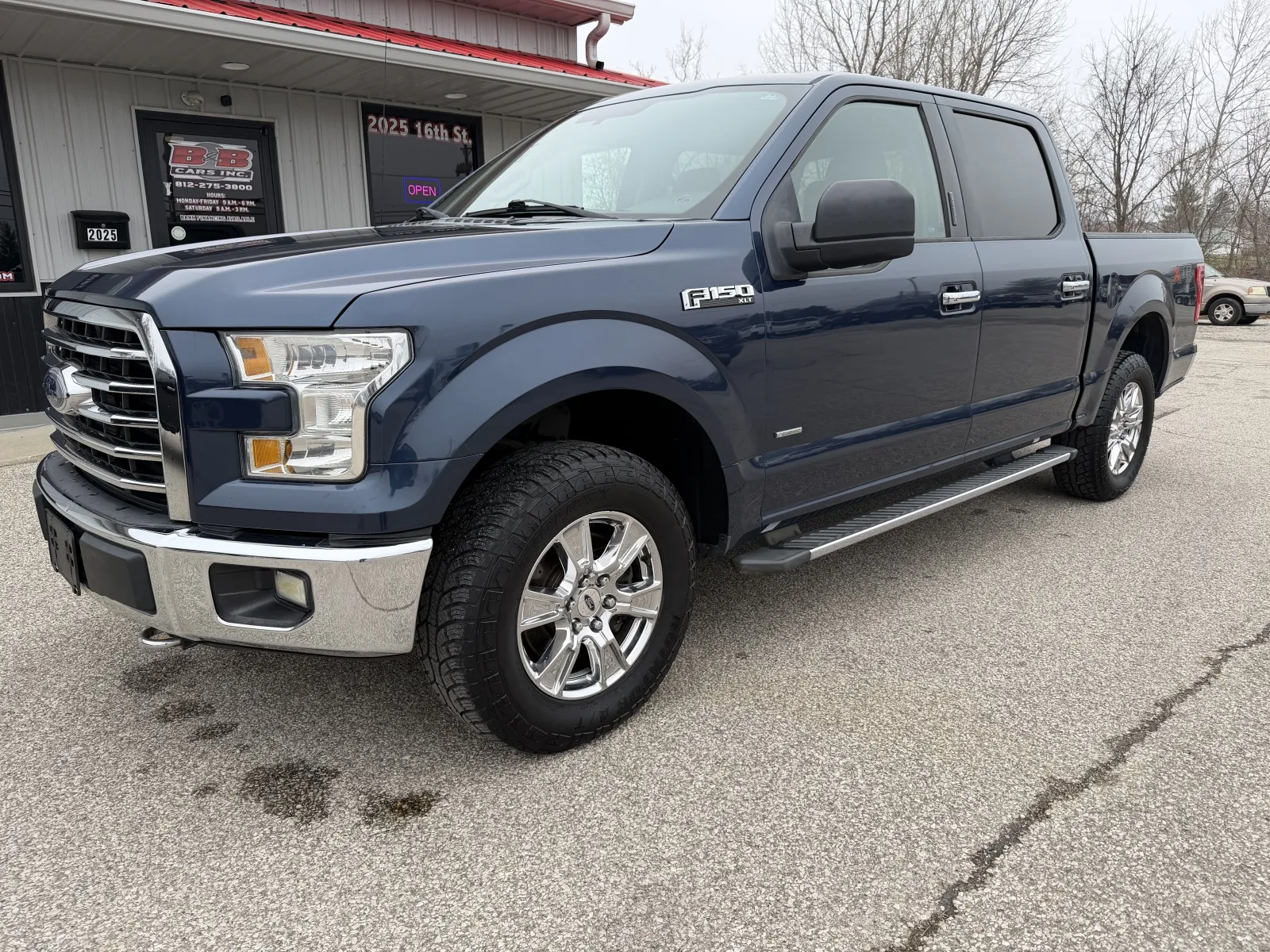
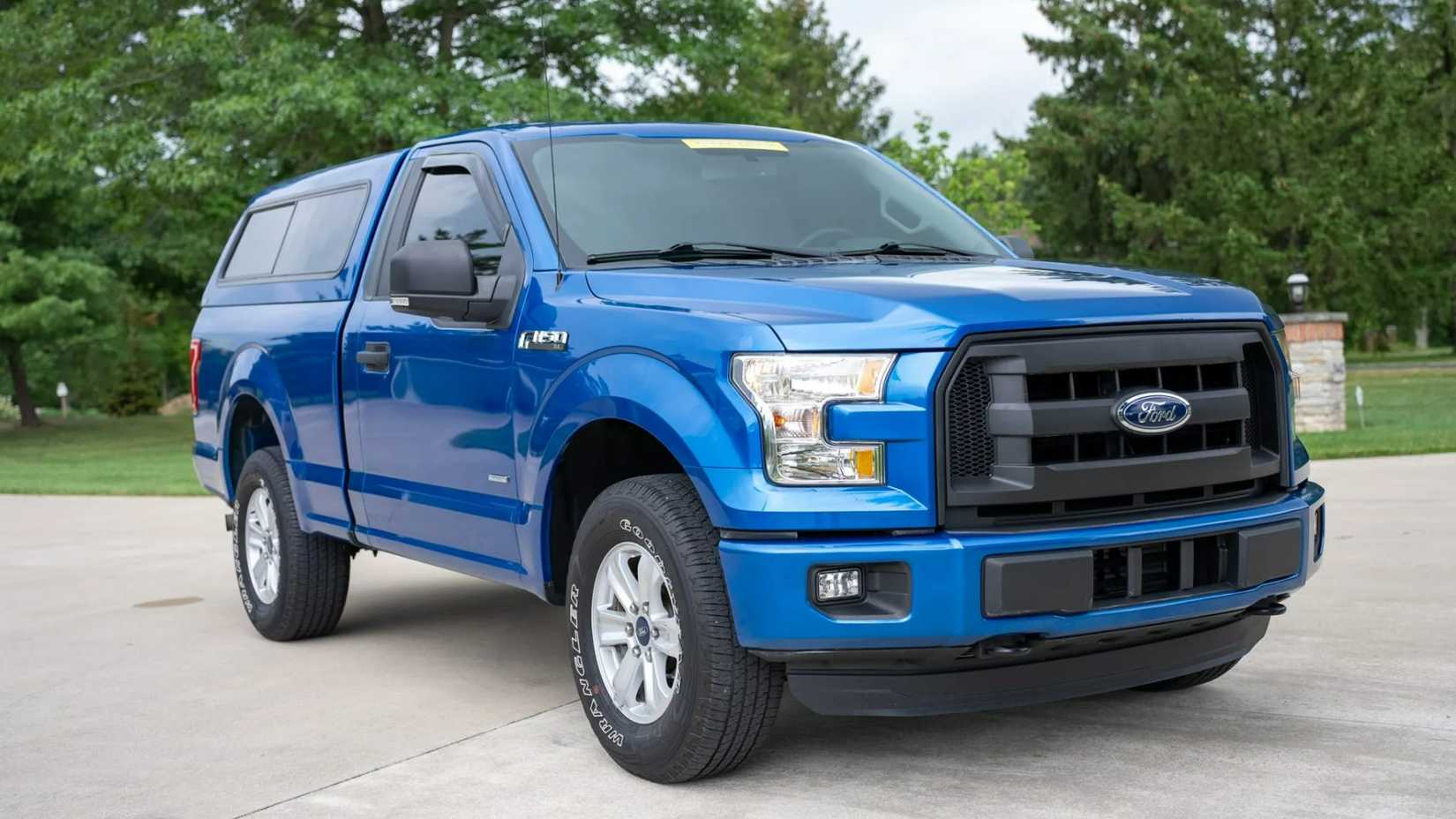
The curb weight of a 2016 Ford F-150 ranges from approximately 4,051 to 5,236 pounds, depending on the specific combination of cab style, bed length, engine, and drivetrain. This weight reflects the vehicle with all standard equipment and a full tank of fuel but excludes passengers, aftermarket accessories, and cargo.
The 2016 Ford F-150 stands as a landmark in automotive engineering because it represents the second year of Ford’s "Aluminum Revolution." By replacing traditional steel body panels with high-strength, military-grade aluminum alloy, Ford managed to shed nearly 700 pounds compared to the 2014 models. As of 2026, many of these vehicles remain active on the road and in the used market, making it essential for owners and buyers to understand how curb weight influences everything from towing capacity to long-term suspension maintenance.
Understanding the Components of Curb Weight
Before looking at the specific numbers for various configurations, it is vital to define what curb weight actually represents and why it matters for a truck of this vintage. Curb weight is the "ready-to-drive" weight of the truck. Unlike "dry weight," which excludes fluids, or "Gross Vehicle Weight Rating" (GVWR), which is the maximum safe weight of the truck plus its load, curb weight is the baseline measurement.
In a 2016 F-150, several factors fluctuate this baseline:
- Cab Configuration: The Regular Cab is the lightest, followed by the SuperCab (extended cab), and finally the SuperCrew (full four-door), which adds the most weight due to the additional glass, seating, and structural reinforcement for the larger cabin.
- Drivetrain (4x2 vs. 4x4): Opting for a 4x4 system typically adds between 200 and 300 pounds to the vehicle's curb weight. This increase comes from the transfer case, front differential, drive shafts, and heavier front suspension components.
- Engine Choice: The 2.7L EcoBoost V6 is surprisingly light, while the 5.0L Ti-VCT V8 and the 3.5L EcoBoost add more mass due to larger blocks or additional turbocharging hardware.
- Wheelbase and Bed Length: A longer frame and a longer bed (e.g., the 8-foot bed versus the 5.5-foot bed) naturally require more steel in the frame and more aluminum in the body, increasing the weight.
2016 Ford F-150 Curb Weight Chart by Configuration
The following table outlines the approximate curb weights for the most common 2016 F-150 configurations. Note that these figures are based on base trim levels (like the XL or XLT); higher trims like the Lariat, King Ranch, or Platinum will be slightly heavier due to additional luxury features, power-adjustable components, and sound deadening.
| Cab Style | Drivetrain | Engine | Wheelbase | Approx. Curb Weight (lbs) |
|---|---|---|---|---|
| Regular Cab | 4x2 | 3.5L V6 | 122" | 4,051 |
| Regular Cab | 4x4 | 5.0L V8 | 141" | 4,538 |
| SuperCab | 4x2 | 2.7L EcoBoost | 145" | 4,414 |
| SuperCab | 4x4 | 3.5L EcoBoost | 145" | 4,871 |
| SuperCrew | 4x2 | 3.5L V6 | 145" | 4,474 |
| SuperCrew | 4x4 | 5.0L V8 | 145" | 4,950 |
| SuperCrew | 4x4 | 3.5L EcoBoost | 157" | 5,236 |
The Impact of the Aluminum Body on Curb Weight
In 2015 and 2016, Ford’s decision to move to an aluminum-intensive design was met with significant industry scrutiny. However, from a technical perspective, the reduction in curb weight provided three primary benefits that are still relevant in 2026.
Improved Power-to-Weight Ratio
By reducing the weight of the "upper" portion of the truck (the body), Ford improved the power-to-weight ratio across all engine options. For example, the 2.7L EcoBoost engine, which might have felt underpowered in a 5,500-pound steel truck, became a performance standout in a 4,400-pound aluminum truck. This weight reduction allows the engine to spend more of its energy moving the load and less energy moving the vehicle itself.
Increased Payload Capacity
In the world of pickup trucks, Payload = GVWR - Curb Weight. By lowering the curb weight while maintaining or increasing the Gross Vehicle Weight Rating through a high-strength steel frame, Ford effectively "gifted" that saved weight back to the owner in the form of higher payload. This is why a 2016 F-150 often has a higher maximum payload capacity than its contemporaries from Chevrolet or Ram, which remained steel-bodied during that era.
Handling and Braking
A lighter vehicle is inherently easier to stop and turn. The 2016 F-150's lower curb weight reduces the kinetic energy that the braking system must dissipate. For owners in 2026, this often translates to slower wear on brake pads and rotors compared to heavier trucks, provided the vehicle isn't constantly pushed to its maximum towing limits.
How Trim Levels Affect Your Truck's Weight
While the base curb weight is a helpful starting point, the "as-shipped" weight of a specific 2016 F-150 can vary by several hundred pounds based on trim levels and optional equipment.
- XL and XLT Trims: These are the lightest. They typically feature cloth seats, manual adjustments, and fewer electronic modules. If you are looking for the maximum possible payload, an XLT with minimal options is usually the sweet spot.
- Lariat and King Ranch: These trims introduce leather seating, power-adjustable seats (with heavy motors), and more extensive infotainment systems.
- Platinum and Limited: These are the heaviest versions of the 2016 F-150. Features such as power-deployable running boards, panoramic moonroofs (which add significant glass weight at the highest point of the vehicle), and massaging seats can add 200+ pounds to the curb weight compared to a base XL SuperCrew.
When calculating towing safety, it is always best to look at the Tire and Loading Information sticker located on the driver-side door jamb. This sticker provides the specific payload capacity for that exact VIN, which is calculated by subtracting the actual "as-built" curb weight from the GVWR.
The Role of the 2016 Powertrains
The engine choice doesn't just dictate how much you can tow; it also dictates the weight on the front axle.
- 3.5L Ti-VCT V6: The base naturally aspirated engine. It is relatively light and was mostly found in fleet-oriented Regular Cab or SuperCab configurations.
- 2.7L EcoBoost V6: This engine uses a Compacted Graphite Iron (CGI) block, which is stronger and lighter than traditional grey iron. Despite having two turbochargers and associated plumbing, it remains one of the lightest options, contributing to the F-150's nimbleness.
- 5.0L Ti-VCT V8: The "Coyote" engine is an all-aluminum block, but its sheer size and the volume of oil it carries (nearly 8 quarts) make it heavier than the small-displacement V6s.
- 3.5L EcoBoost V6: This was the heavy hitter for 2016. Because it was often paired with the Max Trailer Tow Package—which included a heavier-duty rear bumper, upgraded cooling, and a more robust steering gear—trucks equipped with this engine usually have a higher curb weight.
Practical Implications for Today’s Owners
In 2026, the 2016 Ford F-150 is a popular choice for secondary owners, DIYers, and small businesses. Understanding the curb weight is practical for several reasons:
1. Towing with a Used Truck
If you are planning to tow a travel trailer, you must know your curb weight to ensure you do not exceed the Gross Combined Weight Rating (GCWR). As trucks age, suspension components like leaf springs and shocks wear out. A lighter curb weight means less "dead weight" the aged suspension has to support before you even add a trailer.
2. Off-Roading and Modifications
Many owners in 2026 choose to modify these trucks with lift kits, larger tires, and steel bumpers. It is important to remember that every pound added in accessories is a pound subtracted from your payload. If you add 300 pounds of steel armor to a truck with a 4,500-pound curb weight, your new effective curb weight is 4,800 pounds, significantly altering the vehicle's dynamics and legal load limits.
3. Registration and Tolls
In some jurisdictions, vehicle registration fees are scaled based on curb weight. Additionally, certain bridges or residential roads have weight limits (often 5,000 lbs or 2.5 tons). A 4x2 Regular Cab F-150 easily slides under these limits, whereas a fully loaded 4x4 SuperCrew might technically exceed them when passengers are added.
Summary of 2016 F-150 Weight Variations
To summarize the variations, the "lightest" 2016 F-150 is the Regular Cab, Short Bed, 4x2 with the 3.5L V6, weighing in at just over 4,000 lbs. The "heaviest" standard configuration is the SuperCrew, Long Bed (6.5'), 4x4 with the 3.5L EcoBoost, which pushes toward 5,200 lbs before options.
Understanding these numbers allows for better decision-making regarding safety and utility. Ford's use of aluminum in the 2016 model year wasn't just a marketing gimmick; it was a fundamental shift in how weight is distributed in a light-duty pickup, allowing for a more capable vehicle that doesn't have to fight its own mass.
Frequently Asked Questions
How can I find the exact curb weight of my specific 2016 Ford F-150?
The most accurate way to find your specific truck's curb weight is to locate the Gross Vehicle Weight Rating (GVWR) on the door jamb sticker and subtract the Occupant and Cargo Carrying Capacity (Payload) listed on the yellow and white tire sticker. For example, if your GVWR is 7,000 lbs and your payload is 1,800 lbs, your curb weight is 5,200 lbs. Alternatively, you can take the truck to a certified commercial scale (often found at truck stops or scrap yards) with a full tank of gas.
Does the 2016 F-150 weigh less than the 2016 Silverado?
Yes, in almost every comparable configuration, the 2016 Ford F-150 is lighter than the 2016 Chevrolet Silverado 1500. This is primarily due to Ford’s aluminum body panels compared to the Silverado’s predominantly steel construction. This weight advantage typically gave the F-150 a higher payload rating, although real-world fuel economy and towing "feel" vary depending on the powertrain.
Does 4WD add a lot of weight to the 2016 F-150?
The addition of Four-Wheel Drive (4WD) adds approximately 250 to 300 pounds to the curb weight. This includes the weight of the transfer case, front drive axle, CV shafts, and the electronic shifting components. While this increases the curb weight and slightly reduces payload, it is often considered a necessary trade-off for users in northern climates or those who drive off-road.
How does the curb weight affect the 2016 F-150’s fuel economy?
Weight is a primary enemy of fuel economy, particularly in stop-and-go city driving where energy is required to get the mass moving. The 2016 F-150’s lighter aluminum body allowed Ford to use smaller, more efficient engines like the 2.7L EcoBoost without sacrificing performance. However, at highway speeds, aerodynamics (drag) becomes a more significant factor than curb weight.
Is the aluminum body of the 2016 F-150 more expensive to repair if damaged?
Historically, aluminum repair was more specialized and expensive than steel. However, by 2026, the industry has largely adapted. Most certified collision centers now have the specific tools and training required for aluminum work. While insurance premiums for the 2016 F-150 were slightly higher initially, they have leveled out as the technology became more common in the market.
What is the difference between curb weight and GVWR?
Curb weight is the weight of the truck by itself with fuel. GVWR (Gross Vehicle Weight Rating) is the maximum weight the truck is legally and mechanically allowed to weigh when fully loaded with people, fuel, and cargo. The difference between these two numbers is your payload capacity. You should never operate a vehicle where the curb weight plus the load exceeds the GVWR.
Recommendation for Buyers and Owners
If you are looking to maximize the utility of a 2016 Ford F-150 in the current year, prioritize finding a truck with the highest possible payload sticker. Because these trucks vary so much in weight based on their luxury options, two trucks that look identical from the outside could have a 400-pound difference in what they can legally carry. For towing and heavy-duty work, the 3.5L EcoBoost with the Max Tow Package remains the gold standard, even with the slightly higher curb weight that comes with its heavy-duty hardware.